

Memories of rivers and waterways in the cultural life of Southern Vietnam.
According to Professor Chung Hoang Chuong, riverine civilization is the foundation that shaped the people of the Mekong Delta. From upstream to downstream, the Mekong River not only carries alluvial soil but also creates a network of canals, trade routes, livelihoods, and a way of behaving in harmony with nature that has been accumulated over many generations.
"The people of the Mekong Delta know how to rely on water, live with water, and trade using water," Professor Chung Hoang Chuong observed. This flexible adaptation to the water and land environment has shaped a unique set of values: generous, open-minded, yet resilient and deeply understanding of nature.
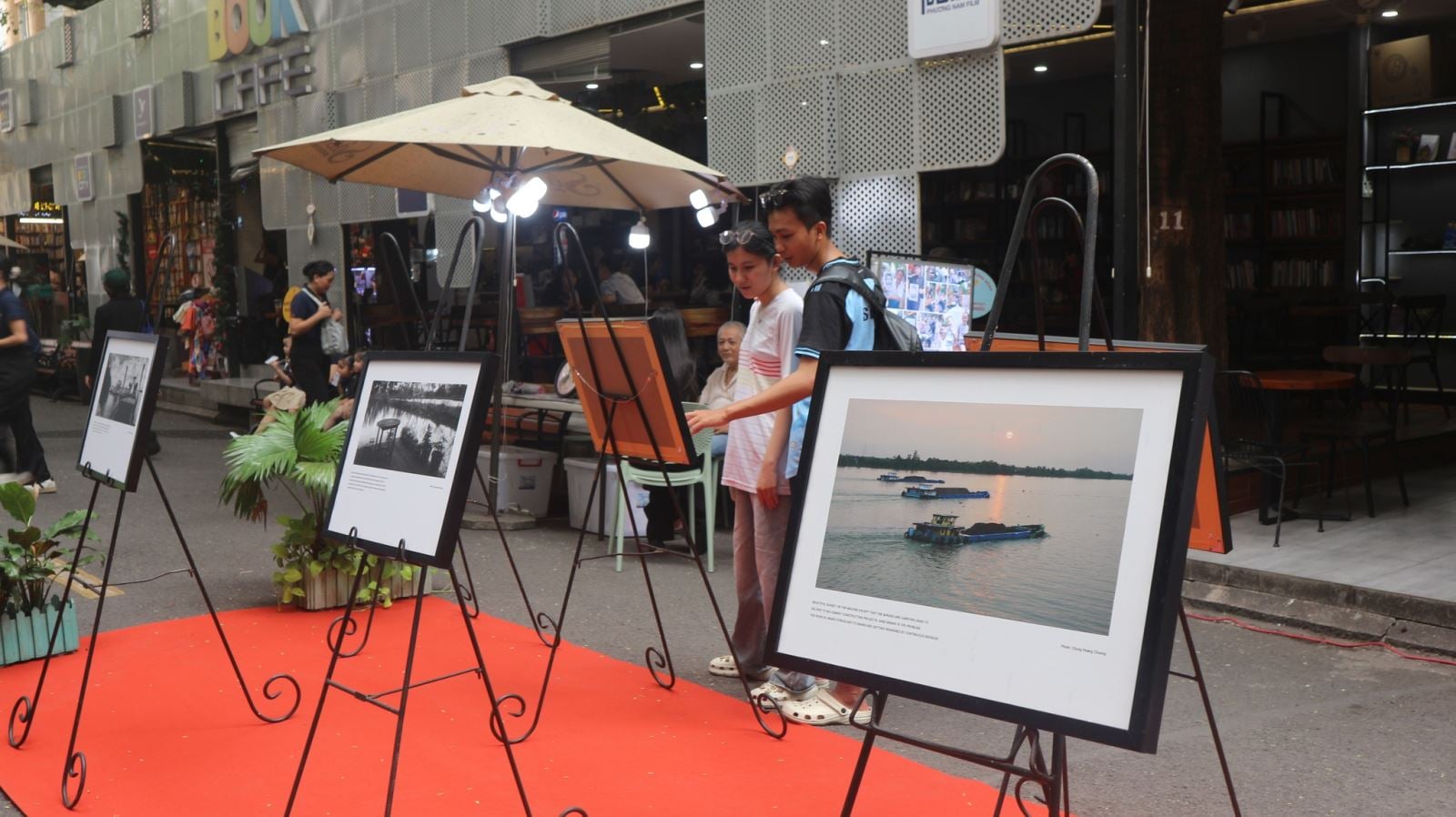
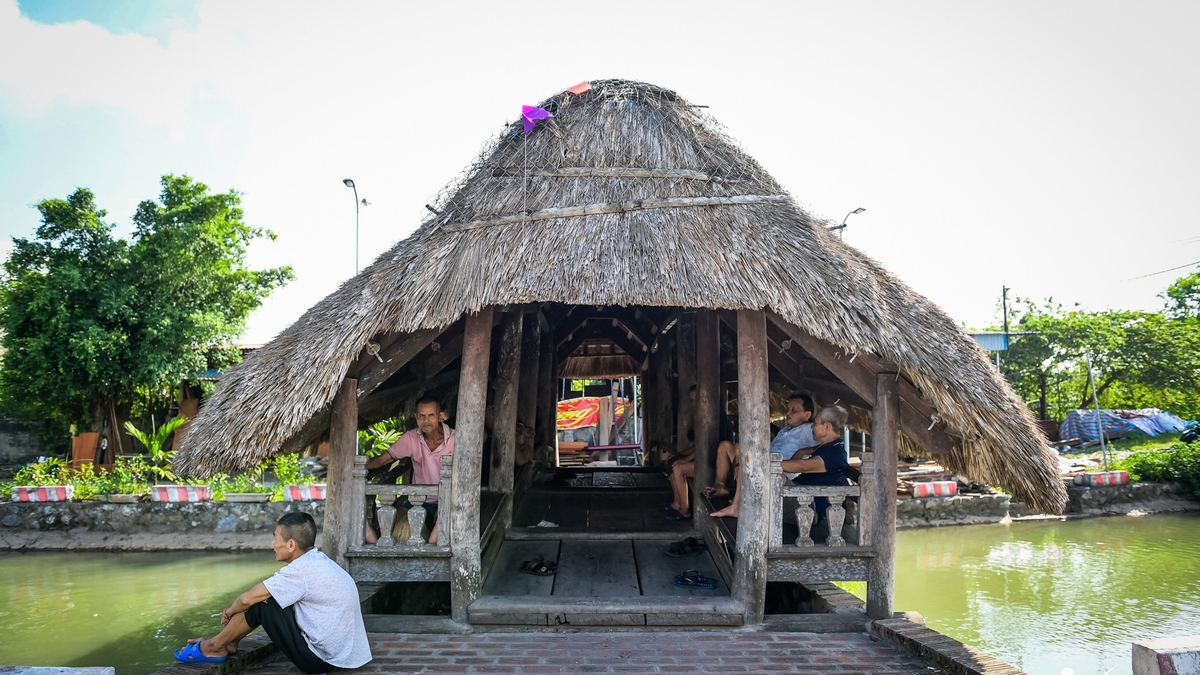
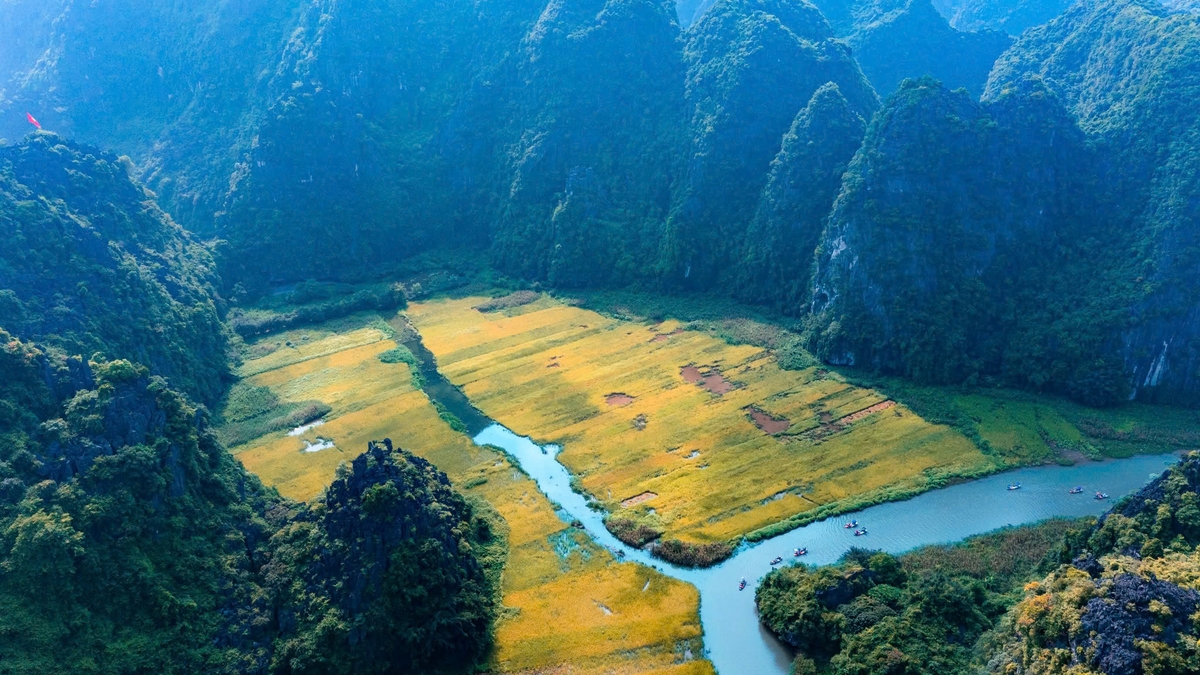
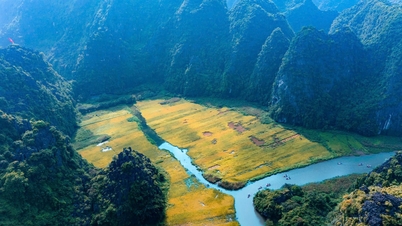
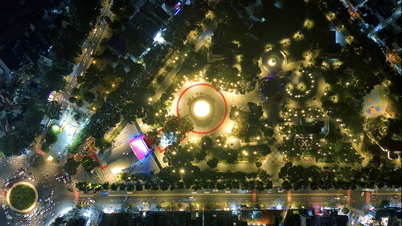
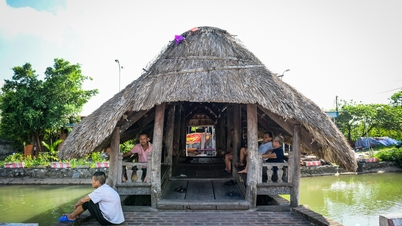
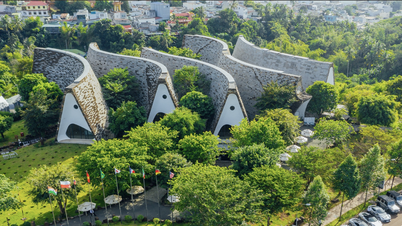
These are pictures showcasing the beauty of the Mekong Delta.
In the realm of traditional crafts, these values are preserved through skill and memory. Artisan Nguyen Van Tot (Bay Tot), who has been involved in the craft of building boats and canoes in Ba Dai for over half a century, recounts his journey of preserving the craft amidst the shrinking of waterway transport. From the large boats that once traversed the rivers and canals, he shifted to making miniature model boats, as a way of "preserving the soul of the waterways." For artisan Bay Tot, each boat is not only a handcrafted product but also a piece of memory of an entire civilization that is gradually fading into the past.
That memory is vividly portrayed in the story of the rice harvest told by engineer Le Quoc Viet, affectionately known as "Mr. Tu, the rice harvest man." He takes listeners back to a time when farming was closely tied to the water, to customs, weddings, festivals, and the cultural space where Khmer, Vietnamese, and Chinese cultures intersected. "Preserving the rice harvest is not just about preserving a seed source, but about preserving the entire system of cultural and social values that nurtured neighborly solidarity and the spirit of 'helping each other in times of need'," engineer Le Quoc Viet shared.
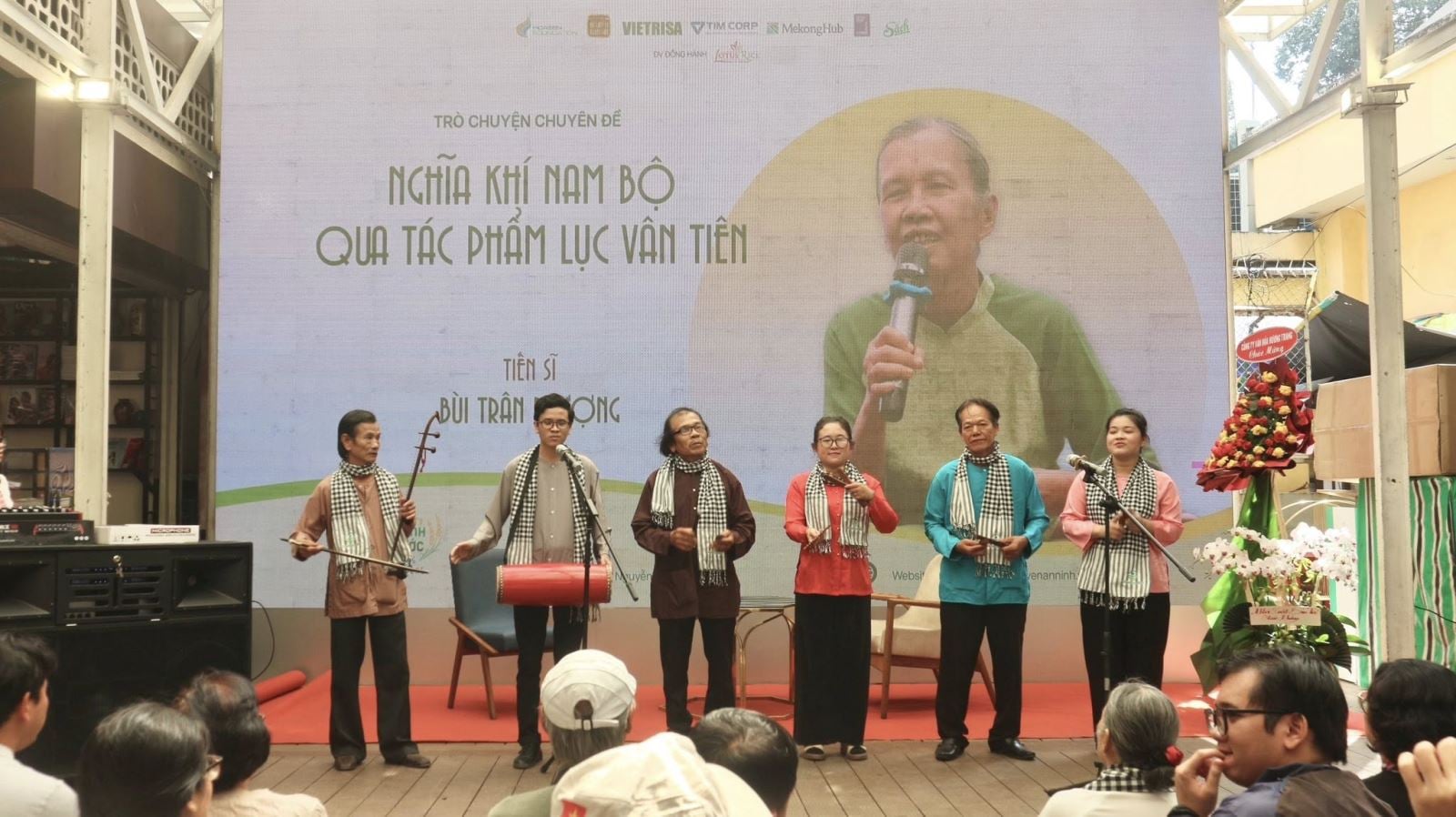
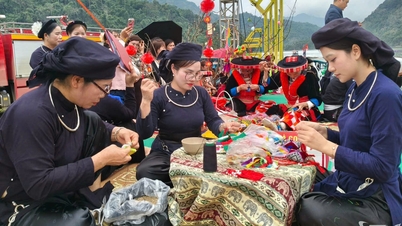
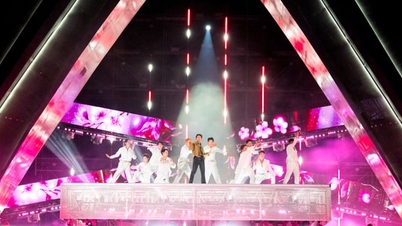
The performance showcases various forms of folk art deeply rooted in the culture of Southern Vietnam.
If rivers and rice grains are the material foundation of delta civilization, then literature and folk performances crystallize its spiritual depth. According to Dr. Bui Tran Phuong, this is clearly demonstrated in Nguyen Dinh Chieu's Luc Van Tien, where the chivalrous spirit of Southern Vietnam is not only found in central characters like Luc Van Tien or Kieu Nguyet Nga, but also in ordinary people like Mr. Quan, woodcutters, fishermen, and young boys – straightforward, righteous individuals who readily help those in need without ulterior motives. This is the "soul of Southern Vietnam" nurtured by life on the waterways.
The form of Vân Tiên poetry recitation, combining spoken and sung verses, demonstrates how people embraced literature as part of community life, where moral philosophies were transmitted intimately and enduringly. This connection extends to other forms of folk performance such as the Sắc bùa Phú Lễ (Bến Tre), with its lively melodies and aspirations for peace and good fortune. According to Dr. Bùi Trân Phượng, the riverine environment, where people had to rely on each other for survival, fostered a sense of community, chivalry, and faith in goodness.
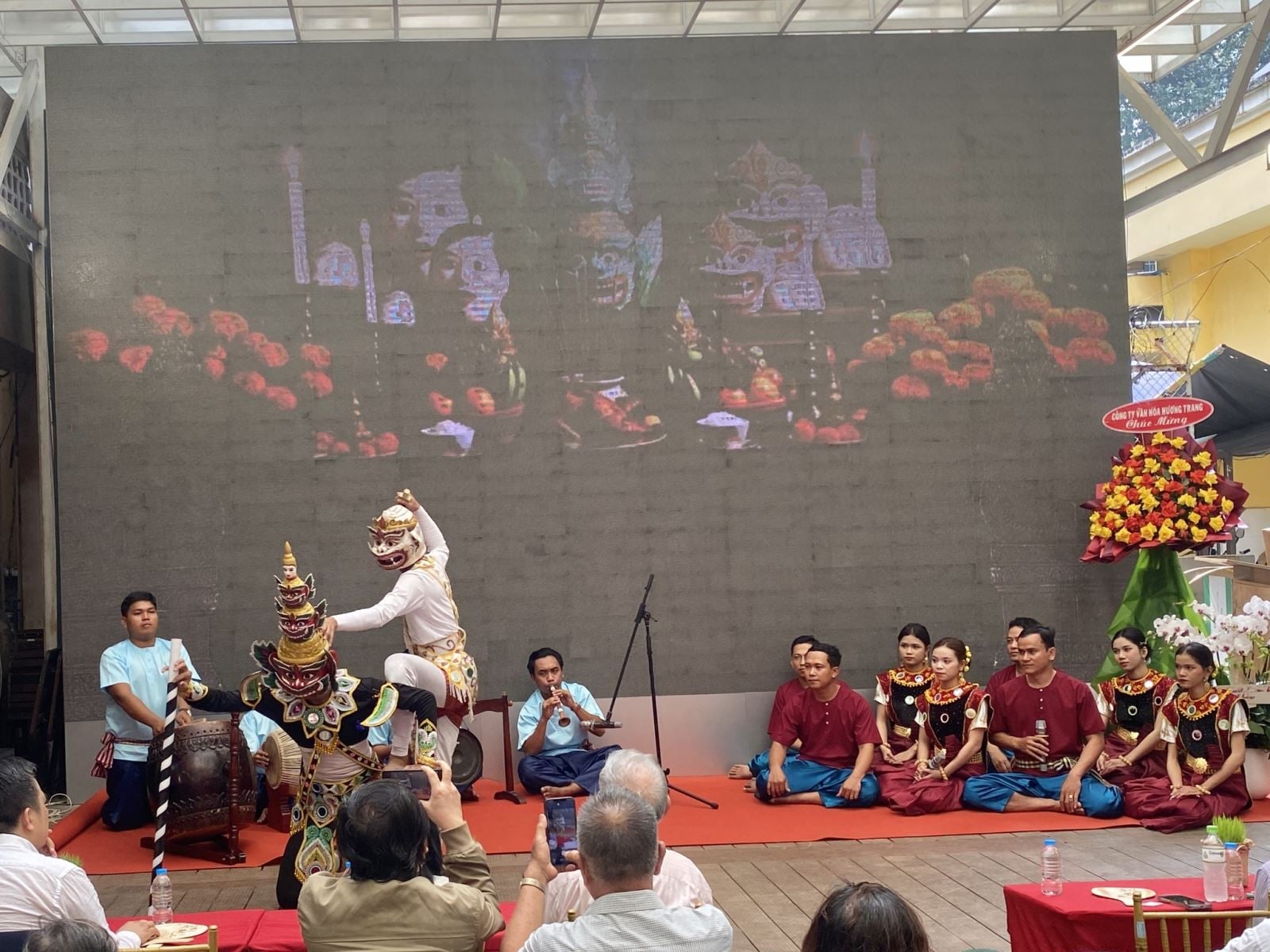
A traditional dance of the Khmer ethnic group.
Preserving identity in the development and transformation of the delta.
From a scientific perspective, Associate Professor Dr. Le Anh Tuan analyzed the history of the delta's formation, highlighting its characteristics of being both rich in alluvial soil and vulnerable to climate change. He emphasized the organic relationship between history, ecology, livelihoods, and culture, considering the adaptability of the Mekong Delta's inhabitants as the building block of a unique civilization. According to him, preserving the riverine identity is inseparable from environmental restoration and sustainable livelihood development.
The picture of development continues to expand through the story of rice varieties and agricultural science. For engineer Ho Quang Cua, it is a journey of breeding high-quality fragrant rice varieties, with ST25 being a prime example of the combination of indigenous knowledge and modern science.
Meanwhile, Dr. Do Khac Thinh and Dr. Tran Ngoc Thach emphasized the need for long-term investment, from laboratories to fields, to improve productivity while maintaining the quality of "delicious and clean" produce, without sacrificing identity for short-term gains.
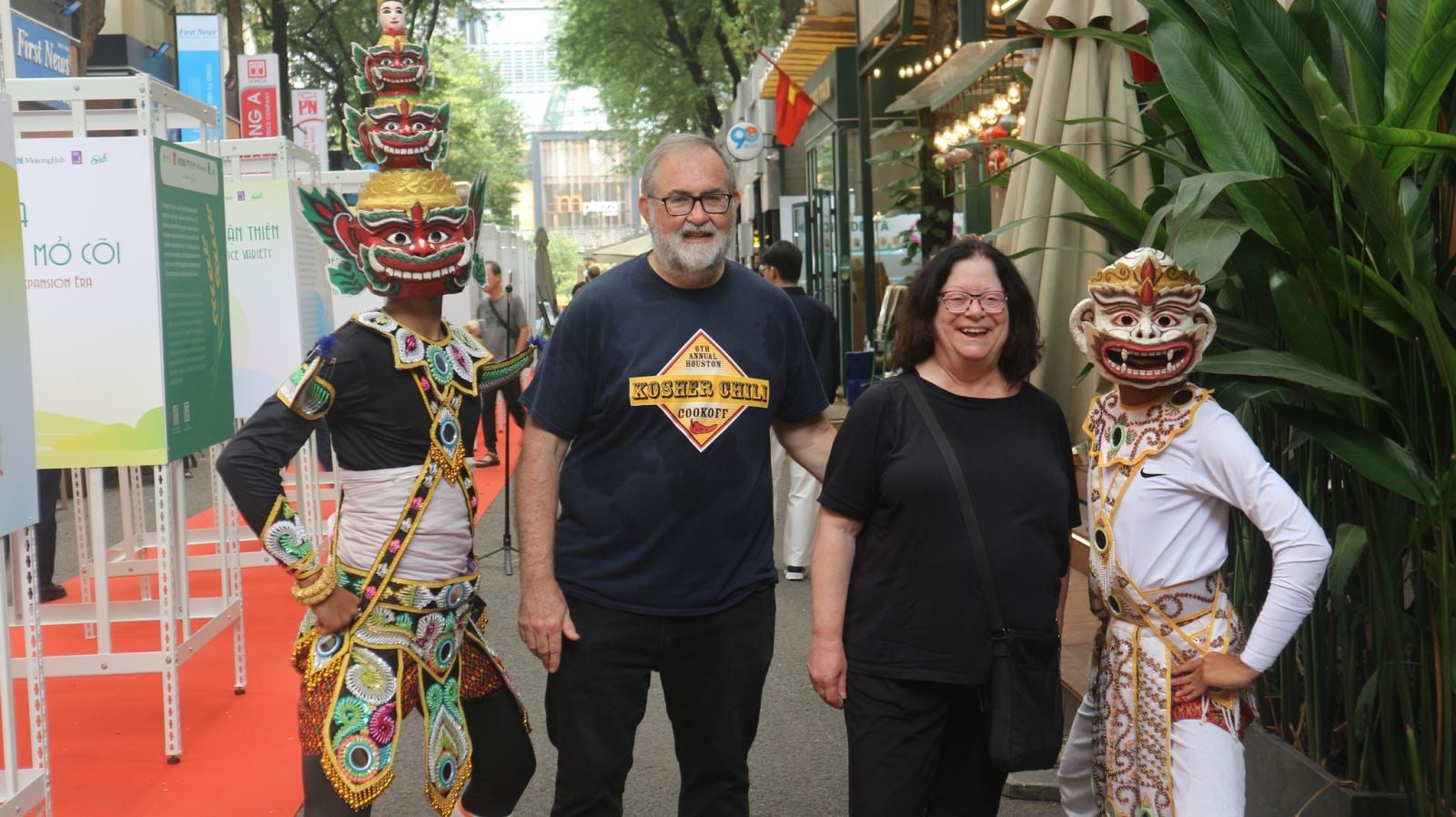
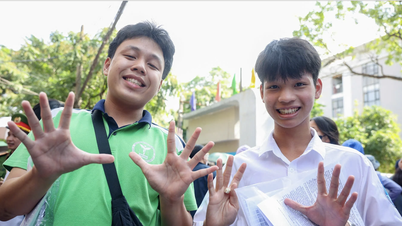
Foreign tourists enjoy learning about the land, culture, and people of Southern Vietnam.
From the perspective of industry development, Associate Professor Bui Ba Bong believes that the value chain and brand of Vietnamese rice are "keys to going further." Sharing this view, Minister of Agriculture and Rural Development Le Minh Hoan sees rice as "a cultural memory of the nation," an important element in identifying Vietnamese identity in the process of integration.
The rice-farming civilization of the Mekong Delta does not exist as a static entity. It is a socio-cultural ecosystem where indigenous knowledge, modern science, livelihoods, and community ethics constantly interact. As the environment changes, these cultural layers shift accordingly. The challenge is not to cling to the past in a purely conservative way, but to find ways to continue the core values in the new conditions.
From the Mekong River, the rice harvest, the boat-making industry, to folk literature and performances, the Southern Delta emerges as both rich in historical sediment and resilient in its adaptability. The perspectives of scientists, artisans, and administrators not only evoke memories but also point the way for the future: To preserve the unique identity of the riverine region, it is necessary to simultaneously safeguard the environment, livelihoods, and community spirit – elements that have contributed to the enduring beauty of the Southern Vietnamese rice-farming civilization.
Source: https://baoangiang.com.vn/giu-ban-sac-chau-tho-tu-dong-song-va-hat-lua-a470547.html
![[Photo] The General Secretary, President and his wife lay flowers at the Ho Chi Minh Monument in Manila.](https://vphoto.vietnam.vn/thumb/1200x675/vietnam/resource/IMAGE/2026/05/31/1780219759477_anh-man-hinh-2026-05-31-luc-16-29-07.png)








![[Video] Sunset at Lap An Lagoon – Where the sun sets over the fishing nets](https://vphoto.vietnam.vn/thumb/340x192/vietnam/resource/IMAGE/2026/05/31/1780192137701_beach-landscape-sea-water-nature-grass-745871-pxhere-com.jpeg)




















































Comment (0)