

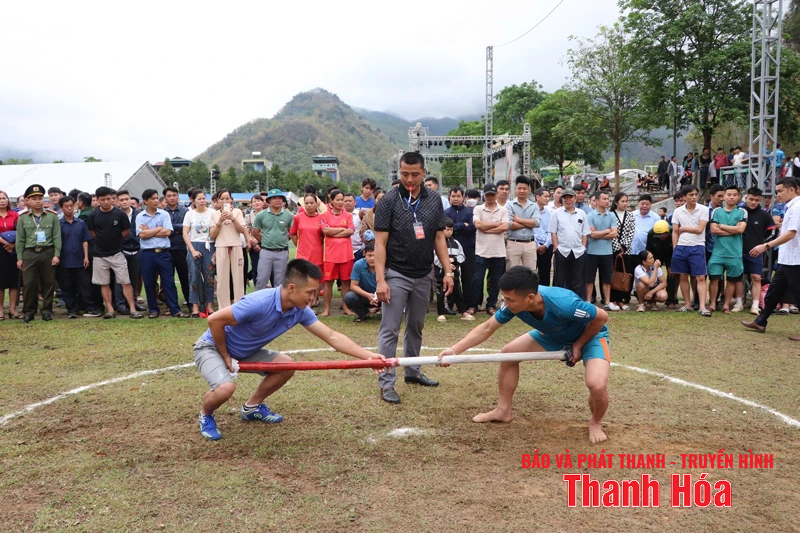
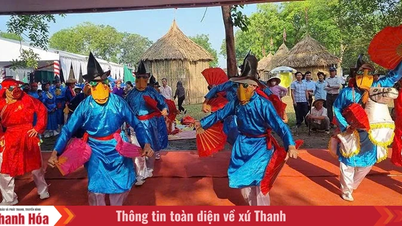
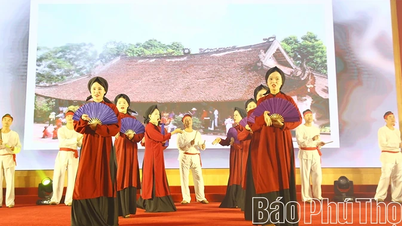
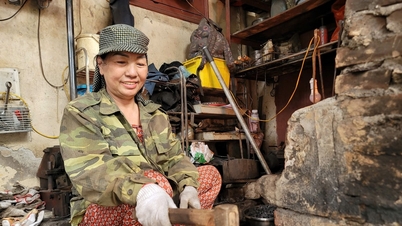
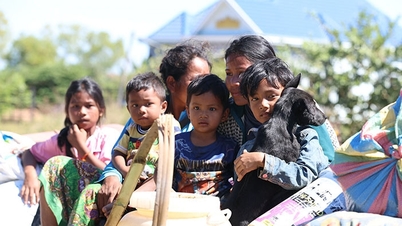
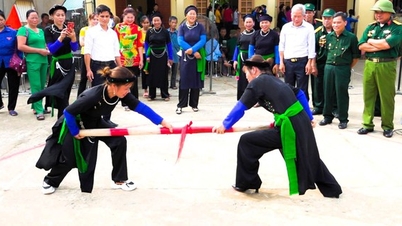
Traditional games and performances in Hoi Xuan commune are preserved and promoted thanks to support from Program 1719. Photo: Do Duc
The criteria for defining regions need to be redefined.
According to the Department of Ethnic Minorities and Religions, in the period 2021-2025, the ethnic minority and mountainous areas of Thanh Hoa province have 11 mountainous districts and 6 districts and towns with mountainous communes and villages, comprising 174 communes and towns, and 1,551 villages, hamlets, and neighborhoods. After streamlining the organizational structure, there are currently 87 communes inhabited by ethnic minorities and mountainous areas in the province. Among these, many communes classified as particularly difficult according to Decision No. 861/QD-TTg dated June 4, 2021, of the Prime Minister approving the List of communes in areas III, II, and I in ethnic minority and mountainous areas for the period 2021-2025 (referred to as Decision 861) have been merged and reorganized with communes not classified as such. This inevitable reality, coupled with the pace of socio -economic development, necessitates a redefinition of regions as a basis for implementing ethnic policies in the 2026-2030 period.
However, defining criteria for classifying ethnic minority and mountainous areas to suit the practical situation is not simple. After Decision 861, the number of communes classified as particularly difficult in the province has decreased significantly compared to the previous period, but socio-economic conditions have not improved significantly, and people's lives still face many difficulties. Meanwhile, being removed from the list of particularly difficult areas has led to a decrease in investment resources for the locality, and people no longer receive support for health insurance, along with many preferential policies for educational development and policies to attract cadres...
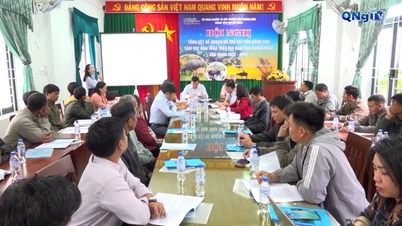
During a recent working session with the National Assembly's Ethnic Affairs Council survey team on the implementation of Program 1719 in the province, the Director of the Department of Ethnic Minorities and Religions, Vu Thi Huong, proposed and recommended that the National Assembly and central ministries and agencies address many obstacles and difficulties. Specifically, she requested that the Ministry of Ethnic Minorities and Religions research, develop, and submit to the Government a plan and criteria for defining ethnic minority and mountainous regions for the period 2026-2030, taking into account natural conditions, socio-economic factors, and poverty criteria. This would prevent situations where people in these areas face significant hardship but their localities are not recognized as disadvantaged or particularly disadvantaged regions, leading to a lack of access to various policies.
It would be very difficult to make a clear and absolute distinction based on development levels and socio-economic conditions. In reality, after the reorganization of the administrative apparatus, many communes in Zones III, II, and I have been merged into new communes. Some argue that Program 1719 for the 2026-2030 period should not focus solely on investment in particularly disadvantaged areas. Mr. Cam Ba Lam, a member of the Ethnic Affairs Committee of the Provincial People's Council and Secretary of the Party Committee of Luan Thanh Commune (formerly the Standing Deputy Secretary of the former Thuong Xuan District Party Committee), stated: Ethnic policies in the coming period should not only focus on supporting particularly disadvantaged areas but should also be expanded to other areas to promote stable and comprehensive socio-economic development in ethnic minority and mountainous regions.
Avoid spreading investment resources too thinly and dispersing them.
One of the viewpoints shared by many National Assembly deputies during recent meetings with constituents in the province is that the state's investment resources through Program 1719 for the 2021-2025 period are scattered and lack focus. In reality, many projects and sub-projects, which account for a large proportion of investment capital, are unsuitable for practical implementation and cannot be disbursed. For example, support for housing land for people, or support for short-term vocational training, are not linked to job creation; and essential infrastructure investment policies serving production and people's lives are necessary but have limited funding...
Mr. Le Hong Quang, Secretary of the Party Committee of Na Meo commune, stated: To ensure that Program 1719 plays a more significant role in the socio-economic development of ethnic minority and mountainous areas during the 2026-2030 period, the central government needs to focus investment on key areas with a ripple effect, avoiding scattered and fragmented investments. Investment should concentrate on infrastructure, supporting production development, creating jobs and livelihoods, and improving the capacity and skills of the people. Transportation and technological infrastructure should be given top priority.
Furthermore, the management and utilization of central government funds for the implementation of Program 1719 during the 2026-2030 period also needs adjustment. In the context of strong decentralization and delegation of power following the restructuring of the administrative apparatus, the central government should allocate total funds according to specific mechanisms and purposes. Provincial and commune levels should be responsible for using these funds in a way that aligns with the practical situation and leverages the potential, strengths, and unique conditions of each locality. In reality, the socio-economic conditions of ethnic minority and mountainous regions vary significantly across provinces, and even within the same locality, making it difficult to find a common model for investment and development.
Furthermore, the central government should promptly provide solutions to support social welfare policies such as health insurance and education development in communes in Zone III and Zone II, and particularly disadvantaged villages and hamlets that have recently been recognized as achieving New Rural Area standards during the 2021-2025 period. Simultaneously, criteria for identifying ethnic groups still facing significant difficulties or specific challenges during the 2026-2030 period should be issued soon to serve as a basis for localities to implement relevant policies.
It must be affirmed that Program 1719 is a humane policy, demonstrating the special concern and care of the Party and State for the lives of ethnic minority people in mountainous areas, which still face many difficulties, ensuring that no one is left behind. However, the obstacles and shortcomings in the implementation of the program in the past require policy adjustments to suit the practical situation, especially in the context of implementing a two-tiered local government model with stronger decentralization and delegation of power to the grassroots level.
Do Duc
Source: https://baothanhhoa.vn/go-bo-rao-can-khoi-thong-nguon-luc-thuc-hien-chuong-trinh-1719-bai-cuoi-can-thiet-phai-dieu-chinh-chinh-sach-256228.htm


![[Photo] Two flights successfully landed and took off at Long Thanh Airport.](/_next/image?url=https%3A%2F%2Fvphoto.vietnam.vn%2Fthumb%2F1200x675%2Fvietnam%2Fresource%2FIMAGE%2F2025%2F12%2F15%2F1765808718882_ndo_br_img-8897-resize-5807-jpg.webp&w=3840&q=75)










































































Comment (0)