

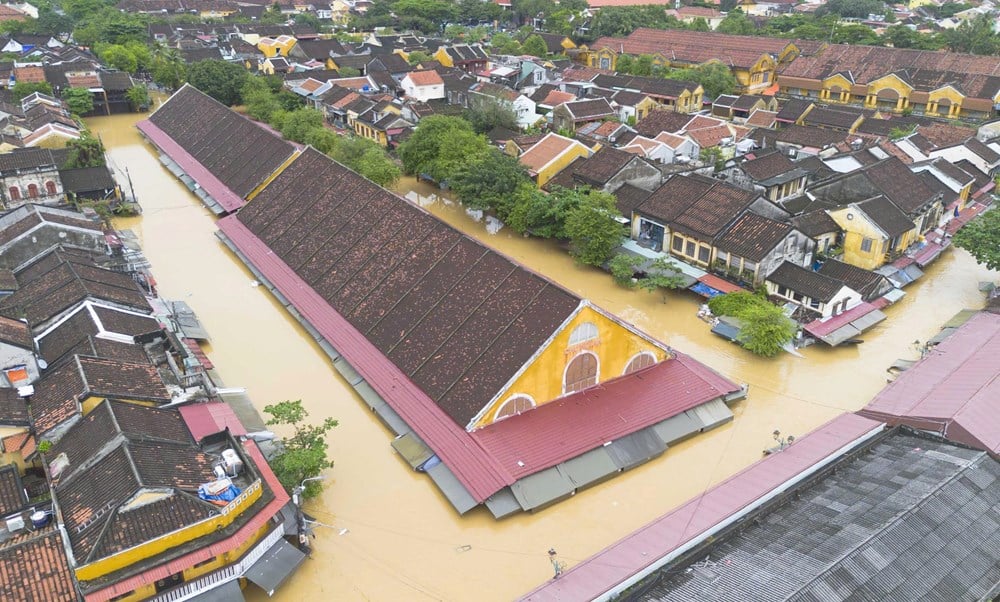
During the meeting, the Hoi An World Cultural Heritage Conservation Center (Hoi An Center) requested the Da Nang Department of Culture, Sports and Tourism to propose to the City People's Committee to consider the policy of investing in the urgent restoration of relics and houses at risk of collapse within the Hoi An Ancient Town World Cultural Heritage site. The proposed mechanism is to provide 100% funding for the restoration of relics of exceptional value.
Many historical sites are in serious disrepair .
According to a report from the Hoi An Center, immediately after the recent historic floods on November 5th, the unit, in coordination with the Hoi An Ward People's Committee and relevant agencies, conducted inspections, reviews, and assessments of the condition of historical sites in the ancient town and surrounding areas. Currently, within Zone I of the Hoi An Ancient Town World Heritage Site, there are more than 1,155 historical sites and houses, of which over 83% are private residences. Surveys indicate that most of these sites remain safe. However, 30 sites are in a state of deterioration, including 9 severely degraded, 14 heavily degraded, and 7 slightly degraded.
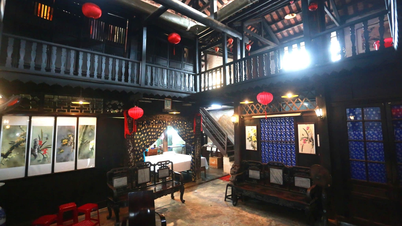
The most severely degraded historical sites are located along Tran Phu Street (11 sites) and Nguyen Thai Hoc Street (4 sites). In addition, they are scattered along streets such as Bach Dang, Phan Chau Trinh, Nguyen Hue, Tieu La, Le Loi, Phan Boi Chau, etc. The sites are in serious disrepair, with the following conditions: The entire north-facing house: The 22 -tile roof system is severely degraded, and the wooden frame and rafters are infested with termites, posing a risk of collapse. The site is unusable for living or daily activities; the interior wooden structures are damaged, and one roof truss has fallen, posing a risk of collapse; the yin-yang roof system is degraded, the wooden frame and rafters are damaged in several places, the wooden frame is infested with termites, the wooden structure is damaged, and the yin-yang tile roof is leaking…
In response to this situation, the Hoi An Center provided emergency support to one historical site (house number 23, Tieu La Street), and also encouraged 19 site owners to reinforce and support their structures themselves. For 10 sites that were severely dilapidated, the Center recommended urgent restoration or temporary dismantling due to the inability to ensure safety. They also requested that the site owners proactively take measures to temporarily reinforce damaged areas.
However, to mitigate the risk of collapse to the historical sites and ensure the safety of those living within them, the relevant authorities have agreed to draw up a commitment agreement with the homeowners and representatives of the historical sites at risk of collapse in the Old Quarter. Accordingly, the owners of the historical sites commit to not living or storing property in dilapidated buildings at risk of collapse, and will proactively relocate their property and people to safe locations before a storm occurs.
For relics located outside the heritage area, the unit coordinates with the People's Committees of Hoi An Dong and Hoi An Tay wards and Tan Hiep commune to issue written requests to relic management teams, owners or representatives of relic owners to proactively reinforce and protect artifacts and assets, and trim trees at the relics, etc., when storms and floods occur.
According to Mr. Pham Phu Ngoc, Deputy Director of the Hoi An Center, proactively preparing and protecting historical sites during storms and floods aims to minimize damage caused by natural disasters, ensuring the safety of the sites as well as the people and property within them. A list of degraded historical sites in the Hoi An Ancient Town World Cultural Heritage Area requiring reinforcement and additional support is compiled annually by the center before the rainy season to proactively develop plans for reinforcement, protection, and minimizing damage to the sites, ensuring the safety of the people.
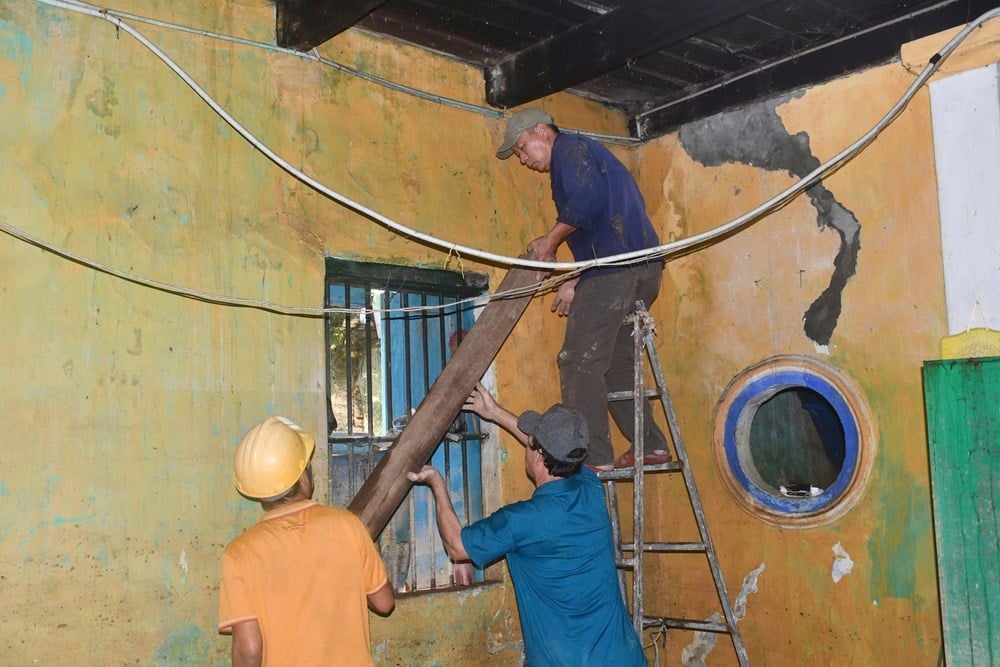
Propose conservation and restoration options.
Surveys reveal that the majority of severely dilapidated historical sites still lack clear legal documentation regarding ownership and usage rights. Restoration costs are substantial, and many owners of these sites in narrow alleys lack the resources for business ventures, making investment and restoration using personal funds difficult, or even impossible.
To preserve the original character of the relics, maintain the integrity of the heritage site, and ensure the safety of residents and tourists in the ancient town, the Hoi An Center proposes that the Da Nang Department of Culture, Sports and Tourism recommend to the City People's Committee to consider a policy of urgently investing in the restoration of relics and houses at risk of collapse within the Hoi An Ancient Town World Cultural Heritage Site. The proposed mechanism is to provide 100% funding for the restoration of relics of exceptional value.
In addition, it is proposed that the People's Committee of Hoi An city issue a mechanism to support funding for the restoration and preservation of relics within and outside the ancient town of Hoi An; and establish a Fund for the Preservation of the World Cultural Heritage of Hoi An Ancient Town to promptly rescue and provide emergency support to relics at risk.
The proposal requests the People's Committee of Hoi An City to approve the Hoi An Center's plan to develop an emergency restoration project for relics at risk of collapse within the heritage site; and to contract with consulting firms and research institutes to conduct a comprehensive assessment of the impacts of climate change, especially the recent severe flooding, in order to develop solutions for prevention, response, and sustainable conservation of the heritage site. The early implementation of these measures is necessary to protect the integrity of Hoi An's heritage from the increasingly evident impacts of extreme weather and climate change.
Following a site visit to inspect the current state of historical relics in Hoi An Old Town, Mr. Pham Duc An, Chairman of the Da Nang City People's Committee, affirmed the importance of these relics in the cultural and spiritual life of the people, especially their role in tourism development.
The Chairman of the Da Nang City People's Committee requested the Da Nang Department of Culture, Sports and Tourism to take the lead and coordinate with relevant departments, agencies, and localities to continue reviewing, compiling, and specifically assessing the current status and function of each historical site. Based on this, they should propose feasible conservation and restoration plans that are appropriate to the actual conditions. The goal is to preserve and promote the cultural and historical value of the sites, while effectively exploiting their tourism potential and contributing to the socio-economic development of the city.
Source: https://baovanhoa.vn/van-hoa/kien-nghi-ho-tro-100-kinh-phi-tu-bo-180821.html
![[Photo] National Assembly Chairman Tran Thanh Man attends the policy seminar to promote Vietnam-Türkiye cooperation.](https://vphoto.vietnam.vn/thumb/1200x675/vietnam/resource/IMAGE/2026/04/16/1776351415367_vna-potal-chu-tich-quoc-hoi-tran-thanh-man-du-toa-dam-chinh-sach-thuc-day-hop-tac-viet-nam-tho-nhi-ky-8705791-jpg.webp)






















































































Comment (0)