

Changing the work mindset of civil servants
According to the draft decree, KPI results will serve as a basis for ranking civil servants at the end of the year, and will also be used as a basis for evaluating Party members, serving personnel work such as placement, rotation, appointment, commendation, or dismissal.

According to Mr. Nguyen Nhat Khanh, M.Sc., from the University of Economics and Law, Vietnam National University Ho Chi Minh City: The application of KPIs in the public sector is a significant new development, reflecting a shift in the thinking behind civil servant management. Job positions play a crucial role in civil servant management, serving as the basis for determining recruitment needs, assigning personnel based on competence, establishing job title standards, and implementing training, planning, and compensation. Managing by job position allows for more accurate evaluation of civil servants, thereby improving the quality of administration. In particular, applying KPIs to performance evaluation will create a major shift in the mindset of civil servants, putting pressure on them to constantly strive to meet job requirements.
According to Master's degree holder Nguyen Tuan Anh, a public administration expert, applying KPIs to the public sector is essential. He explained that the entire country is currently undergoing administrative reform, requiring a streamlined apparatus, improved efficiency and effectiveness, and the development of a service-oriented government. The two-tiered local government model demands clear responsibilities, clear authority, and clear results. KPIs become a tool to quantify the work efficiency of each civil servant and each agency. In other words, KPIs are a step forward in bringing civil servant management closer to modern governance practices. This contributes to changing the administrative mindset of civil servants from management to service, encouraging them to proactively improve their personal work management skills, master digital skills, and apply technology.
Openness and transparency in evaluation and ranking.
According to Master's degree holder Nguyen Tuan Anh, applying KPIs forces civil servants to shift from simply "getting the job done" to "working with quality and measurable results," creating motivation to improve professionalism and reduce complacency or half-hearted work. KPIs also encourage healthy competition and promote a culture of accountability within the public service. Specifically, those who perform well, demonstrate initiative, and achieve clear results will be recognized. Conversely, those who are sluggish or evade responsibility will be more clearly exposed.
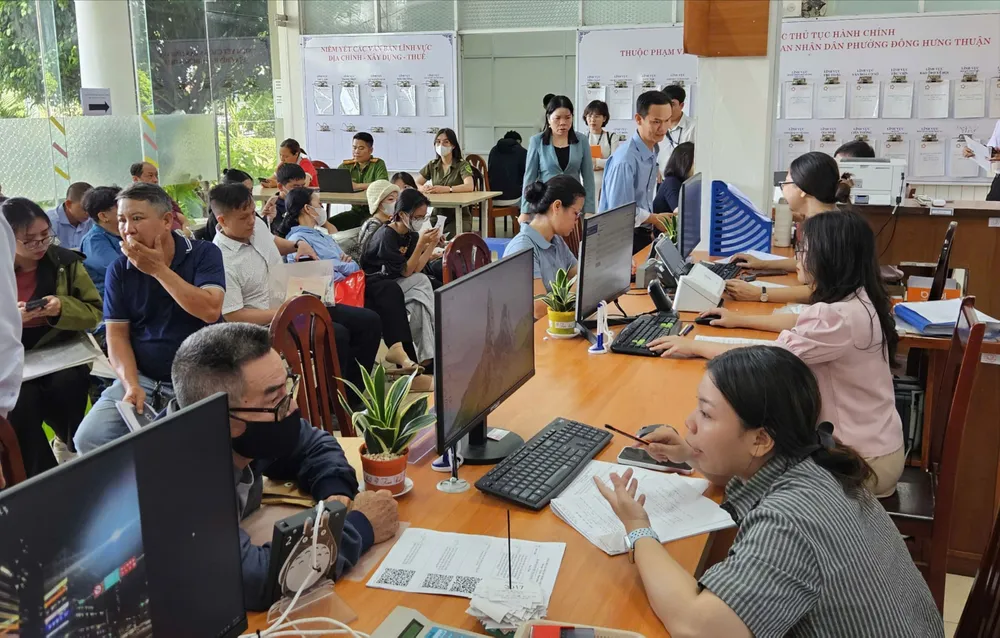
Experts also suggested that instead of applying a rigid framework to all, criteria should be based on the specific functions and tasks of each job position. These criteria should strike a balance between quantitative (number of files, progress, on-time completion rate) and qualitative (level of citizen satisfaction, spirit of coordination and collaboration). The KPI system must be flexible and adaptable to the context, avoiding mechanical measurement that stifles creativity. Along with this, there should be a transparent monitoring and verification mechanism for KPI performance, including the participation of third parties – such as citizens or independent agencies – to prevent "number manipulation" or inflated performance reports.
Analyzing some of the difficulties, Master's student Nguyen Nhat Khanh assessed that scoring KPIs for job positions that do not produce specific products or have clear quantifiable results is a major challenge, but entirely achievable if the right method is applied. Instead of measuring output, these positions should be evaluated based on the work process, the quality of task performance, and the level of contribution to the overall efficiency of the unit. Specifically, indicators such as the rate of on-time completion of work, accuracy in advice, level of process compliance, or level of customer satisfaction can be used.
Experts believe that successful implementation of KPIs requires thorough preparation in terms of institutions, human resources, databases, and information technology. This necessitates that civil service management agencies design detailed and appropriate job descriptions. Simultaneously, these descriptions must fully detail the requirements for each position, including professional qualifications, skills, ethical qualities, and practical abilities that the civil servant need to possess. This requires coordination among the Ministry of Interior , other ministries, sectors, and localities to create a basis for widespread and scientific application. The more specific the job description, the more detailed and effective the application of KPIs will be.
According to the draft decree submitted by the Ministry of Interior to the Government , general criteria regarding character, attitude, discipline, and public service culture account for 30% of the total score, while performance results through KPIs account for 70%. Civil servants are classified based on monthly and quarterly monitoring and evaluation results according to four levels: below 50 points, 50-70 points, 70-90 points, and above 90 points.
Civil servants with performance evaluations below 50 points, or those who have violated discipline or exhibited moral degradation, will be classified as "not completing their duties" and may be transferred or dismissed. The Ministry of Interior explains that this mechanism aims to create a transparent and objective evaluation tool, filtering out those who do not meet requirements, while encouraging civil servants to work productively, creatively, and efficiently.
Source: https://www.sggp.org.vn/kpi-don-bay-thuc-day-can-bo-doi-moi-sang-tao-post812668.html

![[Live] 2025 Community Action Awards Gala](/_next/image?url=https%3A%2F%2Fvphoto.vietnam.vn%2Fthumb%2F1200x675%2Fvietnam%2Fresource%2FIMAGE%2F2025%2F12%2F16%2F1765899631650_ndo_tr_z7334013144784-9f9fe10a6d63584c85aff40f2957c250-jpg.webp&w=3840&q=75)
![[Photo] Prime Minister Pham Minh Chinh receives Lao Minister of Education and Sports Thongsalith Mangnormek](/_next/image?url=https%3A%2F%2Fvphoto.vietnam.vn%2Fthumb%2F1200x675%2Fvietnam%2Fresource%2FIMAGE%2F2025%2F12%2F16%2F1765876834721_dsc-7519-jpg.webp&w=3840&q=75)
![[Photo] Prime Minister Pham Minh Chinh receives the Governor of Tochigi Province (Japan)](/_next/image?url=https%3A%2F%2Fvphoto.vietnam.vn%2Fthumb%2F1200x675%2Fvietnam%2Fresource%2FIMAGE%2F2025%2F12%2F16%2F1765892133176_dsc-8082-6425-jpg.webp&w=3840&q=75)

![[Image] Leaked images ahead of the 2025 Community Action Awards gala.](/_next/image?url=https%3A%2F%2Fvphoto.vietnam.vn%2Fthumb%2F1200x675%2Fvietnam%2Fresource%2FIMAGE%2F2025%2F12%2F16%2F1765882828720_ndo_br_thiet-ke-chua-co-ten-45-png.webp&w=3840&q=75)


















































































Comment (0)