

Among the top 20 global companies offering digital content protection solutions (DRM), alongside big names like IBM, Google, Apple, and Adobe, there's also a Vietnamese brand: Thu Do Multimedia.
Mastering technology in the media field, this Vietnamese company also provides security solutions with flexible protection capabilities, meeting international standards.
But is it easy to achieve such remarkable results?
"Pioneering" new lands
In 2008, after completing his studies in South Korea, Nguyen Ngoc Han decided to return to Vietnam to start his career.
With her in-depth knowledge of engineering and telecommunications, Han joined a company that provided messaging services, but soon after decided to create her own "platform" to proactively pursue new ideas in her own way.
Thu Do Multimedia Joint Stock Company (referred to as Thu Do) was officially established in 2010, when its CEO, Nguyen Ngoc Han, was in his thirties.
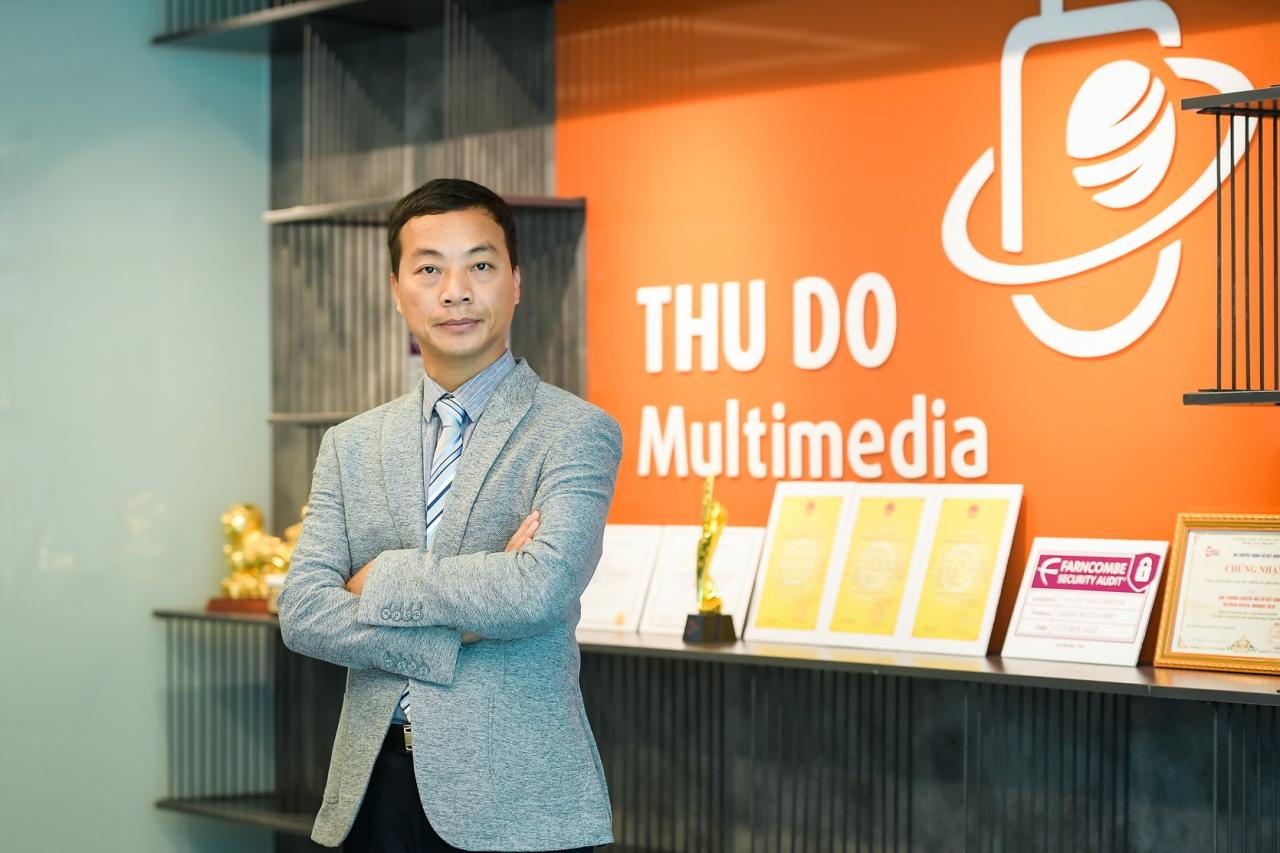
Mr. Nguyen Ngoc Han, General Director of Thu Do Multimedia Company.
With the mindset of "pioneering" the online environment, the "CEO" of the Capital and his associates decided to use a team of Vietnamese people to independently research and develop online applications and games for mobile phones.
Back then, in Vietnam, not many businesses developed their own games like Thu Do; most chose to import games from abroad for business.
Choosing its own path, Capital City places great emphasis on security because it recognizes that if security is not mastered in online product development, all efforts could be wasted. Game hacking is quite common with computer games, and even easier to do on mobile devices. Each player's turn is scored; if these scores are tampered with, the system will malfunction, affecting all game parameters.
Another advantage of Thu Do is its ability to protect and recover data in case of internet connection loss while playing online games. Thu Do's products help users avoid frustration when they win but don't get their achievement points counted just because of a "network outage".
“In the years 2010-2012, the market was quite easy, so Thu Do had sales right away. After developing the game, we just needed to upload it to wap sites and many people loved downloading it. Some of the biggest successes at that time were Chess Master and Billiard Online – which had up to 40 million downloads globally,” Mr. Han happily recalled the early, relatively smooth period of his business.
However, since 2013, when smartphones became popular, domestic game publishers, including Thu Do, have lost their domestic market advantage because global publishers can promote their products directly to users worldwide .
Having recognized the instability in the future of smartphone service provision if they followed the old approach, the leaders of Hanoi sought a new direction, prioritizing the preservation of the company's unique Vietnamese identity, its strengths in content and data protection, and its team of Vietnamese engineers capable of producing products that meet global standards and selling to the global market.
Amidst the chaotic mix of opportunities and storms threatening to sweep away fledgling businesses in the marketplace, Thu Do decided to venture into research and solution provision for the media sector. Recognizing that media is a global trend with a vast market and diverse customer base, and that protecting and managing digital content copyright is a crucial "anchor" for survival, Thu Do believes that protecting and managing digital content copyright is essential.
Recalling the difficulties of pioneering this field, Mr. Han shared: "There were many challenges. First, there were no 'allies.' Even back in the 2010s, I had to put in a lot of effort to persuade network operators to grant us phone numbers so users could top up their accounts to read news or play games. Then, we had to create our own dedicated top-up gateway, like the 9029 number, to address issues related to revenue collection and the proportional distribution of revenue based on the value of the content provided to customers. Perhaps, at that time, Thu Do was the first company to propose this new method to network operators."
Another major challenge, according to Mr. Han, was human resources. In the sectors that the capital city was "pioneering," in the beginning, almost no one in the country could concretely envision what needed to be done, so there was no readily available workforce to meet the job requirements. The capital's leaders had to approach specialized technology training schools such as Hanoi University of Science and Technology and the Posts and Telecommunications Institute of Technology, requesting that third-year students intern at these companies with a salary higher than the scholarship amount.
“Back then, we paid each intern 2-3 million VND per month. Some had difficult circumstances, and that amount was not only enough to pay rent but also to support their younger sibling in their first year of university. The interns were trained by engineers at Thu Do in thinking skills and programming methods that were up-to-date globally. Many students later became full-time employees of the company, ready to meet new job requirements in the context of the rapidly developing information technology industry, where much practical knowledge was never mentioned in textbooks. A very unique aspect of Thu Do's culture is that most of our 'pillars' were once interns, always ready to 'steer the ship' with the company through setbacks and challenges, rising to become a leading enterprise,” Mr. Han recalled.
Proud to be a Vietnamese business
Thu Do is the first company in Southeast Asia to have its digital content copyright protection solution (trade name Sigma DRM) successfully tested, placing Vietnam on the list of 20 countries with DRM solutions globally.
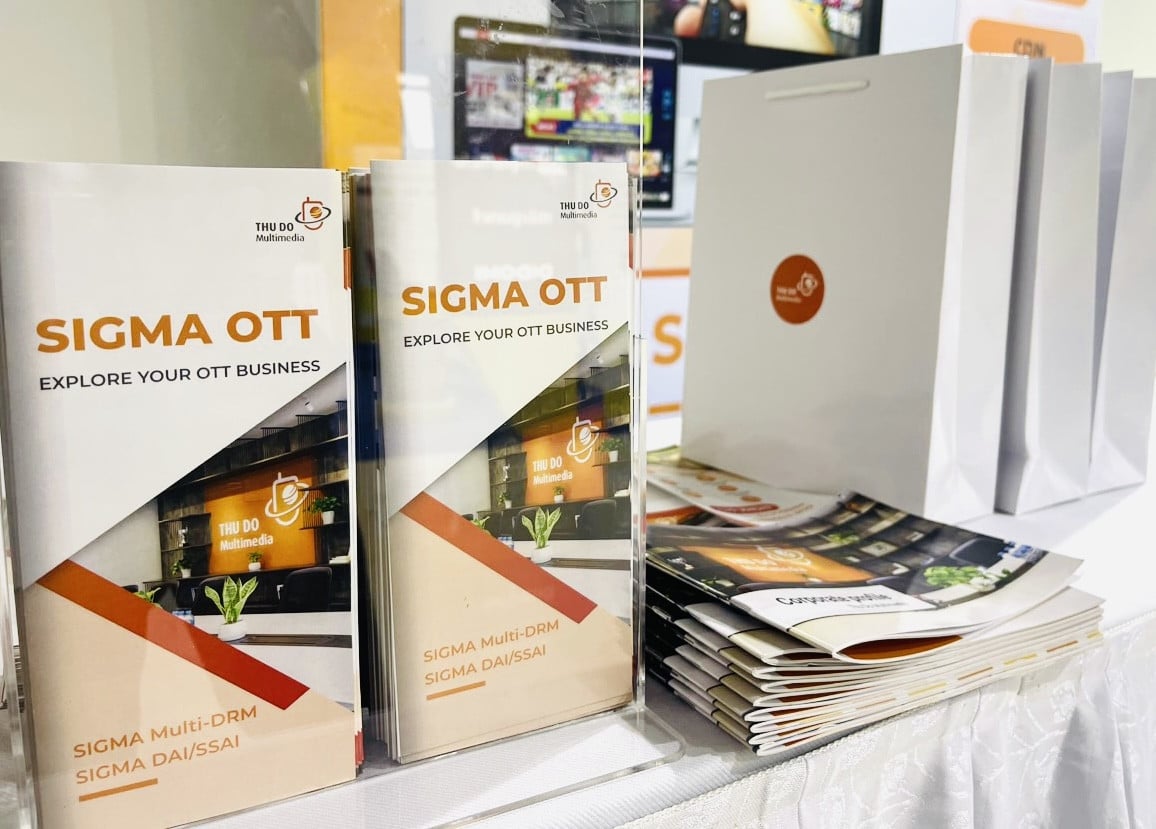
Thu Do Multimedia is one of only 12 companies worldwide that invented DRM in the media field.
“Globally, only 12 companies have invented copyright solutions in the media field, including big names like IBM, Adobe, Apple, Google, Microsoft… We are very proud that Thu Do Multimedia is on the same list as such giants,” said CEO Nguyen Ngoc Han.
However, the journey to achieve that proud accomplishment was also fraught with difficulties.
“Once the solution was finalized, the next step was to get it verified and recognized by a reputable international organization. We emailed a prestigious international accreditation organization, but even after dozens of emails, they didn't reply. We called them, inviting them over, even offering to cover all the required expenses, but they still refused because they didn't believe that Vietnamese businesses could handle this field. Luckily, fate intervened. We found a well-known and reputable Vietnamese person in the global television and media industry. Thanks to this reputable individual's recommendation, the international accreditation organization finally agreed to come to Vietnam to work.”
The next challenge was the extremely rigorous testing process. The immutable principle in security testing is: If the working environment, personnel, and machinery are not secure, it is difficult to produce a sufficiently secure product. Therefore, they not only tested the software but also required all facilities and procedures for people entering and exiting the capital to comply with ISO27000. The capital received a "new wave" in terms of security in production. Finally, Sigma DRM was successfully tested and announced to meet global security standards. "Hopefully, this will be a case study for international organizations to change their thinking and perspective on Vietnamese businesses," Mr. Han recounted his experience.
“If we're talking about businesses providing comprehensive OTT media solutions that include DRM, then currently Thu Do is the only company in the world market. Because, as we know, only 20 companies globally have invented DRM, and those ‘big players’ only specialize in a specific business area. In Thu Do Multimedia's comprehensive solution, some software may not be outstanding, but it's sufficient to meet basic needs. We've prepared a menu for a buffet, allowing customers to choose all or some dishes according to their preferences, saving them the trouble of selecting and combining solutions from multiple providers,” the CEO of Thu Do confidently asserted.
Recently, an incident involving Google's Widevine DRM protection solution resulted in hackers releasing the entire source code online, rendering copyright protection ineffective on over 4 billion Android devices and approximately 2.6 billion Chrome browser devices using Widevine. Thu Do Multimedia once again demonstrated its capabilities to major partners in Vietnam, proving that only Sigma DRM could withstand the attack due to its superior security features compared to foreign DRM providers, having built a third layer of protection while other companies only implemented two layers of protection for their DRM solutions.
According to Cartesian's assessment, Capital's Sigma Active Observer-SAO proactive security layer is the first DRM solution to have such a third layer.
Mastering technology creates a competitive advantage over foreign products.
From its inception, the Capital City leadership determined that the company must master technology and operate according to international standards in both products and personnel.
In 2016, Thu Do (the capital city) partnered with VTVCab to launch an OTT television platform called VTVcab ON, the first platform entirely researched and developed by Vietnamese people. It not only pioneered 4K broadcasting over the internet but is also the only system to date where all content channels, from free to paid, are protected by DRM. By managing content effectively, broadcasters can flexibly grant permission for free viewing times and charge fees for certain hours, avoiding bandwidth costs for content stolen by malicious actors.

"Boss" Nguyen Ngoc Han is very proud of the engineering team at Thu Do Multimedia.
Proud of his team of truly intelligent and skillful engineers, Mr. Han boasted that Sigma's solutions from Hanoi are even more superior to "foreign" products. As proof, Sigma Transcoders process data 2.5 seconds faster than the transcoders of leading global competitors, whereas in television broadcasting, even a moment's delay can be a major problem.
Specifically, according to Mr. Han, any server that comes into the hands of Thu Do engineers, when equipped with Sigma software, becomes an ESG (sustainable growth) device because it is processed in micro-services. For example, with Sigma Transcoder, a typical server from a foreign supplier only allows processing 8 input channels, while Thu Do can handle about 3 times that number because it processes HD streams on the GPU, while lower-level streams use the CPU.
“The equipment we purchased is about 30% cheaper than that from foreign suppliers, yet performance can still increase by 60%. The issue isn't simply about price reduction; the main point is that we have control over the equipment, optimizing its strengths to solve problems, and achieving measurable results. Foreign partners who approached Thu Do Multimedia with our offerings were very satisfied with this because it gives them a basis to move towards ESG – a global trend that is gaining attention,” Mr. Han further explained.
Commenting on the digital content copyright protection solution developed by Hanoi at a recent seminar, Mr. Pham Anh Tuan, representative ofFPT Play, stated: “This is a new and outstanding technology that can be specifically applied to Vietnam as well as other countries in the region. The application of this technology is somewhat different from what others have already done.”
Having been involved in copyright and security for many years, the "captain" of Capital City still harbors many concerns about the current state of the country: "The deeper we integrate into the technology sector, the more important data security must be. In our opinion, the next phase of digital transformation is media transformation across all sectors, from healthcare to education… All data from these sectors needs to be protected according to international standards. However, security camera data in homes, businesses, and public places in Vietnam is currently stored without security measures, leading to numerous data leaks. I am very worried and truly want to send a warning and call for the attention of ministries and agencies on this issue. With our capacity to master international standard technologies, Capital City is ready to work together to minimize security risks."
Starting to expand into the global market.
"We have always believed that Vietnamese people are capable of creating products and software that are in no way inferior to those from around the world. We are confident that Vietnamese people can do it. The reality has proven this over the past years," CEO Nguyen Ngoc Han emphasized.
To date, Thu Do's DRM solution has won over the majority of television companies and businesses in Vietnam. Many large companies, after using Thu Do's solution, have said goodbye to solutions from foreign partners.
Moreover, the client list of Vietnamese businesses is gradually expanding to include many reputable international brands, such as one of the largest television networks in Southeast Asia.
Since the beginning of 2023, the Capital City has started implementing concrete steps to expand into the international market.
According to the plan, Vietnamese businesses will first establish a presence in the US market, followed by Southeast Asia.
“The US is a demanding market, but it's currently the largest in the world. If we can meet the needs of American businesses in the media sector, we can expand globally. Recently, we became a member of an alliance with an American company. Through this, accessing the US market will be easier. It's very possible that we will be the first Vietnamese company to provide media solutions to American customers. Our expectation is that by 2024, we will have global businesses overseas using Thu Do Multimedia's solutions, and after that, we will have more large clients in many other countries,” Mr. Han projected.
Understanding that the journey to the global market will present many challenges, especially the fierce competition from foreign competitors with strong technological capabilities, skills, and business experience, the Capital City is exploring various ways to enhance its capacity.
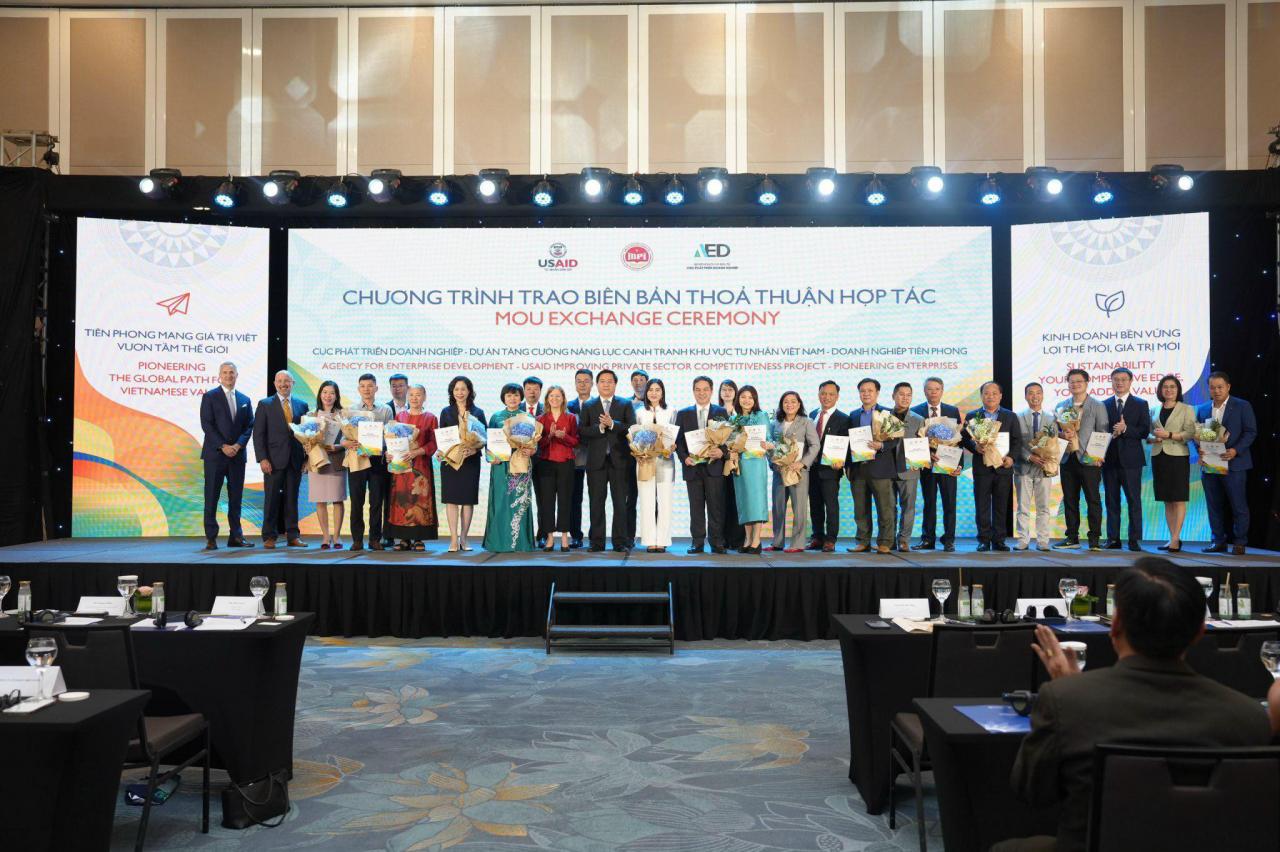
The General Director of Thu Do Multimedia recently participated in the signing ceremony of a cooperation agreement with the IPSC Project in early October 2023 in Hanoi.
In early October 2023, Thu Do was one of the first six businesses to receive a high-level support package from the Vietnam Private Sector Competitiveness Enhancement Project (IPSC), implemented by the Ministry of Planning and Investment with support from the United States Agency for International Development (USAID). This project aims to select pioneering businesses with innovative and competitive Vietnamese products to bring to the international market. This support package will provide further impetus for Vietnamese businesses on their journey to expand internationally.
Appreciating the role of state management agencies in accompanying businesses to reach global markets, CEO Nguyen Ngoc Han proposed that the Ministry of Information and Communications consider establishing a department to periodically evaluate "Make in Vietnam" products and solutions that have been recognized and accepted by the international market, in order to provide guidance and support for businesses to accelerate better in the future.
Vietnamnet.vn
source![[Image] Leaked images ahead of the 2025 Community Action Awards gala.](/_next/image?url=https%3A%2F%2Fvphoto.vietnam.vn%2Fthumb%2F1200x675%2Fvietnam%2Fresource%2FIMAGE%2F2025%2F12%2F16%2F1765882828720_ndo_br_thiet-ke-chua-co-ten-45-png.webp&w=3840&q=75)
![[Photo] Prime Minister Pham Minh Chinh receives Lao Minister of Education and Sports Thongsalith Mangnormek](/_next/image?url=https%3A%2F%2Fvphoto.vietnam.vn%2Fthumb%2F1200x675%2Fvietnam%2Fresource%2FIMAGE%2F2025%2F12%2F16%2F1765876834721_dsc-7519-jpg.webp&w=3840&q=75)
![[Photo] Prime Minister Pham Minh Chinh receives the Governor of Tochigi Province (Japan)](/_next/image?url=https%3A%2F%2Fvphoto.vietnam.vn%2Fthumb%2F1200x675%2Fvietnam%2Fresource%2FIMAGE%2F2025%2F12%2F16%2F1765892133176_dsc-8082-6425-jpg.webp&w=3840&q=75)

![[Live] 2025 Community Action Awards Gala](/_next/image?url=https%3A%2F%2Fvphoto.vietnam.vn%2Fthumb%2F1200x675%2Fvietnam%2Fresource%2FIMAGE%2F2025%2F12%2F16%2F1765899631650_ndo_tr_z7334013144784-9f9fe10a6d63584c85aff40f2957c250-jpg.webp&w=3840&q=75)























































![[Photo] Prime Minister Pham Minh Chinh attends the Vietnam Economic Forum 2025](https://vphoto.vietnam.vn/thumb/402x226/vietnam/resource/IMAGE/2025/12/16/1765893035503_ndo_br_dsc-8043-jpg.webp)





























Comment (0)