

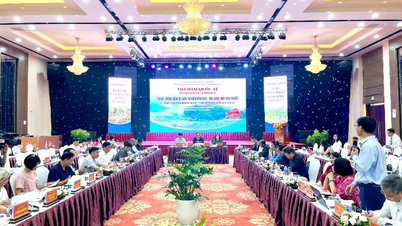
On October 4th in Quang Ninh, the Vietnam Society of Interventional Gastrointestinal Endoscopy held its first national scientific conference with the theme "Elevating Endoscopy Practice: Global Insights for Local Impact".
According to statistics, Vietnam currently has approximately 8,000-10,000 gastroenterologists, of which about 5,000 are gastroenterologists specializing in endoscopic procedures.
Diagnostic endoscopy is becoming increasingly common, especially at the provincial level, but many units still use outdated systems to reduce costs. The integration and development of advanced techniques in gastrointestinal endoscopy are expected to create a breakthrough, raising the standards of diagnosis and treatment, thereby improving the quality of healthcare for the people.
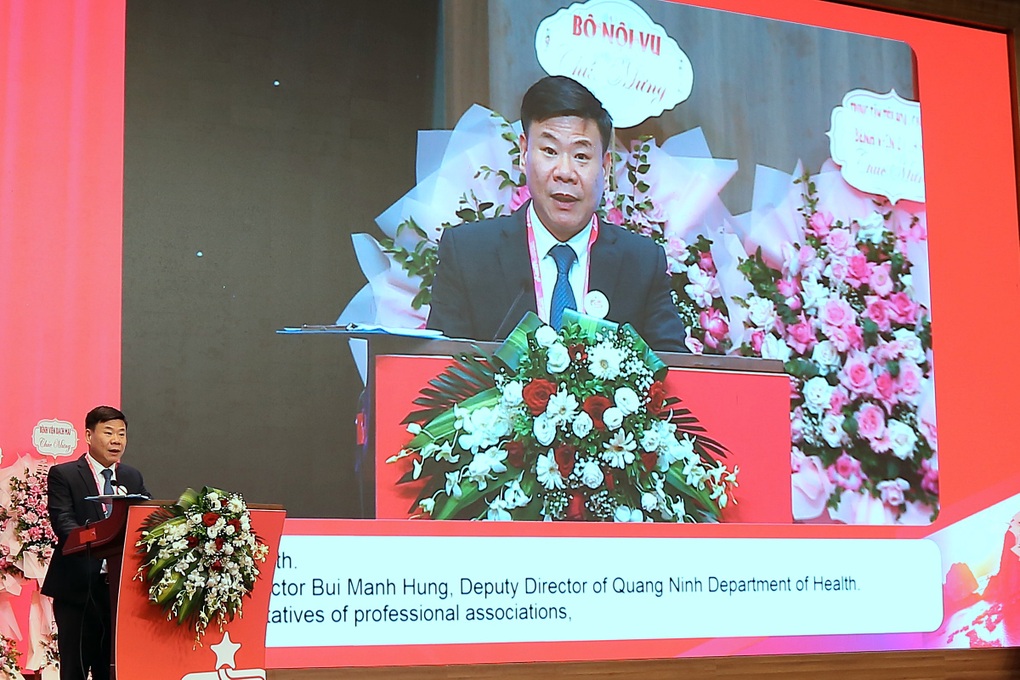
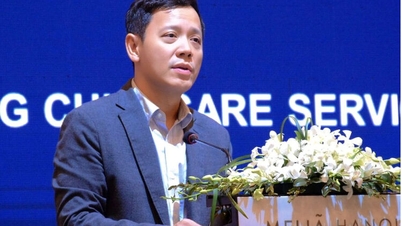
Assoc. Prof. Dr. Nguyen Cong Long, President of the Vietnam Society of Interventional Gastrointestinal Endoscopy (Photo: BA).
Associate Professor Dr. Nguyen Cong Long, President of the Vietnam Society of Interventional Gastrointestinal Endoscopy, stated that the first conference was a significant milestone, marking the maturity of the interventional gastrointestinal endoscopy specialty in Vietnam.
"We are integrating global knowledge, but the goal is to transform it into practical skills at the local level, in order to improve the quality of healthcare for the people," Associate Professor Long emphasized.

According to him, Vietnam is facing four major challenges: disparities in equipment and anesthesia/resuscitation resources between different levels of healthcare; epidemiological differences and operational procedures compared to international research; gaps in training standards, supervision, and external quality control; and the need to improve the legal framework and payment system for new techniques.
Today, interventional endoscopic techniques are revolutionizing the treatment of digestive diseases. From being solely for diagnosis, endoscopy has now developed into a powerful, minimally invasive treatment tool.
Previously, patients with conditions such as colon polyps, esophageal strictures, gastrointestinal bleeding, and gallstones had to undergo open surgery with many risks and a long recovery time. Now, interventional endoscopy techniques allow for early diagnosis, minimally invasive and safe treatment, reduced costs, and shorter hospital stays.
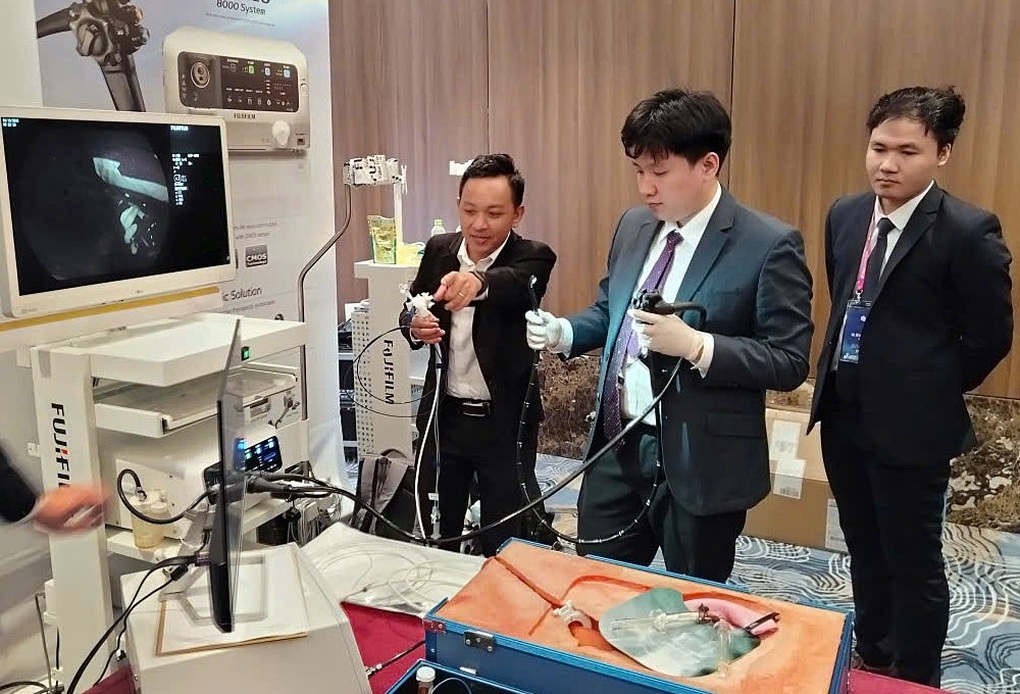
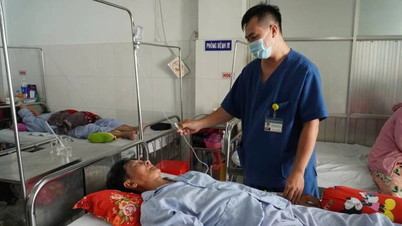
From being solely a diagnostic tool, endoscopy has now developed significantly into an effective treatment tool (Illustrative image: BA).
According to statistics, gastrointestinal cancers account for more than 30% of all cancer cases. Cancers related to the digestive tract include stomach, esophageal, liver, gallbladder, pancreatic, and colorectal cancers.
Endoscopy is the only way to detect gastrointestinal cancer early. Currently, there are many modern machines capable of magnification and color correction to easily identify lesions.
Therefore, improving the capacity for interventional endoscopy means enhancing the ability to detect and treat diseases early and promptly, reducing the burden of disease, lowering healthcare costs, and increasing the chances of survival for millions of patients. If screening endoscopy is widely implemented, especially at the provincial and grassroots levels, the burden of disease and healthcare costs will be significantly reduced.

The conference brought together over 1,500 delegates, 100 domestic speakers, and many leading experts from France, India, Japan, South Korea, China, and other countries.
The scientific sessions focused on updating international standards and discussing advanced techniques such as endoscopic submucosal dissection (ESD), peroral myotomy (POEM), endoscopic ultrasound (EUS), endoscopic biliary-pancreatic intervention (ERCP), as well as solutions for treating early-onset neoplasms using radiofrequency and microwave therapy.
Source: https://dantri.com.vn/suc-khoe/lam-the-nao-de-phat-hien-som-ung-thu-duong-tieu-hoa-20251004164749798.htm









![[ONGOING] Workshop 'Application of Advanced Techniques in Gastrointestinal Endoscopy'](https://vphoto.vietnam.vn/thumb/402x226/vietnam/resource/IMAGE/2026/03/22/1774186073482_anh-man-hinh-2026-03-22-luc-201613-1774185586848244030838-142-247-1600-2580-crop-17741856170671175033239.png)




































![[Video] Sunset at Lap An Lagoon – Where the sun sets over the fishing nets](https://vphoto.vietnam.vn/thumb/1200x675/vietnam/resource/IMAGE/2026/05/31/1780192137701_beach-landscape-sea-water-nature-grass-745871-pxhere-com.jpeg)
































Comment (0)