

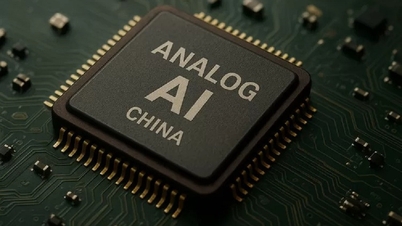
The Shenzhen-based company launched its first-generation Powerstar P3-01105 CPU early last month. Chairman Li Ruijie stated that the chip is primarily designed for commercial desktop computers, based on Intel's x86 architecture in collaboration with a US company.
However, the product marketing materials published by Powerleader did not mention any agreement with Intel. Following the launch event, some experts and tech enthusiasts immediately noticed similarities between this CPU and Intel's product. They said that the new Powerleader CPU was an improved version of an older Intel processor.
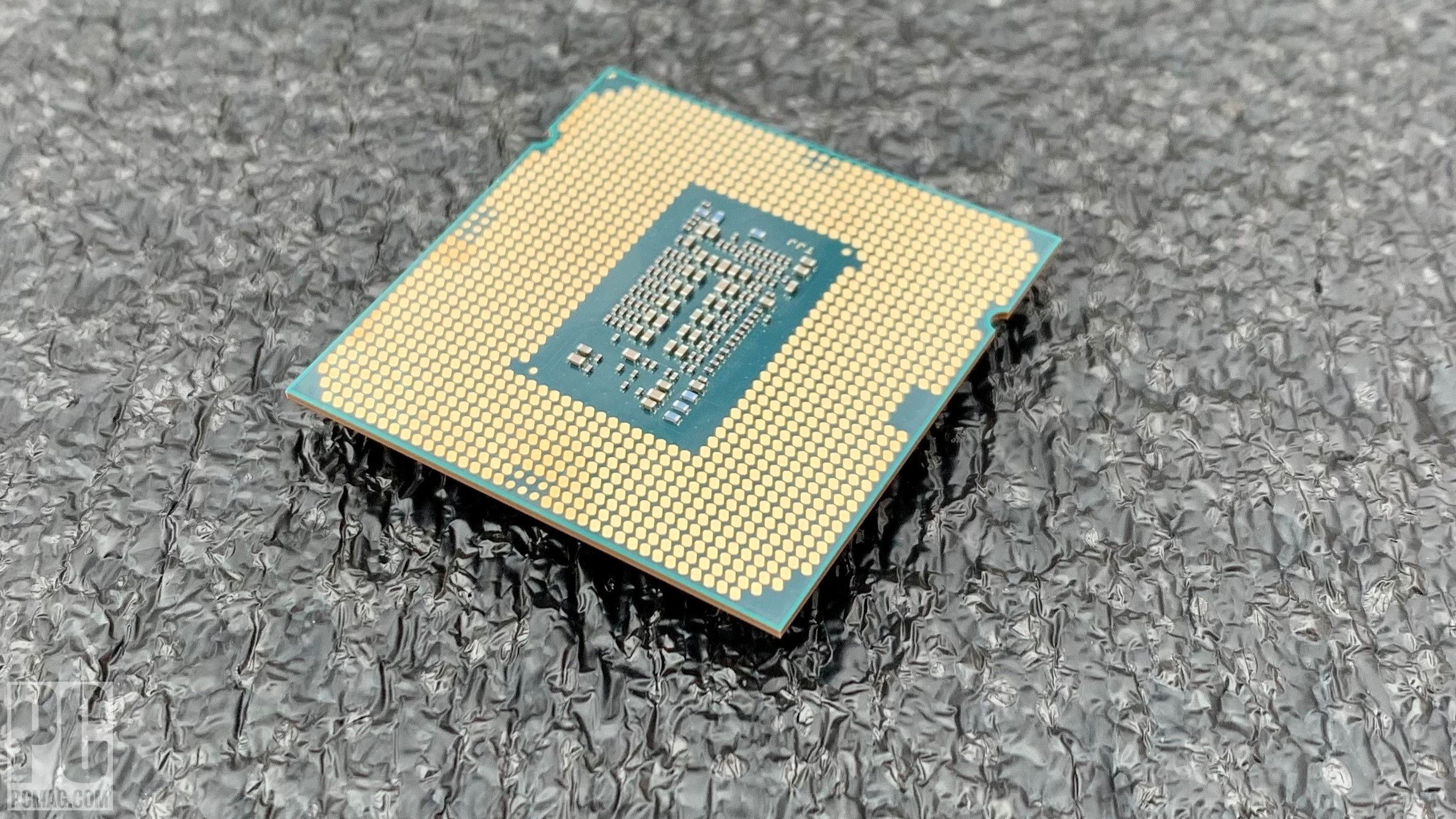
Specifications and performance data for the Powerstar chip, released by Geekbench (Canada) in late May, show that the processor is identical to Intel's Core i3-10105 Comet Lake CPU. Meanwhile, Tom's Hardware, a well-known technology review and news website, also pointed out several identical design elements and physical properties between the two chips.
This has led to accusations that the Chinese company exaggerated its product as an effort to achieve domestic technological self-reliance, in order to receive government subsidies. Beijing has been increasing its support for semiconductor research and development through subsidies and grants amid an ongoing technology war with Washington.
In a statement posted by Li on Weibo, Powerleader reiterated that the Powerstar chip is a "custom product developed with the support of Intel." Besides removing online marketing content about the new processor, the company stated that it did not seek any government subsidies during the development of this processor.
However, Powerleader did not clarify or provide any details about how they customized it with the Intel processor.
Exaggerating domestic technological self-reliance capabilities.
On May 6th, the Chinese company further stated that the newly launched product marks "an important step on the journey to achieving independence and control over the domestic x86 chip architecture." Powerleader plans to build nine manufacturing facilities across the mainland and aims for sales of 1.5 million units per year.

However, according to Caixin, semiconductor experts have expressed doubts about whether Powerleader has the capacity to manufacture its own chips, as the company has not invested heavily in production lines and lacks the expertise to fully understand the technology behind Intel's CPUs.
Powerleader, founded in 2003, primarily manufactures servers and personal computers. According to a report published by market research firm IDC, the company held less than 5% of the server market share in China in 2022.
Some observers have compared the incident to the 2006 scandal when Chen Jin, the president and renowned professor of Shanghai Jiao Tong University, defrauded the government of funding by falsifying research on the Hanxin digital signal processor, which was later exposed as a Motorola chip variant.
Experts say that Powerleader's case differs from the Hanxin chip scandal in that the company previously had a business agreement with Intel. Therefore, they may have exaggerated their technological autonomy in product marketing, blurring the lines between self-developed chips and custom chips.
(According to Nikkei Asia)
Source
![[Photo] The Prime Ministers of Vietnam and Russia witness the signing ceremony on cooperation in building a nuclear power plant.](https://vphoto.vietnam.vn/thumb/1200x675/vietnam/resource/IMAGE/2026/03/23/1774278492322_vna-potal-hai-thu-tuong-viet-nam-va-nga-chung-kien-le-ky-ket-hiep-dinh-ve-hop-tac-xay-dung-nha-may-dien-hat-nhan-8658380-jpg.webp)
![[Photo] Young people of the Dong Thap Border Guard actively participate in "March Border Month" activities.](https://vphoto.vietnam.vn/thumb/1200x675/vietnam/resource/IMAGE/2026/03/23/1774248483508_ndo_tl_dt3-jpg.webp)














































































Comment (0)