

The initiation ceremony of the Bà Ni sect (also known as the Kareh ceremony for girls and the Katat ceremony for boys) among the Cham people of the Bà Ni lineage is considered one of the most important rituals, leaving the deepest impression on the children's lives. This is because it marks a transitional period into adulthood, preparing them for marriage. They are recognized by the village community and religious community as adults, acknowledged as knowledgeable and preserving the customs and traditions of their village and lineage. After this ceremony, the children are free to fall in love and choose their life partners. 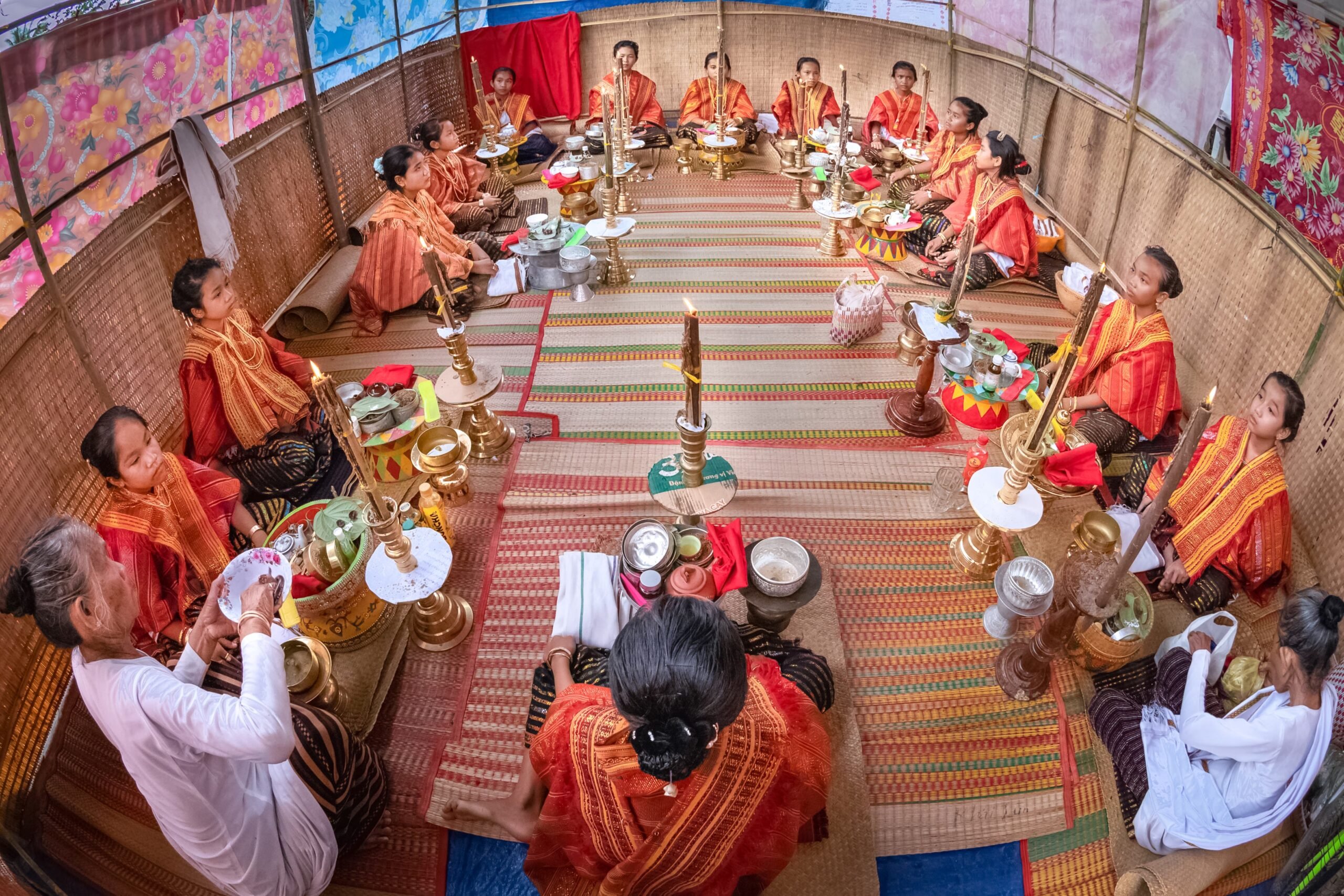
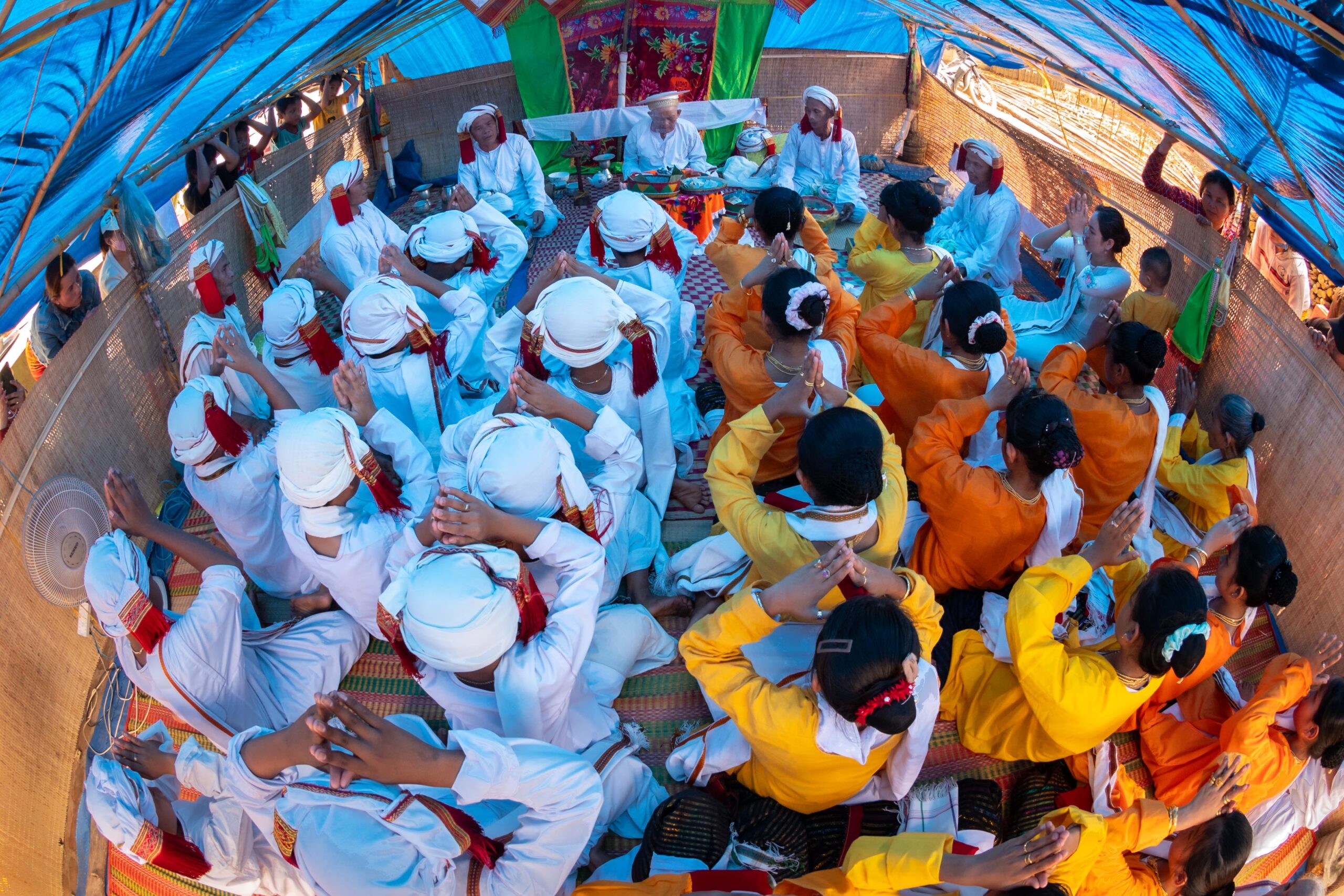 In the life cycle of the Cham Bani people in Ninh Thuan , many rituals are held, such as: the Ceremony for the Blooming of Flowers, the Full Moon Ceremony, the First Birthday Ceremony, the Coming-of-Age Ceremony for Young Women, the Wedding Ceremony, the Ceremony for Peace and Prosperity, the Thanksgiving Ceremony, the Ceremony for the Elderly… Among these, the Coming-of-Age Ceremony for young men and the Coming-of-Age Ceremony for young women are among the most important rituals, because at these times they are recognized as adults by the entire village community and their religion.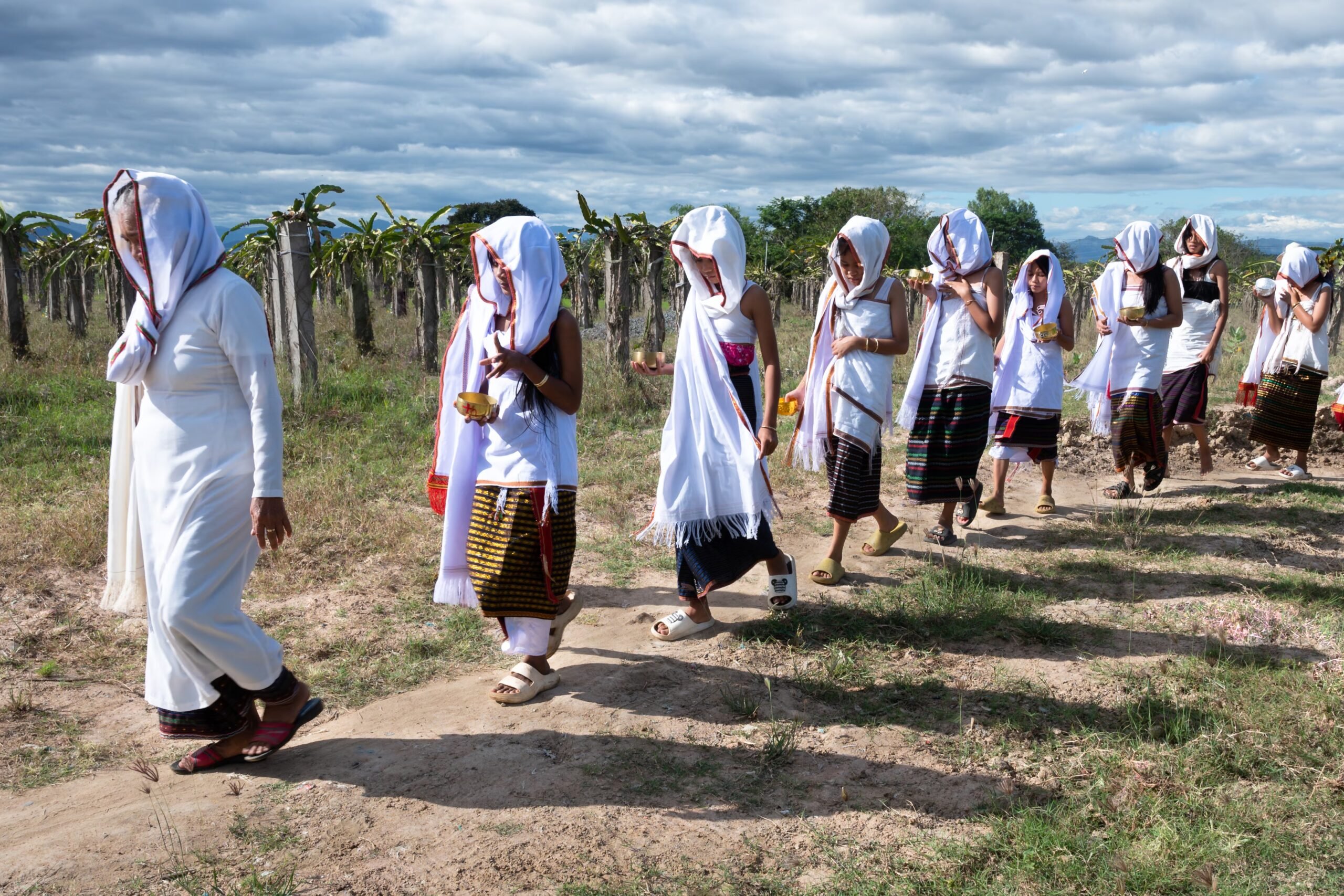
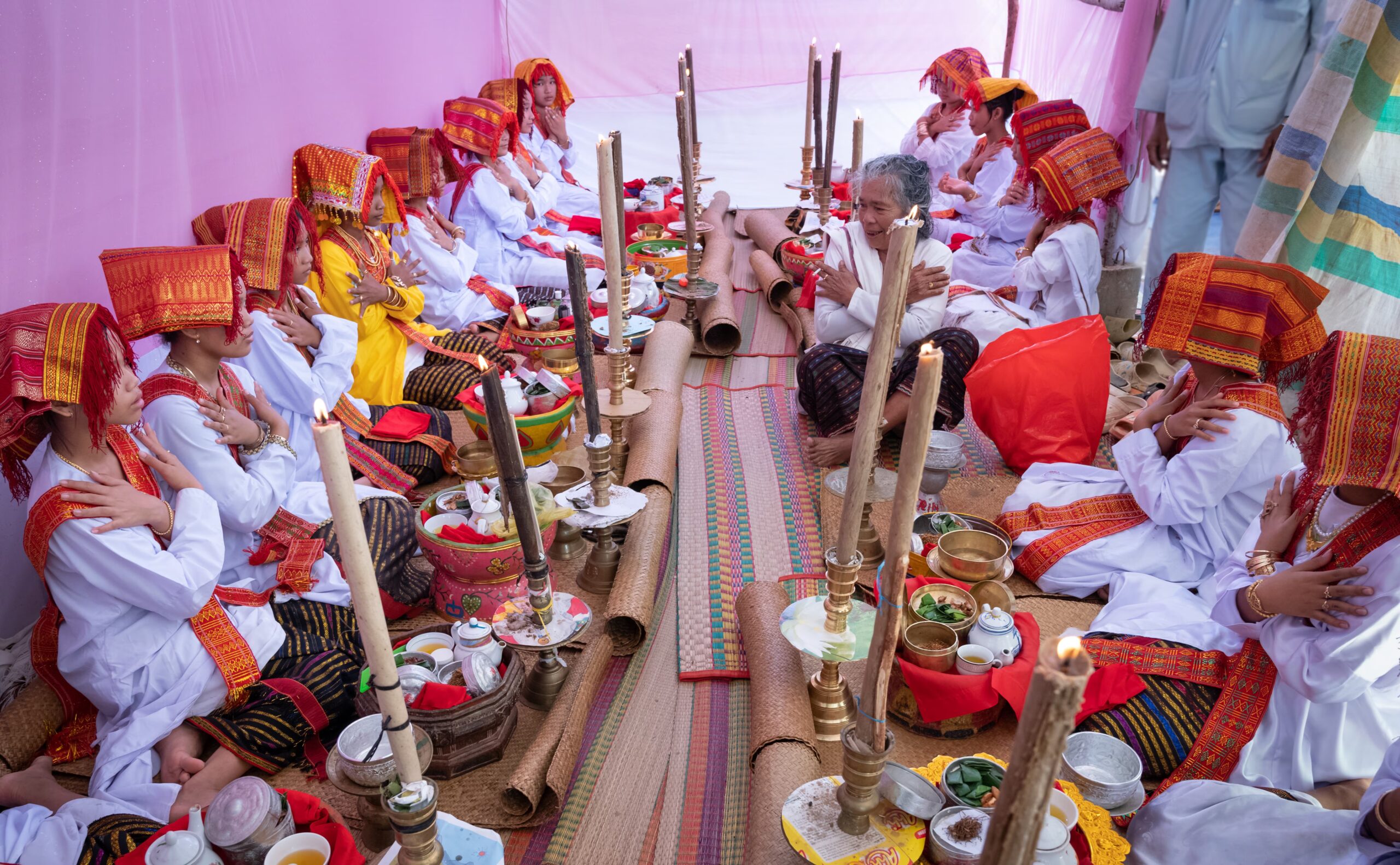
 After bathing, the young women are brought inside the house to be dressed in traditional attire, adorned with jewelry, and have their hair styled in a high bun on top of their heads, preparing for the Coming-of-Age Ceremony. At this time, family members have prepared all the necessary offerings and decorated the ceremonial house. Once the young women are fully dressed and ready for the ceremony, the three religious leaders in the main ceremonial house take their positions to prepare for the rituals. The head priest presiding over the ceremony assigns tasks to the religious leaders. At this time, the shaman is also present in the main ceremonial house to participate in the ceremony.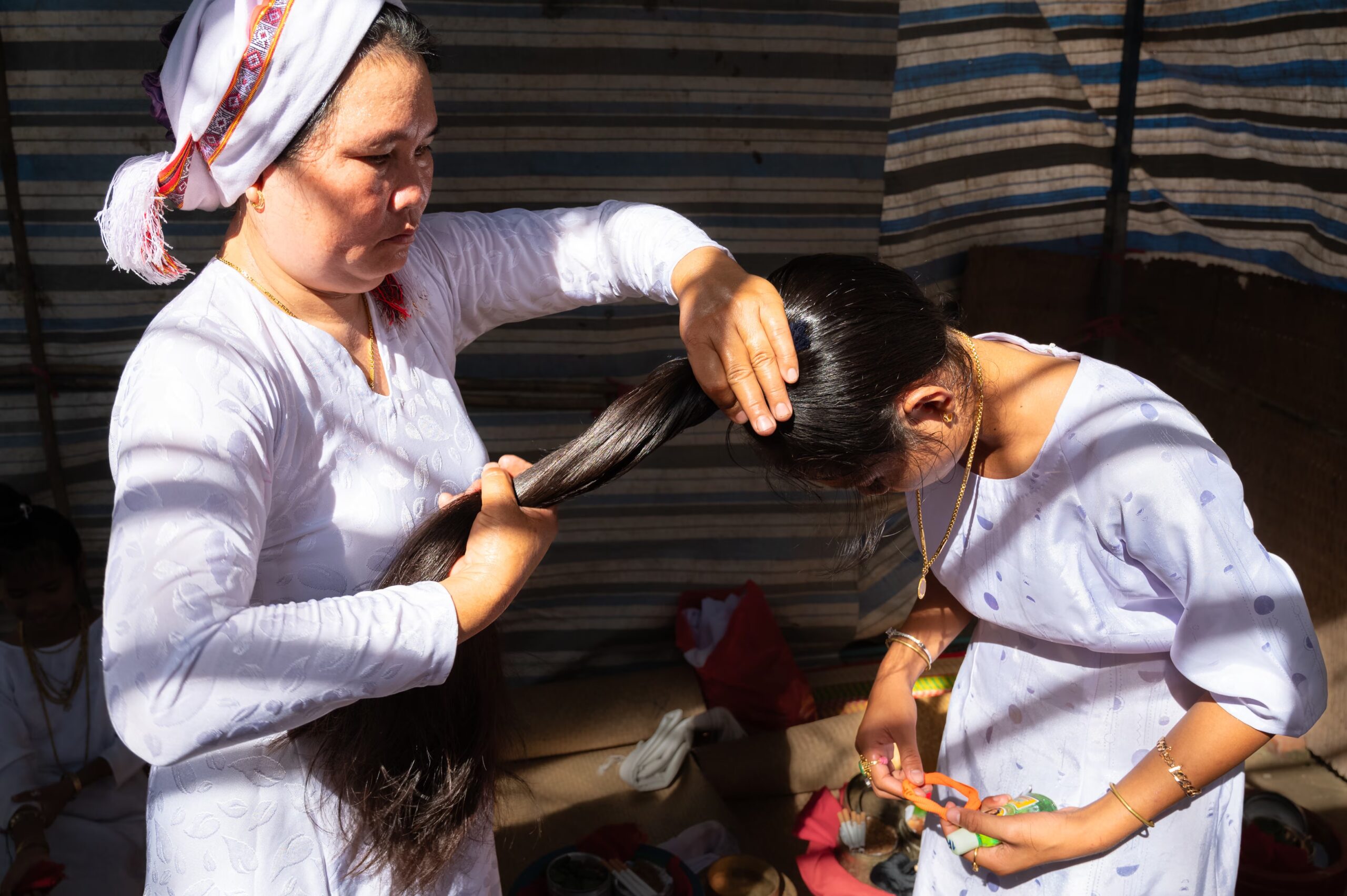
 The young women sit in the main ceremonial hall and are blessed by religious leaders who recite prayers to invite Allah to witness their presence. After the blessing, the young women take turns bowing to the religious leaders, their parents, ancestors, and relatives to acknowledge that from this moment on, they are adults, meaning they are recognized as adults by the religion.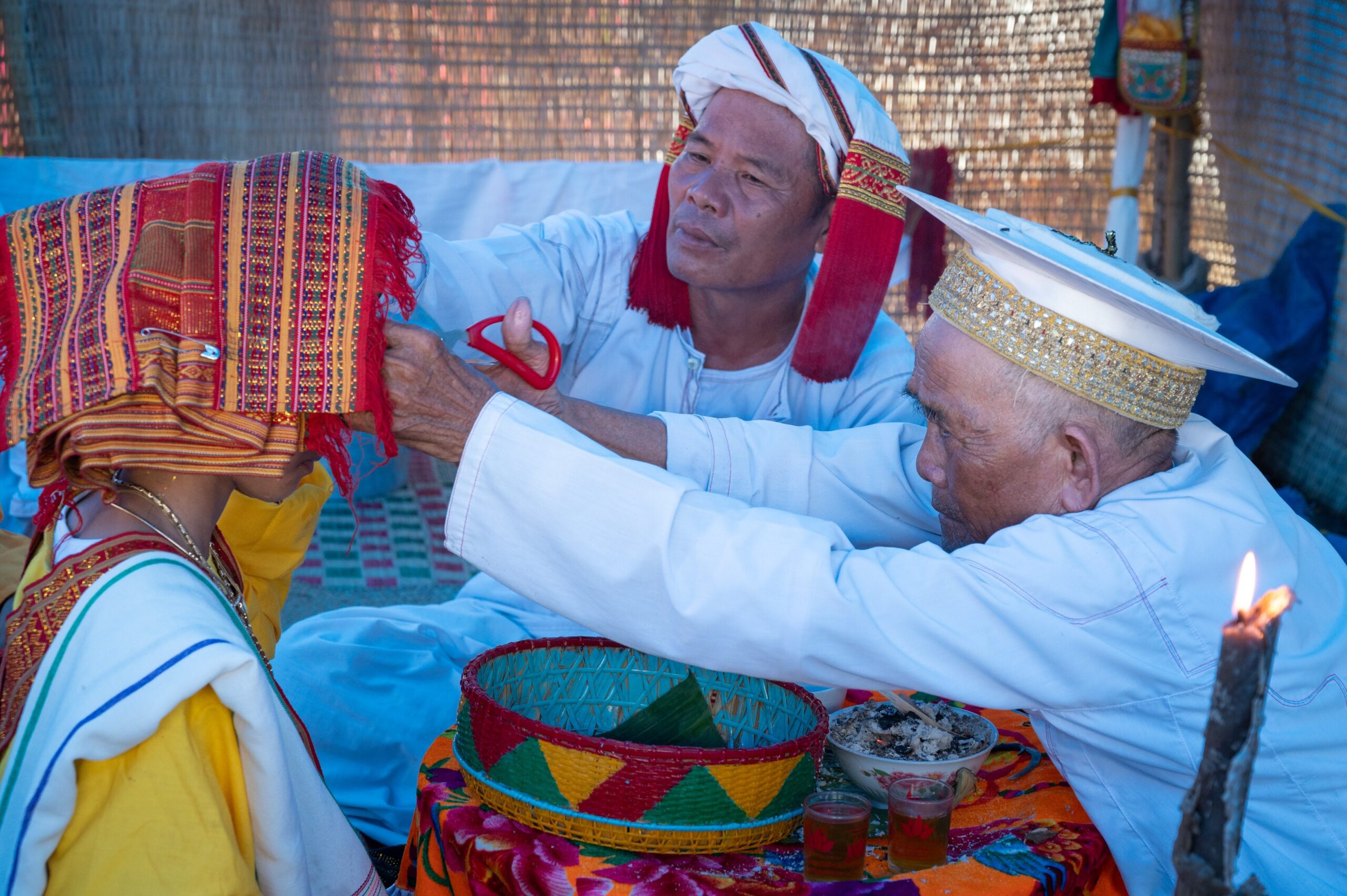
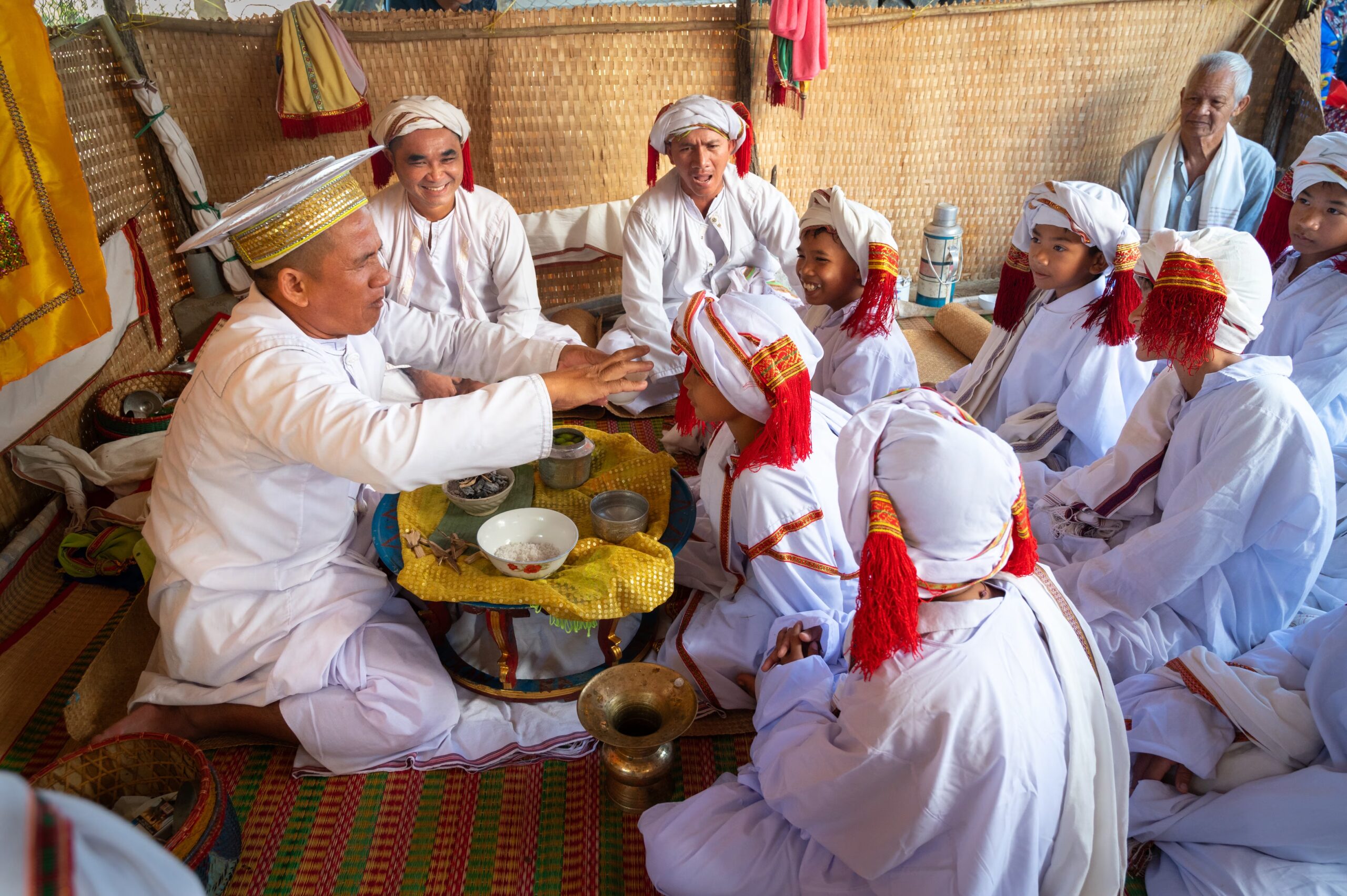 The head priest called each young woman into the main ceremonial hall in order to perform the ritual of having their hair cut. The young women's hair was cut twice, once in the middle of their forehead and once on each side. The first haircut was to show gratitude to their parents, and the second to show reverence to Allah.
  During this ritual, a newborn baby boy (called nuk po thih) is present as a witness, because the Cham people believe that this newborn baby is the most sacred witness to Allah, to see that these young women have had their hair cut and have been initiated into the Brahman religion.
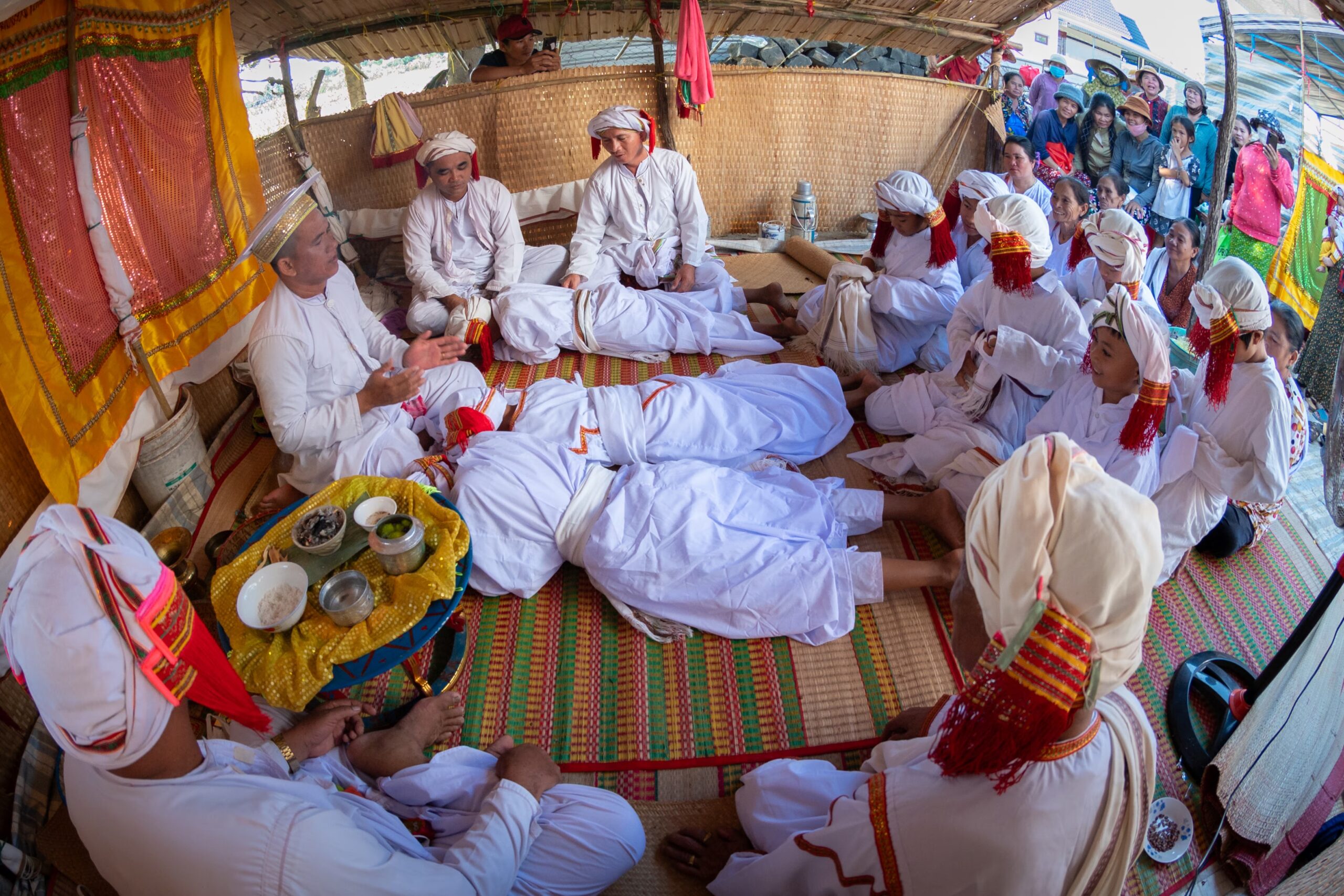

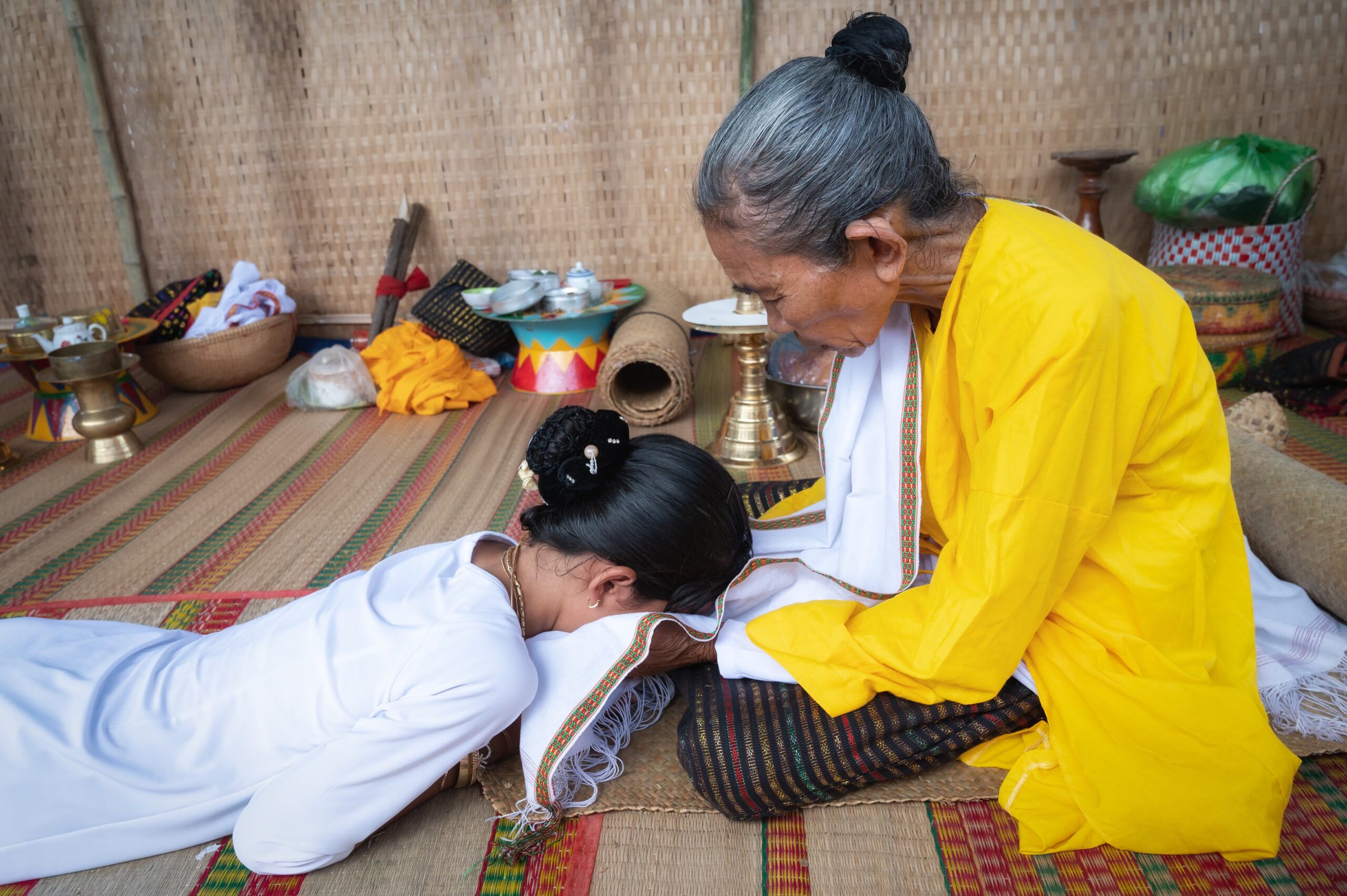 At this time, young women will receive gifts from relatives in the form of money, gold, buffaloes, cows, goats, sheep, etc., or good wishes. These gifts are placed in a basin, blessed by a priest, and then given to the young women to keep. These are considered initial assets, like the dowry of the young women, which parents or relatives are not allowed to use, but are intended as assets for their children later when they reach marriageable age. After the ceremony, the family invites relatives and friends to celebrate the coming of age of their children.
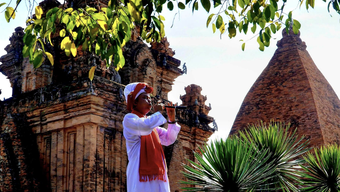
Please learn about this ceremony through the photo series "The Bà Ni Initiation Ceremony" by author Nguyen Van Anh. The author documented the coming-of-age ceremony for Chăm Bà Ni girls, usually held for Chăm girls aged 9-15. This ceremony is held over three consecutive days in March, August, or October according to the Bà Ni calendar. The ceremony is usually organized jointly by several families. The number of girls participating in the coming-of-age ceremony at one time is always an odd number, such as 3, 5, or 7. The author submitted this photo series to the Happy Vietnam Photo and Video Contest, organized by the Ministry of Information and Communications .
In the life cycle of the Cham Bani people in Ninh Thuan , many rituals are held, such as: the Ceremony for the Blooming of Flowers, the Full Moon Ceremony, the First Birthday Ceremony, the Coming-of-Age Ceremony for Young Women, the Wedding Ceremony, the Ceremony for Peace and Prosperity, the Thanksgiving Ceremony, the Ceremony for the Elderly… Among these, the Coming-of-Age Ceremony for young men and the Coming-of-Age Ceremony for young women are among the most important rituals, because at these times they are recognized as adults by the entire village community and their religion. Before the ceremony, families whose daughters are participating in this coming-of-age ceremony must prepare all the necessary offerings, make traditional Cham cakes (sticky rice cakes, glutinous rice cakes), and set up and decorate two houses for the ceremony. On the day of the ceremony, families wake up early in the morning to cook the offerings, prepare the costumes, utensils, and offerings meticulously. The young women in the coming-of-age ceremony are carefully and elaborately dressed and made up. A Chăm woman (an elderly woman) and two other older women help the young women put on their panh (costumes) and take them to bathe outdoors...
After bathing, the young women are brought inside the house to be dressed in traditional attire, adorned with jewelry, and have their hair styled in a high bun on top of their heads, preparing for the Coming-of-Age Ceremony. At this time, family members have prepared all the necessary offerings and decorated the ceremonial house. Once the young women are fully dressed and ready for the ceremony, the three religious leaders in the main ceremonial house take their positions to prepare for the rituals. The head priest presiding over the ceremony assigns tasks to the religious leaders. At this time, the shaman is also present in the main ceremonial house to participate in the ceremony. The young women sit in the main ceremonial hall and are blessed by religious leaders who recite prayers to invite Allah to witness their presence. After the blessing, the young women take turns bowing to the religious leaders, their parents, ancestors, and relatives to acknowledge that from this moment on, they are adults, meaning they are recognized as adults by the religion. The head priest called each young woman into the main ceremonial hall in order to perform the ritual of having their hair cut. The young women's hair was cut twice, once in the middle of their forehead and once on each side. The first haircut was to show gratitude to their parents, and the second to show reverence to Allah. During this ritual, a newborn baby boy (called nuk po thih) is present as a witness, because the Cham people believe that this newborn baby is the most sacred witness to Allah, to see that these young women have had their hair cut and have been initiated into the Brahman religion. At this time, young women will receive gifts from relatives in the form of money, gold, buffaloes, cows, goats, sheep, etc., or good wishes. These gifts are placed in a basin, blessed by a priest, and then given to the young women to keep. These are considered initial assets, like the dowry of the young women, which parents or relatives are not allowed to use, but are intended as assets for their children later when they reach marriageable age. After the ceremony, the family invites relatives and friends to celebrate the coming of age of their children.Vietnam.vn
![[Image] 20 islands in the Spratly Islands special administrative region hold early elections.](https://vphoto.vietnam.vn/thumb/1200x675/vietnam/resource/IMAGE/2026/03/08/1772949669607_img-20260308-112026-90-jpg.webp)
![[Image] Vietnam's diverse colors on its journey of innovation](https://vphoto.vietnam.vn/thumb/1200x675/vietnam/resource/IMAGE/2026/03/09/1773041390813_anh-man-hinh-2026-03-09-luc-14-28-17.png)















![[Photo] Diary of the photojournalism contest “Vietnam on the journey of innovation”](https://vphoto.vietnam.vn/thumb/1200x675/vietnam/resource/IMAGE/2026/03/09/1773041117692_anh-man-hinh-2026-03-09-luc-14-24-45.png)









































Comment (0)