

AI poses a challenge to the professional identity of workers.
Currently, artificial intelligence (AI) is present in all industries, assisting doctors in interpreting diagnostic imaging results, suggesting profiles for human resources departments, or recommending product names to marketing teams.
The effectiveness of AI has been widely discussed, but according to experts at RMIT University, there is still an important aspect that seems to be overlooked: the emotional experience humans have when working with these intelligent technologies.
Behind the sensational headlines and waves of excitement surrounding AI, workers are grappling with a complex mix of emotions: curiosity, anxiety, amazement, and sometimes frustration. These emotions profoundly impact how we engage with our work, perceive ourselves, and connect with colleagues.
To illustrate their point, RMIT experts analyze: imagine a veteran journalist, once proud of their creativity, now feeling overshadowed by an AI system that can generate headlines in the blink of an eye, or a recruiter who always trusted their intuition but is now doubted by an algorithm.
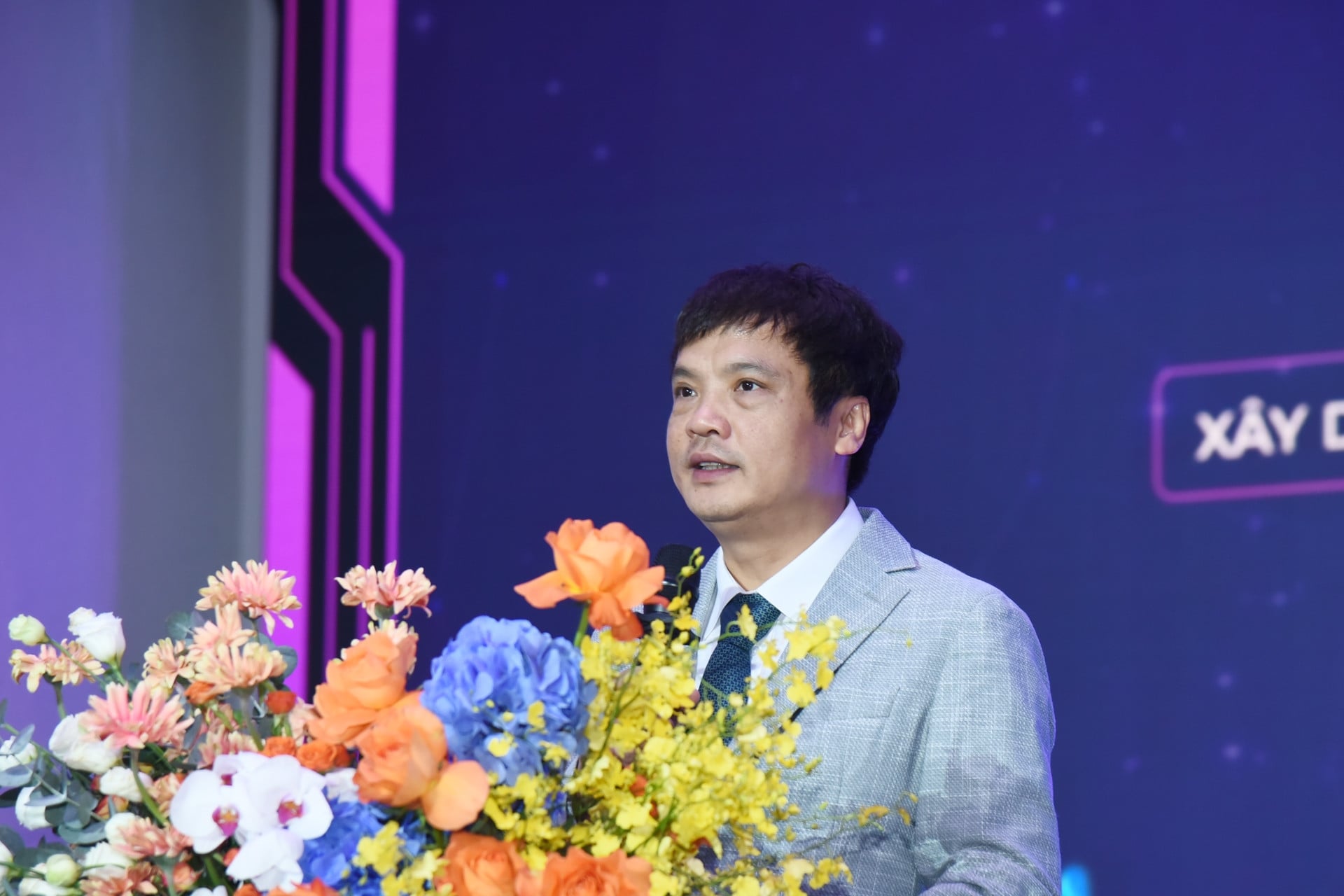
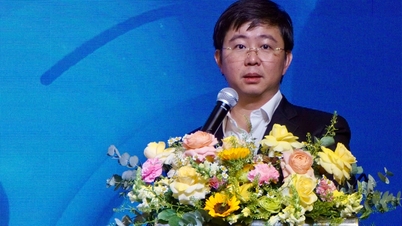
“Situations like these are becoming increasingly common. AI often challenges workers’ professional identities, forcing them to confront the fundamental question: What unique value do I bring to this job that machines cannot replicate? This tension manifests itself in subtle yet profound ways,” says Dr. Tony Nguyen, Acting Associate Dean of the MBA program at RMIT University Vietnam.

Dr. Tony Nguyen stated that workers may feel devalued, reduced to meaningless data points, or simply "an ordinary human being" compared to a nearly flawless machine. For some, AI is a catalyst for self-improvement, but for others, it sows a quiet insecurity.
According to Dr. Hoang Truong Giang, a senior lecturer in Management at RMIT University, trust is a prominent topic in discussions about AI. Employees often wonder whether they can trust the decisions made by AI systems and whether they feel safe questioning or rejecting those decisions. This concern is even greater when AI systems are used to evaluate job performance.
Research from the University of Missouri (USA) shows that emotional trust depends not only on the accuracy of the technology, but also on how AI is deployed, who controls it, and whether employees are actively involved in the process. Low trust easily leads to resistance and resentment, while high trust fosters cooperation and innovation.
Recent studies have also highlighted a phenomenon that could be called "AI-induced change fatigue." In a work environment already constantly evolving with new software, changing roles, and retraining, the emergence of AI only adds to this list.
“Emotional fatigue often manifests as apathy, exhaustion, or skepticism. The issue isn't just whether AI is effective, but how much change each individual can tolerate before their emotions 'crash',” Dr. Hoang Truong Giang further explained.
How can emotional intelligence and artificial intelligence be leveraged together?
Two experts from RMIT University noted that many questions surrounding the human element remain unanswered in discussions about AI deployment: How will AI's credit for crucial insights affect work motivation? How will team interactions change when some members rely on AI while others resist? How can we support those who lack confidence in their abilities?

Offering recommendations to organizations on what needs to be done to foster the combined development of emotional intelligence and artificial intelligence, two experts from RMIT University, Tony Nguyen and Hoang Truong Giang, proposed a key direction.
First and foremost, organizations need to acknowledge the emotional realities of AI integration, provide technical training, and create spaces for reflection, open dialogue, and even sharing personal stories.
Next, it's necessary to involve employees in the AI adoption journey. When employees have a voice in shaping how AI is used and their roles evolve alongside AI, they will be more likely to participate actively.
Ultimately, to support leaders in developing emotional intelligence, leaders need to be sensitive to early signs of alienation or stress, and position AI as a partner that needs to complement human judgment, ethics, and creativity, rather than a replacement tool.
Alongside becoming an indispensable part of decision-making, collaboration, and innovation, AI is also emerging as an emotional element in daily work life. "We don't need to fear AI, but we must learn how to manage our emotional responses to this technology. Understanding how AI impacts our inner world could be the missing piece in using AI effectively in the real world," Dr. Tony Nguyen stated.
Source: https://vietnamnet.vn/manh-ghep-giup-nguoi-lao-dong-su-dung-ai-hieu-qua-hon-2473351.html
![[Photo] Prime Minister Pham Minh Chinh receives the Governor of Tochigi Province (Japan)](/_next/image?url=https%3A%2F%2Fvphoto.vietnam.vn%2Fthumb%2F1200x675%2Fvietnam%2Fresource%2FIMAGE%2F2025%2F12%2F16%2F1765892133176_dsc-8082-6425-jpg.webp&w=3840&q=75)


![[Live] 2025 Community Action Awards Gala](/_next/image?url=https%3A%2F%2Fvphoto.vietnam.vn%2Fthumb%2F1200x675%2Fvietnam%2Fresource%2FIMAGE%2F2025%2F12%2F16%2F1765899631650_ndo_tr_z7334013144784-9f9fe10a6d63584c85aff40f2957c250-jpg.webp&w=3840&q=75)
![[Photo] Prime Minister Pham Minh Chinh receives Lao Minister of Education and Sports Thongsalith Mangnormek](/_next/image?url=https%3A%2F%2Fvphoto.vietnam.vn%2Fthumb%2F1200x675%2Fvietnam%2Fresource%2FIMAGE%2F2025%2F12%2F16%2F1765876834721_dsc-7519-jpg.webp&w=3840&q=75)
![[Image] Leaked images ahead of the 2025 Community Action Awards gala.](/_next/image?url=https%3A%2F%2Fvphoto.vietnam.vn%2Fthumb%2F1200x675%2Fvietnam%2Fresource%2FIMAGE%2F2025%2F12%2F16%2F1765882828720_ndo_br_thiet-ke-chua-co-ten-45-png.webp&w=3840&q=75)


















































![[Live] Closing Ceremony and Award Presentation for the "Impressive Vietnam Tourism" Video/Clip Creation Contest 2025](https://vphoto.vietnam.vn/thumb/402x226/vietnam/resource/IMAGE/2025/12/17/1765974650260_z7273498850699-00d2fd6b0972cb39494cfa2559bf85ac-1765959338756946072104-627-0-1338-1138-crop-1765959347256801551121.jpeg)





















Comment (0)