

The path to Harvard for a poor boy
In 2016, at the Harvard University graduation ceremony, a Chinese student was invited to give a speech.
He told the story of how his mother used the most basic method to completely change her son's life.
His speech received tremendous applause from his friends and teachers. He became the first Chinese student to receive this honor in Harvard's history.

Ha Giang at her Harvard University graduation ceremony in 2016. Photo: Sohu.
His name is Ha Giang, and he comes from a poor farming family in Ninh Huong district, Changsha city, Hunan province, China.
His parents were farmers who spent their days toiling in the fields. Because they were poor, his parents couldn't afford to send their son to any tutoring school.
Mr. Ha's parents only use two habits in raising their children, which are very valuable for other parents to learn from.
One way is to tell stories to your children; the other is to become a good listener.
No matter how tired he was, every evening Ha Giang's father would spend time telling stories to his two sons before bedtime, after which the sons would recount what they had learned at school to their parents.
However, his mother was illiterate, so she often asked him to reread the stories in the textbooks so they could learn together, and if there was anything they didn't understand, she would ask him to explain it.
To ensure his mother could understand what he was saying, Ha listened very carefully during class, afraid of missing any detail.
If he didn't understand something, he would go to the teacher's office and ask one person after another until he understood.
These two parenting methods sparked Ha Giang's passion for learning, helping him move from his hometown to Wuhan to study and from Wuhan to the lecture halls of Harvard.
Upon closer examination of the method this farming couple used for their children, it was discovered that it was the famous Feynman method.
What is the Feynman method?
The Feynman learning method is a method of studying and understanding lectures named after the famous physicist Richard Feynman.
This method emphasizes explaining a concept in a simple and clear way for deeper understanding and longer-lasting retention.
Here are the basic steps of the Feynman learning method:
1. Choose a topic
Choose a topic or concept you'd like to learn about in more depth.
2. Explain it as you would when talking to someone else.
Assume you are giving a lecture to someone else, with the goal of explaining things simply and clearly. Use everyday language and avoid complex terminology.
3. Use paper and pen.
Write down what you know about the topic in the language of someone who knows nothing about it. Use simple words, examples, and diagrams to explain the concepts.
4. Learn more
During the explanation process, you will realize the shortcomings in your understanding.
This will encourage you to learn more, research details, and adjust your interpretation to gain a deeper understanding.
5. Test your understanding.
After you have explained it simply and clearly, test your understanding by explaining the topic again without relying on notes or documents.
This helps you identify aspects that you still don't fully understand and need to research further.
The Feynman learning method encourages deep and clear understanding, helping you build a solid foundation of knowledge.
It also helps you recognize gaps in your knowledge and motivates you to study further.
The application of the Feynman learning method in parenting.
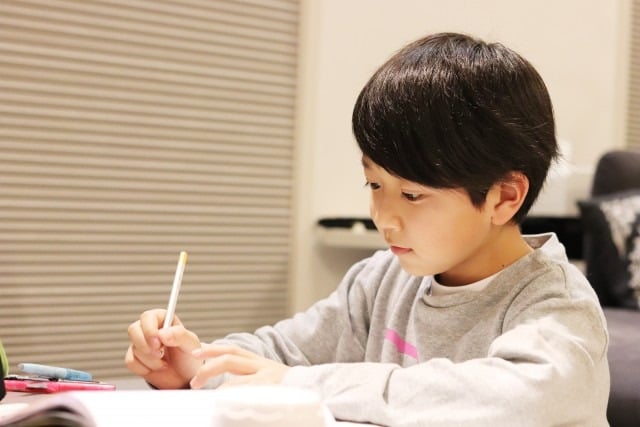
The Feynman method is a learning approach suitable for scientific research, allowing students to gain a deep and thorough understanding in a short period of time. (Illustrative image)
The Feynman learning method is very useful and can be applied to raising children. In fact, it's not difficult for children to learn this method, just follow the 6 steps.
1. Select content
In the initial stages of learning using the Feynman method, parents can help children choose topics they are good at to explain, which will help boost their confidence. If parents choose a difficult topic from the start, children are more likely to give up after a few days.
2. Pay attention to what the child says.
When children explain things to their parents, parents need to listen attentively and seriously, not just go through the motions.
3. Parents ask questions
Parents should ask some questions related to the lesson content, which helps children think more deeply.
4. Verify the information.
Through explanations and questions from their parents, children will realize their own lack of understanding. Parents should encourage children to check and organize information themselves to prepare for the next topics.
5. Say it again.
When children explain a previous problem to their parents, they are better prepared and therefore more likely to perform well this time. This is beneficial for the development of the child's self-confidence.
6. Summary
Parents can work with their children to create mind maps related to the key keywords of the lesson. Summarizing the information will help children grasp the concepts more effectively.


![[Photo] Two flights successfully landed and took off at Long Thanh Airport.](/_next/image?url=https%3A%2F%2Fvphoto.vietnam.vn%2Fthumb%2F1200x675%2Fvietnam%2Fresource%2FIMAGE%2F2025%2F12%2F15%2F1765808718882_ndo_br_img-8897-resize-5807-jpg.webp&w=3840&q=75)


























































































Comment (0)