

 |
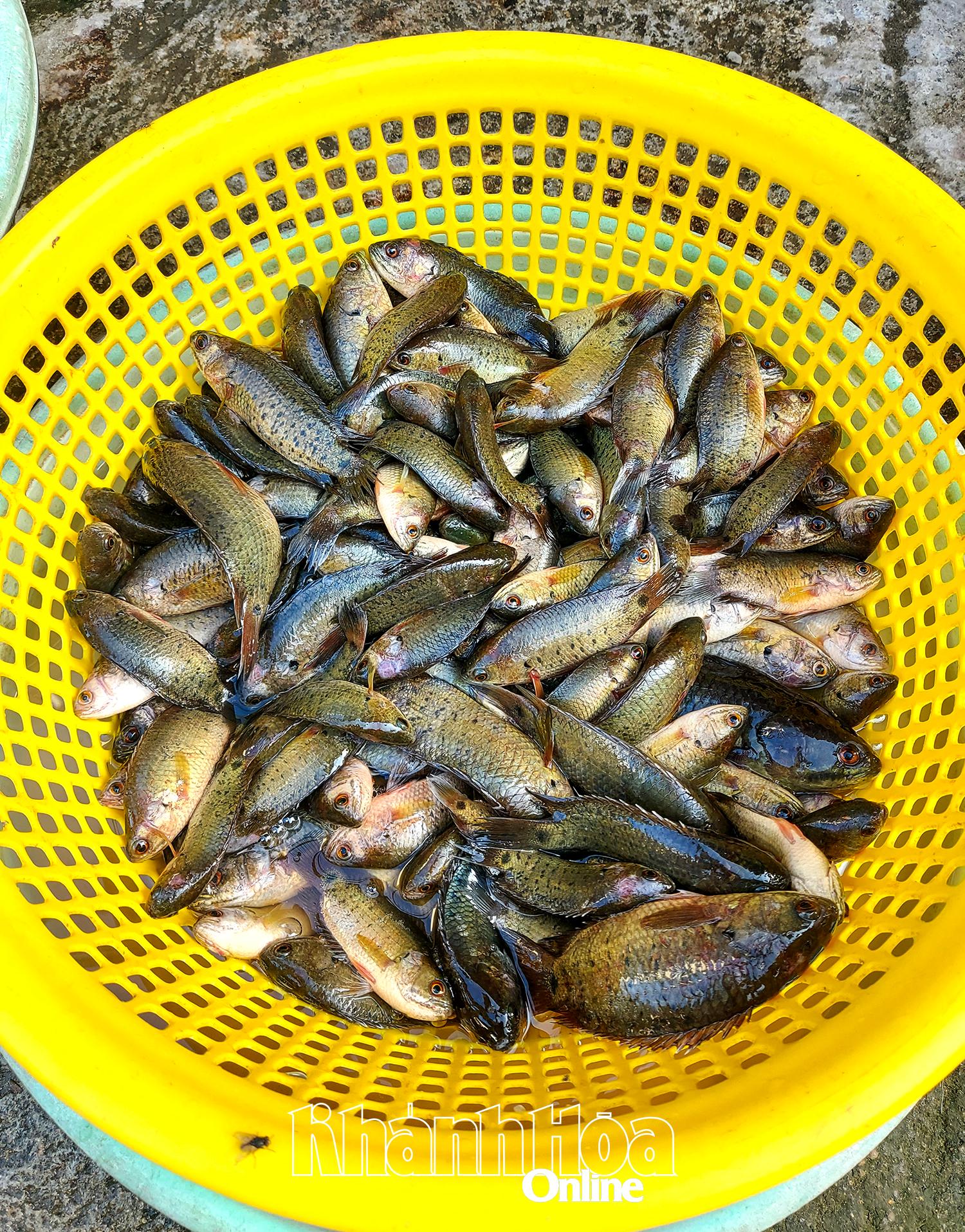
| Tilapia during the flood season. Photo: GC |
The flood season in my hometown usually begins after the Mid-Autumn Festival with incessant rains that last until the end of October in the lunar calendar, when the morning glory flowers bloom white along the Dinh River bank. That's just an old saying passed down from our grandparents, but now, with climate change, everything is unpredictable; some years there are floods, some years there aren't, even though it still rains heavily. The riverbank is now mostly embanked, and there aren't many bamboo clumps left for the morning glory to cling to.
When I was a child, every time there was a flood, the kids in my village loved it because we got a day off from school and didn't have to do anything. No matter how much we were forbidden, we would sneak out of the house to wade in the water. I don't know what was so special about floodwater that I loved it, but being immersed in it felt so good. Sometimes the water would rise so quickly, up to our waists, then to our chests without us even realizing it, and we would get scared and scream for help. We'd call out to each other, run to the train tracks, and watch the fierce, swirling water from upstream rush down, sweeping away anything that stood in its way. Seeing large tree trunks floating downstream, the men in the village, regardless of the danger, would rush out and swim after them to pull them ashore. These would be chopped up to make pillars for houses or firewood, sometimes lasting for a whole month.
And the delicious dishes of the flood season always remain in the memories of those who migrated. Perhaps the simplest is duck eggs marinated in fish sauce. Every household stockpiles a basket of duck eggs during the rainy season. They cook a pot of hot rice, put it on the table, take a dozen eggs, boil them until they're still runny, peel them, and mash them in a bowl of fish sauce with a few green chili peppers. Each person in the family takes a bowl of rice, scoops a piece of the marinated egg onto their bowl, and eats it while wading through the water. The hot, fragrant rice, combined with the chewy, salty, and spicy duck eggs, is incredibly delicious.
The rain had slightly stopped, and my father took his boat out to the fields to catch perch. By morning, he returned with the boat full of fish. Without scaling or gutting, he skewered the fish onto bamboo sticks and grilled them over charcoal until the outer skin was charred. Then he deboned them, discarded the skin, and mixed the flesh in a mortar with unripe tamarind, unripe bananas, starfruit, herbs, basil, chili peppers, and spices, then pounded it into a paste. In the midst of the torrential rain that blanketed the fields, he scooped a bowl of hot rice, spooned in the mashed perch, and the fragrant aroma of the rice, combined with the sourness of the tamarind and starfruit, the astringency of the unripe bananas, the pungent flavor of the basil, the sweetness of the fish, and the spiciness of the peppers and chili peppers, all intertwined. It was the most unique and special dish made from freshwater fish that I learned from my father. It encompassed all the essence of the fields, rivers, and gardens of our homeland in that single mixture.
My mother would buy barracuda, cut it into pieces, and stew it with pickled taro, or fry it until crispy, eating it with fish sauce mixed with chili and garlic and hot rice; or she would soak it in coarse salt water, hang it on the fence to dry, and then store it. On rainy days, she would grill the barracuda over charcoal until it was cooked and fragrant. Scooping up a bowl of cold rice with a piece of fish, you could taste the salty flavor of the fish, of the shore, of the vast ocean, mixing with the rice and seeping deep into your tongue.
One day, my sister took some fermented mackerel paste from the kitchen, chopped it into small pieces, put it in a bowl, cracked seven duck eggs into it, added chopped onions, a few slices of chili, and some seasoning. She stirred it gently until well combined, then steamed it. Afterwards, she beat the egg yolks and poured them over the top to make it look more appealing. The steamed fish paste was cooked, incredibly fragrant and delicious.
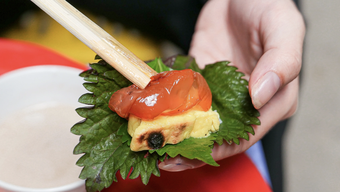
My favorite dish, and one I remember most fondly, is salted squid. The simplest way to enjoy it is grilling it over charcoal; the salty, fragrant aroma of the squid and salt fills the whole house. Two squids are enough for a whole bowl of rice, and it has to be cold rice to be truly satisfying. Grilled salted squid is salty on the outside but sweet on the inside, as if the salt couldn't penetrate. Salted squid braised with pepper, eaten with hot rice, is simply amazing. Before braising, you have to soak the squid in salt water to reduce the saltiness, rinse it thoroughly with cold water, cut it into finger-sized pieces, season it with spices, onions, and coconut milk, then braise it until it thickens. After braising for a while, the squid shrinks and the sauce thickens, but that's enough to finish a whole pot of rice and a basket of vegetables for a family of ten. The squid is delicious, and the braising sauce is even better; pour it over the rice and mix well. Anyone who tries it for the first time is guaranteed to want to eat it ten more times.
Living abroad, whenever the weather turns cold, remembering the simple, everyday dishes back home during the floods, I suddenly feel an overwhelming longing and nostalgia for my homeland!
NGUYEN HUU TAI
Source: https://baokhanhhoa.vn/van-hoa/sang-tac/202511/mua-lut-que-minh-4671cd7/

![[Photo] Xuan Son scores a brace, Vietnam wins 3-1 against Malaysia.](https://vphoto.vietnam.vn/thumb/1200x675/vietnam/resource/IMAGE/2026/03/31/1774971675344_ndo_br_52b4d11dd25c53020a4d-copy-jpg.webp)
















![[Photo] Da Nang: Exploring the inside of Vietnam's largest "sail" symbol.](https://vphoto.vietnam.vn/thumb/1200x675/vietnam/resource/IMAGE/2026/03/31/1774964764698_ndo_br_anhcau1-jpg.webp)




























































Comment (0)