

Startup ecosystem: Increased in quantity, but lacking in quality.
According to the Vietnam Innovation Startup Ecosystem 2025 report by the Ministry of Science and Technology , Vietnam currently has over 4,000 startups, two unicorns, and dozens of near-unicorn businesses, making it an attractive destination for technology capital in the region.
Currently, Vietnam has over 200 domestic and foreign investment funds, and more than 100 creative spaces and incubators. Experts assess that Project 844, after nearly 10 years of implementation, has contributed to perfecting the policy framework and creating momentum for the development of the startup community.

On the international map, Vietnam is ranked #1 in Southeast Asia for its startup ecosystem and #55 globally by StartupBlink. The three major hubs – Hanoi, Ho Chi Minh City, and Da Nang – are consistently mentioned, with Da Nang recognized as the city with the fastest-growing innovation ecosystem in the world over the past year.
However, the final result – the number of unicorns – is not commensurate with the scale of the ecosystem. The conversion rate from startups to unicorns in Vietnam is currently very low: only 2 out of 4,000. This figure shows that the ecosystem is developing more in breadth than in depth.
Five "bottlenecks" hindering unicorns.
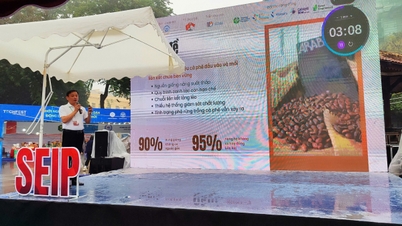
At the recently held international conference "Applying Artificial Intelligence in Building a National Startup Database," Dr. Vu Viet Anh – President of the Success Academy and Head of the Techfest Vietnam Marketing Technology Community – pointed out five strategic bottlenecks hindering the breakthrough of Vietnamese startups.
First and foremost is the data bottleneck. Most startups lack standardized market data, symmetrical information on technology, and global trends. This prevents many businesses, despite having good ideas and products, from commercializing them, or they face competition from international platforms even before launch.
Furthermore, the lack of transparency with investors creates many obstacles in the disbursement process. Regulatory agencies also lack real-time technology roadmaps, making it difficult to accurately grasp the lifecycle and maturity level of startups, thereby limiting the effectiveness of policy planning.
The challenges of funding and survival rates also arise, with as many as 97% of tech startups failing to survive past their second year. The success rate for fundraising is only around 29.5%. In Vietnam, "angel funding" accounts for only 7-10%.
The limitations in human resources, networking, and commercialization are weaknesses for many Vietnamese startups.
Leveraging the role of AI
From a state management perspective, Dr. Pham Hong Quat – Director of the Department of Startups and Technology Enterprises (Ministry of Science and Technology) – frankly acknowledges that the current startup data system is still fragmented and does not meet the criteria of being "accurate, complete, clean, unified, and shared."
The lack of standardized data raises a series of major questions for the ecosystem: Who are the reputable mentors? Which investors are trustworthy? Which projects deserve funding and how should they be valued? Until these questions are clearly answered, the formation of unicorns is inevitably delayed.
In this context, artificial intelligence (AI) is seen as a new competitive tool. However, as many experts emphasize, AI is only effective when there is quality input data. Therefore, building a national AI-integrated startup data platform is considered a strategic choice, not only in terms of technical significance but also in shaping national competitiveness over the next decade.
To realize the goal of making Vietnam the innovation hub of Southeast Asia by 2030, Dr. Vu Viet Anh proposed five key strategies: building a national startup data platform connected globally; forming an open AI network; promoting venture capital funds and public-private partnerships; innovating education and nurturing AI talent from an early age; and building a national sandbox mechanism for core technologies.
In addition, positive signals from policies such as Decree 246, which allows localities to support up to 75% of the capital for startups depending on the stage, are opening up a new legal framework for venture capital investment.
From an international perspective, India's experience shows that using AI to analyze big data and increase transparency in capital flows is key to attracting the trust of global investors. This is also a direction that Vietnam can learn from and adapt to its own domestic conditions.
Source: https://daidoanket.vn/nam-2030-viet-nam-co-them-3-ky-lan-cong-nghe-co-kha-thi.html

































































![[Photo] General Secretary To Lam meets with voters in Hanoi.](https://vphoto.vietnam.vn/thumb/402x226/vietnam/resource/IMAGE/2025/12/15/1765783098527_image.jpeg)



























Comment (0)