

This is seen as a turning point that helps remove barriers, paving the way for schools to innovate, improve quality, and integrate internationally.
Assoc. Prof. Dr. Nguyen Thanh Chuong - Chairman of the University Council of the University of Transport and Communications: Creating conditions for higher education institutions to best develop their strengths.
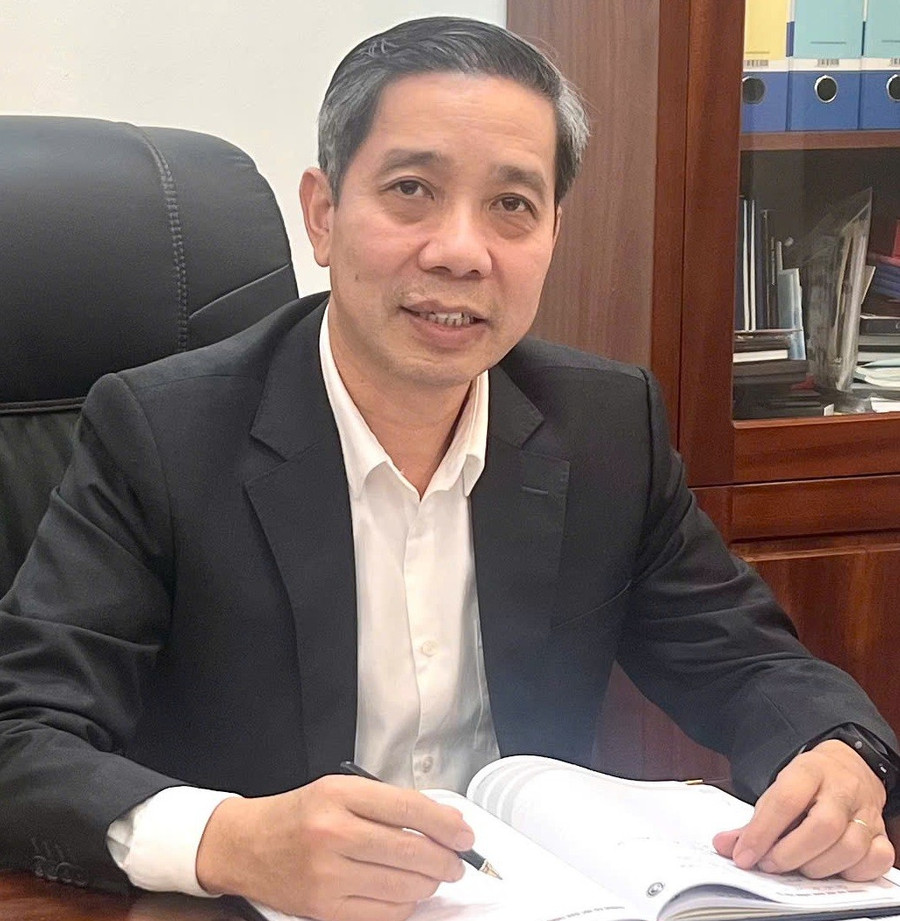
It can be affirmed that Resolution No. 71-NQ/TW of the Politburo is one of the pillars for continuing to implement the Party's resolutions to further innovate the country and enhance its position in the international arena. One of the notable provisions in Resolution No. 71-NQ/TW is "ensuring full and comprehensive autonomy for higher education institutions and vocational education institutions regardless of their level of financial autonomy."
Currently, autonomy for universities is still limited to financial autonomy. Investing in higher education remains challenging, and research conditions are restricted.
In recent times, the biggest challenge for schools has been securing the necessary financial resources to meet training requirements. Schools' revenue primarily comes from tuition fees, which mainly covers training expenses; however, implementing research and innovation faces many difficulties. Innovation centers and research groups have not had many opportunities to work with domestic and international organizations and businesses, partly due to limitations in the autonomy of the schools.
In this context, the regulations in Resolution No. 71-NQ/TW create conditions for schools to best utilize their strengths; combine human resource training with innovation and scientific research; and promote effective collaboration between the State, schools, and external research units and businesses. On the other hand, the new regulations create conditions for scientists to best utilize their abilities; and for schools to train high-quality human resources to meet the development requirements of the country.
Currently, the Law on Higher Education is being amended to be more concise and clear, ensuring that universities can effectively fulfill their mission. This is to better implement Resolution 71/NQ-TW.
The amended Law on Higher Education needs to concretize this Resolution, increasing the autonomy of universities in various aspects; especially creating conditions for higher education institutions to be centers of innovation, contributing to the development of science and technology, and serving the country's integration. At the same time, it should maximize the potential of universities in both training and scientific research, thereby enabling them to master technology and drive national development in the new era.
Assoc. Prof. Dr. Tran Thanh Nam - Vice Rector of the University of Education, Vietnam National University, Hanoi: New opportunities for development and upgrading of higher education.

The regulation on "full and comprehensive autonomy, independent of financial autonomy" will help both public and private universities remove many barriers that exist in the current system. Specifically, it will help eliminate inequality caused by financial constraints.
Previously, the degree of autonomy of a public university was usually directly proportional to its ability to self-finance its operating expenses. Now, with autonomy no longer dependent on "pocket money," all universities have equal opportunities in decision-making, encouraging even those that are not yet financially autonomous to boldly innovate, improve quality, and enhance competitiveness.
In reality, although university autonomy is stipulated by law, its implementation has not been complete. Many other legal regulations (regarding public service units, budget management, and civil servants) overlap, limiting the autonomy of public universities in terms of organizational structure, personnel, finance, and assets... unless they can fully secure their own funding.
Each institution had to develop an "autonomy plan" to submit to higher authorities for approval of the autonomous content, leading to complex and inflexible procedures. With Resolution No. 71-NQ/TW, the new principle is that all universities naturally have the right to comprehensive autonomy, and regulations will be revised synchronously to resolve the obstacles caused by the old regulations. This helps make university autonomy more substantive and complete, instead of just nominal autonomy.
Previously, many areas of cooperation in training, especially in high technology, faced obstacles due to a lack of mechanisms (for example, a lack of public-private partnership policies, and mechanisms for approving foreign joint projects).
Now, full autonomy allows universities to overcome these "bottlenecks" and make the most of domestic and international resources to serve the development of the institution. Universities have the right to open new training programs, adjust curricula and teaching methods according to practical needs, or cooperate with businesses and international partners in research and training in a more flexible manner.
With the new perspective that autonomy does not mean a complete cut in support, the State will shift to a mechanism of ordering educational services and allocating budgets according to tasks; at the same time, it will indirectly support universities through students (scholarships, preferential loans) instead of subsidizing based on entrance requirements… This approach helps universities have “more complete and deeper” autonomy and confidently plan their development strategies and invest in the quality of training without worrying about budget cuts.
This is truly a timely breath of fresh air for reforming higher education, helping educational institutions focus their intellectual resources on their professional tasks, thereby creating a foundation for further breakthroughs.
Ensuring full and comprehensive autonomy not only resolves immediate difficulties but also provides long-term opportunities to elevate Vietnamese higher education. Accordingly, when freed from regulatory constraints, each university has a stronger motivation to improve quality and affirm its reputation in a competitive environment. Autonomy allows universities to innovate their programs according to international standards, quickly update their technology and knowledge, thereby benefiting students by providing them with knowledge and skills closely aligned with practical requirements.
Complete autonomy in personnel and finance allows universities greater flexibility in attracting talented lecturers and scientists. Resolution 71/NQ-TW permits universities to independently decide on the recruitment and appointment of lecturers and administrative staff, including foreigners – something previously difficult to do due to procedural barriers. As a result, universities can invite leading experts and international professors to work for them, thereby improving the qualifications of their staff.
At the same time, with autonomy, schools can proactively develop attractive compensation and salary schemes based on work performance, thereby retaining talent and creating a healthy competitive work environment. The quality of teaching and research will therefore be significantly improved.
When the power of decision rests in their hands, each university will strive to leverage its unique strengths to advance. Autonomy coupled with accountability forces universities to be more dynamic and innovative in their management and operations, fostering a culture of self-responsibility. Innovative university models and next-generation technology universities will also be encouraged, as outlined in Resolution No. 71-NQ/TW. The entire system will therefore enter a new phase of development, shifting from "movement" to "breakthrough," as expected by society.
Granting full autonomy is considered a prerequisite for Vietnamese universities to make breakthroughs in international rankings in the long term. Currently, the State aims to have at least 8 universities in the top 200 in Asia and 1 university in the top 100 globally in certain fields by 2030, and 5 universities in the top 100 globally by 2045. To achieve these ambitious milestones, universities need more space for development and autonomy to focus resources on their core areas of training and research.
International experience shows that many leading universities have thrived thanks to a high degree of autonomy. With the new policy, Vietnamese universities have similar opportunities to integrate deeply, forge international links, improve their rankings, and attract international students, thereby affirming their position on the international stage.
Overall, comprehensive university autonomy is considered by many experts to be a kind of "contractual reform" in higher education – a genuine reform that helps unleash resources and create a strong breakthrough for the development of universities. Higher education institutions that know how to effectively utilize their autonomy along with accompanying preferential policies will certainly have many opportunities to thrive.
Of course, opportunities always come with challenges. Autonomy requires universities to improve their governance capacity, undergo digital transformation, and enhance transparency and efficiency in order to meet the trust of society. However, with a determination to innovate at the macro level, it can be believed that comprehensive autonomy will create long-term momentum for higher education in our country to take off in the coming decades.
Dr. Pham Kim Thu - Principal of Huu Nghi College (Nghe An): Perfecting the legal system helps schools fully exercise their autonomy.

Resolution No. 71-NQ/TW of the Politburo emphasizes "ensuring full and comprehensive autonomy for higher education institutions and vocational education institutions regardless of their level of financial autonomy." This regulation is expected to resolve major obstacles that schools are facing in the process of implementing autonomy.
In reality, over the past period, the autonomy of many universities has been "anchored" to their ability to self-finance recurrent or investment expenditures. Tuition fee structures are divided according to the level of financial autonomy, limiting the decision-making power of many institutions, even those with strong academic and organizational capabilities. This creates inequality among different fields, especially those that are difficult to socialize, such as education, basic sciences, and medicine.
With Resolution No. 71-NQ/TW affirming the principle of separation, schools will be granted academic, personnel, and organizational autonomy… without being dependent on revenue and expenditure levels, thereby creating conditions for equal development and focusing on quality instead of relying solely on financial capacity.
The opportunities are immense. Universities will be more proactive in recruiting, appointing, inviting experts, and raising program and research standards. State budgets will gradually shift from "allocation" to a mechanism of commissioning based on mission, quality, and output results. In addition, the target of allocating at least 3% of the budget to higher education will create a stable source of resources, helping to form research centers and elite universities, and enhancing Vietnam's position on the international education map.
However, to fully realize this spirit, many obstacles remain. The biggest is the overlapping legal system and management mechanisms, especially in the areas of finance, assets, investment, and bidding. The role of the School Council is not clearly defined in many places, and governance models are still in disarray. Data infrastructure and accountability mechanisms are not synchronized, limiting transparency and quality control.
In the context of amending the Higher Education Law, it is necessary to clearly institutionalize the principle of "comprehensive autonomy independent of finance"; innovate the budget mechanism towards a results-oriented, commissioned approach; adjust tuition fee policies to be separate from the level of financial autonomy but ensure fairness for students; and simultaneously refine the governance model to suit the specific characteristics of public and private institutions. Alongside this, it is necessary to enhance transparency based on national databases and build a clear accountability index system for public oversight.
Resolution No. 71-NQ/TW not only "unleashes" universities but also opens up opportunities for Vietnamese higher education to enter a new phase of development: genuine autonomy, high accountability, linked to innovation and international integration. - Dr. Pham Kim Thu
Source: https://giaoducthoidai.vn/nghi-quyet-so-71-nqtw-dong-luc-but-pha-cho-giao-duc-dai-hoc-viet-nam-post747474.html

![[Photo] Prime Minister Pham Minh Chinh receives the Governor of Tochigi Province (Japan)](/_next/image?url=https%3A%2F%2Fvphoto.vietnam.vn%2Fthumb%2F1200x675%2Fvietnam%2Fresource%2FIMAGE%2F2025%2F12%2F16%2F1765892133176_dsc-8082-6425-jpg.webp&w=3840&q=75)
![[Live] 2025 Community Action Awards Gala](/_next/image?url=https%3A%2F%2Fvphoto.vietnam.vn%2Fthumb%2F1200x675%2Fvietnam%2Fresource%2FIMAGE%2F2025%2F12%2F16%2F1765899631650_ndo_tr_z7334013144784-9f9fe10a6d63584c85aff40f2957c250-jpg.webp&w=3840&q=75)
![[Image] Leaked images ahead of the 2025 Community Action Awards gala.](/_next/image?url=https%3A%2F%2Fvphoto.vietnam.vn%2Fthumb%2F1200x675%2Fvietnam%2Fresource%2FIMAGE%2F2025%2F12%2F16%2F1765882828720_ndo_br_thiet-ke-chua-co-ten-45-png.webp&w=3840&q=75)

![[Photo] Prime Minister Pham Minh Chinh receives Lao Minister of Education and Sports Thongsalith Mangnormek](/_next/image?url=https%3A%2F%2Fvphoto.vietnam.vn%2Fthumb%2F1200x675%2Fvietnam%2Fresource%2FIMAGE%2F2025%2F12%2F16%2F1765876834721_dsc-7519-jpg.webp&w=3840&q=75)


























































![[Live] Closing Ceremony and Award Presentation for the "Impressive Vietnam Tourism" Video/Clip Creation Contest 2025](https://vphoto.vietnam.vn/thumb/402x226/vietnam/resource/IMAGE/2025/12/17/1765974650260_z7273498850699-00d2fd6b0972cb39494cfa2559bf85ac-1765959338756946072104-627-0-1338-1138-crop-1765959347256801551121.jpeg)























Comment (0)