

The reason is that this government was formed by political parties without a majority in parliament . The most striking paradox here is that both President Emmanuel Macron and his nominee for prime minister, Michel Barnier, were well aware of this from the beginning but still decided to proceed.
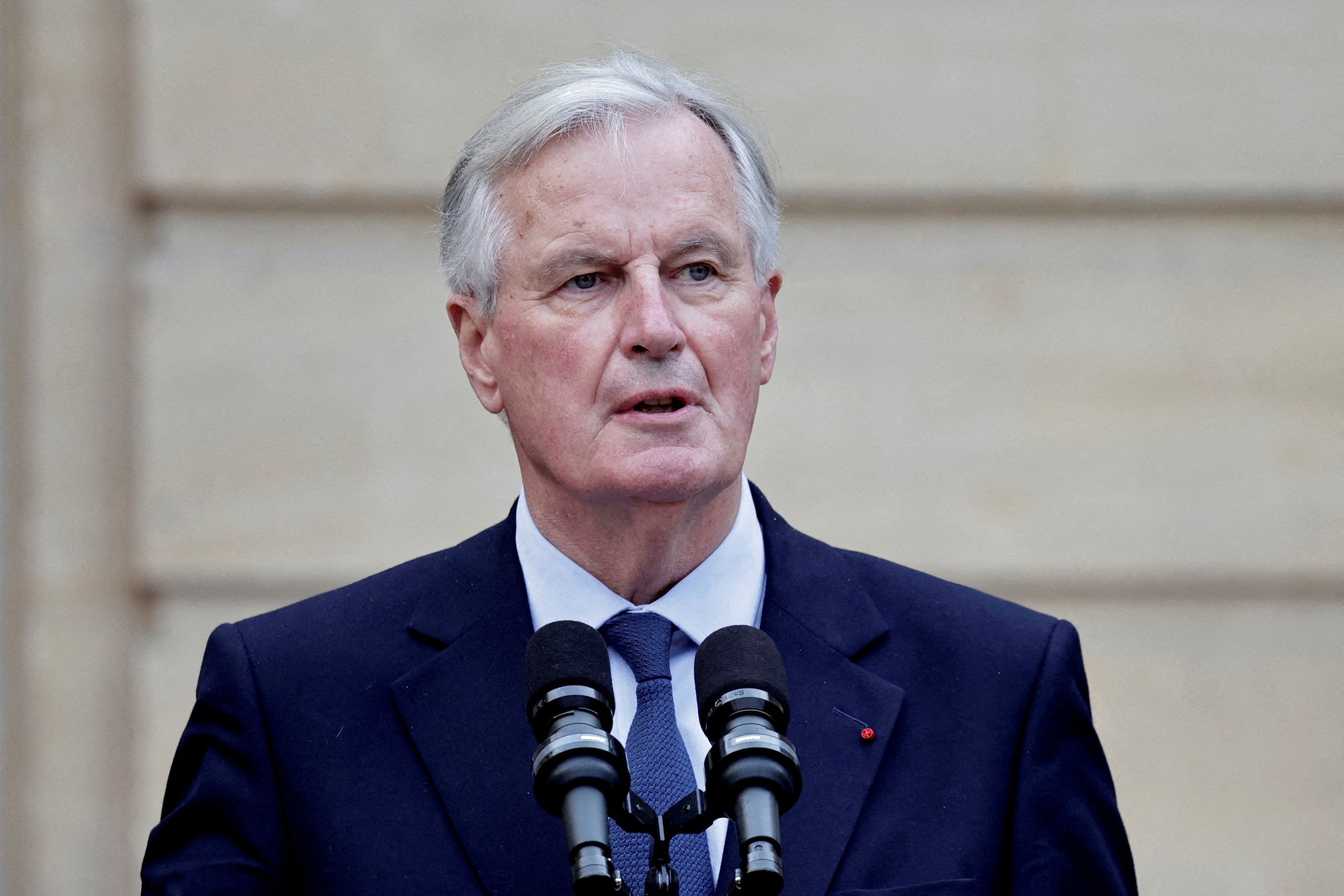
French Prime Minister Michel Barnier
The rare paradox this time is that the political party that won the French election was not given the power to form a government; instead, that power was given to a member of the party that only won 47 seats out of a total of 577 seats in parliament. The coalition between Macron and Barnier together only secured 193 seats, while the minimum majority required in parliament is 289 seats.
This means that to achieve significant results, the government must rely on the left-wing New Popular Front (NFP), currently the largest political faction in parliament and the winning coalition in the recent parliamentary elections, or on the far-right National Rally (RN) party. Both blocs have voiced their opposition. The NFP has even declared non-cooperation. This will be a major challenge because building and consolidating stability is a mission of the government.
Source: https://thanhnien.vn/nghich-ly-kieu-phap-185240922224831938.htm


![[Photo] General Secretary and President To Lam presides over a meeting on assessing national development resources.](https://vphoto.vietnam.vn/thumb/1200x675/vietnam/resource/IMAGE/2026/05/20/1779253785852_a1-bnd-2943-8519-jpg.webp)

![[Photo] National Assembly Chairman Tran Thanh Man working with the Standing Committee of the Economic and Financial Committee](https://vphoto.vietnam.vn/thumb/1200x675/vietnam/resource/IMAGE/2026/05/20/1779249584387_ndo_br_1-jpg.webp)


































![[Workers' Month 2026] Spreading love on the Vinh - Dong Hoi frontline: Nearly 1 billion VND spent on caring for the lives of workers.](https://vphoto.vietnam.vn/thumb/402x226/vietnam/resource/IMAGE/2026/05/20/1779237885217_img_8650.jpeg)































Comment (0)