|
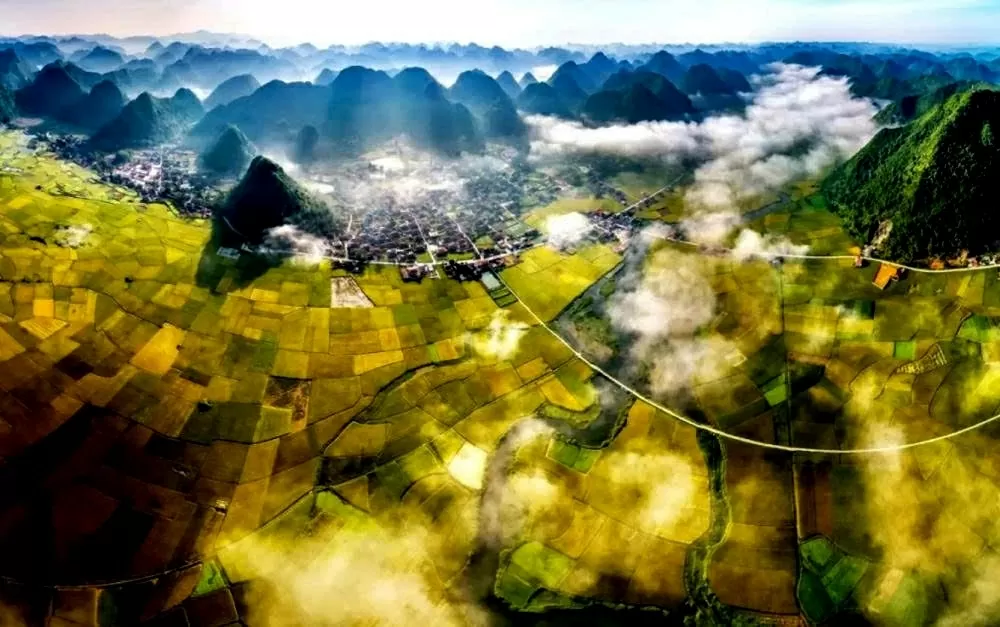
This unique village is located in the Bac Son valley. (Source: UN Tourism) |
Maintaining its traditional slow pace of life, Quynh Son Community Tourism Village (Bac Son commune, Lang Son province) has just written a new chapter by achieving the status of "Best Tourism Village" as honored by the United Nations Tourism Organization (UN Tourism) in 2025.
Celebrating indigenous culture
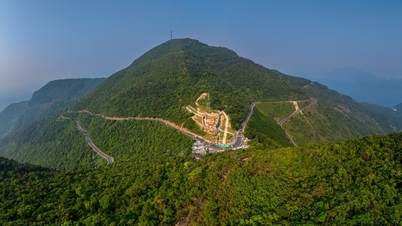
Nestled amidst the towering limestone mountains of the Bac Son valley, Quynh Son possesses a rare and unique feature: most houses face south – a direction the Tay people call "dragon's path" – to welcome vitality, light, and good fortune.
Especially during the rice harvest season, around September and October, the entire village transforms into a shimmering golden carpet, blending seamlessly with the clouds and mountains. Visitors come here not only to admire the scenery but also to slow down, listen to the stories of the locals, and try a Tay ethnic meal with braised pork, roast duck, grilled stream fish, or colorful sticky rice cakes.
Quynh Son develops community-based tourism, where each villager acts as a guide, storyteller, and guardian of cultural identity. It is known that over 90% of the villagers bear the surname Duong – a Tay ethnic group with a long tradition of unity and cultural preservation.
|
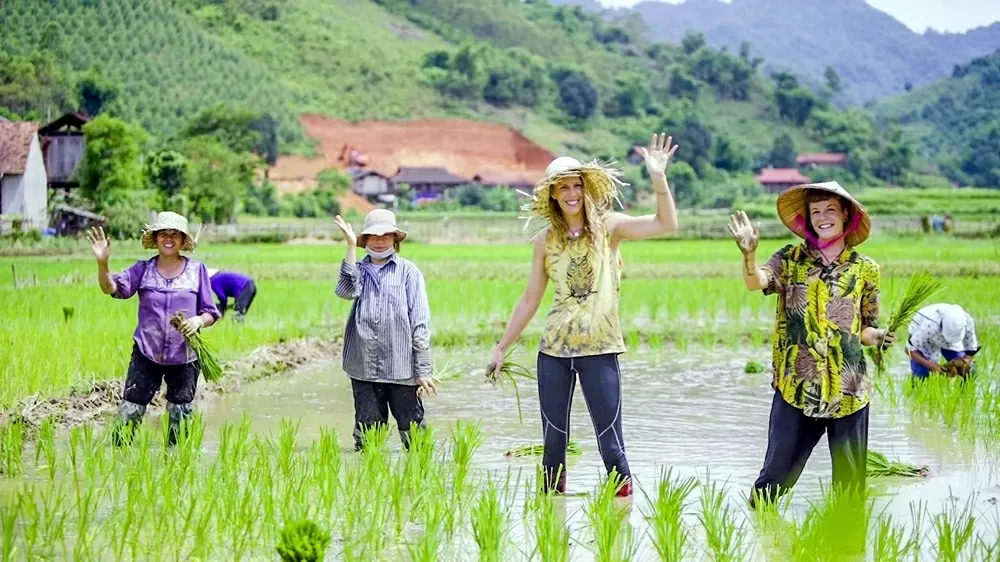
Tourists enjoy experiencing rice planting activities in the village. (Source: Vietnam National Tourism Administration) |
As a result, tourism doesn't disrupt traditional life but becomes a natural part of the community. In the village, only a few households engage in tourism, mainly offering simple homestay services, free from commercial noise. Visitors are welcomed like family returning home, invited to share meals, help with rice harvesting, basket weaving, corn wine making, or sit and sing traditional folk songs by the fireplace.
It is this genuine and unpretentious charm that attracts hundreds of foreign tourists each year to Quynh Son as a destination, where they can learn to live at a slower pace, immerse themselves in nature and the local people, and explore traditional crafts such as making yin-yang roof tiles and climbing Na Lay mountain.
The village still preserves many historical and cultural relics such as the Quynh Son communal house, dedicated to Quy Minh Dai Vuong, which is hundreds of years old, or the Ra Rieng bridge – a place that marks the Bac Son uprising in 1940.
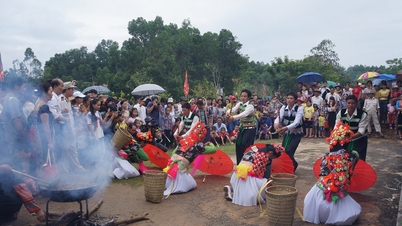
Every year in January, the people eagerly organize the Lồng Tồng festival – a festival celebrating the start of the farming season to pray for a bountiful harvest. The sounds of folk songs, traditional dances, and Tán Đàn dances resonate amidst the lively atmosphere of traditional games like throwing the ball and swinging, creating a vibrant cultural tapestry of Quỳnh Sơn in the Northeast region.
The journey to becoming the “Best Tourist Village”
For many years, with a focus on developing green and sustainable tourism, Lang Son province has invested in improving tourism infrastructure while protecting the environment: waste collection and treatment systems, clean water sources, reducing single-use plastics, and increasing green spaces.
In Quynh Son, every house is encouraged to use natural materials and traditional yin-yang tile roofs, which are both beautiful and environmentally friendly. The local community is at the center of this change: they are trained in hospitality skills, service management, food safety and hygiene, fire prevention, civilized behavior, and environmental protection.
|
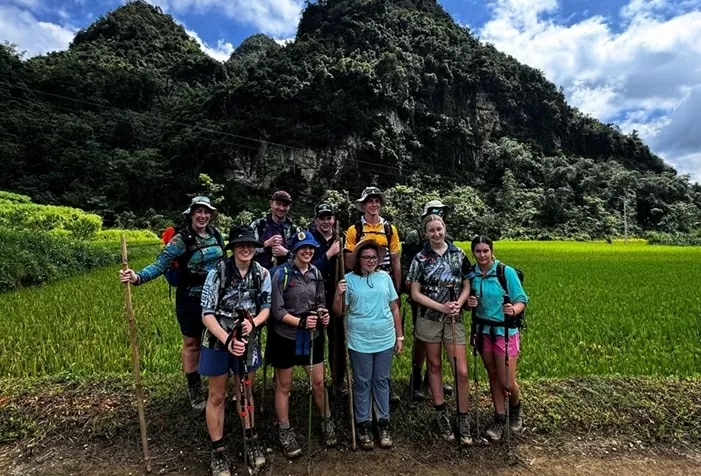
Quynh Son develops community-based tourism, where each local resident acts as a guide, storyteller, and guardian of cultural identity. (Source: Vietnam National Tourism Administration) |
Mr. Duong Cong Chich's family is one of the first five households in the village to switch to tourism to welcome visitors. On-site livelihood models such as homestays, traditional cuisine, handicrafts, and agricultural-cultural experiences have helped his family and neighbors increase their income, encouraging women and young people to participate in the tourism value chain.
Ms. Tran Thi Bich Hanh, Deputy Director of the Investment, Trade and Tourism Promotion Center of Lang Son province, said that the Center launched a comprehensive promotional campaign for Quynh Son in 2023. Images of the community tourism village are introduced on the Smart Tourism portal, social media platforms, and especially through carefully produced experiential videos.
The center also invited many famous KOLs and KOCs to directly experience and create short content, helping Quynh Son's image spread widely and attract millions of views on social media.
Those efforts materialized in early 2025, when the 53-page application dossier for the "World's Best Tourist Village" award, complete in English and including dozens of images, videos, and supporting documents, was reviewed by the Vietnam National Tourism Administration and submitted to UN Tourism.
After several rigorous rounds of evaluation regarding governance, innovation, sustainability, environment, and contributions to the Sustainable Development Goals (SDGs), Quynh Son surpassed more than 270 applications from 65 countries to be named on the list of honorees at the event held on October 17th in Huzhou City, Zhejiang Province (China).
This success is a source of shared pride for the local community and the Vietnamese tourism industry. The title is even more significant as Lang Son was recently recognized by UNESCO as a Global Geopark in April 2025, joining a network of 229 geoparks in 50 countries.
The key to sustainable tourism
For Quynh Son, the title of "Best Tourist Village" is not the final destination, but the beginning of a new journey towards sustainable development in the age of globalization.
It's easy to see that the success of this small village today stems from its unwavering commitment to local values. While many other rural destinations are pursuing mass tourism models, Quynh Son has chosen a slow but steady approach, helping its people understand that only by preserving the soul of the village can tourism have a future.
According to Trinh Minh Tuan, Chairman of Bac Son commune, immediately after being honored, the Lang Son Provincial Center for Investment, Trade and Tourism Promotion, together with the commune, continued to implement a new communication plan aimed at promoting the title and building the Quynh Son community tourism brand on the world map.
|
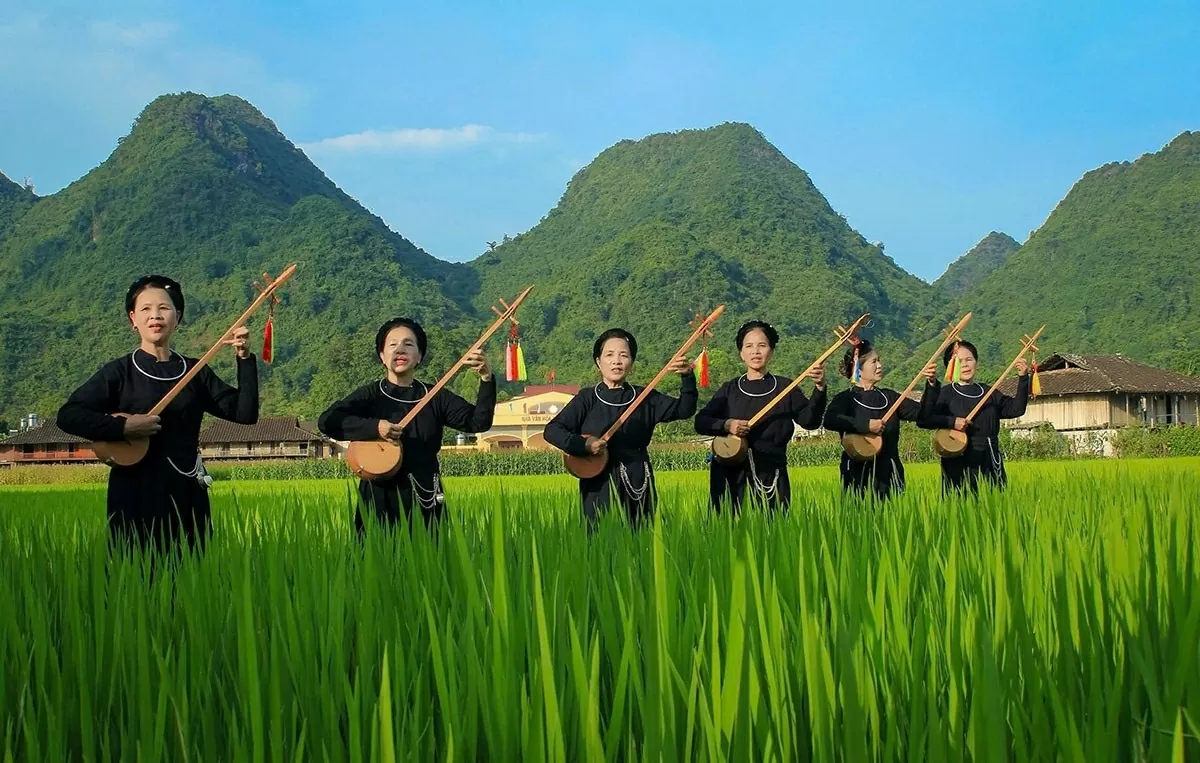
It is easy to see that the success of this small village today stems from its unwavering commitment to local values. (Source: Vietnam National Tourism Administration) |
Images of the clean and beautiful village, the smiles of the Tay people on the verandas of their stilt houses, or the melodious sound of the Tinh lute echoing in the valley are now appearing not only in domestic news reports but also on international channels.
Every visitor to Quynh Son can take home a unique memory. Some will forever remember the golden sunset painting the valley, others are captivated by the neatly arranged yin-yang tiled roofs, and still others simply find here a sense of peace in a rural setting… This is also vivid evidence of the effectiveness of a harmonious development model between conservation and tourism, between local culture and the trend of globalization.
The “Best Village” award, initiated by UN Tourism, is a global initiative to honor rural destinations that have achieved outstanding results in cultural and natural conservation, sustainable tourism development, and improving community livelihoods. The award is selected based on a rigorous system of criteria including governance, innovation, sustainability, environmental impact, and contribution to the United Nations Sustainable Development Goals (SDGs), becoming an international benchmark for high-quality community-based tourism models. To date, Vietnam has five villages recognized by UN Tourism as "Best Tourist Villages," including: Tan Hoa Village (Quang Tri), Thai Hai Village (Thai Nguyen), Tra Que Vegetable Village (Da Nang), Lo Lo Chai Village (Tuyen Quang), and Quynh Son Community Tourism Village (Lang Son). These names clearly demonstrate the integration capacity and enduring vitality of Vietnamese rural tourism in the process of green and humane development. |
Source: https://baoquocte.vn/ngoi-lang-dac-biet-duoi-thung-lung-bac-son-333143.html















































































Comment (0)