

Many restaurant owners in Hanoi know that raising prices will drive away customers, but they still have to do it for fear of losing money as the price of ingredients at the market is increasing weekly.
If the price doesn't increase, the capital loss will be substantial.
According to a survey, due to the weekly increase in prices of vegetables and meat at the market, many eateries have announced price adjustments, with increases of 5,000 - 10,000 VND per serving.
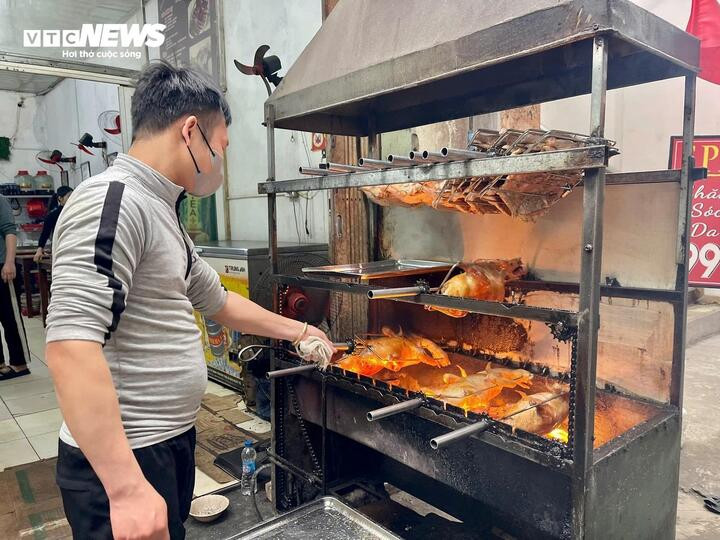
Mr. Nguyen Van Hung, owner of a roast duck restaurant in Me Tri ward (Nam Tu Liem district), said that he recently had to increase the prices of his dishes to ensure profitability due to the rising cost of ingredients. Accordingly, the price of roast duck and boiled duck, previously 190,000 VND per duck, has now been raised to 200,000 VND per duck. The price of noodle soups has also increased from 35,000 VND to 40,000 VND per bowl.
“Regular customers were surprised and asked why we increased prices. Honestly, we didn't want to change the selling price and tried to hold out for many days. But we waited and waited and still didn't see the price of raw materials go down; all kinds of vegetables and meat at the market increased in price. If I didn't adjust accordingly, I would lose money. I also didn't want to import low-quality goods even if the price could be cheaper, because that would be sabotaging the reputation I've built up over the years,” Mr. Hung said.
Similarly, Mr. Vu Quoc Vinh, the owner of a pho restaurant on Do Duc Duc Street (Nam Tu Liem District), also said that about a week ago he changed the selling price by increasing it by 5,000 VND per bowl. Thus, the price of pho will fluctuate according to the new increase, ranging from 35,000 to 50,000 VND per bowl.
“Since Tet (Lunar New Year), the prices of vegetables and meat have both increased. Beef is now 260,000 VND/kg, 10,000 VND/kg more expensive than before, and vegetables have also gone up. I tried to maintain the old prices for a while, but at this point, I am forced to raise them. An increase of 5,000 VND per bowl of pho is only equivalent to the cost of a few lemons and chili peppers, but it helps our restaurant avoid losses,” Vinh shared.
Many eateries near Vinh Tuy market have also increased the price of each meal by 5,000 VND. For individual dishes, owners will adjust the price based on ingredient costs or sell less than before to avoid losses.
Meanwhile, Vu Tran Quang, representative of the Huyen Anh noodle soup chain, said that the prices of vegetables and meat in the market have increased significantly. After struggling for many days and realizing the situation was unsustainable, Quang had to change direction. His restaurant chain has now sought out food suppliers directly to ensure a more stable and consistent supply of ingredients at reasonable prices.
"However, to achieve this, we have to commit to consistently importing large quantities of vegetables and meat from suppliers. This is quite difficult for small businesses, so they are forced to source food from local markets at fluctuating prices. It's understandable that they have to increase the prices of their dishes," Mr. Quang said.
According to surveys, prices of meat and vegetables have increased across the board in many markets. Pork prices began rising after Tet (Lunar New Year) and have not decreased since. Initially, the price only increased by 1,000-2,000 VND/kg, but after several consecutive increases, it is now more than 10,000 VND/kg higher than before Tet. The increase in pork prices has forced traders to adjust the price of pork to 130,000-200,000 VND/kg depending on the type.
Beef prices also increased by 10,000 - 15,000 VND/kg, reaching 260,000 - 275,000 VND/kg. Prices of green vegetables increased by 5,000 - 10,000 VND/bunch/kg.
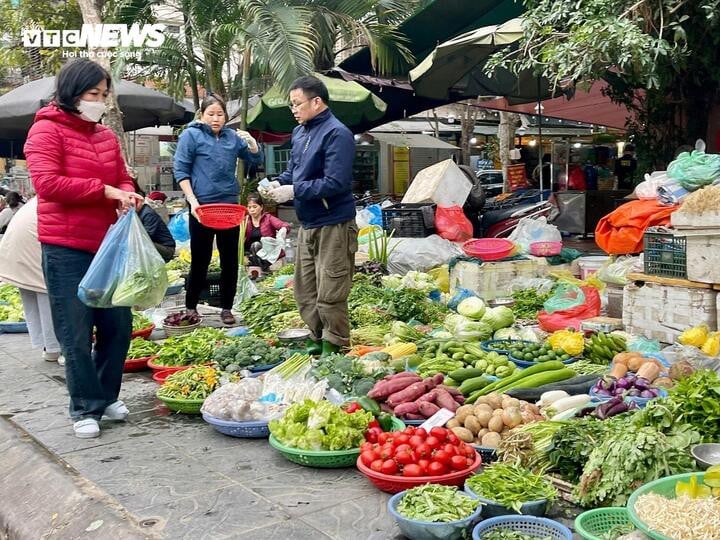
"Gritting their teeth" and enduring the situation for fear of losing customers.
While many restaurants are raising prices, quite a few are choosing to hold on, waiting for the price of ingredients to cool down.
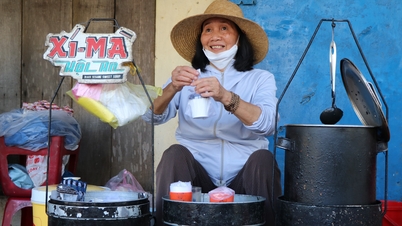
Mr. Hoang Minh Hoi, owner of a Nha Trang-style grilled spring roll stall (Thanh Cong Market, Ba Dinh District), said that in recent days, the price of pork and vegetables at the market has been continuously increasing, causing many difficulties for his business. “To make grilled spring rolls, I buy the meat and ingredients myself every day instead of stocking them up for a week or a month like many larger restaurants. Therefore, the continuous increase in pork prices since after Tet (Lunar New Year) has made me extremely anxious because the already meager profits from my small-scale business are shrinking every day. Currently, the price of pork at the market has increased to 25,000 VND/kg compared to before, and that's only for regular customers,” Mr. Hoi said.
According to Mr. Hoi, he imports about 20kg of pork per week to make spring rolls, and the increase in input prices has forced him to spend an additional 500,000 VND just on meat alone. After struggling for a few weeks, Mr. Hoi has now had to reduce the amount of pork he imports to balance the restaurant's expenses.
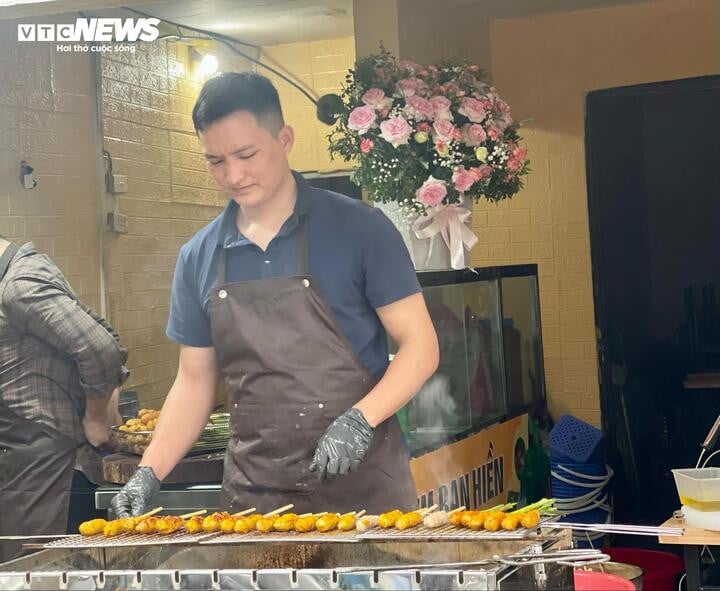
Not only has pork prices risen, but the cost of vegetables and fruits is also increasing, adding to Mr. Hoi's headaches. Because grilled spring rolls require a lot of fresh vegetables, Mr. Hoi cannot omit this ingredient, nor can he import less or limit the amount customers can use. Therefore, Mr. Hoi is facing the risk of his business becoming unprofitable, or even losing money.
“Raising prices would risk further reducing the already small customer base, while keeping prices the same and reducing portion sizes might also lead to customer dissatisfaction. After weeks of deliberation, I decided not to raise prices to retain customers. I also advised customers to limit their vegetable consumption to avoid waste and save on operating costs. Despite this, I'm still operating at a loss, sometimes even losing money on slow days , ” Mr. Hoi added.
Mr. Hoi complained: “With snack products, customers are usually unwilling to spend a large amount of money on a single serving. Currently, I'm selling them for 40,000 - 60,000 VND per serving. Increasing the price by 10,000 VND per item would ensure a profit margin, but that would be quite high, so I don't dare raise the price for fear that regular customers will look elsewhere or give up their snacking habit. Now, I just hope that food prices at the market will drop quickly; otherwise, we won't be able to sustain this business for much longer. In addition, I will also check prices at supermarkets; if they are more stable, I will buy there. However, the variety of herbs at supermarkets is not as abundant as at the market.”
Similarly, Mr. Nguyen Van Tuyen, owner of Gia Ngoc draft beer restaurant (Nam Tu Liem district), also said that soaring food prices are causing his business to decline.
"The weather is still freezing, and the restaurant's best-selling item is hot pot. However, this dish requires a lot of fresh vegetables and meat, so even if we sell a lot, we still won't make a profit. I'm really worried." Mr. Tuyen said.
According to Mr. Tuyen, the restaurant always needs to prepare a large supply of fresh vegetables and meat. The high prices of these items at the market have significantly increased the cost of purchasing them. "The expenses incurred each time we go to the market can amount to millions of dong. Meanwhile, it's not always busy. Even when it's busy, we have to prepare more, increasing costs without making a profit. In short, lately we've only seen losses or break-even, and haven't seen any profit yet." Mr. Tuyen complained.
Source
![[Photo] Prime Minister Pham Minh Chinh receives Lao Minister of Education and Sports Thongsalith Mangnormek](/_next/image?url=https%3A%2F%2Fvphoto.vietnam.vn%2Fthumb%2F1200x675%2Fvietnam%2Fresource%2FIMAGE%2F2025%2F12%2F16%2F1765876834721_dsc-7519-jpg.webp&w=3840&q=75)
![[Photo] Prime Minister Pham Minh Chinh receives the Governor of Tochigi Province (Japan)](/_next/image?url=https%3A%2F%2Fvphoto.vietnam.vn%2Fthumb%2F1200x675%2Fvietnam%2Fresource%2FIMAGE%2F2025%2F12%2F16%2F1765892133176_dsc-8082-6425-jpg.webp&w=3840&q=75)


![[Image] Leaked images ahead of the 2025 Community Action Awards gala.](/_next/image?url=https%3A%2F%2Fvphoto.vietnam.vn%2Fthumb%2F1200x675%2Fvietnam%2Fresource%2FIMAGE%2F2025%2F12%2F16%2F1765882828720_ndo_br_thiet-ke-chua-co-ten-45-png.webp&w=3840&q=75)
![[Live] 2025 Community Action Awards Gala](/_next/image?url=https%3A%2F%2Fvphoto.vietnam.vn%2Fthumb%2F1200x675%2Fvietnam%2Fresource%2FIMAGE%2F2025%2F12%2F16%2F1765899631650_ndo_tr_z7334013144784-9f9fe10a6d63584c85aff40f2957c250-jpg.webp&w=3840&q=75)























































![[Photo] Prime Minister Pham Minh Chinh attends the Vietnam Economic Forum 2025](https://vphoto.vietnam.vn/thumb/402x226/vietnam/resource/IMAGE/2025/12/16/1765893035503_ndo_br_dsc-8043-jpg.webp)

































Comment (0)