

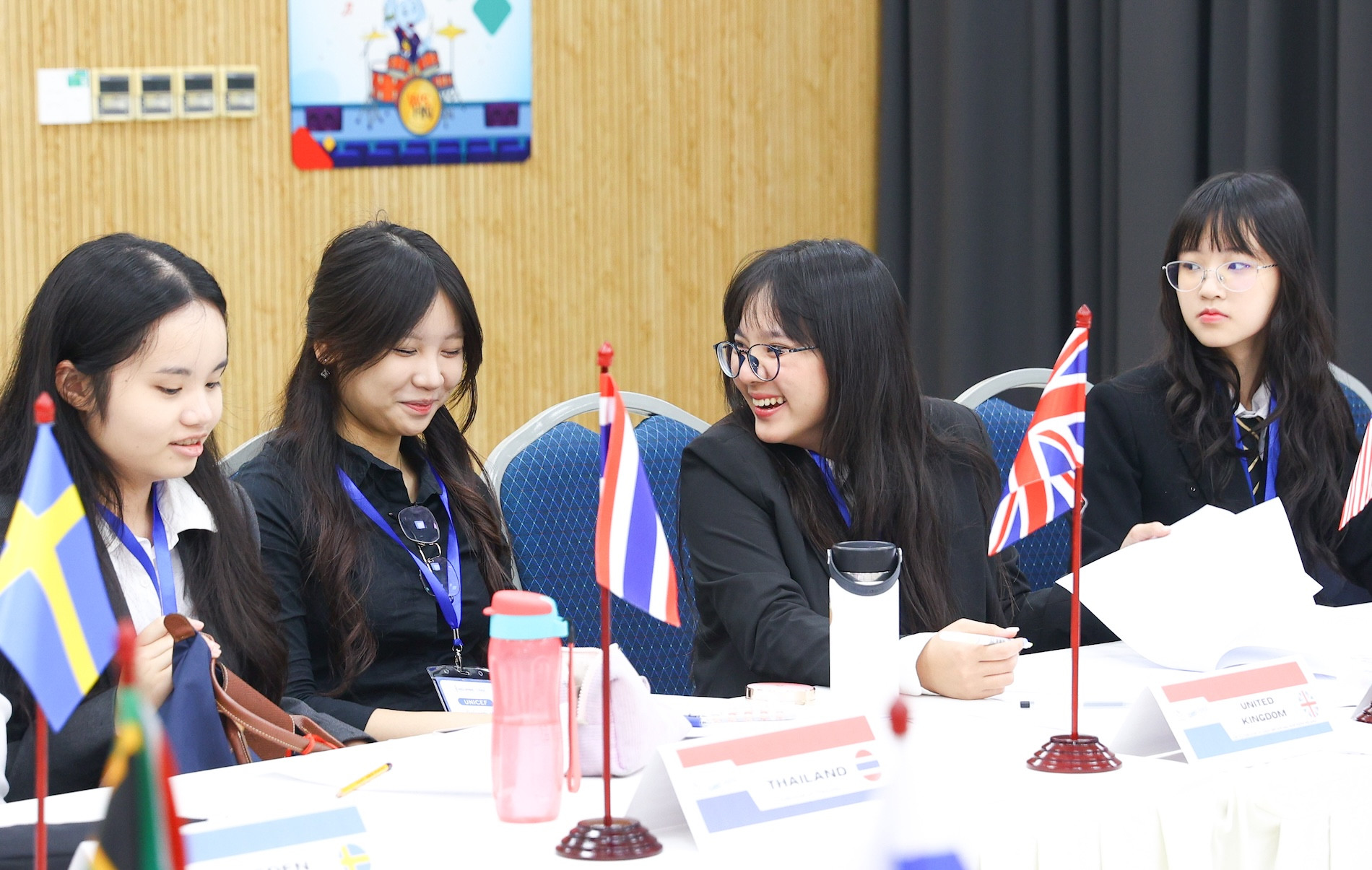
The above information was presented by experts at the Cyber Peace event, which took place at Wellspring Bilingual School recently. This is a follow-up activity to the Hanoi Convention 2025 and the “Not Alone” campaign to build a safe and humane digital environment for the young generation.
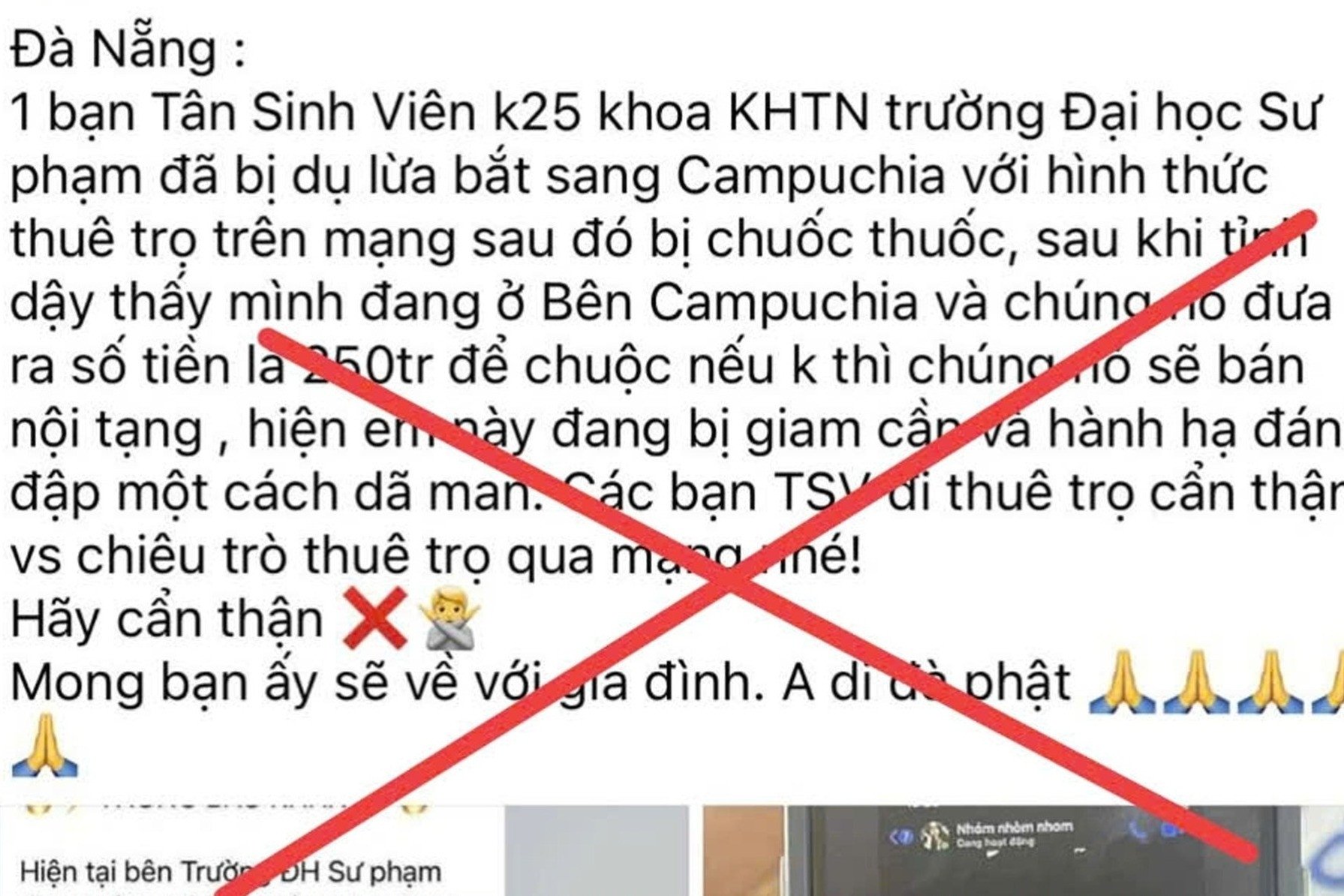
According to Lieutenant Colonel, Dr. Luu Xuan Van, lecturer of the Faculty of Cyber Security and High-Tech Crime Prevention, People's Security Academy, currently cyber criminals have many sophisticated methods and tricks to lure and threaten students, causing psychological, financial and health damage, focusing on 4 main tricks.
First, the subjects may impersonate police officers or authorities to threaten that the children are involved in legal proceedings. From there, they ask the children to perform activities according to pre-arranged scenarios, entice them to transfer money or participate in illegal activities.
In addition, cybercriminals can create fake websites or forums to collect personal information, then use this data to build scam scenarios to defraud the victims' relatives and friends.
They can also take advantage of security holes to obtain sensitive and important information of students to attack and threaten them.
Not only that, through social networks, subjects can create false information to guide public opinion, thereby leading students to carry out illegal activities.
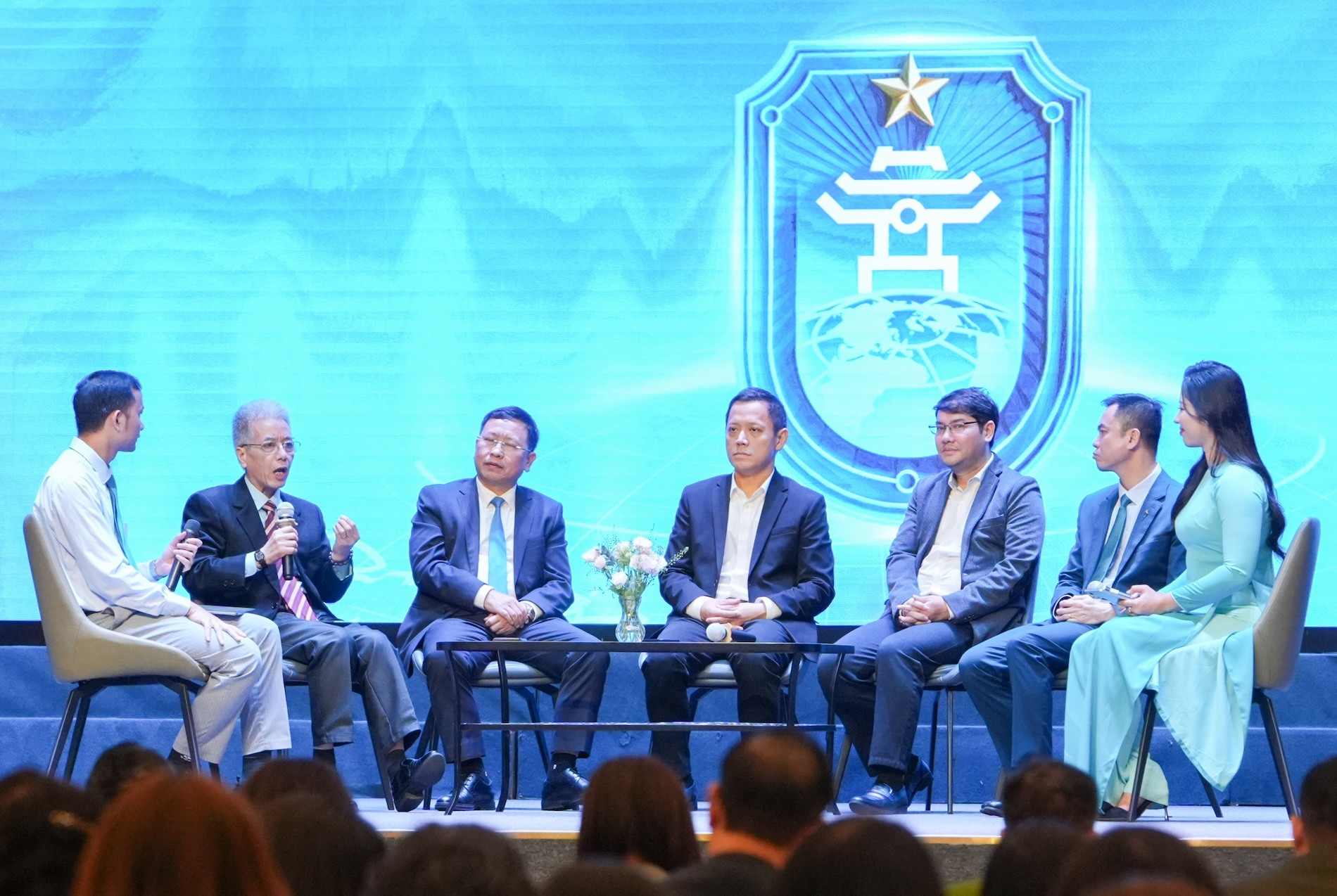
Lieutenant Colonel Luu Xuan Van said that although these tricks are not new and have been warned about many times, many students with good qualifications, knowledge, even very good students and smart people... are still being scammed.
The reason is that children have early access to technology and use many services on the internet, while their digital skills are still weak and their understanding of the law is incomplete, leading to being led by bad people.
Many students have the ability, qualifications, and desire to learn from information on the internet, but this information is often mixed with truth and falsehood. In this “matrix”, sometimes students are too confident in themselves, do not care about warnings, and easily become victims.
Professor Dr. Le Anh Vinh, Director of the Vietnam Institute of Educational Sciences, also shares this view. He said that in a study conducted by the Institute, two groups of students were surveyed, including those with very good IT skills and those with average IT skills. The surprising result was that the group of students who were good at IT had lower digital security skills.
“Therefore, having knowledge or technological ability does not mean that students have enough skills to deal with the risk of fraud in cyberspace, even though the situations are very common,” said Professor Le Anh Vinh.
In order for children to know how to protect themselves, according to Professor Le Anh Vinh, students need to be educated early on digital skills to recognize fraudulent behavior and risks, while raising awareness, increasing critical thinking skills, and always asking questions in unusual situations to have the best defense.
Meanwhile, Ms. Le Anh Lan, education expert at UNICEF Vietnam, said that to protect children in cyberspace, the most important thing is to focus on improving children's self-awareness instead of just focusing on prohibition or pointing out risks.
Ms. Lan also said that UNICEF's view is that it is necessary to equip children with digital skills early, preferably from preschool.
“When we made this recommendation, we received a lot of negative feedback from parents, even educators. Many people asked why preschool children should be exposed to the digital environment so early.
But whether they like it or not, children are immersed in the digital world from preschool age. Therefore, the problem is not at what age children should be exposed, but adults must prepare the best skills to support and create an environment to help children master the digital world," said Ms. Lan.
Source: https://vietnamnet.vn/nhieu-hoc-sinh-sinh-vien-rat-gioi-va-thong-minh-nhung-van-bi-lua-dao-tren-mang-2463115.html




![[Photo] General Secretary To Lam receives Vice President of Luxshare-ICT Group (China)](https://vphoto.vietnam.vn/thumb/1200x675/vietnam/resource/IMAGE/2025/11/15/1763211137119_a1-bnd-7809-8939-jpg.webp)
![[Photo] Prime Minister Pham Minh Chinh meets with representatives of outstanding teachers](https://vphoto.vietnam.vn/thumb/1200x675/vietnam/resource/IMAGE/2025/11/15/1763215934276_dsc-0578-jpg.webp)

































































Comment (0)