

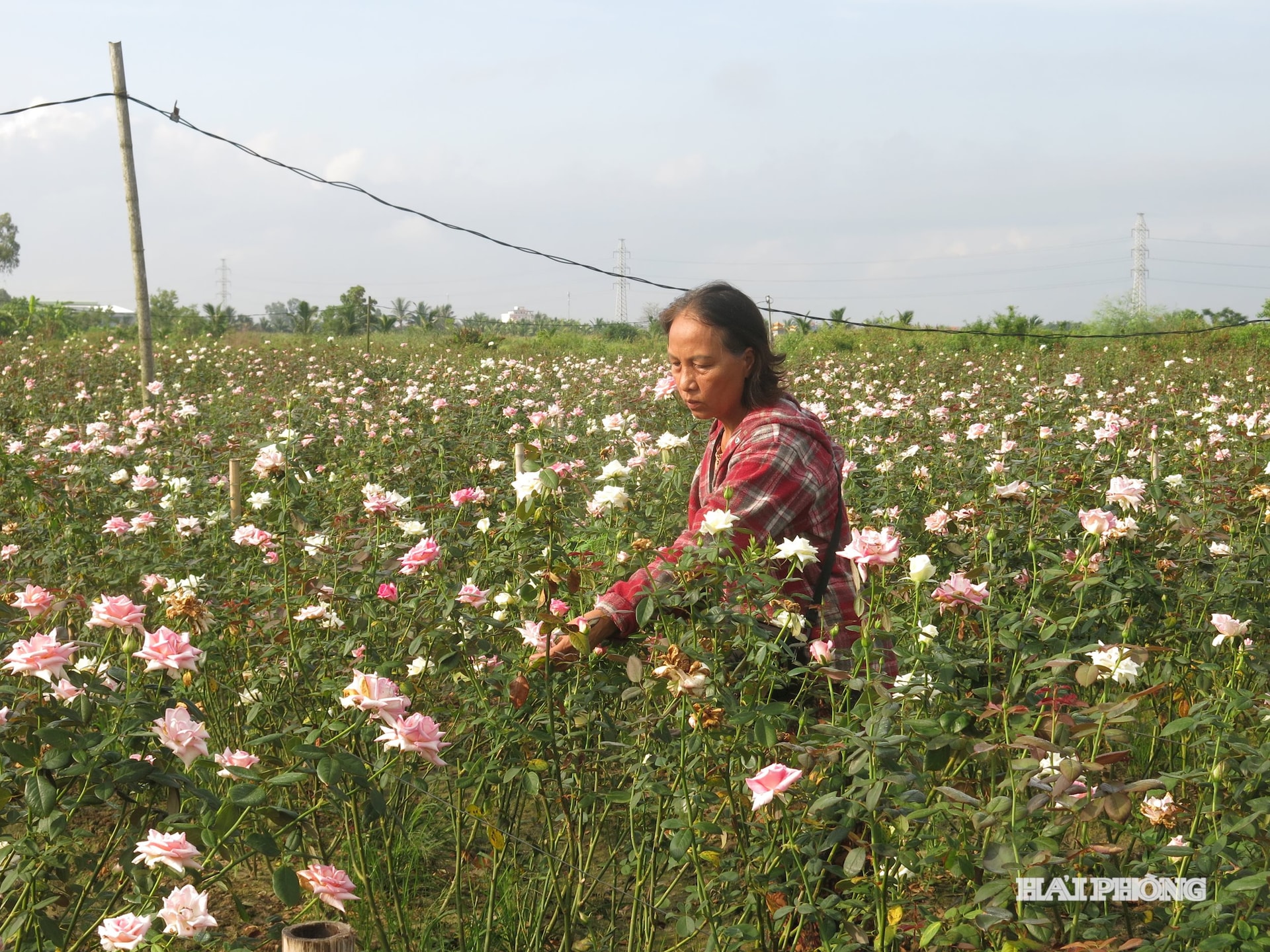
Let the flower garden display its vibrant colors.
In Hai Phong , in recent years, some farmers in specialized flower-growing areas such as Trang Cat, Ha Lung (Hai An ward), Dong Thai (An Duong ward), and Ly Cau (An Khanh commune) have shown exceptional skill in growing roses. These growers can maintain and care for perennial plants to harvest produce year-round...
The family of Mr. Tran Duy Hieu, in Ly Cau village, An Khanh commune, owns 3 sao (approximately 0.3 hectares) of rice paddies and a garden where they grow roses, generating a high income. Mr. Hieu said that on normal days, these roses sell for 5,000-7,000 VND per flower. During holidays, Tet (Lunar New Year), and times of scarcity, beautiful roses can sell for 15,000-20,000 VND per flower, but farmers don't have much produce to supply the market... Each day, his rose garden can bring in an income of 1-2 million VND...
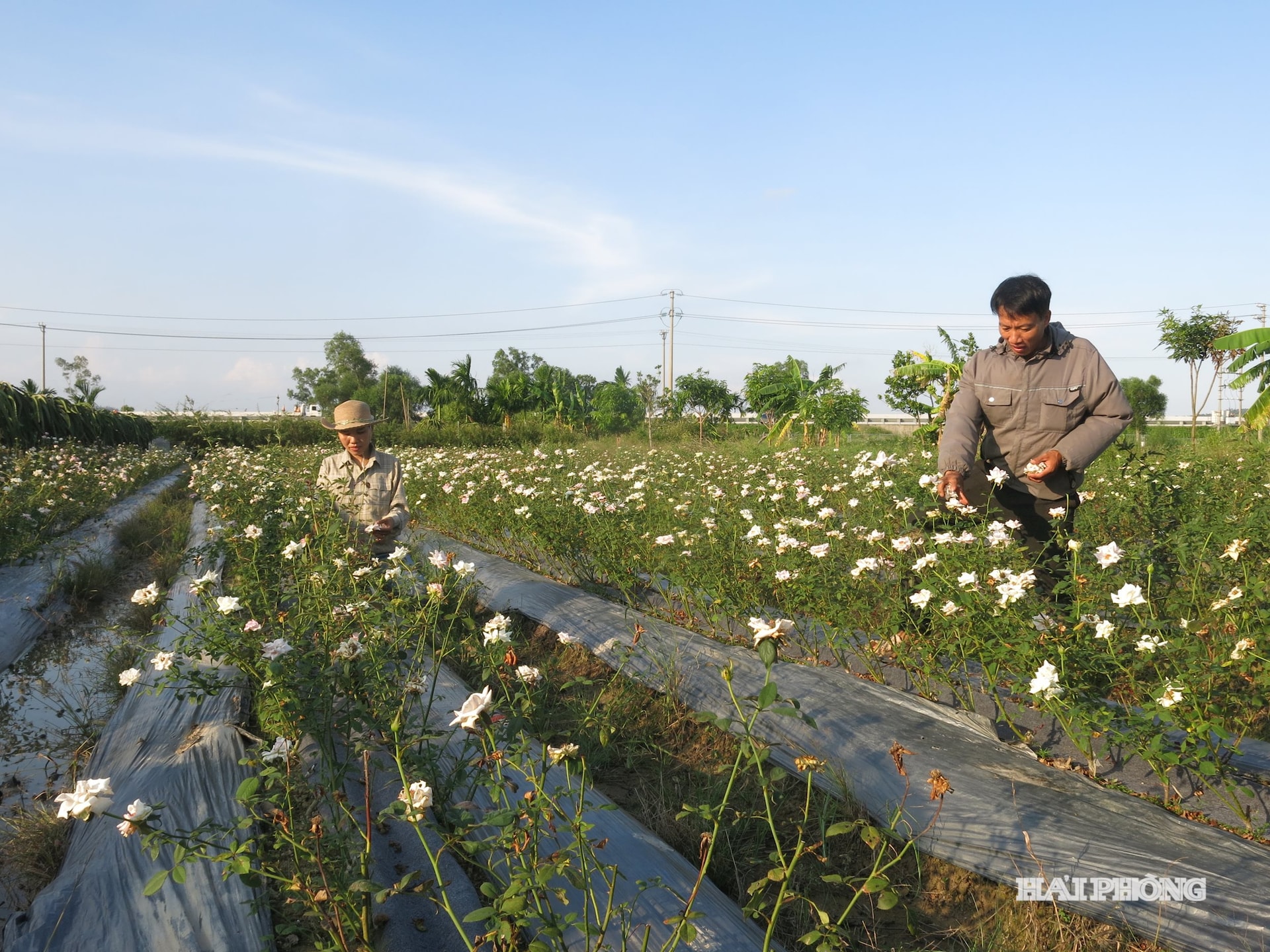
Rose growers in Hai Phong are now drawing on experience and learning new techniques to create vibrant, long-lasting rose gardens. Mr. Tran Van Dien, from Ha Lung, Hai An ward, said that in the past, people mainly planted roses directly from cuttings or grafts, but the gardens were not durable, and the plants were prone to root rot and yellowing leaves. In recent years, most gardeners have adopted the technique of grafting roses onto the rootstock of the Forsythia plant. With this method, the gardens last longer; some rose gardens have lasted 9-10 years without needing replanting, still yielding regular harvests of large, beautiful flowers. Growers can graft many vibrant colors such as red, pale pink, fuchsia, white, lipstick red, and double happiness...
Along with farmers' experience in grafting rose cuttings onto forsythia plants, some agricultural extension officers are supporting flower growers with modern grafting techniques to improve production efficiency. Engineer Do Thi Hang, from Agricultural Extension Station No. 4 (Hai Phong Agricultural Extension Center), said that traditionally, farmers usually make soil balls for grafting rose cuttings, and it takes 1-2 months for the grafted branches to develop. However, agricultural extension officers are assisting farmers in using specialized grafting wire and soil balls, and advising them to prune the stems and leaves of the forsythia plant to concentrate nutrients on the grafted branch, so the grafted branch gradually develops after only 15 days...
Encourage and support scaling up.
Unlike some seasonal flower crops, growing roses allows farmers in Hai Phong to harvest year-round, resulting in higher incomes. However, rose cultivation requires more elaborate techniques and carries a higher risk. Mr. Do Chi Dung, from My Khe Dong residential area, Kien An ward, said that in the summer, caring for roses is more laborious, but the actual yield is lower, the flowers are smaller, and not as fresh and beautiful as in the winter. Rose plants are also prone to pests, diseases, and yellowing leaves. Therefore, growers must use the correct pesticides.
.jpg)
Along with that, the area of land available for flower cultivation is gradually shrinking, causing many people, despite their dedication to developing the profession, to face numerous difficulties. According to Ms. Nguyen Thi Thoan, in Ha Lung, Hai An ward, many inner-city and suburban flower-growing areas such as Trang Cat, Ha Lung, Dong Thai... have been included in economic and urban development projects, so most farmers no longer have land to grow high-value flowers like roses. The remaining land is mostly interspersed plots, while the irrigation system has been disrupted and the water source is polluted, thus failing to meet the requirements for growing "fussy" flowers like roses...
To expand the cultivation of this economically valuable flower, many passionate rose growers have moved to communes with predominantly agricultural land, located about 20-30 km from the city, to rent, borrow, or consolidate abandoned rice paddy land to transform it into flower gardens. Although these flower-growing areas are vast, farmers are constantly concerned about land procedures. Currently, flower growers mainly rent or borrow land through agreements or handwritten documents with local farmers who have abandoned their fields. When production becomes profitable, many landowners want to reclaim their land, while the investment costs for growing flowers are quite high. Furthermore, transporting harvested products from the suburbs to the city center for sale faces many obstacles due to the long distances.
To expand the area for rose cultivation, farmers hope that local authorities will encourage and create favorable conditions for production development. They also request support from relevant agencies in applying advanced techniques and establishing product distribution links. Some households have ideas to develop their rose gardens into experiential areas for tourists to visit, take photos, and purchase products directly from the gardens; and to collaborate with businesses to process rose-based cosmetic products, thereby generating higher economic value.
HO HUONGSource: https://baohaiphong.vn/nong-dan-hai-phong-ghep-tam-xuan-no-hoa-hong-520090.html































































Comment (0)