

For many designers, artisans, ao dai ambassadors, and ao dai tailors across the country, pride and love for the ao dai are always present in every brushstroke, every fold of fabric, every stitch... connecting creativity with the preservation of the inherent traditional values of the ao dai.
Preserving a part of the Vietnamese soul.
Always appearing in public in elegant and graceful ao dai (traditional Vietnamese dress), Meritorious Artist Hai Phuong, Head of the Traditional Music Department at the Ho Chi Minh City Conservatory of Music, has a special love for the ao dai.
"As a performer of traditional Vietnamese musical instruments, I automatically choose to wear an ao dai (traditional Vietnamese dress) when I go on stage. The ao dai helps the public recognize Vietnamese artists and helps define Vietnamese culture and identity when we go out into the world ," shared Meritorious Artist Hai Phuong.
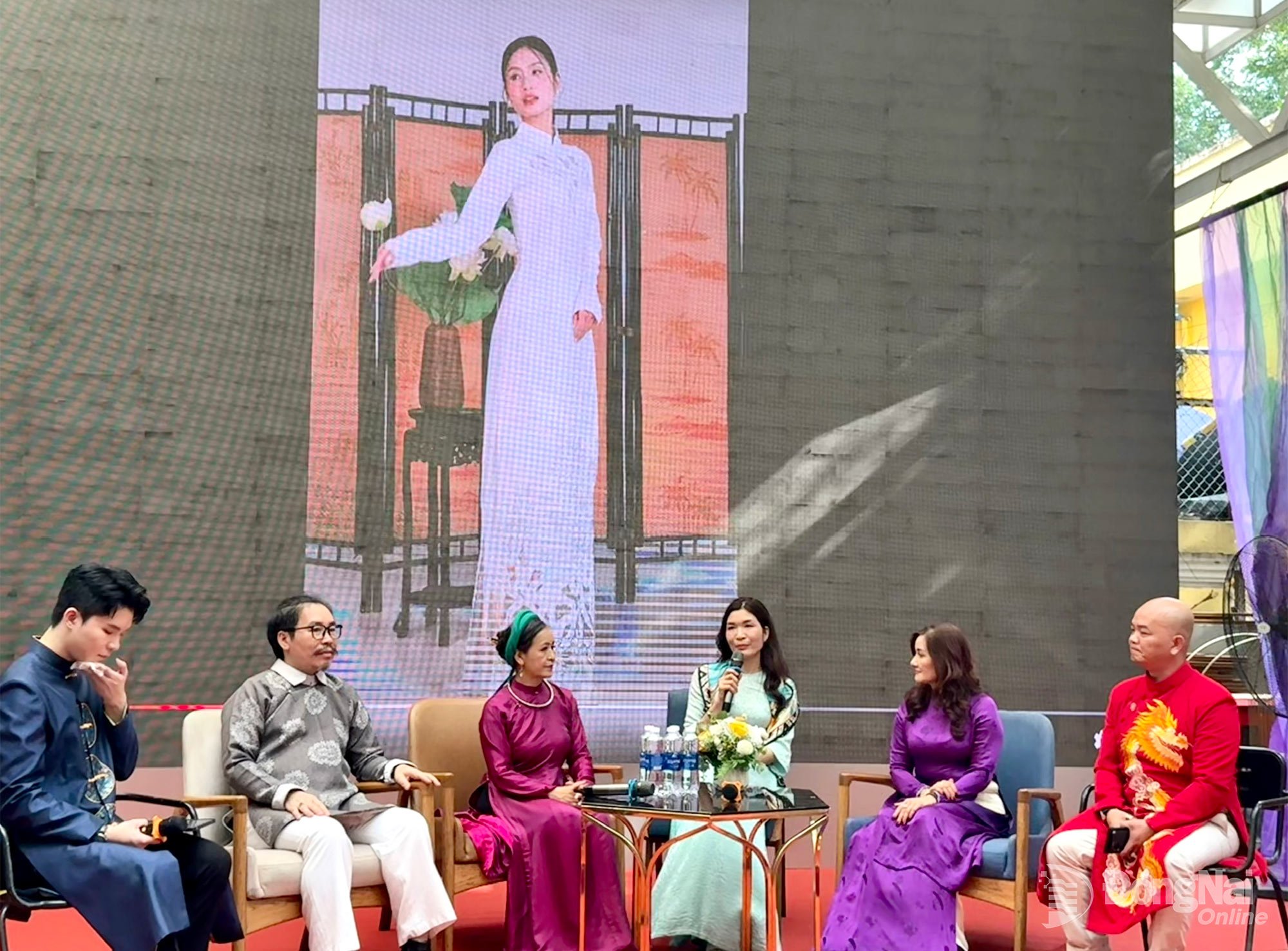 |
| Designers, artisans, and ao dai ambassadors share their experiences at the Seminar on Sustainable Development of the Ao Dai Craft held at the Ho Chi Minh City Book Street. Photo: Nhat Ha |
With a deep love and attachment to the ao dai (Vietnamese traditional dress), Meritorious Artist Hai Phuong believes that the ao dai is increasingly appearing in modern life, in many contexts and for many age groups. Designers have continuously explored and created ao dai designs that are not only beautiful and reflect the true identity of the Vietnamese people, but also provide comfort to the wearer – something essential for the ao dai to truly exist in contemporary life.
"The most difficult thing in the art of making ao dai is to love and understand it in order to breathe life into it, so that even if the context or perspective changes, the essence and character of the ao dai are still evident, and it's recognizable as an ao dai, not just something else created and called an ao dai."
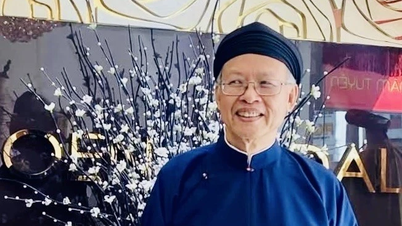
Artisan NAM TUYEN
Artisan Nam Tuyen, who has over 30 years of experience in restoring the traditional five-panel ao dai, shared his thoughts: first and foremost, he designs and sews ao dai to express his deep gratitude to his ancestors who created this enduring garment. Secondly, he aims to look towards the future, so that young people understand the value of the ao dai and continue the tradition, the distinctive cultural values of the nation in modern life. Artisan Nam Tuyen likens the ao dai to the "cultural identity of the nation," meaning that when wearing it, the wearer is aware of their roots, while the designer must have a deep understanding of the essence and core values of the ao dai.
The Ho Chi Minh City Ao Dai Association has been implementing training activities, workshops, showcases, and collaborations with schools and design businesses to build a sustainable development ecosystem; exchanging and sharing ideas on preserving the traditional values of the Ao Dai, developing brands and markets in the contemporary context, and training the next generation.
Designer Anna Hanh Le - Acting President of the Ho Chi Minh City Ao Dai Association
Growing up in a rural area of Central Vietnam, the first time designer Anna Hanh Le – acting president of the Ho Chi Minh City Ao Dai Association – wore the ao dai was also the moment she felt the femininity, softness, and beauty of wearing the ao dai – a national heritage. Designer Anna Hanh Le believes that each person who wears the ao dai is not just wearing a garment, but is preserving a part of the Vietnamese soul.
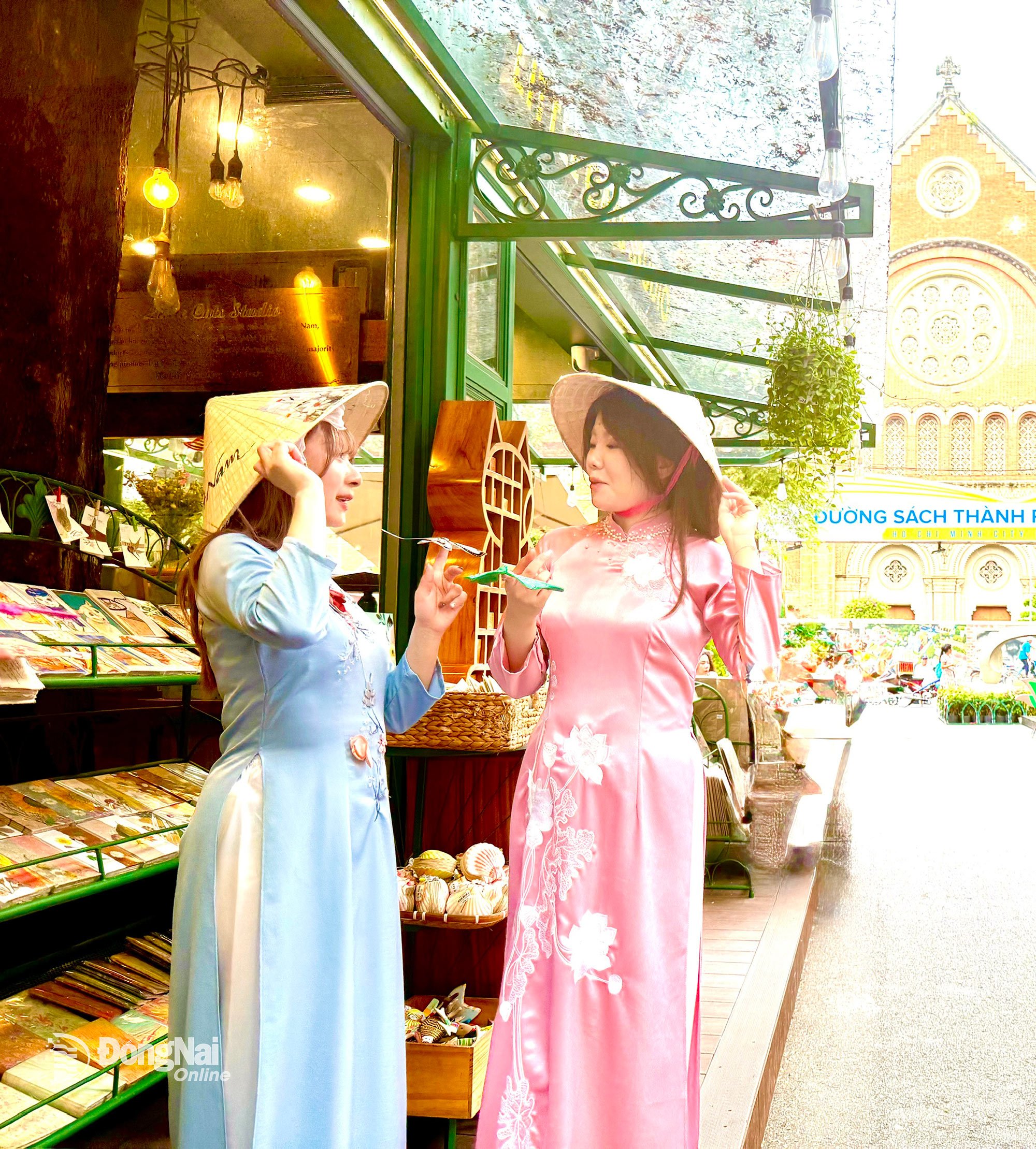 |
| Foreign tourists experience wearing the traditional Vietnamese ao dai dress at Ho Chi Minh City Book Street. |
The Seminar on Sustainable Development of the Ao Dai Craft is one of the events concluding the series of activities within the framework of the Ho Chi Minh City Ao Dai Culture Festival, taking place from June 21st to October 20th, 2025. The festival brings together hundreds of artisans, designers, businesses, and Ao Dai ambassadors. The event includes many prominent activities such as: the "Ao Dai Journey 2025" photo exhibition; the "Ao Dai - The Breath of the City" gift-giving program, showcasing Ao Dai designs as a token of appreciation; and the awarding of the "Skills for a Future" livelihood fund to disadvantaged women and single mothers, giving them the opportunity to learn Ao Dai tailoring. Notably, the program also includes a lookbook photoshoot for visitors. |
Connecting for the sustainable development of the traditional Vietnamese dress (áo dài) craft.
According to designer Anna Hạnh Lê, the ao dai (Vietnamese traditional dress) is a product that connects the hands of tailors, the hearts of artisans, and the vision of the designer. To build a Vietnamese ao dai brand that reaches the world stage, she emphasizes the designer's vision, which plays a crucial role in elevating the ao dai and connecting it with international fashion . This is when the ao dai combines traditional identity with international standards.
"Currently, the fashion world is seeking authenticity and cultural depth in each design, and the ao dai is a symbol of these two elements," said designer Anna Hanh Le.
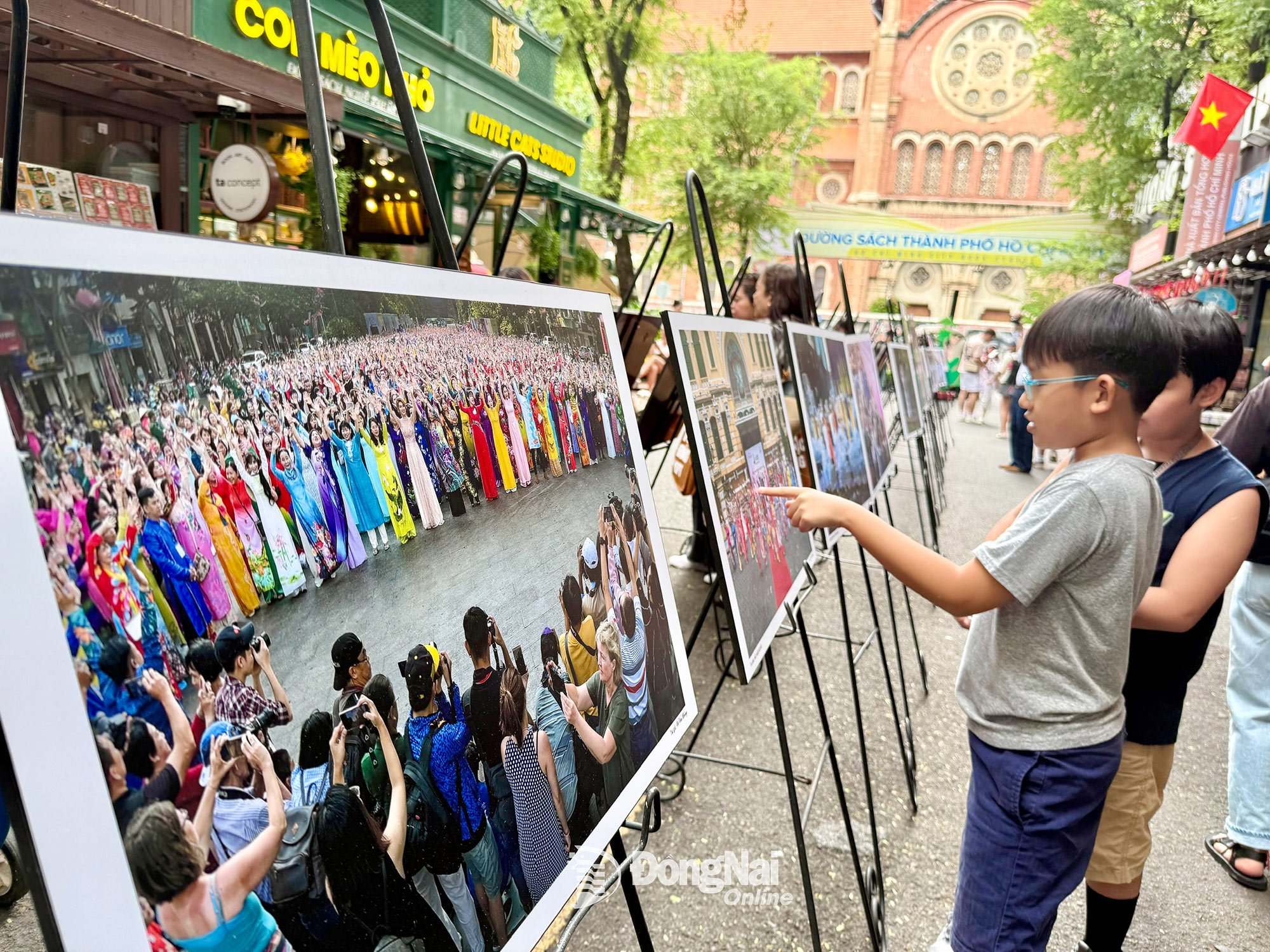 |
| Visitors view a photo exhibition at the Ho Chi Minh City Ao Dai Culture Festival, October 19th. |
Acknowledging that the craft of making ao dai (Vietnamese traditional dress) is not a glamorous affair but a challenging journey, involving countless days spent in the design studio and demanding constant creativity, designer Anna Hanh Le believes that in order to survive, thrive, and spread the value of ao dai in the context of international integration, those in the profession must be truly dedicated, requiring not only skills and techniques but also marketing and communication.
Concerned that many design students lack opportunities to work in the field, despite the arduous and costly learning process, designer Anna Hạnh Lê hopes to continue connecting with and spreading the value of the profession to young designers, students, and trainees, inspiring them not only with skills but also with a professional mindset.
For artisan Nam Tuyen, the most fundamental aspect of the ao dai craft is preserving the essence of the ao dai in every stitch, seam, and fold of fabric passed down from the past, blending it with contemporary elements to create a unique style and define the designer's identity.
"To achieve this, artisans must understand the core essence, nature, and cultural depth of the ao dai so that when they adapt it, it won't be distorted or mistaken. When worn, the ao dai should reflect the dignified, elegant, and especially humble nature of the Vietnamese people," said artisan Nam Tuyen.
When passing on his skills to young designers, artisan Nam Tuyen doesn't focus on technical training, such as how to design or sew. Instead, he instills in the younger generation a sense of pride in the ao dai (Vietnamese traditional dress), in traditional culture, specifically the culture of wearing it. When young people love the ao dai, they will learn about it, understand how to create it, and wear it beautifully. While acknowledging that preserving the ao dai craft sustainably is a matter for the whole society, he always reminds his apprentices that when they receive a piece of fabric, they must understand the process from the silkworm, the cocoon, to the silkworm spinning, and they must appreciate the culture, thereby breathing life into each design.
Nhat Ha
Source: https://baodongnai.com.vn/dong-nai-cuoi-tuan/202510/phat-trien-nghe-ao-dai-ben-vung-57f3ea8/





















![[Photo] Prime Minister Pham Minh Chinh receives the Chinese Ambassador to Vietnam](https://vphoto.vietnam.vn/thumb/1200x675/vietnam/resource/IMAGE/2026/04/05/1775397481797_ndo_br_dsc-5512-jpg.webp)






















































Comment (0)