

Especially in the context of the country entering an era of development and prosperity, and looking forward to the 14th National Congress of the Party.
Creating a new educational mindset.
Resolution No. 71-NQ/TW dated August 22, 2025, of the Politburo on breakthroughs in education and training development clearly states: “Comprehensive digital transformation, widespread adoption and strong application of digital technology and artificial intelligence (AI) in education and training.” On September 15, 2025, the Government issued Resolution No. 281 on the Action Program to institutionalize and fully implement the viewpoints, objectives, tasks, and solutions in Resolution No. 71-NQ/TW.
The resolutions define AI not merely as a tool, but as a groundbreaking solution, creating a new educational mindset. According to experts and educators, the action program implementing Resolution No. 71 plays a crucial role in modernizing and comprehensively improving the quality of education and training, a priority for our country.
This issue has been specifically identified as a key task and strategic breakthrough in the draft documents for the 14th National Congress of the Party, which are currently being circulated for comments.
Given the opportunities and advantages for the development and application of artificial intelligence (AI) in education, the 2025-2026 academic year marks a significant transformation in the field of education and training, with the central task being comprehensive digital transformation, widespread adoption, and application of digital technology and AI.
These orientations have become an important driving force, encouraging educational institutions to constantly innovate, promote digital technology, and gradually build a digital ecosystem to serve management, teaching, scientific research, and community engagement…
According to Professor Dr. Le Anh Vinh - Director of the Vietnam Institute of Educational Sciences (Ministry of Education and Training): Besides infrastructure issues, connectivity and the capacity of human resources serving digital transformation are among the issues that need attention. Therefore, there must be specific programs to support the capacity of management staff and teachers directly involved in implementation, and especially staff working on digital transformation in schools.
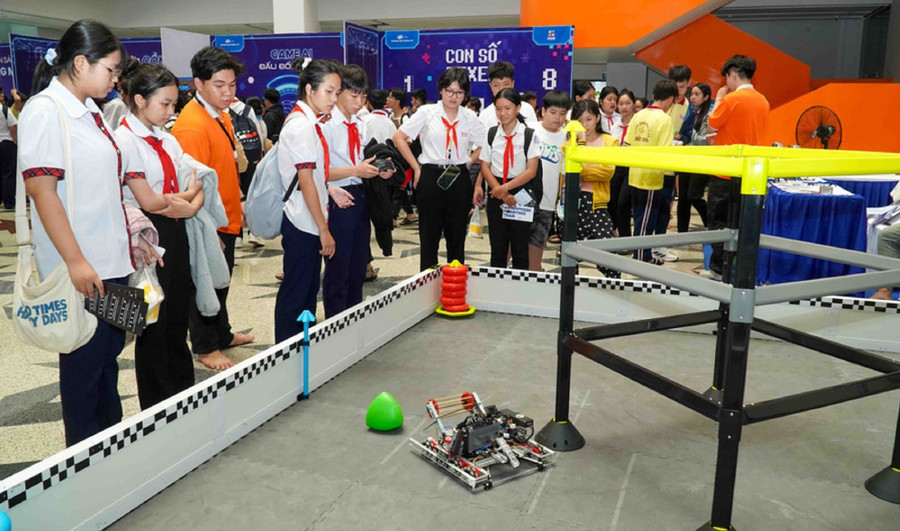
Accordingly, AI is considered a useful tool in developing students' abilities and qualities. Professor Dr. Le Anh Vinh stated: Developing AI capabilities not only creates a creative learning environment but also helps students recognize their own potential, aiming to become global citizens in the future.
“The trend of applying artificial intelligence in education is irreversible. AI will undoubtedly have a comprehensive impact on changing curricula, improving teaching and learning processes, and supporting in-class testing and assessment. This will provide teachers with information and students with more learning opportunities.”
"The application of AI technology in education needs to be implemented through two solutions: short-term and long-term. The short-term solution is to develop digital capabilities for teachers and administrators so they can teach and manage schools more effectively. The long-term roadmap requires changing the curriculum to allow students to access AI earlier," shared Professor Le Anh Vinh.
According to representatives from the Can Tho City Department of Education and Training, in the period 2025-2030, to further promote comprehensive digital transformation in education and meet the spirit of Resolution No. 71-NQ/TW, the sector has identified enhancing digital capacity for teachers and students as one of the key factors.
This includes focusing on building and implementing a digital competency framework for teachers at each educational level, organizing training courses and skill development programs on applying scientific and technological achievements for 100% of teachers and administrators. It also involves promoting the "Digital Literacy Movement" throughout the entire sector, specifically by popularizing basic digital skills for all teachers, students, and even parents, so that everyone is ready to participate in the digital education environment.
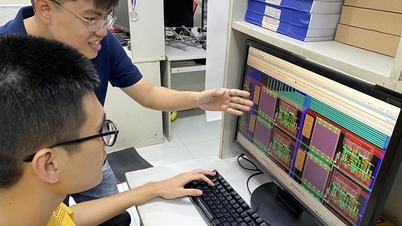
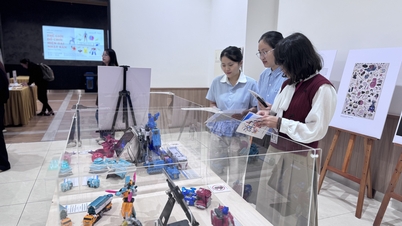
Effectively implement STEM/STEAM education models, incorporating robotics programming and AI applications into experiential activities for high school students to cultivate creative thinking and adaptability to new trends.
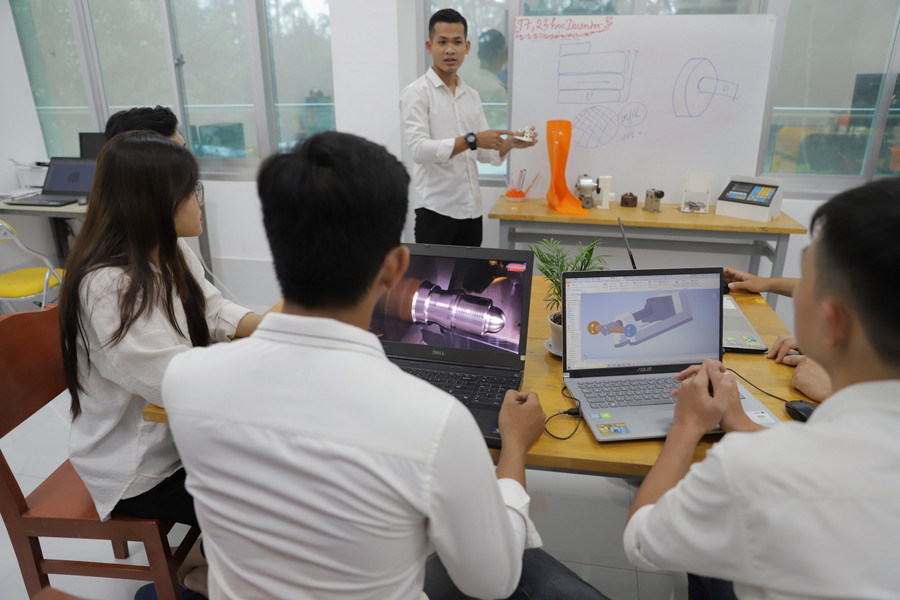
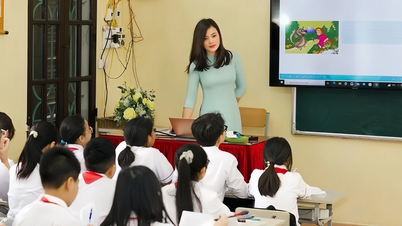
Changes are occurring in everything from administration and teaching to testing and evaluation.
Discussing the development and application of AI in Can Tho City until 2030, Mr. Nguyen Huu Thanh Binh, Deputy Director of the Department of Science and Technology, said:
The city aims for 100% online public services utilizing AI; all officials and civil servants to use virtual assistants to support their work; each agency, organization, and enterprise to have at least one AI application; and the formation of at least five AI-based startups. Can Tho also identifies priority areas for AI application, including public administration, healthcare, education, agriculture, urban transportation, environment, and tourism.
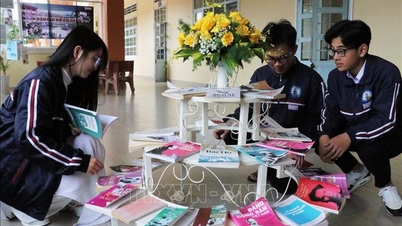
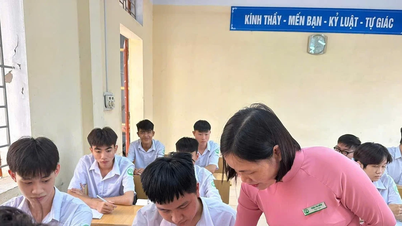
From the perspective of high school management, according to Dr. Phung Kim Phu - Principal of Hoang Dieu High School (Can Tho City): Digital transformation is not just about introducing computers or software into schools, but a comprehensive "revolution" that changes everything from administration and teaching to testing and evaluation.
According to Dr. Phung Kim Phu, the school has digitized student, teacher, facility, and financial records on systems such as VnEdu, VNPT-CCVC, and Misa, enabling transparent management, centralized data, and synchronization with the Ministry of Education and Training.
Meetings, documents, and reports are processed online, reducing paperwork and increasing administrative efficiency. The school is continuing to raise awareness and improve digital skills for teachers and students; while also investing in information technology infrastructure to support teaching and learning. All activities, from management and teaching to meetings and record keeping, will be completely digitized.
Amidst the widespread digital transformation, higher education institutions in the Mekong Delta are proactively applying AI in teaching, research, and training management.
At FPT University's Can Tho campus, the learning environment extends beyond the classroom, offering students diverse experiences, opportunities to access advanced technology, develop entrepreneurial ideas, and integrate internationally. From these ideas, students apply them to their graduation projects, which are highly practical and combine technology and business…
According to Dr. Nguyen Xuan Phong, Vice Rector of FPT University and Director of the FPT University branch in Can Tho City: AI impacts and changes the way people learn and work, with increasingly widespread applications in education, healthcare, agriculture, and sustainable development. However, Dr. Nguyen Xuan Phong also pointed out that developing countries still face many challenges regarding data and high-quality human resources when implementing AI.
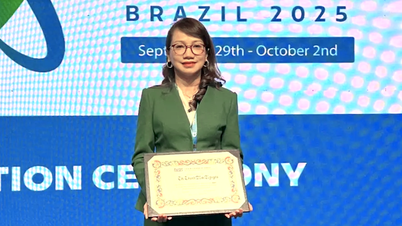
Ms. Le Thi Kim Loan, Vice Rector of Tien Giang University, further stated that equipping individuals with digital skills is an indispensable factor for achieving success in their studies, research, and career development. Equipping individuals with digital skills is considered a comprehensive and sustainable training strategy, creating a generation of highly adaptable human resources for all industries.
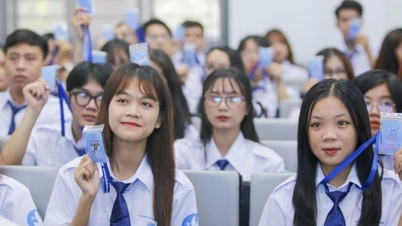
At Tien Giang University, the implementation of digital competency training for students is carried out comprehensively. “The university has established a council to develop regulations on digital competency standards and the content of digital competency training integrated into the undergraduate and college-level Early Childhood Education programs,” Ms. Loan shared.
In addition, the university established councils and program development teams to review, update, supplement, and adjust the training and teaching programs applied to the 25th cohort. This included developing a "Digital Skills" module and integrating it into the specialized modules of various majors. Student training was implemented in two ways: incorporating it into the main curriculum as prescribed and supplementing knowledge through specialized training courses…
The school focuses on developing digital learning materials, innovating teaching methods based on technology, and encouraging teachers to apply flexible and creative educational models. The ultimate goal is "every teacher masters technology, every student learns in their own way," aiming for a smart, modern school model that is still full of joy and humanistic values. - Dr. Phung Kim Phu - Principal of Hoang Dieu High School (Can Tho City)
Source: https://giaoducthoidai.vn/phat-develop-application-ai-key-to-breakthrough-education-in-the-new-era-post755527.html


![[Photo] Closing Ceremony of the 15th Conference of the Central Committee of the 13th Party Congress](/_next/image?url=https%3A%2F%2Fvphoto.vietnam.vn%2Fthumb%2F1200x675%2Fvietnam%2Fresource%2FIMAGE%2F2025%2F12%2F23%2F1766462841764_a1-bnd-3731-1647-jpg.webp&w=3840&q=75)



















































































Comment (0)