


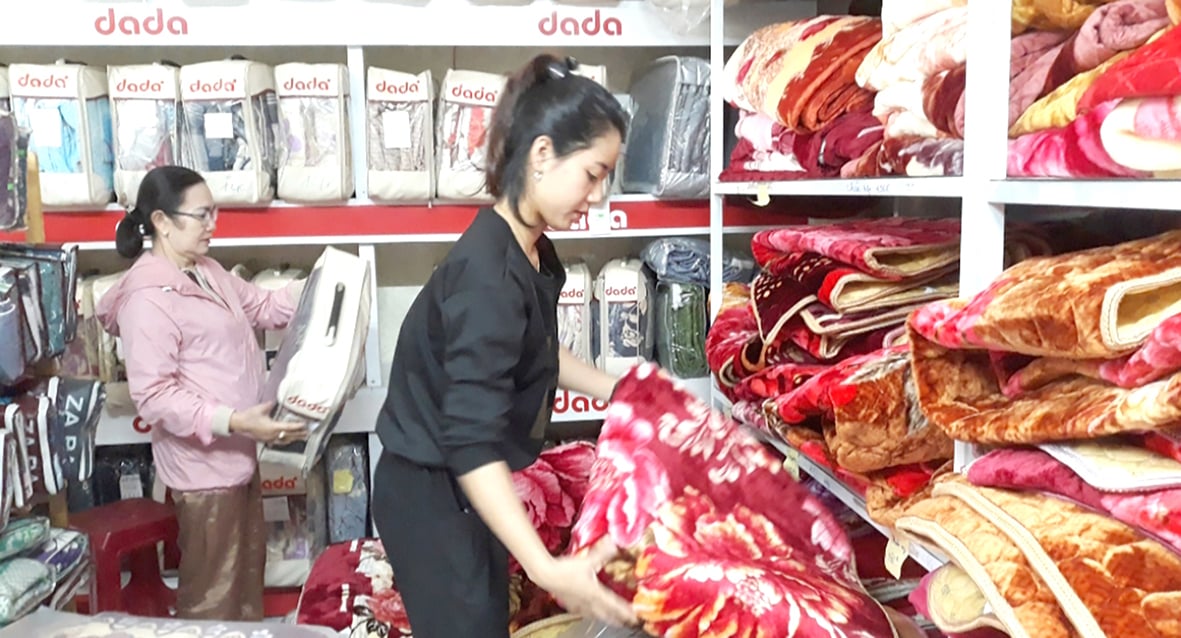
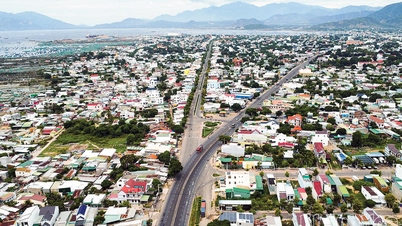
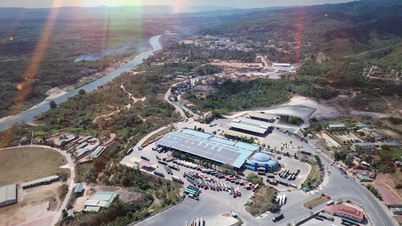
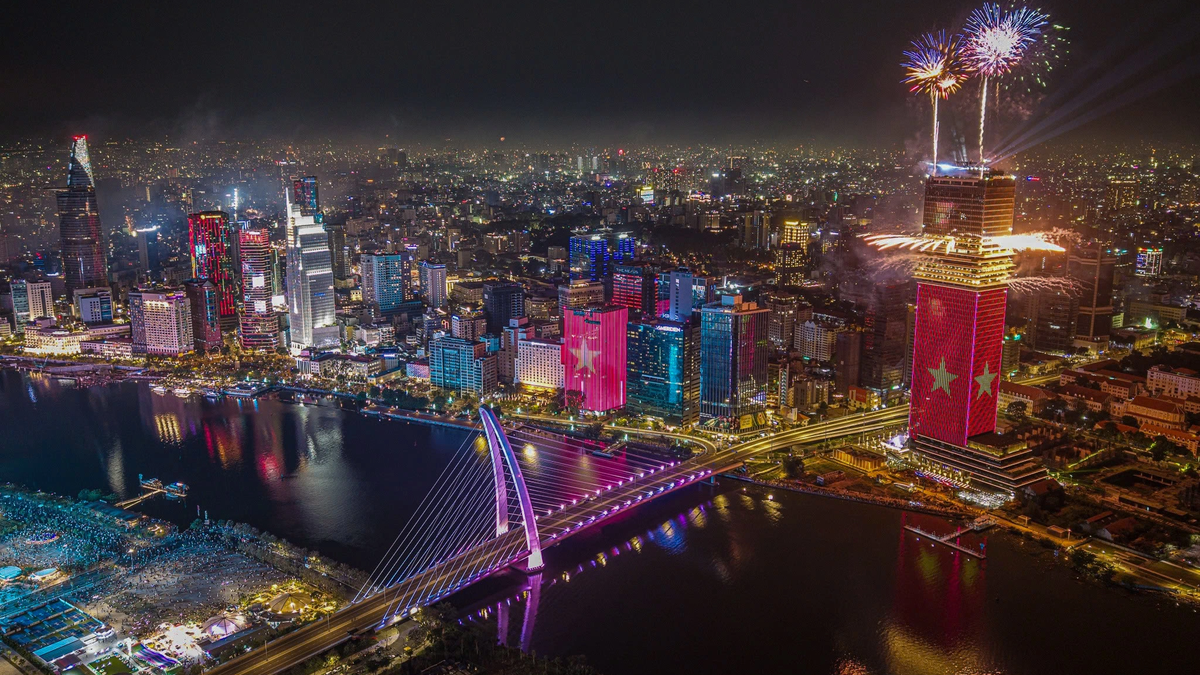
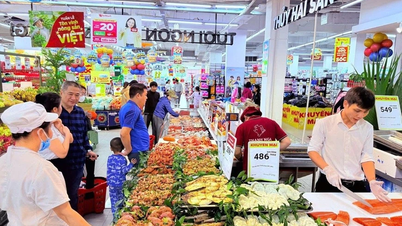
Quang Tri town is experiencing strong commercial development - Photo: TQ
From the old battlefields with so much pain and loss...
During the two wars of resistance against French colonialism and American imperialism, Quang Tri was a battlefront for over 20 years. In particular, following the 1954 Geneva Accords, Vietnam was temporarily divided into two regions, North and South, at the 17th parallel. Quang Tri province was temporarily divided into two areas: the Vinh Linh area on the north bank of the Ben Hai River was completely liberated along with the North, transitioning to socialism; the Quang Tri area on the south bank of the Ben Hai River, along with the South, became a new type of colony of the United States.
During the war against the US, Quang Tri province was like a microcosm of Vietnam: two regions with two different social systems, simultaneously pursuing two revolutionary strategies: the national democratic revolution and the socialist revolution. At that time, the Quang Tri Party Committee and the Vinh Linh area adopted sound policies to mobilize the highest level of the people's spirit and material resources to defeat the enemy in all situations. From movements demanding the implementation of the Geneva Agreement; fighting against "denouncing communism" and "exterminating communism"; Mountain uprisings, rural uprisings in the plains, resistance against pacification, establishment of strategic hamlets, and resounding campaigns: Khe Sanh 1968, the Route 9 - Southern Laos campaign 1971, the Quang Tri liberation campaign 1972, the 81-day and night Quang Tri Citadel campaign, the historic Spring Offensive 1975 – the whole country knew Quang Tri as a place where "houses were destroyed, but we did it; defeating the American invaders was hard work, but happiness will come later."
On July 6, 1969, Comrade Le Duan, First Secretary of the Central Committee of the Party, wrote a letter to the Tri-Thien Regional Party Committee and Military Region Party Committee, stating, “The Tri-Thien battlefield consists of a very narrow and long strip of plain, with Highway 1 running from Da Nang , Highway 9 to the north, and rugged mountains to the west. Although the enemy is currently de-escalating, Tri-Thien still retains its important position. For us, it is a bridgehead connecting to the socialist North; for the enemy, it is a battle line preventing our main forces from advancing south.”
In 1973, General Vo Nguyen Giap inspected Cua Viet, Doc Mieu, Khe Sanh... Seeing the devastation caused by American bombs and bullets, the desolate and ruined state of Con Tien, Doc Mieu, Quan Ngang, Hill 241, the General said emotionally: “So many cadres, soldiers and people fell here during the strategic offensives and counter-offensives of 1971-1972 to achieve immortal victories in defeating the Americans and the puppet regime, creating the conditions and strength to bring the resistance war against the US to victory.”
To achieve today's results.
Having just emerged from the brutal war, and closely following the leadership of the local Party committee and government, the people of Quang Tri immediately set about reclaiming and restoring the land, working day and night to clear bombs and mines, determined to transform barren, bomb-strewn fields into rice paddies and potato fields. Just one year later, 10,000 hectares of land were reclaimed, and many heavily bombed areas were cleared by the people in coordination with the armed forces, bringing them into production. A series of irrigation projects were launched by the Party committee and government, with the people participating in the construction. The Party committee and government were gradually strengthened and built into robust entities.
In particular, after Quang Tri province was re-established, on June 28, 1989, the Provisional Executive Committee of the Provincial Party Committee held a meeting and issued Resolution No. 01 on the assignment of key positions in the Party Committee. On the same day, the Provincial Party Committee issued Resolution No. 02 on the main immediate tasks in the fields of socio-economic development, national defense and security, organization, and ideology. As a result, after only a short time, these fields experienced strong development, with food production in the five years from 1986 to 1990 being nearly 50,000 tons higher than the previous five years.
Since the 17th Provincial Party Congress, the Provincial Party Committee has issued specialized resolutions, conclusions, directives, action programs, and specific, accurate, and highly feasible implementation plans. In particular, to effectively implement the Resolution of the 17th Provincial Party Congress, the Provincial Party Standing Committee established several steering committees and working groups to lead and direct a number of urgent tasks and key areas, such as the establishment of the Steering Committee for COVID-19 prevention and control; the Steering Committee for the prevention and control of corruption, waste, and negative practices; the Steering Committee for key provincial-level projects; the Steering Committee for land clearance; and the Quang Tri Provincial Working Group (referred to as Working Group 626) to coordinate with Savanakhet province to research and propose to the Governments of Vietnam and Laos the construction of a joint Lao Bao - Densavan cross-border economic and trade zone; and to coordinate with Salavan province on economic cooperation in the La Lay - Lay Lay border gate area...
In addition, focus on leading and directing key economic zones of the province such as industrial parks and economic zones, in conjunction with proposing a second East-West corridor from La Lay International Border Gate to My Thuy Port, creating a ripple effect to promote the province's economic development.
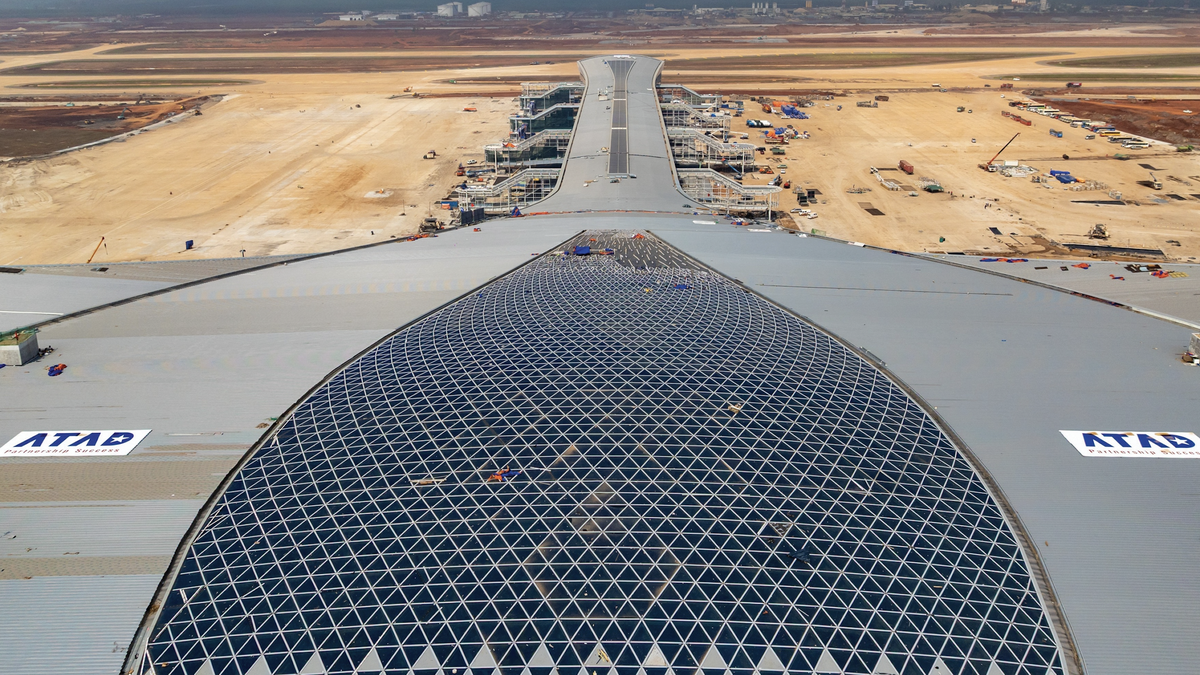
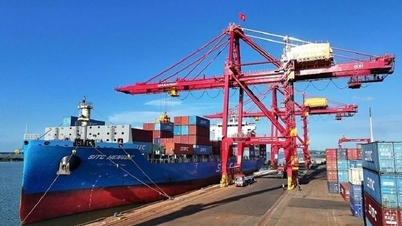
Based on that orientation, the province has focused on proposing and creating resources to initiate and implement key transportation projects that connect key economic centers, such as: Route 15D connecting My Thuy Port and La Lay International Border Gate; the coastal road connecting the East-West economic corridor; the Van Ninh - Cam Lo - La Son expressway; the eastern bypass of Dong Ha City; the My Thuy port area; Quang Tri Airport; and the Cam Lo - Lao Bao expressway.
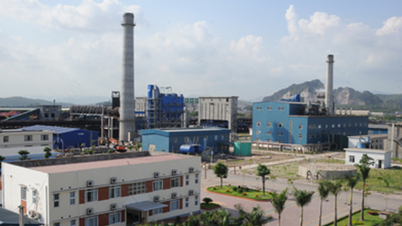
On April 27, 2021, the Provincial Party Committee issued Action Program No. 15 to implement Resolution No. 55 dated February 11, 2020, of the Politburo on the orientation of the national energy development strategy of Vietnam until 2030, with a vision to 2045. To date, the total commercial power generation capacity of energy projects in the province has reached over 1,060 MW.
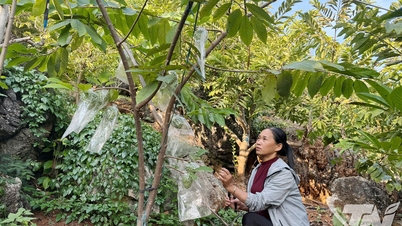
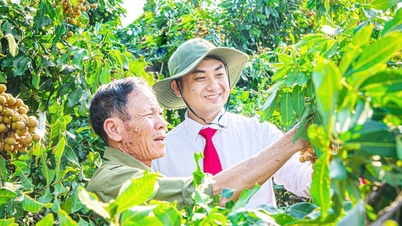
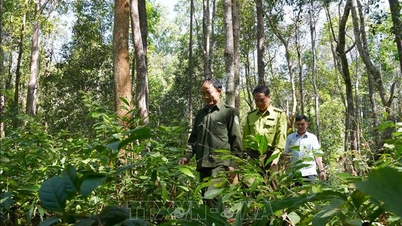
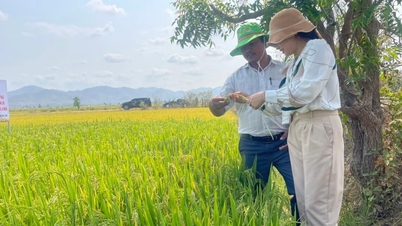
With a focus on developing high-tech agriculture, organic farming, and natural farming, the Provincial Party Committee and its Standing Committee have strengthened leadership and guidance to continue vigorously implementing the restructuring of the agricultural sector. To date, more than 11,000 hectares of crops utilize and apply high technology in production (water-saving irrigation systems (1,000 hectares), unmanned aerial vehicles (10,000 hectares), sensor systems, IoT, and intelligent pest monitoring systems). There are 135 high-tech integrated livestock farms; and more than 111 hectares of shrimp farms apply high technology. The area of organic rice production, natural farming, following organic, VietGAP, and food safety standards is 1,226.85 hectares. Quang Tri is one of the leading provinces nationwide in planting raw material forests and processing timber from planted forests, with the forest cover rate in the province maintained at over 49%...
In 2024, the province's GRDP growth rate is projected to reach 5.97% compared to 2023; the size of the economy is estimated at VND 53,508 billion; GRDP per capita will reach VND 81.2 million, the highest level ever. The multidimensional poverty rate across the province will be 11.53% by the end of 2024. 76 out of 101 communes in the province will meet the new rural development standards, with the districts of Cam Lo, Vinh Linh, Trieu Phong, and Hai Lang achieving these standards. By June 30, 2025, no households in the province will be living in temporary or dilapidated houses.
Tuan Quang
Source: https://baoquangtri.vn/quang-tri-vuon-minh-cung-dan-toc-193310.htm




















































Comment (0)