Young innovator: Removing dust and smoke from smart cameras.
Báo Thanh niên•22/05/2024
The group of students has created fog-removing hardware for smart cameras, contributing to traffic safety for the public.
In adverse weather conditions such as fog and smog, the images captured can be blurry and unclear, reducing visibility and making it difficult to identify objects, leading to numerous accidents every year. This creates a high demand for developing effective solutions to improve image quality and enhance visibility in harsh weather conditions. That's why the student group came up with the idea for a hardware design project to remove "fog" from images in smart cameras.
The group of students and their supervising lecturer (far right) receiving an award in the competition.
THAI PHUC
The project's creators are a group of four students from Ho Chi Minh City University of Technology and Education: Nguyen Huy Hoang, Phan Minh Nhat, Tran Tuan Kiet, and Pham Nguyen Hoang Hai. After developing the idea, the group spent about six months perfecting the product. The project won second prize at the first "Smart City Microchip Design" competition in 2023. Huy Hoang shared: "The product can be used as a processing foundation for AI applications in object recognition. The fog removal application will play a role in cleaning data, enhancing image quality, and removing noise. This improves the accuracy of AI models." Regarding its advantages, compared to traditional input image enhancement methods which are less effective because they require adjusting basic image parameters such as brightness, contrast, and color saturation, the dark channel method allows for deeper intervention by assuming and remapping the depth of field of objects in the image. Therefore, it offers significantly improved image quality and more efficient processing performance with reasonable power consumption compared to methods using machine learning and deep learning techniques.
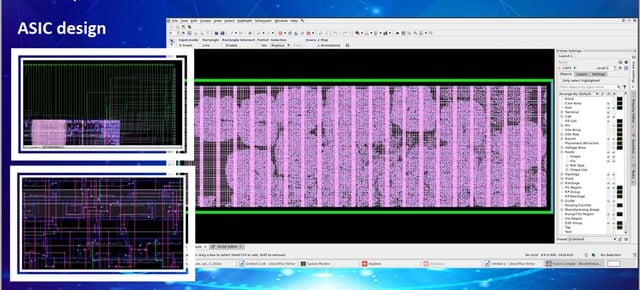
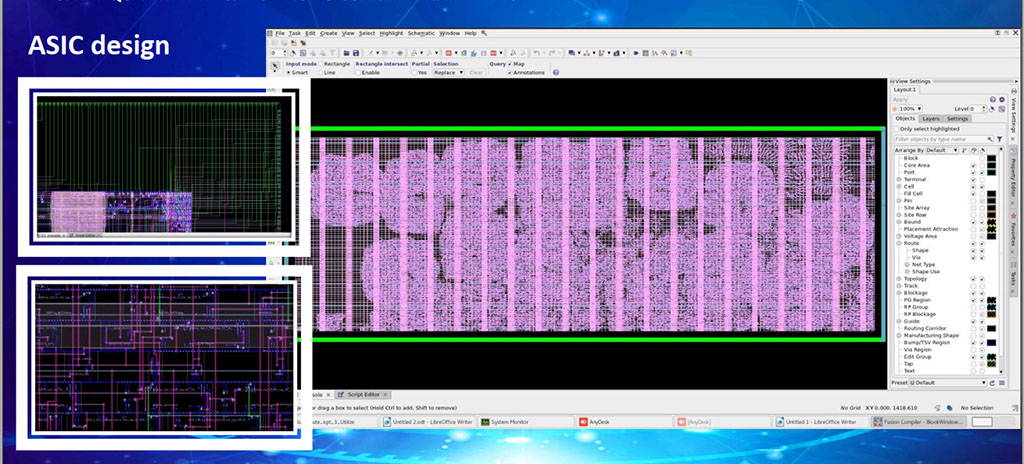
Product design and simulation results
THAI PHUC
Sharing about the implementation process, Huy Hoang said: "First, the team found a suitable fog removal algorithm. We chose Dark Channel Prior, which ensures short execution time and relatively high efficiency. Then, we completed the code using the Vitis HLS library to use a third-party tool, Xilinx - Vitis HLS, which can convert it to Verilog. Xilinx's functionality also helps us generate a testbench to ensure that our code executes correctly when converted to a new language. Finally, we will use Synopsys' tool to complete the chip development. After training and guidance from members of Sunedu and ADT company, we were able to implement it." Assessing the feasibility of the project, Mr. Truong Huu Ly, Deputy Director of the Research and Development Center, Ho Chi Minh City High-Tech Park, said that the current model is attracting a lot of interest from businesses, especially Truong Hai Automobile Joint Stock Company. Mr. Ly also stated that the project has great potential if further developed. For example, when driving in fog, even without external observation, the team's camera system can recognize and capture the image. Developing software to display on the windshield would make it easier to observe than looking directly at the screen. Developing it on a small screen like the current one would distract the driver. "In general, this project has great potential for development, especially in the automotive technology industry," Mr. Ly emphasized. Huy Hoang added that the team will soon strive to integrate the system into an ASIC unit so that it can be used in car cameras. This would allow drivers to monitor images and ensure safety while driving. Furthermore, in the future, the team plans to develop hardware capable of filtering images from security cameras in extreme weather conditions, thereby better ensuring social order and safety for citizens.





![[Photo] Prime Minister Pham Minh Chinh receives Lao Minister of Education and Sports Thongsalith Mangnormek](/_next/image?url=https%3A%2F%2Fvphoto.vietnam.vn%2Fthumb%2F1200x675%2Fvietnam%2Fresource%2FIMAGE%2F2025%2F12%2F16%2F1765876834721_dsc-7519-jpg.webp&w=3840&q=75)
![[Image] Leaked images ahead of the 2025 Community Action Awards gala.](/_next/image?url=https%3A%2F%2Fvphoto.vietnam.vn%2Fthumb%2F1200x675%2Fvietnam%2Fresource%2FIMAGE%2F2025%2F12%2F16%2F1765882828720_ndo_br_thiet-ke-chua-co-ten-45-png.webp&w=3840&q=75)
![[Live] 2025 Community Action Awards Gala](/_next/image?url=https%3A%2F%2Fvphoto.vietnam.vn%2Fthumb%2F1200x675%2Fvietnam%2Fresource%2FIMAGE%2F2025%2F12%2F16%2F1765899631650_ndo_tr_z7334013144784-9f9fe10a6d63584c85aff40f2957c250-jpg.webp&w=3840&q=75)
![[Photo] Prime Minister Pham Minh Chinh receives the Governor of Tochigi Province (Japan)](/_next/image?url=https%3A%2F%2Fvphoto.vietnam.vn%2Fthumb%2F1200x675%2Fvietnam%2Fresource%2FIMAGE%2F2025%2F12%2F16%2F1765892133176_dsc-8082-6425-jpg.webp&w=3840&q=75)



























































![[Live] Closing Ceremony and Award Presentation for the "Impressive Vietnam Tourism" Video/Clip Creation Contest 2025](https://vphoto.vietnam.vn/thumb/402x226/vietnam/resource/IMAGE/2025/12/17/1765974650260_z7273498850699-00d2fd6b0972cb39494cfa2559bf85ac-1765959338756946072104-627-0-1338-1138-crop-1765959347256801551121.jpeg)





















Comment (0)