

My mother said that even someone with years of experience in tending a wood-fired rice cooker can't cook a pot of rice without... burnt rice at the bottom. The burnt rice at the bottom is a guarantee of the deliciousness of rice cooked over a wood fire.
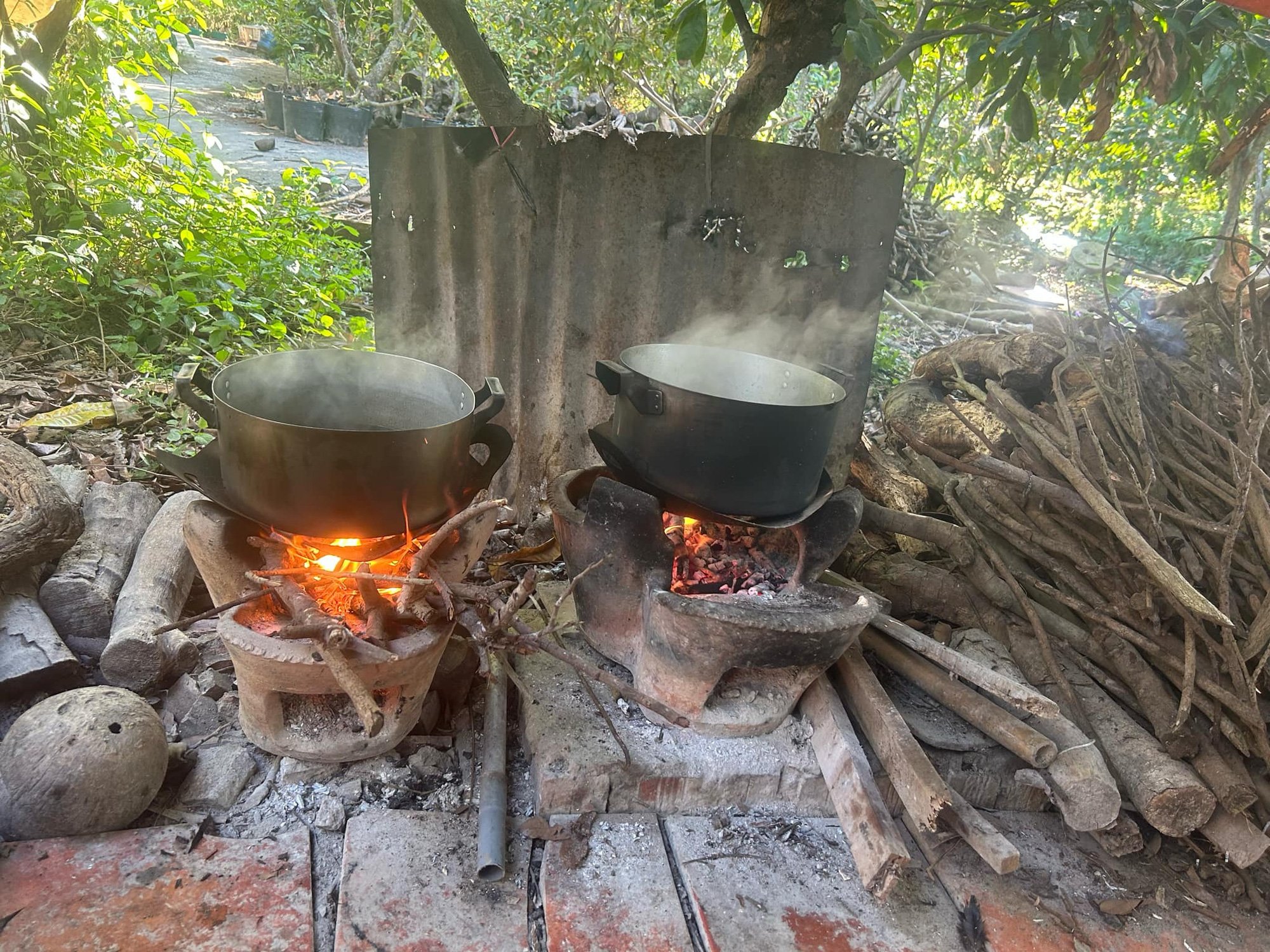
Meals cooked over a wood-fired stove are also very fragrant, especially the aroma of the burnt rice sticking to the bottom of the pot - Illustration photo: MINH PHÚC
My childhood passed peacefully amidst the smoke of my hometown. In the 1980s, the outskirts of Saigon were still a marshy area, the scenery not unlike the Mekong Delta with its intricate network of rivers and canals: vast rice paddies, and rows of lush green water coconut trees lining the riverbanks.
In my village, back when electricity lines were only just being installed along the roadside, houses in the rice paddies could only afford rechargeable batteries and tiny light bulbs, so they had to be thrifty and mostly used oil lamps. Those lamps had to be saved for special occasions like ancestral worship ceremonies and holidays. That was the situation with lighting; cooking was purely done with wood-burning stoves, rice husks, sugarcane scraps, dried coconut shells, and straw after the harvest...
Every farming household will certainly have a large yard for drying rice. Every gardening household will have a long annex behind the house where they can neatly stack several bundles of firewood from dry branches in the garden.
My family are farmers, so we have a large yard, not paved with tiles, but just a compacted earthen floor made from very pliable riverbed soil, tightly compressed over a long period of time until it's smooth and flat like it's been plastered with oil. I cherish my yard very much. Because it's there that Tet (Vietnamese New Year) first and most clearly manifests itself, every year.
At the beginning of the twelfth lunar month, my father would go to the garden, gather coconut leaves, dried mango branches, and acacia wood, then chop them into equal pieces and spread them out in the yard to dry. The twelfth lunar month sun was so strong that the firewood in the yard was completely dry in just a few days. At this time, my father meticulously stacked them into a long, straight pile of firewood behind the house.
The neighbors were all in sync, their yards overflowing with all kinds of firewood. Those who could afford it would buy several truckloads of leftover wood from nearby carpentry workshops: jackfruit wood, melaleuca wood, pine wood...
That seemingly simple pile of firewood can sometimes be a measure of a man's attentiveness – the pillar of the household. When visiting a home, the women will certainly glance at the pile of firewood to know whether the husband truly loves his wife and children. Women keep the fire burning in the home, but it is men who bring the fire home.
On ordinary days, the pile of firewood might be a little messy. But when Tet (Lunar New Year) comes, it must be neat, tidy, and well-prepared. From that pile of firewood, you get bundles of banh tet (sticky rice cakes), overflowing pots of braised pork, bowls of bitter melon soup, and fragrant pots of bamboo shoot stew, making Tet complete.
Every year, at dawn on the first day of the Lunar New Year, the whole family gathers around a bonfire filled with firewood, dry leaves, and straw to warm their hands in the biting cold of the first day of the year, beginning a heartwarming conversation about the new year.
The wisps of smoke that curled between my fingers before dissipating left behind a very unique aroma. It carried a hint of the pungent spiciness of eucalyptus or lemongrass leaves, a touch of the tangy scent of dried lime leaves; along with the crisp crackling sound of burning guava or mangrove wood...

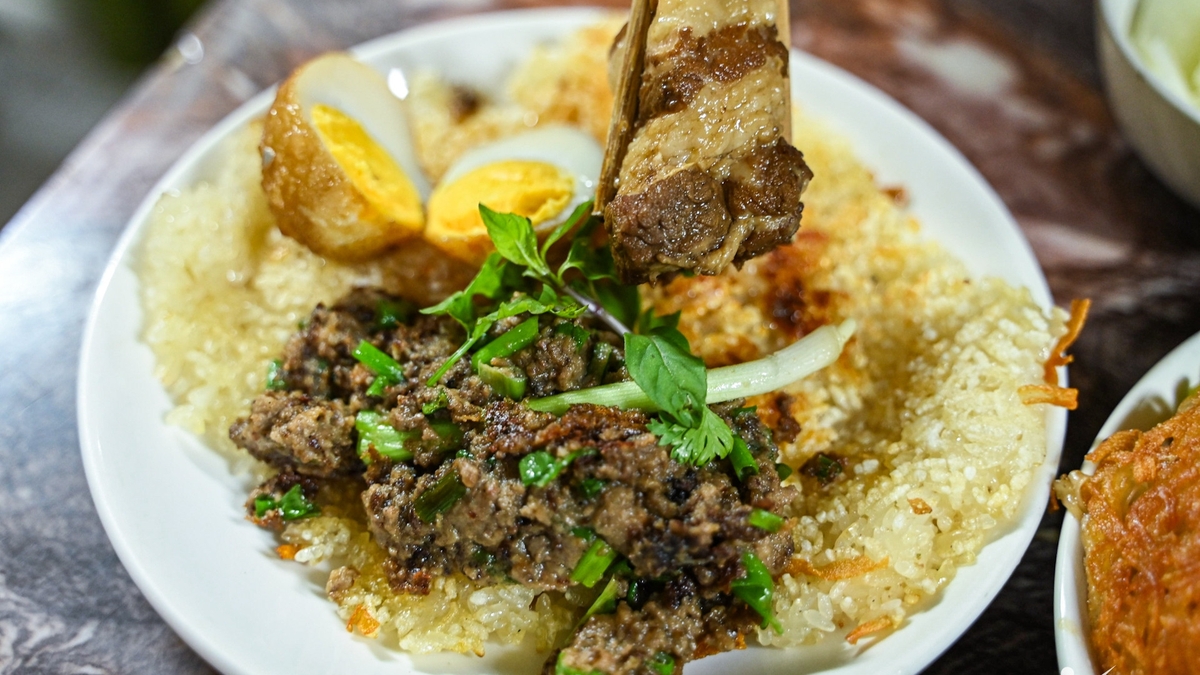
Meals cooked over a wood-fired stove are always fragrant, especially the aroma of the burnt rice clinging to the bottom of the pot. My mother said that even someone with years of experience in tending a wood-fired stove can't cook a pot of rice without... burnt rice. The burnt rice is a guarantee of the deliciousness of rice cooked over a wood fire.
As for me, I still vividly remember the lingering scent of wood smoke on the creamy white grains of rice on the Tet holiday feast table. It's a scent that, now, in this bustling city, I long to experience once more – to put a pot of rice on the stove, cooking it with pieces of firewood pulled from my father's woodshed, to smell the fragrant, smoky aroma of the rice, but that's no longer possible...
 Why do we have to go back to our hometowns for Tet?
Source: https://tuoitre.vn/tet-ve-nho-soi-khoi-que-20241229112213417.htm













































![[Video] Sunset at Lap An Lagoon – Where the sun sets over the fishing nets](https://vphoto.vietnam.vn/thumb/1200x675/vietnam/resource/IMAGE/2026/05/31/1780192137701_beach-landscape-sea-water-nature-grass-745871-pxhere-com.jpeg)






















Comment (0)