


At Bai Bui, visitors can sit under the shade of ancient reed trees and watch herds of buffalo and cows grazing on the grassland.

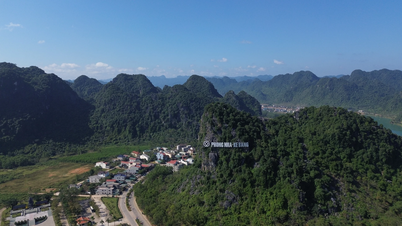
Bai Bui is located in Khop hamlet, Ngoc Lau commune, Lac Son district, Hoa Binh province, about 140 km from Hanoi . The area covers approximately 9 hectares, is covered in green grass, and is situated at an altitude of 600 meters above sea level.
Mr. Nguyen Duc Sam, a local resident currently working in tourism at Bai Bui, said that this area was originally a grazing ground for local livestock. It wasn't until 2022, when the road was improved, that Bai Bui began attracting many tourists, especially during the recent April 30th holiday.

On May 13th, Vu Minh Quang (Hanoi) and his friends went to Bai Bui beach to camp overnight after a friend in the group searched online and suggested it.
Arriving at the beach around 10 PM, it was already dark, so Quang couldn't see the surroundings clearly. The whole group set up camp, ate, and rested. The next morning, when they woke up, he and his friends were astonished by the scenery before them.

At dawn, before him stretched a wide, flat, lush green meadow, like a prairie. On the meadow, herds of buffalo and cattle belonging to the local people grazed peacefully or wallowed in the mud to cool off. Surrounding them were vegetable and corn gardens belonging to the locals. "The scenery is simple and pristine, resembling Hang Tau - the primitive village of Moc Chau - in seven or eight aspects," Quang said.
Even in the hot summer, with relatively high temperatures, the spacious and airy environment here doesn't feel as stuffy as in the city. Just standing in the shade of the ancient trees, with a gentle breeze, you feel cool and comfortable.

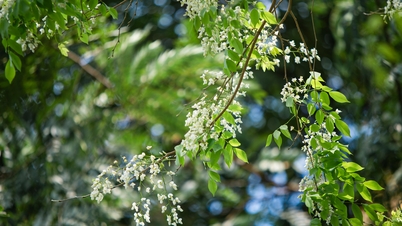
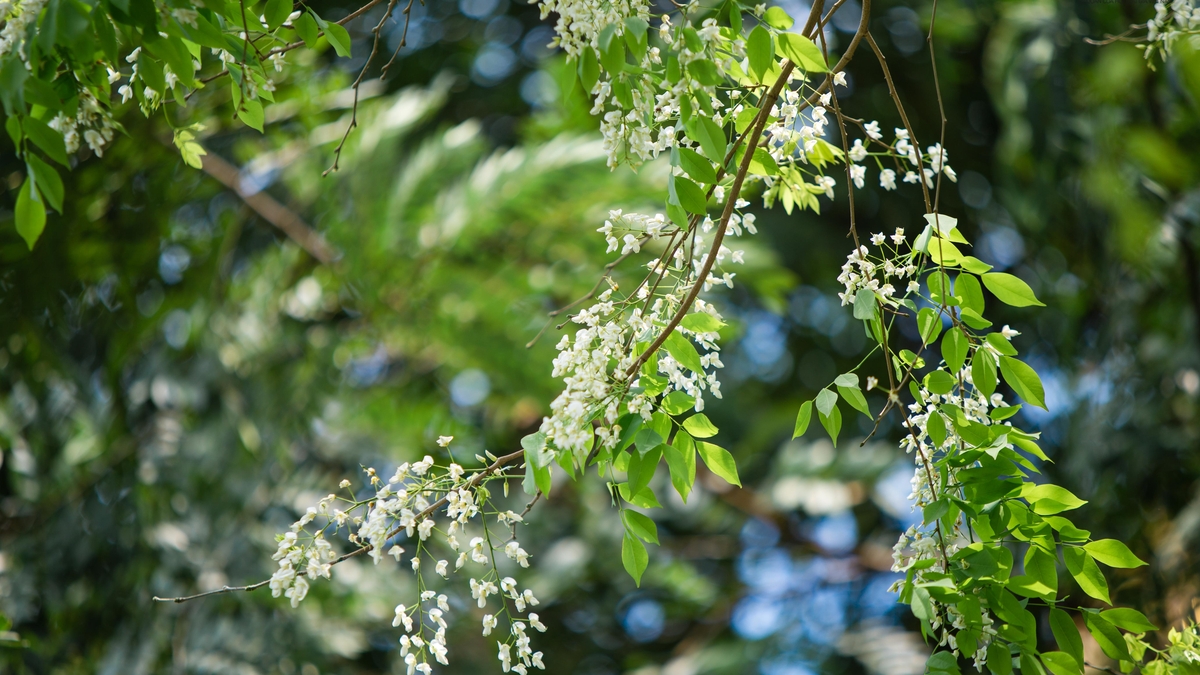
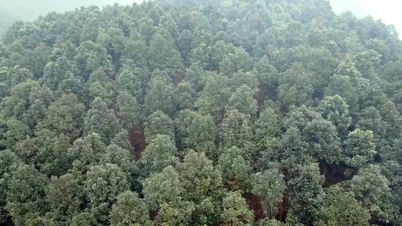
The ancient trees on the beach are called tlau, or "chau" trees, Mr. Sam said. More than 60 tlau trees here, hundreds of years old, were designated for preservation by a resolution of the Ngoc Lau Commune People's Council in 2007. Currently, Bai Bui beach in Ngoc Lau commune is one of the few areas with a large number of ancient tlau trees, becoming a source of pride for the local people.
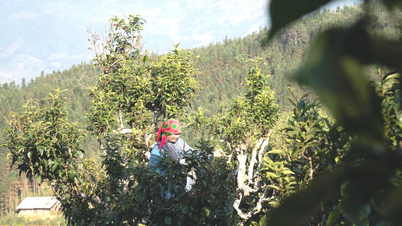
The tlau plant is a familiar plant in the lives of the Muong ethnic people. The young leaves of the plant are used as an ingredient in certain foods such as salted meat and fermented meat.

In summer, the tlau trees provide cool, green shade. In winter, their leaves turn yellow and red, while other trees have shed all their leaves. "The maple forest stands out against the prairie, creating a scene reminiscent of autumn in Europe," said Mr. Sam.
Therefore, the ideal time to go camping at Bai Bui Beach is during the winter, from October to December. But in the summer, Bai Bui Beach also has its own unique beauty with the soothing green of nature.

Under the shade of the tlau trees, locals have built several swings out of bamboo or wood for visitors to enjoy. Camping, swinging, and taking photos are all activities available at the beach. free of charge.

As a developing area, Bai Bui beach remains relatively unspoiled and lacks many tourist services. Next to the beach, there is a homestay for overnight stays and a few beverage stalls. Homestay room prices range from 300,000 to 500,000 VND. Renting a tent for 4-5 people costs around 500,000 VND.
The water stalls are quite expensive compared to the market, with a bottle of mineral water costing 30,000 VND. Mr. Quang advises tourists to prepare food, drinks, and camping equipment in advance to be more proactive and save money.

The atmosphere at Bai Bui is quiet and deserted, day or night, because there aren't many tourists yet. Bai Bui is Quang's favorite camping spot because "the scenery resembles that in literary works describing Vietnamese villages of the past." According to him, it's also an ideal place to escape the heat in the summer or to get a change of scenery.

The area is located within the Ngoc Son - Ngo Luong Nature Reserve, so visitors need to pay special attention to preserving the landscape. Mr. Sam said that if visitors want to have a campfire, they need to use stoves that are at least 1 meter tall to avoid burning the grass. Climbing or damaging the ancient trees, which have been numbered by the forest rangers, is also prohibited.
Visitors should bring insect repellent. To ensure the safety of their vehicles while camping overnight, visitors can park at tourist facilities located near the campsite for a fee of 5,000 VND.
Vnexpress.net





















































































Comment (0)