

Three days earlier, presiding over a meeting of the Government's Steering Committee to summarize the implementation of Resolution No. 18-NQ/TƯ on the Central Steering Committee's plan for the rearrangement and merger of provincial and commune-level administrative units and the construction of a two-tiered political system at the local level, Politburo member and Prime Minister Pham Minh Chinh also requested that "priority be given to allocating surplus facilities for healthcare, education, and culture, serving public purposes." Thus, in less than a week, the highest leaders of the Party and Government have all expressed deep empathy and concern for the lives of the people!
For parents with school-aged children, every meal and every tuition fee "needs careful consideration," representing a "burden" of worry for their children. The whole country was delighted by the Politburo 's decision to waive all tuition fees for students from preschool to high school in public schools nationwide, starting from the 2025-2026 school year. Now, even more enthusiastic is the Party leader's suggestion for the capital city to set an example by helping parents provide additional meals for students in the area. This suggestion for the capital is specific, but it extends further to all localities across the country: What more can be done to care for the future generation? What more concrete actions can be taken to lessen the burden on the people?
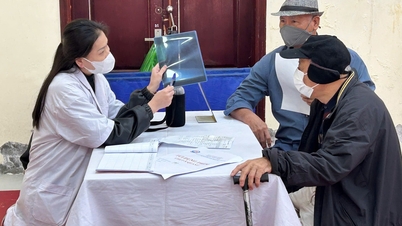
It's not just about education; for everyone, health is a daily concern. Looking at hospitals, you see overcrowding everywhere. Patients lack beds for treatment, so where are the caregivers supposed to find beds, forced to sleep in hallways or on benches? With a shortage of doctors and nurses, long queues and exhausting waits for tests and examinations are unavoidable. Coming from the countryside to the distant city, where will they eat and sleep to avoid such hardship?
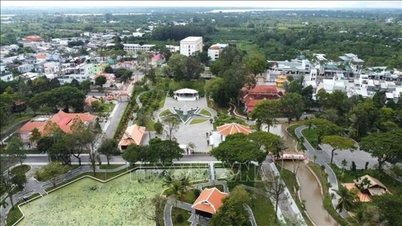
Children lack schools, patients are crammed into overcrowded treatment rooms – this is something no one can bear! Yet, everywhere you look, there are buildings and offices that, after 5, 10, or even more years since mergers and downsizing, are left abandoned and dilapidated in oblivion. It's heartbreaking to see, but when asked, no one answers, and no one takes responsibility!
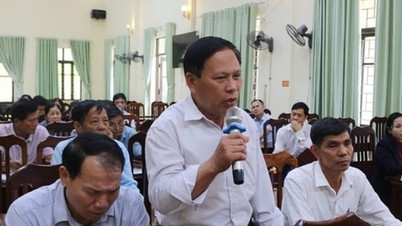
Despite strongly supporting the revolution to streamline the administrative apparatus from the central to local levels, many voters and citizens are deeply concerned: With a reduced bureaucracy and surplus offices, what will they be used for, or will they be left abandoned and neglected? The statements from Party and Government leaders mentioned above demonstrate that the voters' concerns have reached those in positions of highest responsibility.
Party and government leaders have shared the concerns of voters and the people; and moreover, they have quickly and decisively provided specific directions to definitively address many concerns at once: prioritizing the use of surplus office buildings to partially alleviate the shortage of schools, medical facilities, and sports and cultural venues. In this way, not only will the abandonment of surplus office buildings after reorganization be stopped, but those that have been "forgotten" for so long will also be "revived" through clear and specific guidance and suggestions.
Speaking at the National Conference on the Implementation of the Resolution of the Eleventh Plenum of the 13th Central Committee on April 16th, General Secretary To Lam once again emphasized: "In the spirit of 'running while queuing,' we must consider other related issues while doing this." Streamlining the apparatus means that surplus offices and workplaces should be immediately used to address pressing issues related to education, healthcare, and other needs, truly aligning with the aspirations and concerns of voters and the people, and genuinely reflecting the people's sentiments!
Source: https://hanoimoi.vn/thau-to-long-dan-699382.html


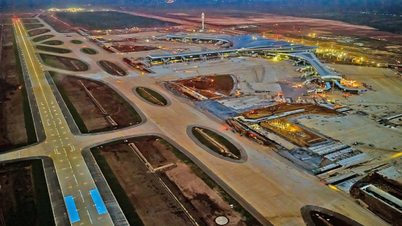
![[Photo] Two flights successfully landed and took off at Long Thanh Airport.](/_next/image?url=https%3A%2F%2Fvphoto.vietnam.vn%2Fthumb%2F1200x675%2Fvietnam%2Fresource%2FIMAGE%2F2025%2F12%2F15%2F1765808718882_ndo_br_img-8897-resize-5807-jpg.webp&w=3840&q=75)
















































Comment (0)