

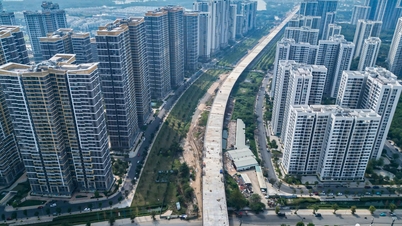
Capital is flowing into areas adjacent to Ho Chi Minh City.
According to the General Statistics Office, as of August 31, 2024, the total registered foreign direct investment (FDI) in Vietnam reached US$20.52 billion, an increase of over 8% compared to the same period last year. Of this, 2,247 newly licensed projects received registrations with a total registered capital of nearly US$12 billion, representing an 8.5% increase in the number of projects and a 27% increase in registered capital compared to the same period last year.
Specifically, real estate business activities reached US$2.4 billion, 5.1 times higher than the same period last year and accounting for nearly 20% of the total newly registered capital. Including both newly registered and adjusted registered capital, FDI registered in real estate business activities reached US$2.55 billion, 3.7 times higher than the same period last year and accounting for nearly 14.4% of the total newly registered and increased capital. Regarding foreign investors' capital contributions and share purchases, investment in real estate business activities reached nearly US$812 million, accounting for 29%.
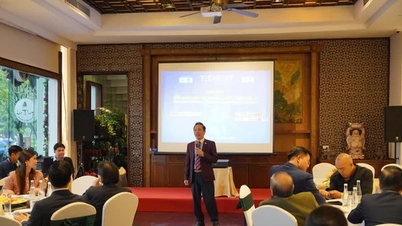
Ms. Trang Bui, General Director of Cushman & Wakefield Vietnam, also noted that the residential segment remains an attractive option for both domestic and foreign investors due to its appealing return on investment. While 15 years ago, FDI capital focused primarily on high-end housing with familiar names like Keppel Land and Capital Land, the market now has many new foreign giants entering the game, such as Lotte Group, GS, Sumitomo, and Hong Kong Land.
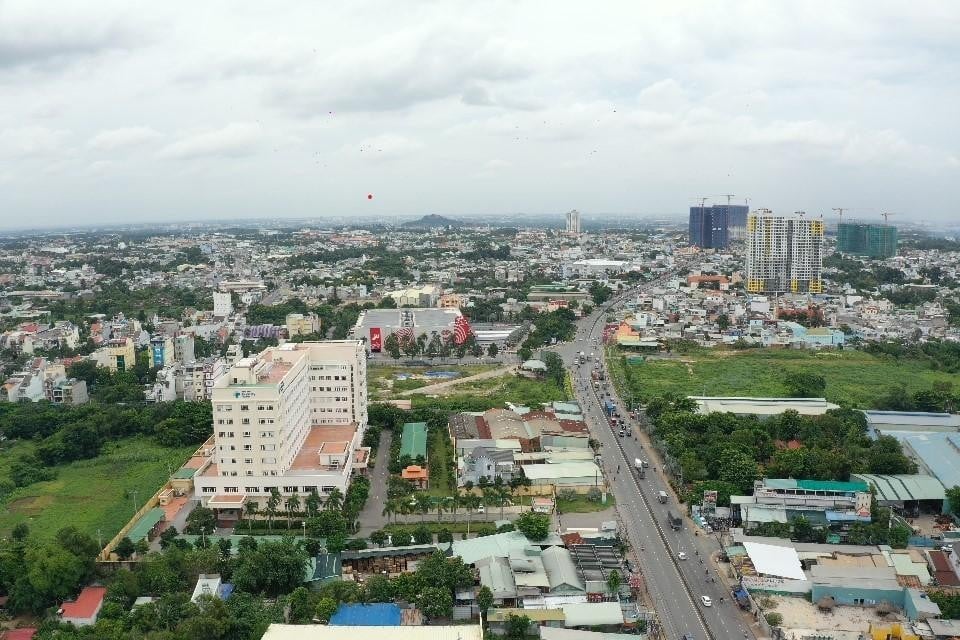
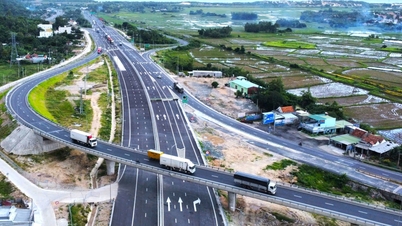
With the advantage of abundant land resources, the market in provinces adjacent to Ho Chi Minh City is receiving a lot of foreign investment.
Furthermore, from the end of 2023 to the first half of 2024, approximately 16 real estate M&A transactions were recorded. Foreign investors' investment objectives remain focused on finding clean, high-quality land with real value, complete legal documentation, and significant development potential. This is also why this large capital flow is strongly directed towards provinces surrounding Ho Chi Minh City, making markets such as Binh Duong, Dong Nai, Long An , and Ba Ria – Vung Tau more vibrant with strong growth in both sales prices and interest levels in the recent period.
A recent report by Batdongsan.com.vn shows that in the third quarter of 2024, Chau Thanh and Duc Hue districts of Long An province were outstanding growth areas with increased interest levels of 19% and 13% respectively. Following closely behind was Di An district of Binh Duong province with a 9% increase in interest.
Regarding price growth, Trang Bom and Nhon Trach districts in Dong Nai province recorded price increases of 15% and 16% respectively. Following closely behind in the region are Long Dien and Phu My districts in Ba Ria - Vung Tau province, with price increases of 15% and 14%.
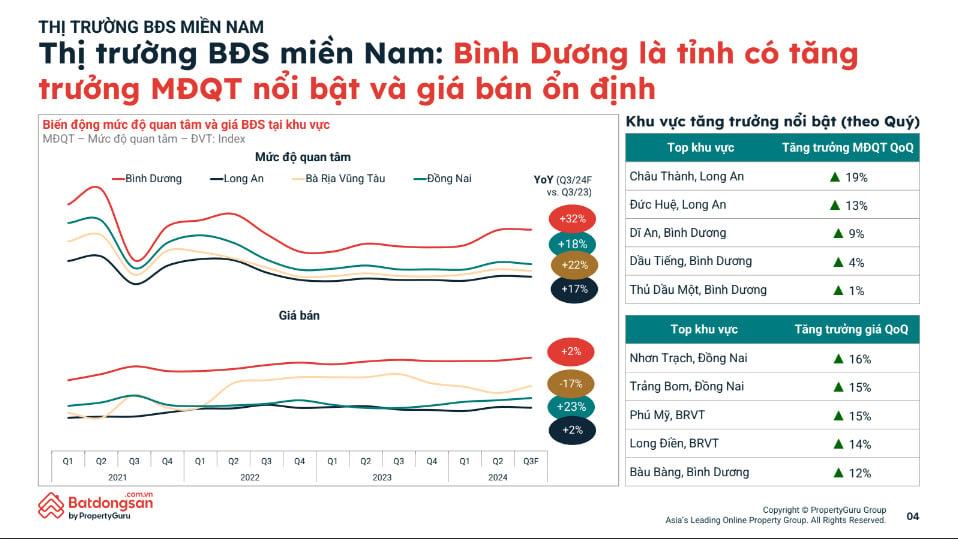
Many provinces adjacent to Ho Chi Minh City, especially Binh Duong, have recorded strong interest and price growth.
Numerous M&A deals stimulate the provincial market.
According to Savills Vietnam, in the second quarter of 2024, there were three notable M&A deals in the Southern real estate market: Kim Oanh Group (Vietnam) partnered with NTT Urban Development, Sumitomo Forestry, and Kumagai Gumi Co Ltd (Japan) to develop The One World, a 50-hectare residential area in Binh Duong.
Next, Electronic Tripod Vietnam Co., Ltd. (Chau Duc), a subsidiary of Tripod Technology Group (Taiwan), acquired an 18-hectare industrial land plot in Ba Ria - Vung Tau from Sonadezi Chau Duc; Nishi Nippon Railroad (Japan) also acquired a 25% stake in the 45.5-hectare Paragon Dai Phuoc Project from Nam Long Group for approximately US$26 million.
Most recently, a Japanese joint venture comprising Cosmos Initia (a member of Daiwa House Group) – a major Japanese real estate group – along with TT Capital Investment Joint Stock Company and Koterasu Group, commenced construction of the TT AVIO apartment project in Di An, Binh Duong.
Regarding the influx of foreign capital into the Vietnamese real estate market, Mr. Nguyen Van Dinh, Chairman of the Vietnam Real Estate Brokers Association, stated that this capital contributes to the development of Vietnam's capital and financial markets, helping domestic businesses reduce their dependence on bank loans.
Another positive impact of foreign capital is that it gives domestic businesses the opportunity to learn from and leverage the strengths of foreign investors in project development, branding, and construction expertise. Furthermore, real estate projects involving foreign capital in Vietnam have established new urban standards towards a more civilized and modern lifestyle, emphasizing green living spaces and integrated amenities, providing a better living experience for Vietnamese people.
Source: https://www.congluan.vn/thi-truong-bds-tai-cac-tinh-ke-can-tp-hcm-soi-dong-nho-dong-von-ngoai-post313812.html







































































Comment (0)