

Digital payments grow strongly
Although Vietnam's digital payment level has grown strongly, it still has a significant gap compared to many developed countries in the region. Meanwhile, the risks of online fraud, cyber attacks and data leaks are increasingly sophisticated, becoming a direct pressure on the entire safety structure of the payment ecosystem. The imbalance between the speed of transaction growth and the ability to control risks has made the requirement for switching and electronic clearing infrastructure that is strong, standard and can apply AI, Big Data, biometrics or blockchain more urgent than ever.
According to data from the State Bank, in just the first 9 months of 2025, non-cash payments increased by 43.32% in quantity and 24.23% in value. Transactions via the Internet increased by more than 51%, via mobile increased by more than 37%, and QR Code recorded an increase of 61.63% in quantity and 150.67% in value. These are numbers that clearly show the shift of users, but also raise questions about the absorption, processing and security capacity of the infrastructure as the transaction volume increases day by day.
In the operational picture, the financial switching and electronic clearing system also increased by 19.14% in transaction volume and 5.87% in value. Although this rate is high compared to the same period, it still only reflects the tip of the iceberg of actual demand, especially in the context that many digital payment channels have begun to enter a phase of exponential growth.

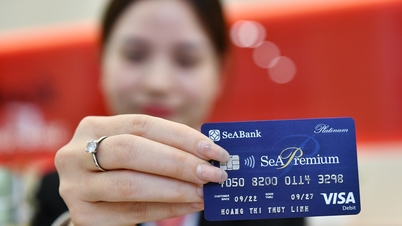
Vietnam's digital payment rate is growing strongly. Illustrative photo
On the risk side, fraud handling has had to increase the level of monitoring, the data sharing system between service providers has tracked and handled nearly 600,000 accounts suspected of fraud, and warned of more than 440,000 suspicious transactions, helping to prevent about 1,600 billion VND at risk of loss. These figures show both efforts to protect users but also see the challenge is expanding with the market size.
To bridge the gap, many banks have stepped up the application of AI, machine learning, and big data in transaction behavior analysis, credit scoring, service personalization, and process automation. Along with that, the banking industry has widely deployed biometric identification, data comparison of chip-based Citizen Identification Cards and VNeID. As of October 10, 2025, there have been more than 132.4 million individual customer records and more than 1.4 million organizational records that have been biometrically authenticated. This is the foundational security layer that helps the market move closer to international standards on payment security.
However, despite the impressive growth figures, Vietnam still lags behind many countries in the region in terms of domestic digital payments. This gap is the driving force that forces the market to open up both in terms of processing capacity and the number of units participating in infrastructure operations.
The market entered a period of open borders.
The biggest turning point in the switching and clearing market at the end of 2025 is that MobiFone Digital Payment Joint Stock Company (MDP) was officially licensed by the State Bank to provide intermediary payment services, including electronic switching and electronic clearing.
This is the second unit in the market that is allowed to deploy these two core services, after the National Payment Corporation of Vietnam (NAPAS), which has been the only unit for many years.
This licensing marks the time when the switching and clearing market enters the competitive era, opening up expectations of forming a healthy environment, promoting innovation, accelerating the standardization process and upgrading infrastructure according to international standards. Under the license, MDP will deploy switching, clearing, electronic payment gateway services and collection and payment support services within the management scope of the State Bank.

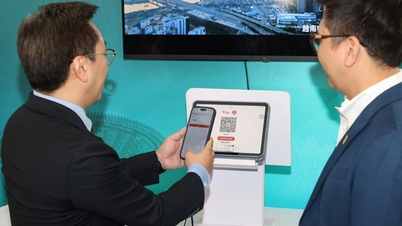
The switching and clearing market has added MobiFone Digital Payment Joint Stock Company (MDP). Illustrative photo
MDP positions its vision of creating a 4th generation core switching and digital payment infrastructure, aiming to popularize digital payments for all people, contributing to improving national digital capacity, and even aiming to make Vietnam the leading digital payment country in the region.
With a charter capital of VND 300 billion and the advantage of MobiFone's ecosystem, this is expected to be a new factor to promote the expansion speed of the market, especially in the context of increasing demand for electronic payments from rural, mountainous and remote areas, where Mobile Money currently has more than 10.89 million accounts, of which 70% are in areas with difficult access to banking services.
From the perspective of the management agency, Mr. Pham Anh Tuan, Director of the Payment Department, State Bank, said that security and confidentiality are strategic pillars. Banks currently spend over 16% of their total technology costs on information security, and have achieved security certifications such as ISO 27001 and PCI DSS. Coordination with the Ministry of Public Security in preventing cybercrime and digital fraud has also been strongly enhanced.
At the operational level, Mr. Nguyen Hoang Long, Deputy General Director of NAPAS, said that the unit is processing an average of 35 - 36 million transactions/day, equivalent to 70 million users. The unit's payment ecosystem has covered from VCCS cards, NAPAS 247, VietQR to VietQR Global, connecting from public transport, public services to VNeID. In 2025, NAPAS is expected to reach 11 - 12 billion transactions, reaching about 1/3 of Vietnam's population every day. This shows that the transaction flow is reaching a very large scale, posing an inevitable requirement for competition to optimize the backbone.
In addition, the international integration journey of Vietnam's payment infrastructure is also going very fast. The company has completed QR connection with Thailand, Laos, and Cambodia; opened payment for Chinese tourists to Vietnam from December 2, 2025, and is expected to open the opposite direction in 2026. According to NAPAS, Vietnam aims to connect with Japan, Korea, Singapore, etc. to bring domestic payment infrastructure to the region.
The geographical expansion and the number of core service providers are taking place simultaneously, creating a "new wave" on the payment backbone. If in the past, the national switching infrastructure operated in a state of one unit, one structure, from now on, the market will enter a multi-center phase, where competitiveness, technological innovation and the ability to ensure safety will determine the quality of service and the speed of development.
Source: https://congthuong.vn/thi-truong-chuyen-mach-bu-tru-buoc-vao-thoi-ky-mo-bien-433034.html


![[Photo] Parade to celebrate the 50th anniversary of Laos' National Day](/_next/image?url=https%3A%2F%2Fvphoto.vietnam.vn%2Fthumb%2F1200x675%2Fvietnam%2Fresource%2FIMAGE%2F2025%2F12%2F02%2F1764691918289_ndo_br_0-jpg.webp&w=3840&q=75)
![[Photo] Worshiping the Tuyet Son statue - a nearly 400-year-old treasure at Keo Pagoda](/_next/image?url=https%3A%2F%2Fvphoto.vietnam.vn%2Fthumb%2F1200x675%2Fvietnam%2Fresource%2FIMAGE%2F2025%2F12%2F02%2F1764679323086_ndo_br_tempimageomw0hi-4884-jpg.webp&w=3840&q=75)
























































































Comment (0)