

Output "blockage"
According to the Vietnam Cement Association, in the first six months of 2024, only 44,600 tons of cement and clinker were exported to the Chinese market, bringing in foreign exchange earnings of less than 1.57 million USD, compared to over 24 million USD in the first half of 2023.
Last year, China, once a key export market for Vietnam's cement industry, reduced imports by 90% due to weak demand stemming from difficulties in its real estate sector. Furthermore, the country also increased cement exports to major Vietnamese cement importing markets, intensifying price competition in export markets.
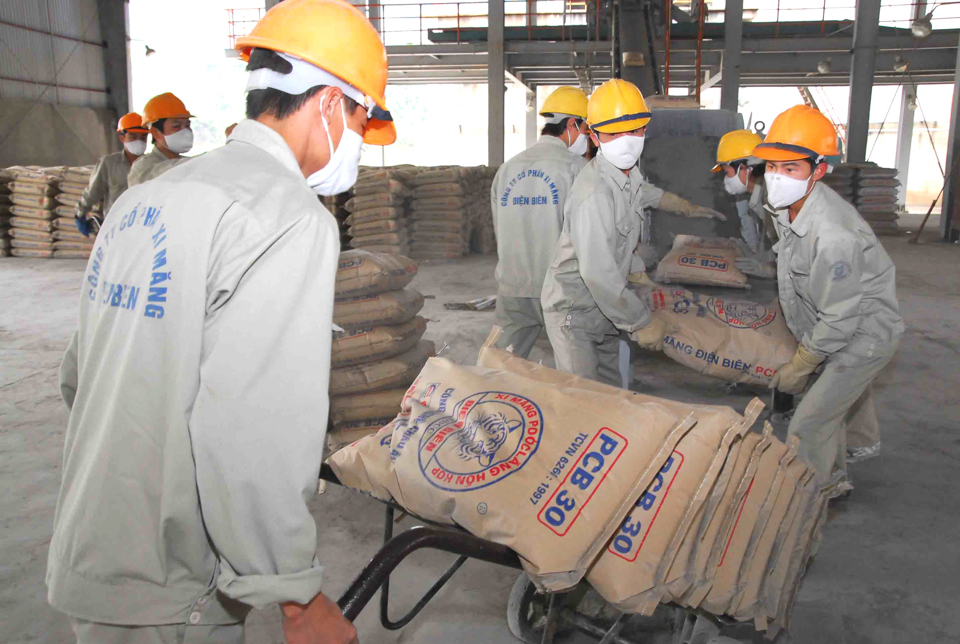
Statistics on cement and clinker exports in the first half of this year show that the country exported 15.9 million tons, earning nearly $612 million, an increase of 0.1% in volume but a decrease of 11% in value compared to the same period in 2023. Before facing difficulties from fluctuations in the Chinese market, the competitive outlook for the cement industry had been predicted many years in advance.
The situation is becoming increasingly complicated as the Trade Remedies Department of the Ministry of Industry and Trade (PVTM) recently received information that Taiwan (China) has officially initiated an anti-dumping investigation into cement and clinker originating from or imported from Vietnam.
Accordingly, the investigated goods are cement and clinker, classified under Taiwan's import tariff codes 2523.29.90.00.2 and 2523.10.90.00.3. The petitioner is the Taiwan Cement Manufacturers Association. The initiation date is August 8, 2024; the anti-dumping investigation period is from July 1, 2023 to June 30, 2024. The alleged dumping margin for Vietnam is 16.99%. The Trade Remedies Department stated that the petitioner named seven Vietnamese enterprises, in addition to other enterprises that also export the investigated goods to Taiwan.
It is evident that weak demand, coupled with domestic and international competition and widely divergent profits, has left cement companies in a bleak financial state during the first half of the year. Many companies have had to shut down their kilns due to difficulties in sales or lower product prices, adjust kiln capacity and employee working hours, even if it means accepting reduced profits to save costs and prevent waste in production and business.
For example, in Nghe An province , according to the Department of Industry and Trade's report, there are currently 4 cement plants operating with a designed capacity of 7.8 million tons/year, including: Hoang Mai Cement Plant (1.4 million tons/year); Song Lam Cement Plant (4 million tons/year); Song Lam 2 Cement Plant (0.6 million tons/year); and Tan Thang Cement Plant (1.8 million tons/year).
Two projects are currently being implemented by the investor: the Song Lam Cement Plant Phase II project, with a capacity of 3.8 million tons/year, and the Hoang Mai 2 Cement Plant - Phase 1 project, with a capacity of 2.3 million tons/year. However, due to some obstacles and difficulties, the implementation progress is slower than expected (currently temporarily suspended).
From 2019 to the present, the production, business, and consumption of cement factories in Nghe An province have declined sharply. Currently, Song Lam 2 Cement Plant is shut down for 3-4 months a year, and Tan Thang Cement Plant is only operating its kilns at about 37% of its planned capacity...
An effective solution is needed.
According to statistics from 18 cement companies listed on the stock exchange, in the first half of 2024, these companies incurred pre-tax losses of nearly 110 billion VND, 3.4 times higher than the same period last year.
Industry experts believe that the real estate market has not yet shown strong signs of recovery. Projects are experiencing delays or postponements due to funding difficulties, and the disbursement of public investment capital is not yet substantial. The scarcity and rising prices of construction materials (sand, stone, gravel) are affecting construction progress in many areas, especially in Central and Southwestern Vietnam, leading to a sharp decline in domestic cement demand.
Meanwhile, fossil fuel resources such as silicon oxide, iron oxide, and basalt additives are becoming increasingly scarce. The prices of coal, oil, fly ash, and additives are trending upwards, but selling prices are not increasing, and are even decreasing, making competitiveness difficult. The unstable supply and price of fuel at many times negatively impact production and business results.
The use of alternative fuels and raw materials remains problematic, with no specific guidelines yet for utilizing industrial waste as a substitute for raw materials in production. The sharp decline in cement consumption has forced factories to adjust selling prices according to fluctuating production costs for certain product lines and specific projects in order to maintain operations.
In the near future, the government will conduct an inventory of greenhouse gas emissions, and the carbon emissions market will be implemented, putting significant pressure on the cement industry. Investors and consumers are increasingly aware of the importance of greening production, including the use of alternative fuels, utilizing waste heat, and waste treatment, leading to an increase in the use of alternative fuels to coal.
Representatives from the Vietnam Cement Association shared that the price per carbon credit in Europe is quite high, reaching over $90/ton of CO2, so if taxed, this would be a significant burden for businesses. Therefore, businesses need to quickly implement green transition solutions to cope with the tax. Green transition in cement production typically involves reducing clinker content (the main component of cement), reducing emissions during clinker burning, or reducing electricity consumption in production.
However, reducing clinker content is difficult because no customer wants to buy cement with low clinker content. Therefore, businesses need to focus on reducing emissions during the firing process or reducing electricity consumption during production.
Mr. Tanakorn Theeramankong, Deputy Country Director of SCG Vietnam, stated that the company has produced "green cement," reducing carbon emissions by 20% during production compared to conventional cement. The product utilizes biomass fuel in its production process, replacing fossil fuels and increasing the proportion of renewable energy sources.
DN has also installed waste heat recovery systems throughout its factories to reduce carbon emissions generated from the cement production process. Thanks to these initiatives, each ton of SCG Low Carbon Super cement (green cement) contributes to reducing carbon emissions equivalent to the CO2 absorption of 12 mature trees over a year.
Source: https://kinhtedothi.vn/thi-truong-xi-mang-tiep-tiep-kho-khan.html

![[Photo] Two flights successfully landed and took off at Long Thanh Airport.](/_next/image?url=https%3A%2F%2Fvphoto.vietnam.vn%2Fthumb%2F1200x675%2Fvietnam%2Fresource%2FIMAGE%2F2025%2F12%2F15%2F1765808718882_ndo_br_img-8897-resize-5807-jpg.webp&w=3840&q=75)




































































Comment (0)