


Wind it up
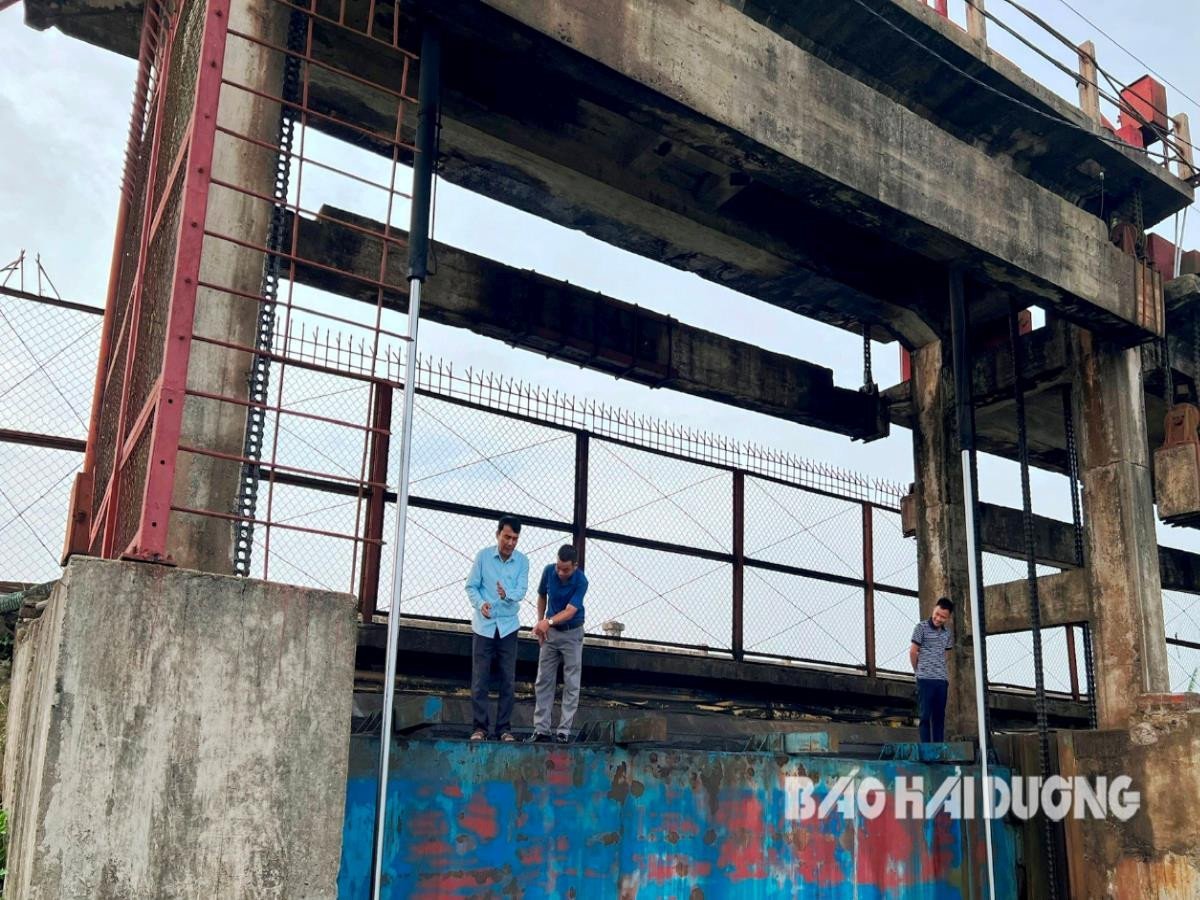
The Huong River sluice gate (Thanh Ha) is a key irrigation project in Hai Duong province. While crucial for irrigation, it also faces constant challenges during the rainy season. It serves as the main source of tidal water from the Van Uc River, irrigating and nourishing over 19,000 hectares of rice paddies and orchards in Thanh Ha and Nam Sach districts. During the rainy season, the Huong River sluice gate collects water from 21.5 km of inland canals, flowing into the river to protect crops. Despite its significant contribution, for the past few decades, the Huong River sluice gate has only received minor, piecemeal repairs and has not been given significant investment or upgrades. Therefore, for many years, the Huong River sluice gate has been considered a critical point, prone to failure at any time.
Mr. Dang Van Thanh, from Lien Mac commune (Thanh Ha district), has been working at the Huong River sluice gate for nearly 20 years. Although his retirement is imminent, he remains deeply concerned about the arduous task of maintaining the gate. Rolling up his sleeves and eagerly inspecting every detail and part of the gate, Mr. Thanh says the Huong River sluice gate is probably the largest in the province and among the oldest and most outdated. Previously, the gate operated using a winch, but now it uses hydraulics, making the work less strenuous for the workers. Even so, it still takes almost an hour to open or close all three gates. However, because it was built so long ago, malfunctions frequently occur during the opening and closing process.
“I remember most vividly 2005 when I was assigned to manage and oversee the Huong River sluice gate. It coincided with a prolonged period of heavy rain. Water rushed in just as the gate opening and closing malfunctioned. Everyone was busy and hurried, and by the time we managed to close the gate, the water had already overflowed, and everyone had to scramble to shovel sand to prevent further flooding. During the rainy season, the sluice gatekeepers work without fixed hours or schedules; they always have to be on high alert and ready for any task,” Mr. Thanh shared.
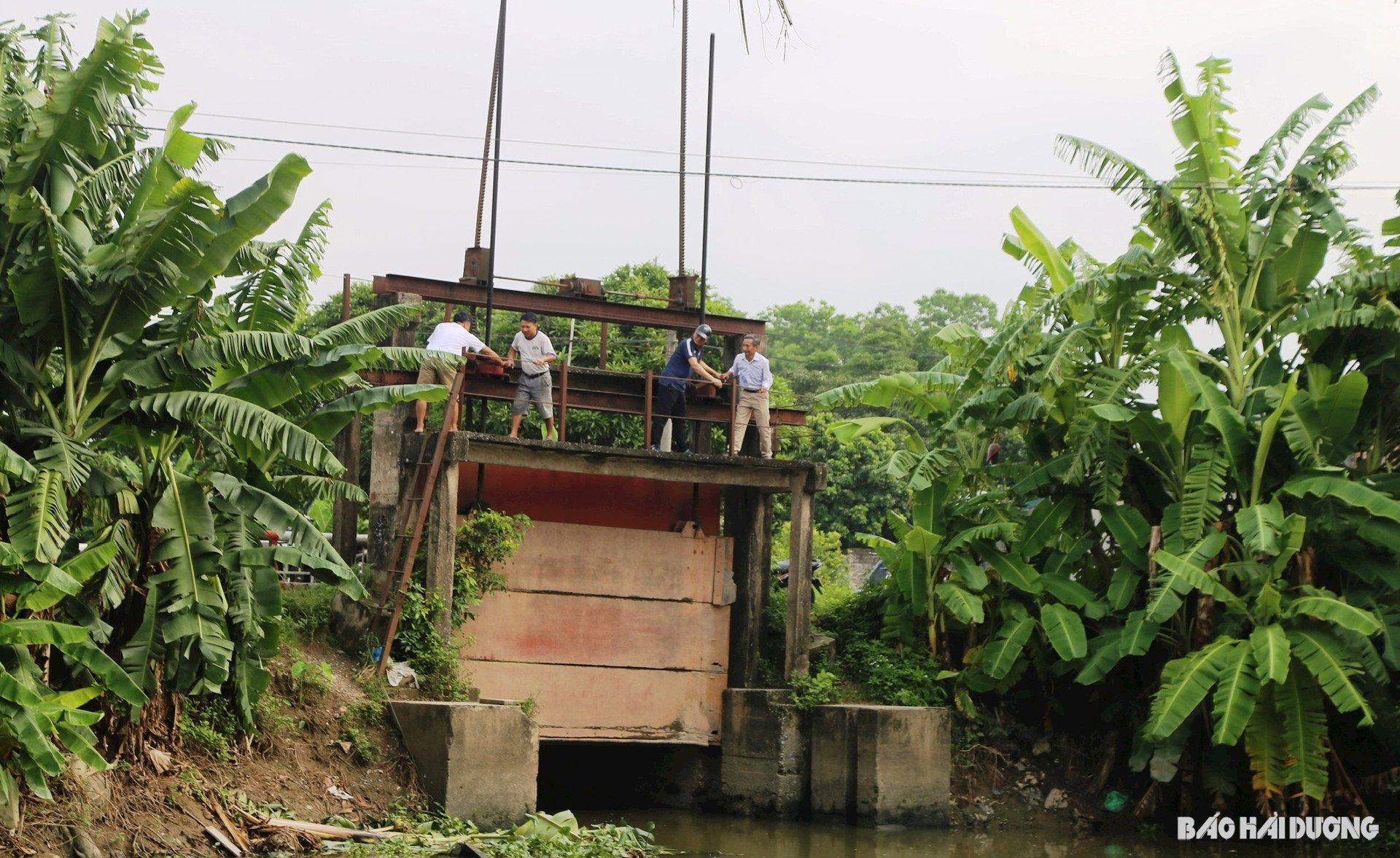
"Human effort is insufficient," followed by a sigh and a click of the tongue from Mr. Pham Quang Tien, Head of the Dong Trang Irrigation Cluster, when discussing the operation of the Dong Trang sluice gate (Tu Ky district). The Dong Trang sluice gate was built in the 1950s, at the same time as the Bac Hung Hai irrigation system. Water from this sluice gate serves 17 irrigation pumping stations in Tu Ky district, 11 pumping stations in Gia Loc district, and 2 pumping stations in Hai Duong city. The Dong Trang sluice gate also ensures gravity drainage for over 2,000 hectares of agricultural land. Despite the urgent and timely irrigation and drainage requirements, the sluice gate still has to be operated manually, resulting in significant time and effort wasted.
Currently, opening or closing the Dong Trang sluice gate requires 5,000 rotations by 10 people, equivalent to 2-3.5 hours. Meanwhile, the unpredictable nature and impact of storms and heavy rains mean that even a momentary delay can have serious consequences. Therefore, the sluice gate keepers must always be on standby to be ready for any situation. Not only does it require many people, but manually opening and closing the sluice gate is also very complex; without close and coordinated cooperation, dangerous incidents can easily occur.
Mr. Tien said that operating the sluice gates requires timing and timing carefully. If there's a large difference in water levels, it creates high pressure, making operation very difficult. Manual operation requires strength but must be consistent, with the gates lowering or raising rhythmically to avoid misalignment. Mr. Tien recounted days when the gates were closed in the morning to retain water, and then opened again in the afternoon to lower the water level in the main canal in case of heavy rain. Each time the gates were opened and closed, it was very strenuous, but everyone had to do their best because it was their duty. Moreover, the gates often suffered minor malfunctions, so sometimes the gatekeepers also doubled as repairmen.
Step-by-step upgrade
While both pump station workers and sluice gatekeepers perform the same task of managing and operating irrigation works, they need to accumulate more skills and experience in monitoring tides and water levels to ensure proper and timely sluice gate regulation. Furthermore, large sluice gates are often built near the outer river and downstream, making them susceptible to salinization. Therefore, sluice gatekeepers must always check water quality before allowing water to flow into the main canal system.
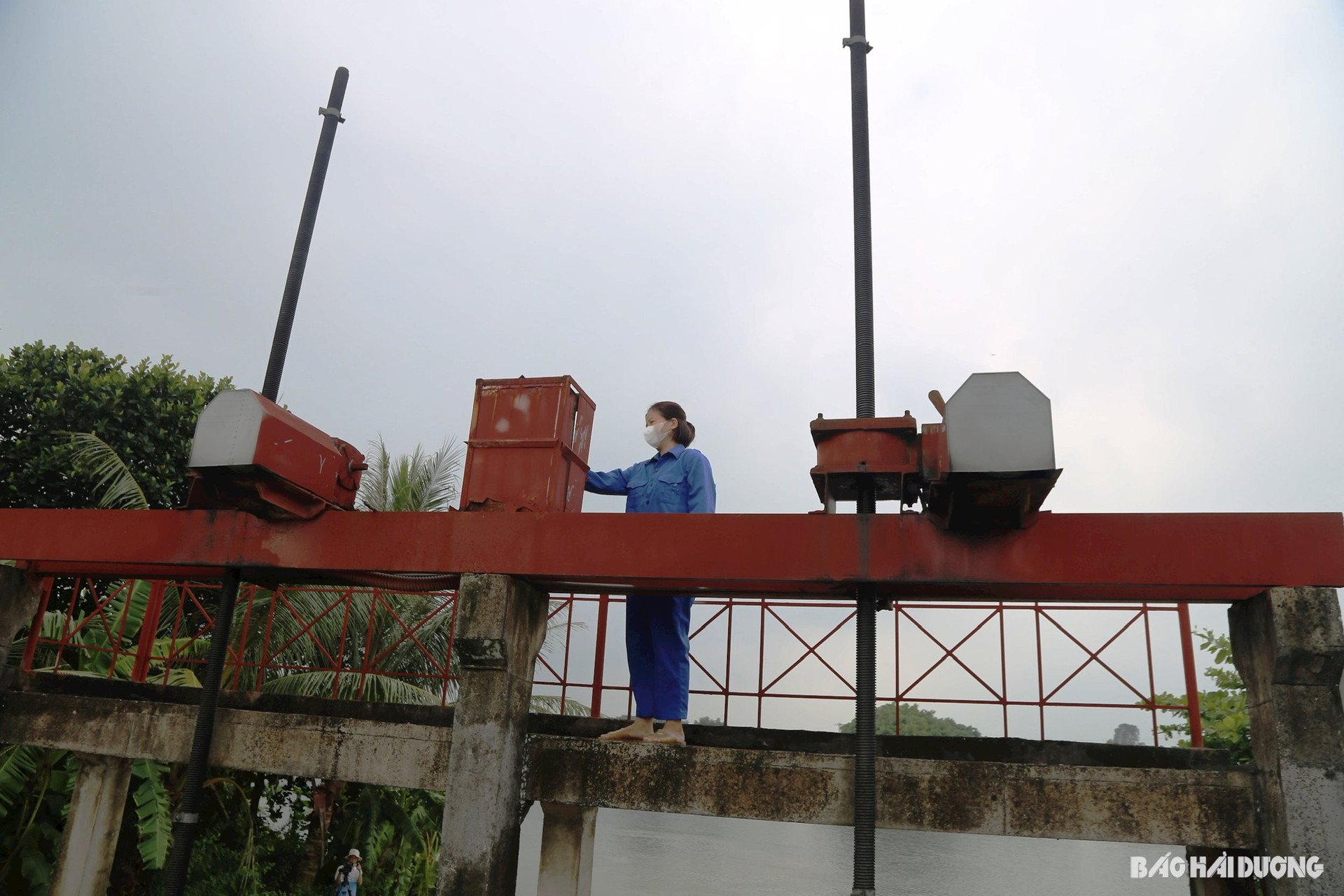
Each sluice gatekeeper must memorize the tide schedule and use the moon to identify high tides. At the Huong River sluice gate, Mr. Thanh usually uses the water levels at Pha Lai (Thai Binh River), Gua Ferry (Gua River), and Hon Dau ( Hai Phong ) as a basis for calculating tidal fluctuations, thereby proposing appropriate sluice gate operation plans to ensure irrigation water supply and efficient and timely drainage. As a key sluice gate, the Huong River sluice gate is managed and operated by 10 people, including sluice gatekeepers and engineers. However, during heavy rains, everyone becomes a sluice gatekeeper, each performing a specific task and procedure to safely open and close the sluice gate.
Mr. Thanh shared: “The Huong River sluice gate has three gates. Opening and closing them must be done sequentially, which is time-consuming and often misses the opportune moment for flood control or drainage. Therefore, everyone hopes that the operation of the sluice gate will be improved to make opening and closing easier. Only then will the regulation of water flow through the gates be as effective as expected, and the sluice gate operators will have less work to do.”
Besides the outdated, manually operated sluice gates, the province now has several electrically operated gates that are faster, more convenient, and meet the requirements of disaster prevention. The Doan Thuong sluice gate (Gia Loc) is managed and operated by female staff because opening and closing the gate is simple. Ms. Pham Thi Huyen has worked there for many years, from when the gate was small and outdated to now, after being newly built and operating with just one operation. Ms. Huyen recounted that in the past, it took 6-7 people and exactly 3 hours and 15 minutes to open or close the gate. During unpredictable and sudden floods, flood control was very reactive and stressful, often leaving no time to react.
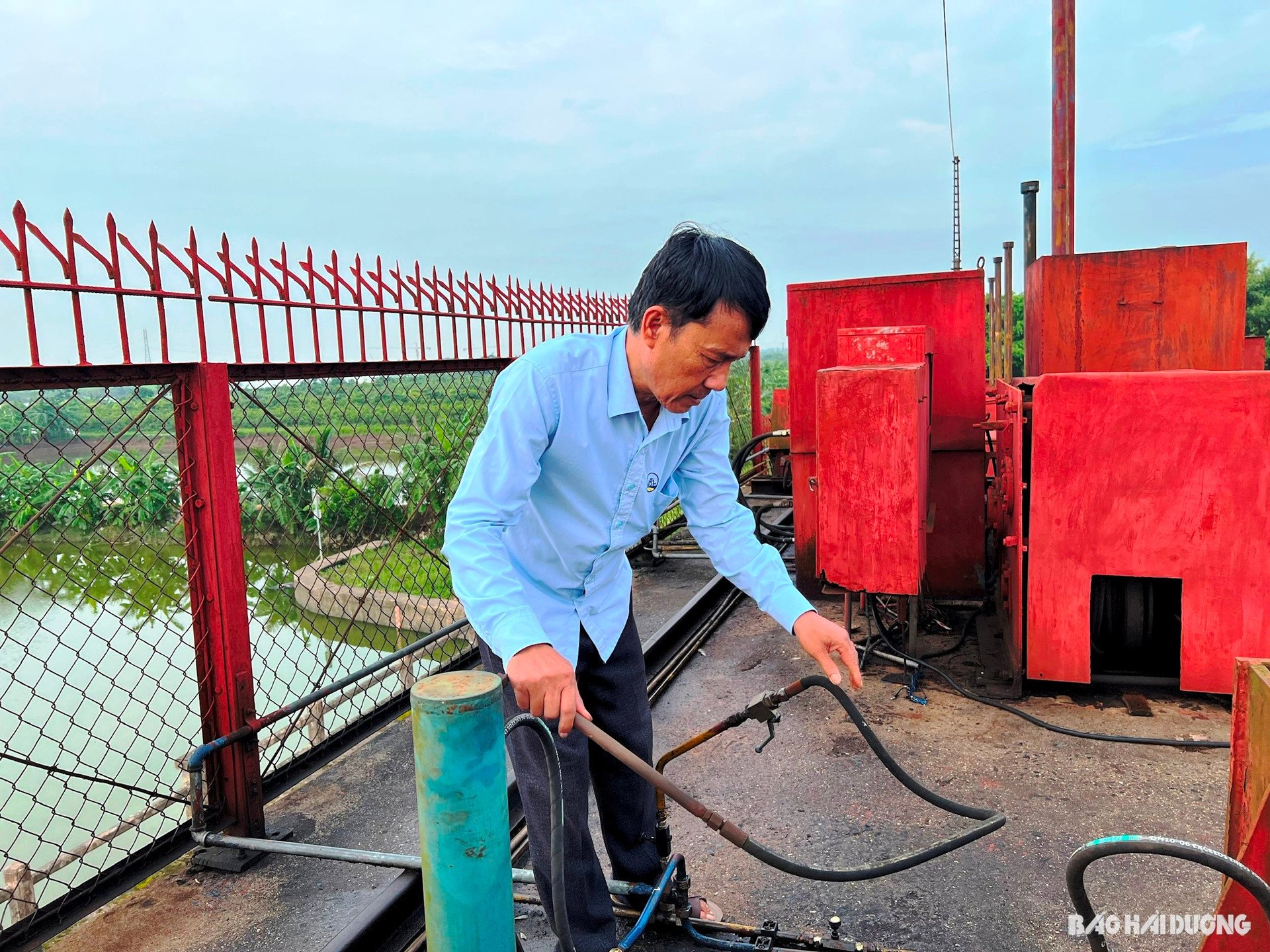
The Doan Thuong sluice gate supplies water to over 3,000 hectares of agricultural land in Gia Loc district and draws water by gravity from the Thach Khoi-Doan Thuong canal for Gia Loc district and Hai Duong city. Since 2015, the sluice gate has been upgraded and uses electricity for operation, eliminating the need for manpower to open and close it as before, and shortening the time required. "Now it only takes 15 minutes to open and close the sluice gate. Because I'm luckier than many others in managing and operating the sluice gate, I always tell myself to do my job well," Ms. Huyen said enthusiastically.
Gia Loc District has six irrigation sluices that have been equipped with electrically operated systems, making it easier for those assigned to manage and protect them. Mr. Bui Trong Duc, Deputy Director of the District's Irrigation Works Exploitation Enterprise, affirmed that the role of the sluices is no less important than that of motorized pumping stations. Therefore, it is necessary to gradually invest in ensuring the sluices operate efficiently and smoothly, reducing the pressure of disaster prevention and alleviating the hardship for the sluice gate keepers.
The province has nearly 600 sluice gates under dikes and thousands of large and small sluice gates in the fields that serve the purpose of gravity irrigation. The gravity irrigation system helps save costs compared to operating motorized pumping stations, but most of the province's sluice gates were built a long time ago, some are dilapidated, causing significant disadvantages in water regulation. The sluice gate operators must overcome difficulties and persevere in their work to meet irrigation needs and disaster prevention requirements. However, in the long term, a comprehensive upgrade and renovation of the entire province's sluice gate system is still necessary. Only then can the safety of agricultural production and the sluice gate operators themselves be ensured.
DUNG CUONGSource: https://baohaiduong.vn/thu-cong-mua-mua-bao-390331.html

















































































Comment (0)