

An opportunity for Vietnamese education to make a breakthrough.
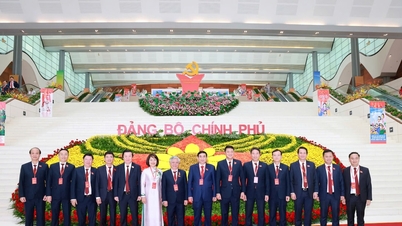
Associate Professor Dr. Nguyen Anh Tuan, Chairman of the University Council of Hanoi Capital University, stated: In Vietnam, amidst a strong digital transformation, on August 22nd, the Politburo issued Resolution No. 71-NQ/TƯ on breakthroughs in the development of education and training.
The resolution affirms that education and training are not only a top national priority but also a decisive factor in the destiny and future of the nation. This represents a major turning point in awareness and action, demonstrating the Party's profound concern for the cause of nurturing human resources.
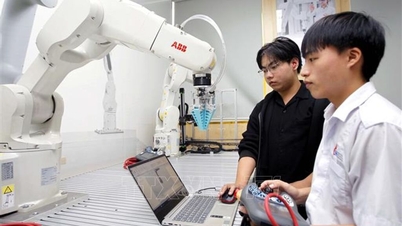
In the Resolution, the Politburo clearly outlined strategic directions for fundamentally and comprehensively reforming the education system. One of the key highlights is to accelerate comprehensive digital transformation and apply digital technology and artificial intelligence in education.
This is an urgent task, and also an opportunity for Vietnamese education to make breakthroughs, improve quality, ensure equity in access, and expand the doors to international integration.
Professor Dr. Le Anh Vinh - Director of the Vietnam Institute of Educational Sciences - believes that the popularization of artificial intelligence in general education is not only a technological trend but also a strategic requirement for countries in the 21st century.
An analysis of Vietnam's journey over the past period shows that the combination of practical research, capacity building, guidance issuance, and long-term strategic preparation has laid an important foundation for the deployment of AI education at the secondary school level.
International experience indicates that, for effective AI integration, education systems need a clear policy vision linked to a phased implementation roadmap; curricula and learning materials appropriate for each educational level, ensuring timeliness and applicability; mechanisms for continuous teacher training and professional development, linked to competency standards; and a collaborative ecosystem between the state, local authorities, educational institutions, and technology companies.
For Vietnam, these lessons highlight the need for continued, integrated investment in three key pillars: enhancing the digital and AI capabilities of teachers; developing diverse, safe, and user-friendly curricula, learning materials, and teaching support tools; and establishing monitoring and evaluation mechanisms to ensure the application of AI is effective, fair, and responsible.
If successfully implemented, AI education in secondary schools will not only equip students with the necessary knowledge and skills in the digital age, but also contribute to shaping creative, humane citizens who are ready to contribute to the sustainable development of the country.
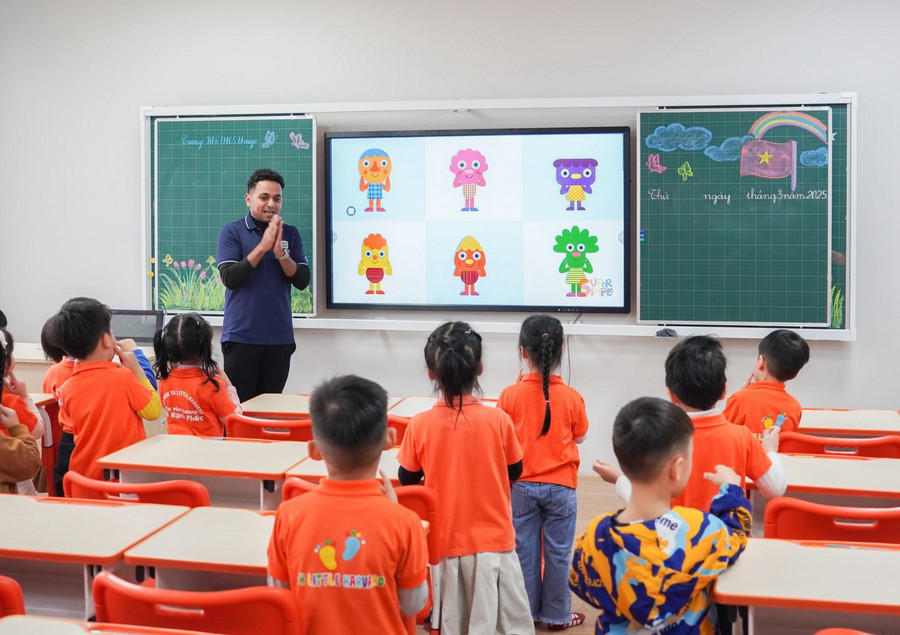
Implementing Resolution 71
Resolution 71-NQ/TW not only sets goals but also clearly defines directions and solutions for educational development. In particular, the major orientations serve as a guiding principle, opening up a long-term vision towards building a modern, integrated, equitable, and high-quality education system, contributing to Vietnam becoming a developed nation by 2045.
Dr. Vu Hai Nam, a lecturer at the University of Science (Vietnam National University, Hanoi), affirmed that the reform of general education cannot be separated from digital transformation and the application of artificial intelligence. AI helps make lectures more engaging, meets the requirements of reforming testing and evaluation according to the competency-based development orientation, and helps students apply knowledge to practice instead of just memorizing theory.
Mr. Nam believes that AI also contributes to the development of digital skills, critical thinking, and practical research abilities – core competencies outlined in the 2018 General Education Program. In the era of open education, every teacher and school needs to become a center of innovation, proactively adapting and shaping the future of digital education.
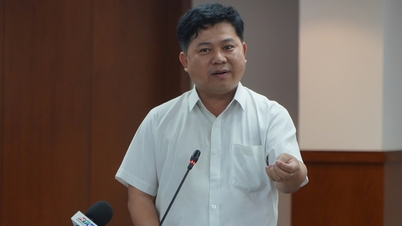
Emphasizing the crucial significance of Resolution 71 in guiding the development of the education and training sector in the coming period, the Director of the Hanoi Department of Education and Training, Tran The Cuong, affirmed that the Hanoi education and training sector is determined to build an open, flexible, and integrated education system, strongly applying technology to improve the quality and effectiveness of teaching and learning, aiming towards international standards, and contributing to the digital transformation of the capital's education sector.
According to Mr. Tran The Cuong, to anticipate the development trend of artificial intelligence, the Hanoi Department of Education and Training is collaborating with Google to train 100,000 teachers according to global standards; building a centralized data platform and expanding the "Google Digital School" model; and focusing on supporting students with learning equipment.
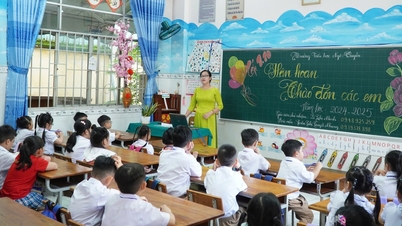
To achieve this goal, in the 2025-2026 school year, Hanoi's Department of Education and Training will focus on improving the digital skills of teachers and students; promoting investment in building smart and modern technical infrastructure; expanding the digital school model; and strengthening the application of artificial intelligence.
Recalling the slogan of Hanoi's Department of Education and Training, "to train students who are excellent in their subject matter, foreign languages, computer skills, and communication skills," Mr. Tran The Cuong stated that to train excellent students, a team of excellent teachers is necessary. Therefore, opening training courses, equipping teachers with knowledge, and sending them for further training are areas that the Department's leadership pays special attention to and implements.
The rapid development of artificial intelligence is opening up many new opportunities in innovating teaching methods, assessment, and educational management. However, this also places very high demands on teachers in terms of professional competence, technological skills, adaptability, and innovation.
“Accessing, mastering, and effectively applying artificial intelligence to teaching and management is a crucial aspect. These courses gradually equip teachers with a system of knowledge and skills in AI, contributing to the goal of: Every teacher is a digital citizen, and every classroom is a digital educational environment,” Mr. Tran The Cuong emphasized.
Source: https://giaoducthoidai.vn/tri-tue-nhan-tao-giup-giao-duc-dao-tao-phat-trien-dot-pha-post748412.html


![[Photo] General Secretary To Lam visits the exhibition space showcasing books, photo exhibitions, and achievements of digital transformation in journalism.](/_next/image?url=https%3A%2F%2Fvphoto.vietnam.vn%2Fthumb%2F1200x675%2Fvietnam%2Fresource%2FIMAGE%2F2025%2F12%2F19%2F1766110879215_1766110240024-jpg.webp&w=3840&q=75)
![[Photo] Enchanting ancient rose garden on the mountainside in Nghe An](/_next/image?url=https%3A%2F%2Fvphoto.vietnam.vn%2Fthumb%2F1200x675%2Fvietnam%2Fresource%2FIMAGE%2F2025%2F12%2F19%2F1766109900916_vuon-hong-chin-do-thu-hut-du-khach-toi-check-in-o-ha-noi-3-20162778-1671624890024-1671624890104198100259.jpeg&w=3840&q=75)














































































Comment (0)