

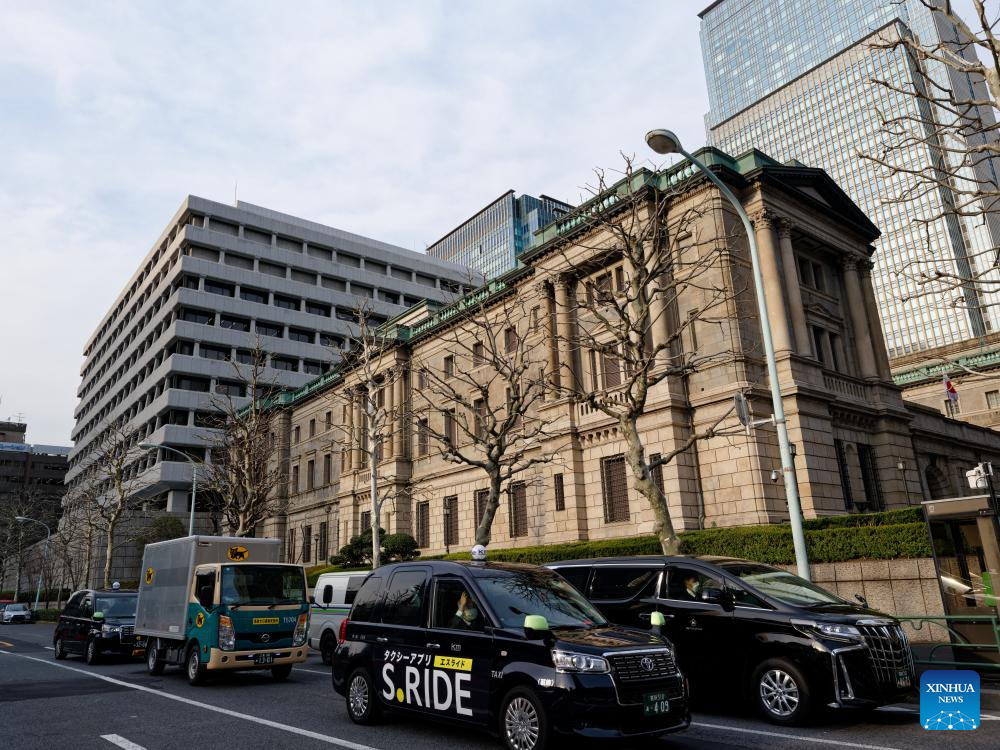
Business confidence improved significantly.
According to Reuters, the Bank of Japan's (BOJ) short-term survey of Japanese businesses nationwide (Tankan), released on December 15, showed that the confidence index of large manufacturing businesses reached +15 points in December, up from +14 points recorded in September, in line with the market's median forecast. This marks the third consecutive quarter of improvement and is also the highest level since December 2021, indicating that the large manufacturing sector is somewhat weathering the impact of US trade barriers in the short term.
For the non-manufacturing sector, the business confidence index for large enterprises reached +34 points, unchanged from the previous quarter and close to market forecasts. This result reflects a relatively positive economic picture, but stronger measures are needed to completely eliminate the risks ahead.
Commenting on the newly released data, Masato Koike, senior economist at the Sompo Institute Plus, stated: “Overall, the Tankan survey results support the market’s prevailing view that the BOJ will raise interest rates in December. Unless there is a major shock to the economy or financial markets, it is highly likely that the central bank will proceed with the rate hike.”
Increased investment, but caution regarding prospects.
The survey also showed that large businesses expect to increase capital spending by 12.6% in the current fiscal year ending March 2026, higher than the strong increases of previous years and slightly exceeding market forecasts. This aligns with the Japanese government 's direction of encouraging businesses to invest in improving productivity to address the persistent labor shortage.
Nevertheless, businesses also forecast worsening business conditions over the next three months. According to BOJ officials, in addition to concerns about US trade policy, severe labor shortages and the negative impact of rising prices on domestic consumption are factors making businesses more cautious.
The Tankan survey's index reflecting employment conditions shows that the Japanese labor market is at its most strained level since 1991 – the period of the asset bubble. The Japanese Ministry of Health , Labour and Welfare has also repeatedly warned that the working-age workforce continues to decline, putting long-term pressure on economic growth.
Conversely, many experts believe that a tight labor market will fuel wage increases – a key factor the BOJ uses to justify further interest rate hikes. According to Capital Economics, a severe labor shortage could help maintain a positive cycle between wage increases and price hikes, laying the groundwork for less accommodative monetary policy in the coming years.
The BOJ also paid particular attention to wage developments. On the same day it released the Tankan survey, the BOJ announced the results of another rare survey conducted by its regional branches, showing that the majority of businesses expect wage increases in 2026 to be similar to those in 2025.
The economy is showing signs of recovery.
Previously, the Japanese economy contracted in the third quarter due to a decline in exports caused by US tariffs. However, according to assessments from several international organizations such as the International Monetary Fund (IMF) and the Organization for Economic Cooperation and Development (OECD), Japan's growth could recover in the current quarter thanks to improved exports and industrial production.
Inflation in Japan has exceeded the Bank of Japan's 2% target for more than three years. The Tankan survey shows that businesses expect inflation to reach around 2.4% over the next one, three, and five years, indicating that inflation expectations are stabilizing around the BOJ's target. This is one of the key factors leading more and more members of the BOJ Policy Board to signal their willingness to support interest rate hikes, in order to avoid falling behind in controlling inflation.
Source: https://baotintuc.vn/thi-truong-tien-te/trien-vong-chinh-sach-tien-te-o-nhat-ban-trong-tinh-hinh-moi-20251215154933239.htm
![[Image] Leaked images ahead of the 2025 Community Action Awards gala.](/_next/image?url=https%3A%2F%2Fvphoto.vietnam.vn%2Fthumb%2F1200x675%2Fvietnam%2Fresource%2FIMAGE%2F2025%2F12%2F16%2F1765882828720_ndo_br_thiet-ke-chua-co-ten-45-png.webp&w=3840&q=75)
![[Photo] Prime Minister Pham Minh Chinh receives the Governor of Tochigi Province (Japan)](/_next/image?url=https%3A%2F%2Fvphoto.vietnam.vn%2Fthumb%2F1200x675%2Fvietnam%2Fresource%2FIMAGE%2F2025%2F12%2F16%2F1765892133176_dsc-8082-6425-jpg.webp&w=3840&q=75)


![[Live] 2025 Community Action Awards Gala](/_next/image?url=https%3A%2F%2Fvphoto.vietnam.vn%2Fthumb%2F1200x675%2Fvietnam%2Fresource%2FIMAGE%2F2025%2F12%2F16%2F1765899631650_ndo_tr_z7334013144784-9f9fe10a6d63584c85aff40f2957c250-jpg.webp&w=3840&q=75)
![[Photo] Prime Minister Pham Minh Chinh receives Lao Minister of Education and Sports Thongsalith Mangnormek](/_next/image?url=https%3A%2F%2Fvphoto.vietnam.vn%2Fthumb%2F1200x675%2Fvietnam%2Fresource%2FIMAGE%2F2025%2F12%2F16%2F1765876834721_dsc-7519-jpg.webp&w=3840&q=75)






































![[Photo] Prime Minister Pham Minh Chinh attends the Vietnam Economic Forum 2025](https://vphoto.vietnam.vn/thumb/402x226/vietnam/resource/IMAGE/2025/12/16/1765893035503_ndo_br_dsc-8043-jpg.webp)



















Comment (0)