

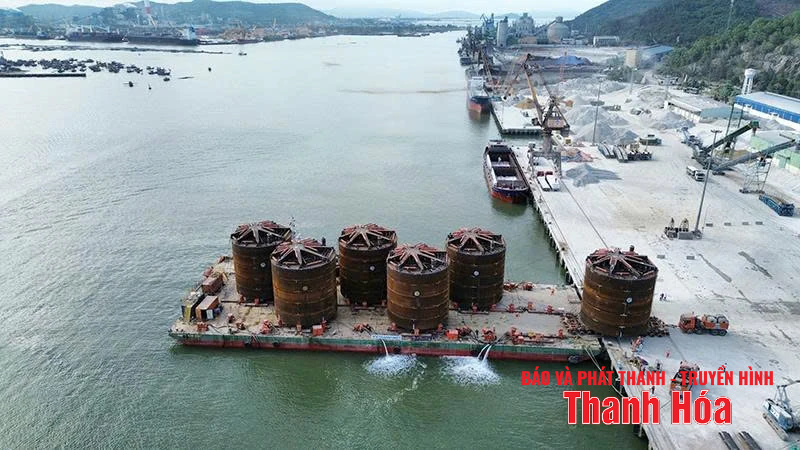
Nghi Son seaport is bustling with ships transporting both domestic and international goods.
More than two decades ago, the southernmost part of Thanh Hoa province – Tinh Gia district, now part of the Nghi Son Economic Zone – was still a poor area where people relied on agriculture, fishing, and the overgrown mangrove forests along the coast. This acidic, impoverished land was once known for its abundance of fish offshore and sweet potatoes on the shore, with agriculture, forestry, and fisheries accounting for 54% of the economy, while industry and services only made up a mere 18%.
The year 1997 marked a turning point – when the Government approved the planning orientation for the development of the South Thanh Hoa - North Nghe An region, paving the way for the establishment of the Southern Economic Zone – marking the beginning of a spectacular transformation.
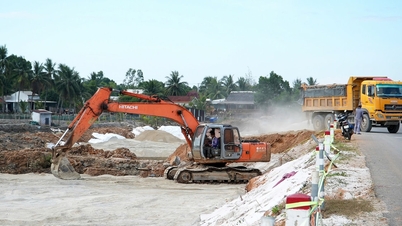
From the first factory built with FDI capital – Nghi Son Cement – in 1997, the Nghi Son coastal area "awakened" with the sounds of construction and industrial machinery echoing amidst the sand and wind. An industrial ecosystem gradually formed, with a seaport, oil refinery, thermal power plant, and hundreds of domestic and foreign projects continuously flocking to the area.
Here, the Nghi Son Refinery and Petrochemical Plant – the "industrial heart" of Thanh Hoa province – holds a strategic position in national energy security, undertaking the responsibility of supplying 40% of the country's fuel needs and contributing more than 40% to Thanh Hoa province's budget.
According to Mr. Kazutaka Yamato, General Director of Nghi Son Refinery and Petrochemical Company Limited, despite facing many challenges, in the first six months of 2025, the plant operated safely and stably with an average capacity reaching nearly 117% of its design capacity, far exceeding the set plan. The company is proactively optimizing its production plan, ensuring the supply of crude oil, and simultaneously seeking opportunities to diversify raw materials to ensure stable operation, maintain high-quality output, and guarantee fuel supply for the domestic market.
Bim Son – a land once renowned for having the largest cement factory in Northern Vietnam, a place deeply marked by Soviet-style industrialization – is now transforming into a modern, dynamic industrial city. From a "cement town" associated with dust, construction sites, and endless trains carrying clinker, Bim Son now boasts a new image, with improved transportation links between the North and Central regions via national highways, expressways, and railways; expanding industrial zones and developing logistics; and flourishing urban services and housing.
In particular, the new "vitality" comes from a strategic shift – as Bim Son has moved beyond relying solely on heavy industry and construction materials, successfully attracting supporting industries, processing, electronics, and value-added services.
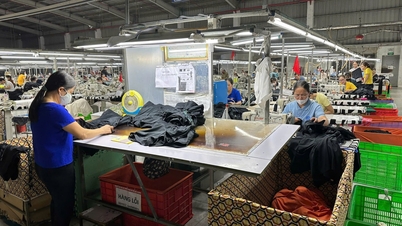
A prime example of the new wave of investment in Bim Son is DS HI-TECH VINA Co., Ltd. - a South Korean company operating in the automotive parts manufacturing sector. Officially commencing operations in September 2020 in the Bim Son Industrial Park, after nearly five years, this company has recorded revenue of $30 million and contributed over 600 billion VND to the state budget - figures that speak volumes about the effectiveness of investment and the attractiveness of the business environment here.
Furthermore, the company has plans to expand its factory, with construction expected to begin at the end of this year and be completed by mid-2026. “The new facility will not only expand the current production line but also develop more lines of automotive parts for export, opening up a more sustainable and long-term direction,” shared Mr. Lee Jae Taeg, the company's director.
Heading west to the Lam Son-Sao Vang region, once known as the "sugar capital" of Thanh Hoa province, the area's economy relied heavily on sugarcane cultivation, agricultural processing, and small-scale livestock farming for many years. However, its landscape has rapidly transformed as high technology and green economic thinking have permeated every field and factory. In particular, according to the Provincial Party Committee's vision for 2030 and 2045, Lam Son-Sao Vang will accelerate its development based on three pillars: industry, large-scale agriculture , high technology, and aviation services.
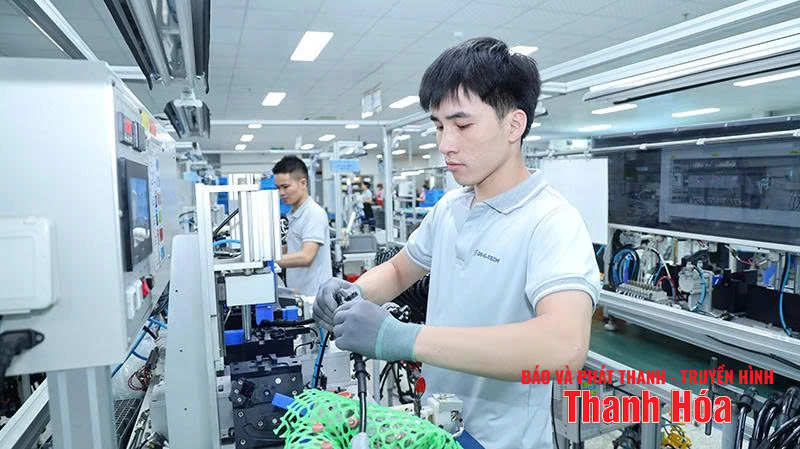
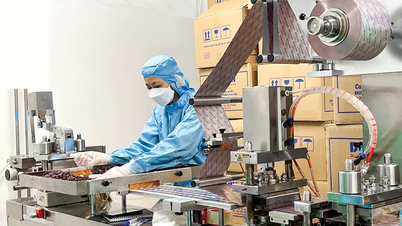
Bim Son Industrial Park has successfully attracted supporting industries, processing, electronics, and high value-added services (pictured: Workers at DS HI-TECH VINA Co., Ltd. producing automotive components for export).
Here – amidst the scorching summer sun of Lam Son – the lush green sugarcane fields are not just a harvest but also become "living data units" – where farmers keep their farming diaries and adhere to environmentally friendly techniques. Beyond being a source of clean raw materials for dozens of beverage products that Lam Son Sugar Corporation (Lasuco) uses to compete in numerous European and American countries, the project on reducing greenhouse gas emissions, a collaboration between Lasuco and its Japanese partners (Idemitsu Kosan, Sagri), has officially begun registering for international carbon credits. After an initial trial phase on 500 hectares, the project aims to expand to 8,000 hectares. Once the carbon credits are certified, this will be a new sustainable source of income for farmers – a prime example of Vietnam's agricultural capacity to integrate into the global green development trend.
The Lam Son - Sao Vang Industrial Park is also actively working to complete its infrastructure and attract investment, focusing on high-tech projects such as electronic component manufacturing; medical equipment and supplies manufacturing; supporting industries; and clean, environmentally friendly technology projects with high added value.
To date, the Nghi Son Economic Zone and industrial parks in the province have successfully attracted 734 investment projects, including 657 domestic projects with a total registered capital of over VND 190,600 billion, and 77 FDI projects with a total capital of nearly USD 14 billion. Notably, the disbursed FDI capital reached USD 13.44 billion, equivalent to 96% of the registered capital, demonstrating the high implementation rate and tangible effectiveness of foreign capital flows.
Many large-scale factories have been established, creating a clear impetus for development. In the period 2020-2025 alone, businesses generated a total production value of over 1,229,121 billion VND, with export turnover reaching approximately 18 billion USD. Notably, thanks to the impetus from these "economic powerhouses," the province's state budget revenue reached nearly 126,000 billion VND, officially placing Thanh Hoa in the "50,000 billion VND Club" nationwide...
With an average GRDP growth rate of approximately 10.24% per year during the 2020-2025 period, Thanh Hoa's GRDP in 2025 is estimated to reach nearly 358,000 billion VND - almost double that of 2020. This impressive achievement has propelled Thanh Hoa to the top of the entire North Central and Central Coastal region. The projected GRDP per capita is 3,750 USD, reflecting a clear improvement in both the quality of growth and the living standards of the people.
A new era awaits Thanh Hoa province, with the powerful momentum of a multi-pillar economy. With a foundation of modern industry, high-quality services, and sustainable agriculture, Thanh Hoa is not only creating development for itself but is also becoming a pillar, spreading momentum to the entire North Central region on its journey towards a prosperous future!
Text and photos: Minh Hang
Source: https://baothanhhoa.vn/tu-vung-dat-thuan-nong-nbsp-den-cuc-tang-truong-bac-trung-bo-256327.htm




![[Image] A brilliant symphony and explosive power in the skies of Da Nang.](https://vphoto.vietnam.vn/thumb/1200x675/vietnam/resource/IMAGE/2026/05/31/1780196945787_anh-man-hinh-2026-05-31-luc-10-08-51.png)














![[Video] Sunset at Lap An Lagoon – Where the sun sets over the fishing nets](https://vphoto.vietnam.vn/thumb/340x192/vietnam/resource/IMAGE/2026/05/31/1780192137701_beach-landscape-sea-water-nature-grass-745871-pxhere-com.jpeg)




































































Comment (0)