


This requires fundamental solutions to ensure fairness, safety, and effectiveness in research, while promoting sustainable development in the academic and creative environment.
A capable right-hand man
Experts point out that subjectivity, multimodality, and an emphasis on context are prominent characteristics in the process of collecting, analyzing, and interpreting data in social science research. Therefore, humans always play a central role in social science, and the application of artificial intelligence to this field has its own unique and more complex characteristics compared to the exact sciences. AI not only serves as a supporting tool but has now become a subject of research within the social sciences and humanities themselves.
Dr. Pham Si An (Vietnam Academy of Social Sciences) stated: One of the reasons artificial intelligence has become an attractive tool for researchers in social sciences and humanities is its ability to process large volumes of unstructured data such as text, audio, and images – data types common in fields such as history, linguistics, anthropology, and cultural studies.
Today, Neuro-Linguistic Programming (NLP) tools can help extract information from millions of articles, archaeological documents, interview transcripts, or social media posts, enabling researchers to identify patterns, analyze trends, and make policy recommendations.
AI also supports the automation of many stages in the research process, such as encoding qualitative data, analyzing topics, classifying opinions, or building models to predict social behavior; helping researchers solve questions that go beyond the limits of traditional methods.
Specifically in the field of history, AI is contributing to the digitization and identification of ancient texts.
The National Archives Center I has applied AI to convert more than 80,000 pages of Nguyen Dynasty documents from Chinese and Nom script into digital form, for archiving and retrieval purposes.
At the Vietnam National University Ho Chi Minh City, the NomNaOCR project has digitized thousands of pages of Sino-Vietnamese documents, creating the largest database in Vietnam for research and reference.
The University of Science (Vietnam National University Ho Chi Minh City) has also developed an automated translation system from Nom script to Quoc Ngu script, integrating knowledge of culture, geography, and language to increase accuracy.
In philosophy research and teaching, many universities have proactively applied AI to support students and faculty. A prime example is TrietGPT – a virtual assistant developed by Associate Professor Dr. Nguyen Hoang Hai (Vietnam National University, Hanoi ), capable of interpreting abstract concepts and opening up deeper understanding for learners and researchers. In addition, many lecturers have experimented with AI tools such as ChatGPT, Bing AI, or Google Gemini to prepare lesson plans and build philosophical discussion content.
Many universities in Ho Chi Minh City have organized workshops and training sessions on AI for lecturers, students, and researchers. The Ho Chi Minh National Academy of Politics is also experimenting with AI applications in teaching.
Similarly, in fields such as archaeology, anthropology, cultural studies, and regional development research, AI is being applied to analyze images, videos, audio, and text collected from local communities; through this, researchers can identify behavioral patterns, social organization models, and specific cultural characteristics.
AI algorithms assist in analyzing informal language, patterns, symbols, and graphics in festivals and religious rituals, helping to compare similarities and differences between population groups within the same geographical area.
AI also helps identify localized clusters of economic activity or vulnerable social areas, assisting planners in determining priority areas for policy interventions.
Dr. Hoang Hong Hiep (Institute of Social Sciences of the Central and Central Highlands Regions) stated: “Environmental research and monitoring work greatly benefits from AI, through its ability to analyze data from sensors, monitoring stations, and satellite imagery. AI can predict floods and landslides early with high accuracy, thereby optimizing evacuation and relief distribution.”
Challenges and solutions
It is clear that AI is transforming the research environment in the social sciences and humanities, with far-reaching impacts such as enhanced data collection and processing capabilities, the discovery of new problems and hypotheses, improved efficiency in quantitative and qualitative analysis, and support for social policy design. However, the application of AI in research also raises several issues worth noting.
First and foremost is the risk of technological dependence. The misuse of AI could lead researchers to rely on pre-existing biases in data repositories, undermining their reasoning abilities, critical thinking, and humanistic values—core elements of social science. Furthermore, experts warn of other challenges such as: the technological capacity gap among researchers, the lack of open and interconnected data platforms, and ethical and copyright issues in the use of AI.
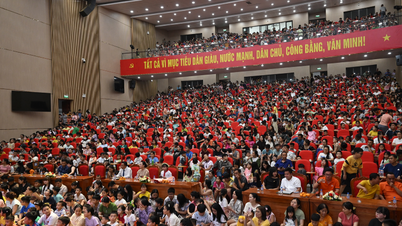
At the scientific conference "Applications of Artificial Intelligence: Opportunities and Challenges for Social Science Research in Vietnam Today," Dr. Kieu Thanh Nga (Institute for South Asia, West Asia and Africa Studies, under the Vietnam Academy of Social Sciences) emphasized: As a leading research institution in the field of social sciences, the Vietnam Academy of Social Sciences (VASS) needs to proactively adapt to the AI era; urgently develop a medium- and long-term development strategy, linked to the goal of integrating AI technology into the entire research cycle; promote training and development of digital capabilities for the research team, narrowing the digital skills gap; and develop digital infrastructure to meet the requirements for data storage, analysis, and sharing. In addition, VASS also needs to develop a code of academic ethics in the AI era, clearly defining the responsibilities of researchers in verifying and validating results generated by AI.
In Vietnam, current legislation primarily regulates technological aspects and lacks specific regulations for the unique issues in social sciences and humanities research. While technology industries focus on efficiency and optimization, social sciences are linked to ethics, culture, and human rights. Therefore, AI, with its automation and reliance on large amounts of data, could pose risks if appropriate control mechanisms are not in place.
According to Dr. Pham Thuy Nga (Institute of State and Law - VASS), notable legal issues include: protecting personal data in surveys of vulnerable groups, liability when AI causes inaccuracies, intellectual property rights for AI-powered products, lack of transparency in closed AI models, and ethical risks when AI is misused to create academic content.
Completing the legal framework for the application of AI in social sciences and humanities research is becoming an urgent requirement, ensuring that the technology is developed within the legal framework, respecting human values, and serving the community. This is also the basis for promoting an advanced, modern, and sustainable science, in line with the spirit of Resolution 57 of the Politburo on breakthroughs in the development of science, technology, innovation, and national digital transformation.
According to Vu Quynh Trang/Nhan Dan Newspaper
Link to the original articleSource: https://baovanhoa.vn/nhip-song-so/ung-dung-ai-trong-khoa-hoc-xa-hoi-va-nhan-van-147206.html
![[Image] Hanoi Police officially crowned champions of V-League 2025/2026](https://vphoto.vietnam.vn/thumb/1200x675/vietnam/resource/IMAGE/2026/05/31/1780244769054_ndo_br_039d561b692be875b13a-jpg.webp)






























![[Photo] The General Secretary, President and his wife begin their state visit to the Philippines.](https://vphoto.vietnam.vn/thumb/1200x675/vietnam/resource/IMAGE/2026/05/31/1780230559452_anh-man-hinh-2026-05-31-luc-19-28-11.png)






































































Comment (0)