

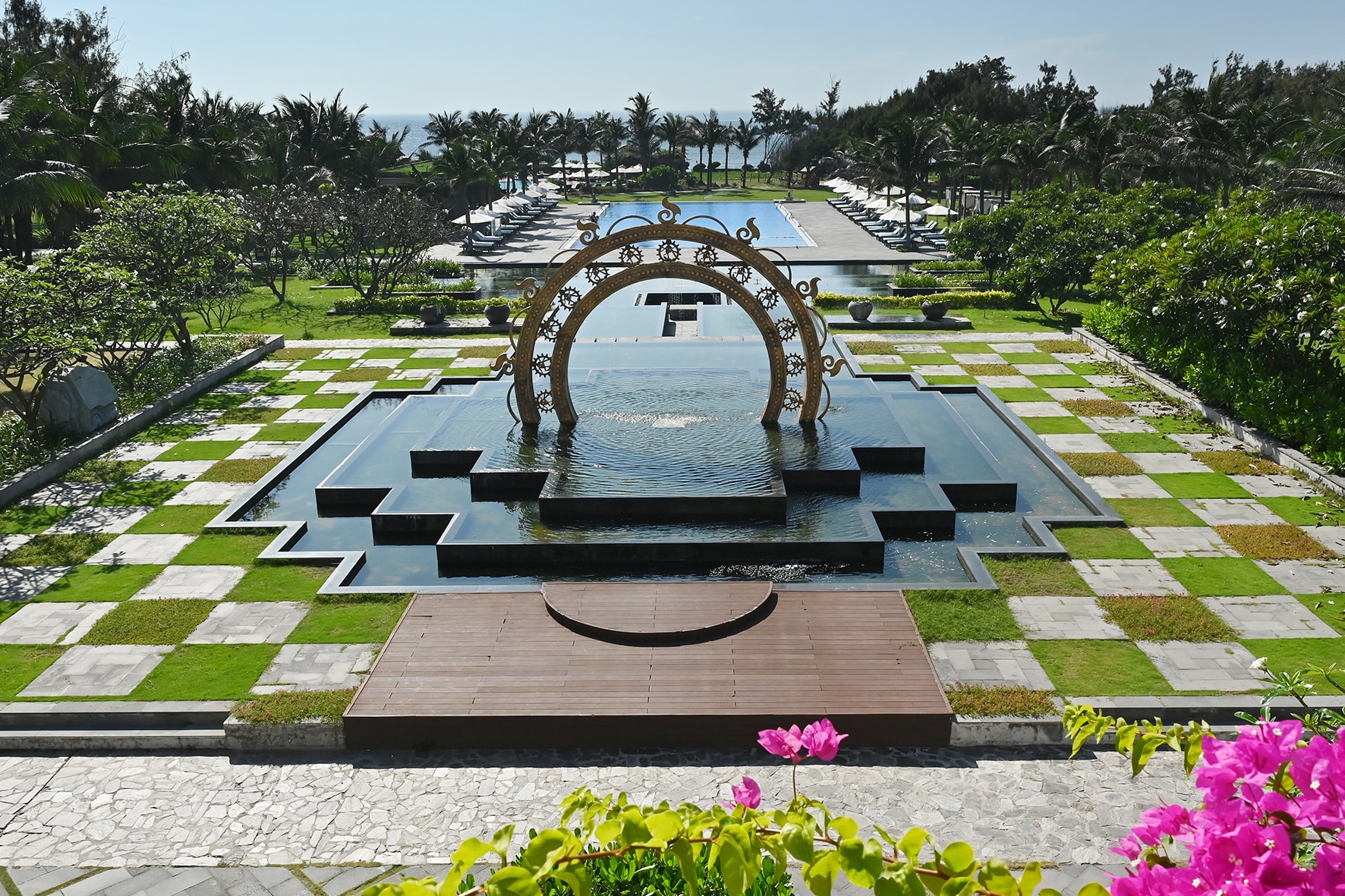
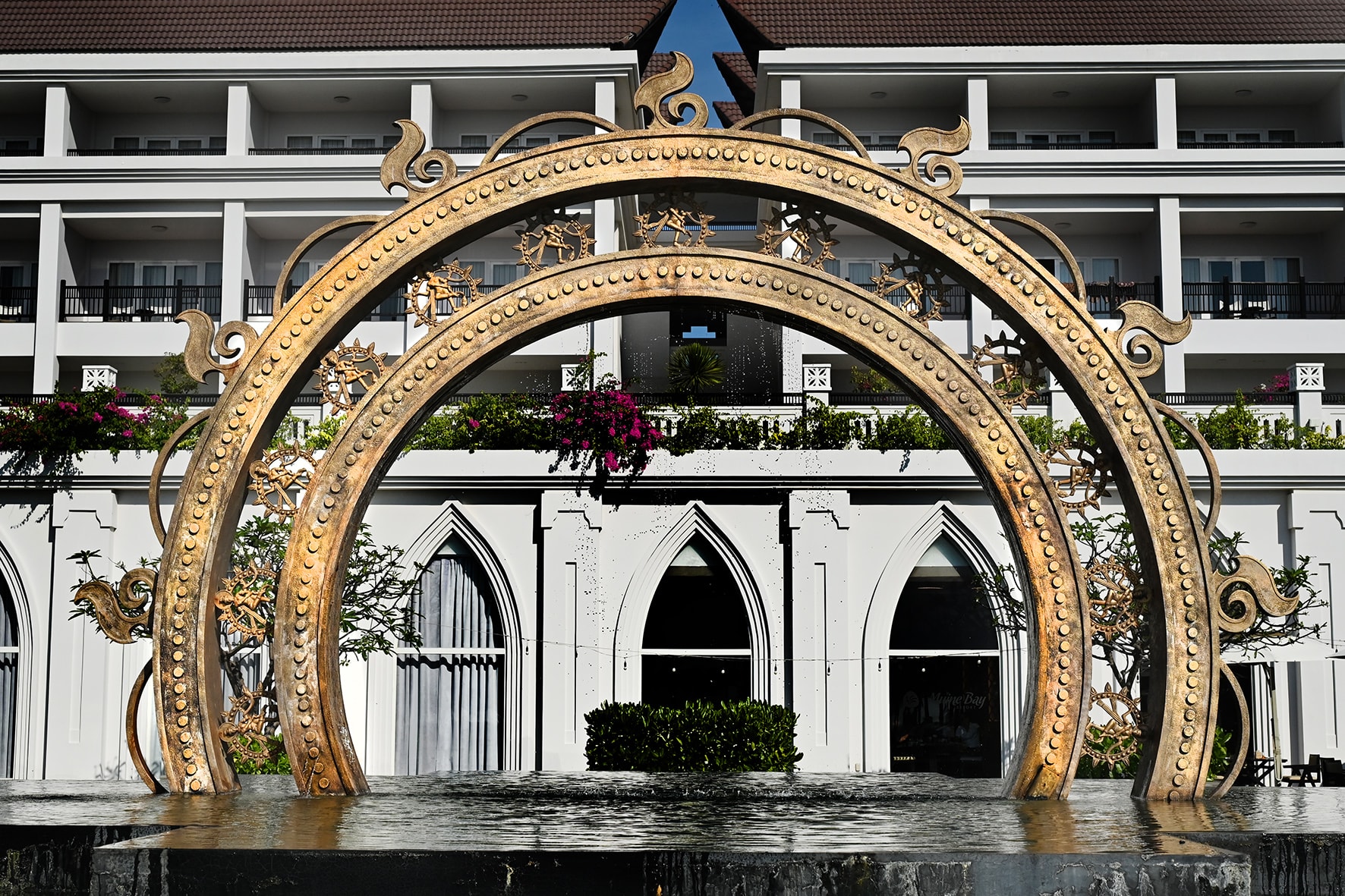
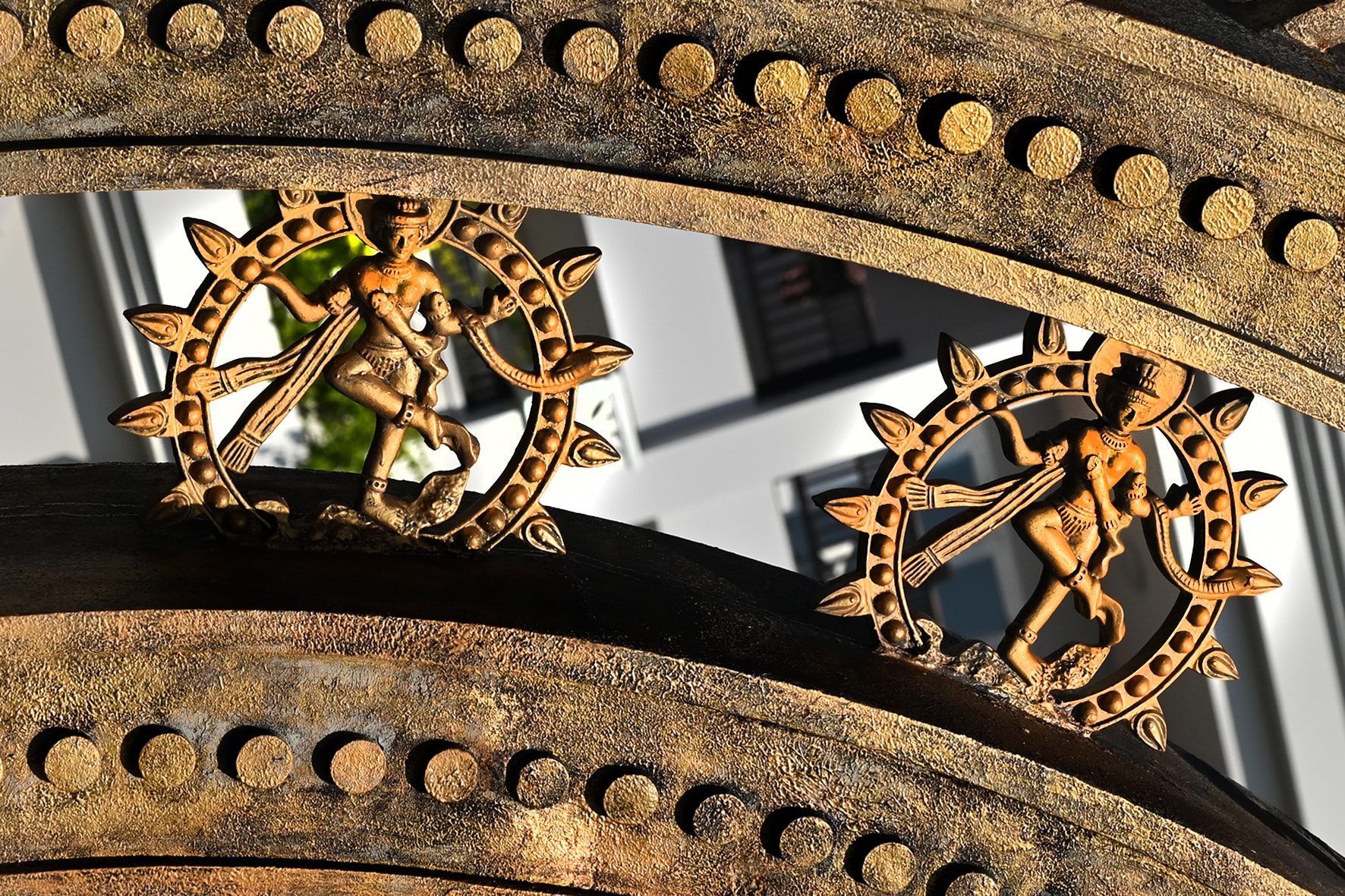
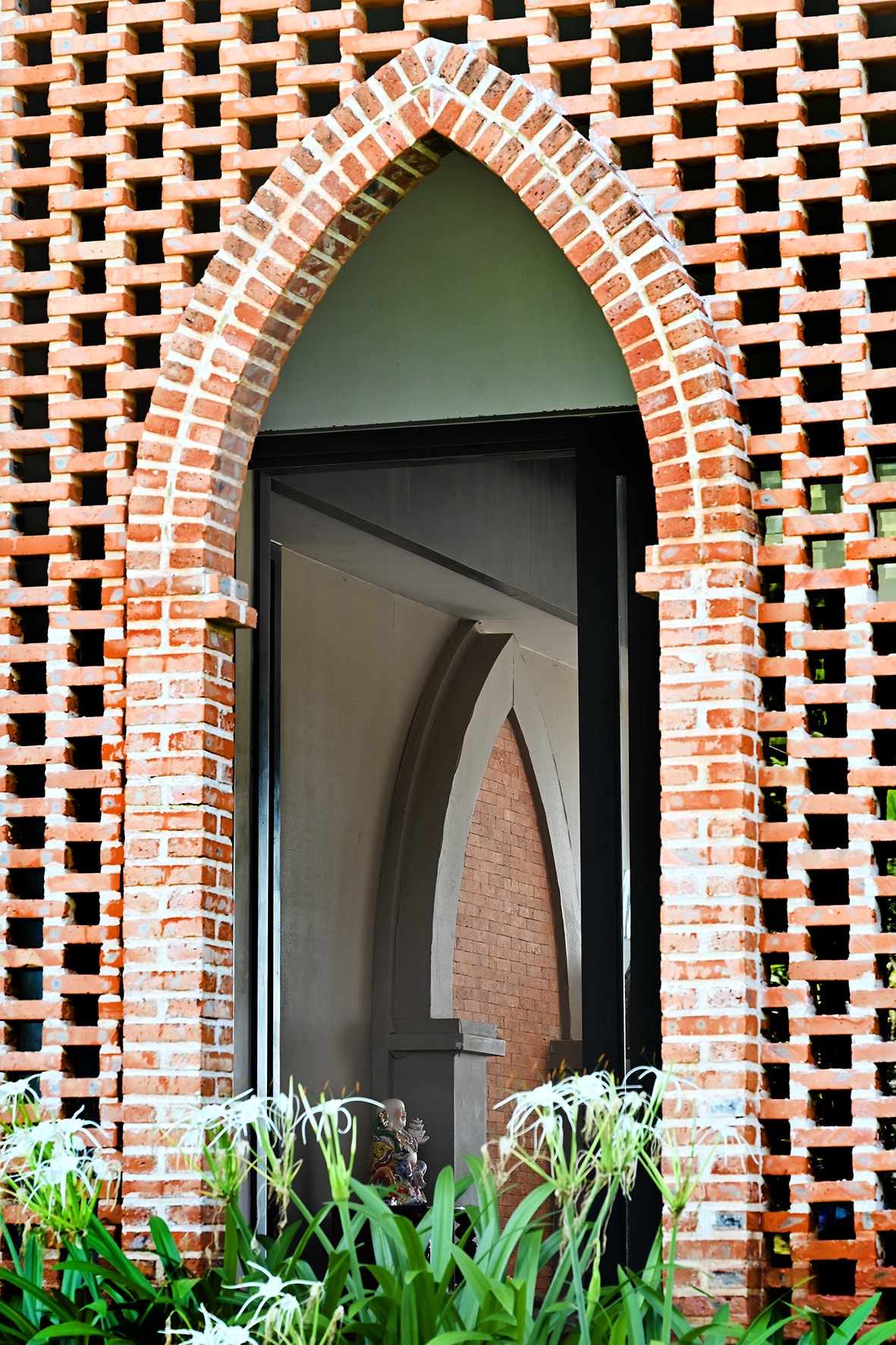
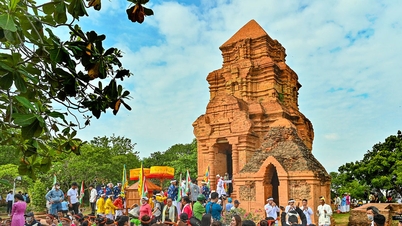
Hoa văn Chăm thường mang tính biểu tượng, thể hiện qua các họa tiết thực vật, động vật và các hình tượng thần linh. Những hoa văn này có thể được áp dụng vào thiết kế nội thất, tạo ra không gian mang đậm sắc thái văn hóa.
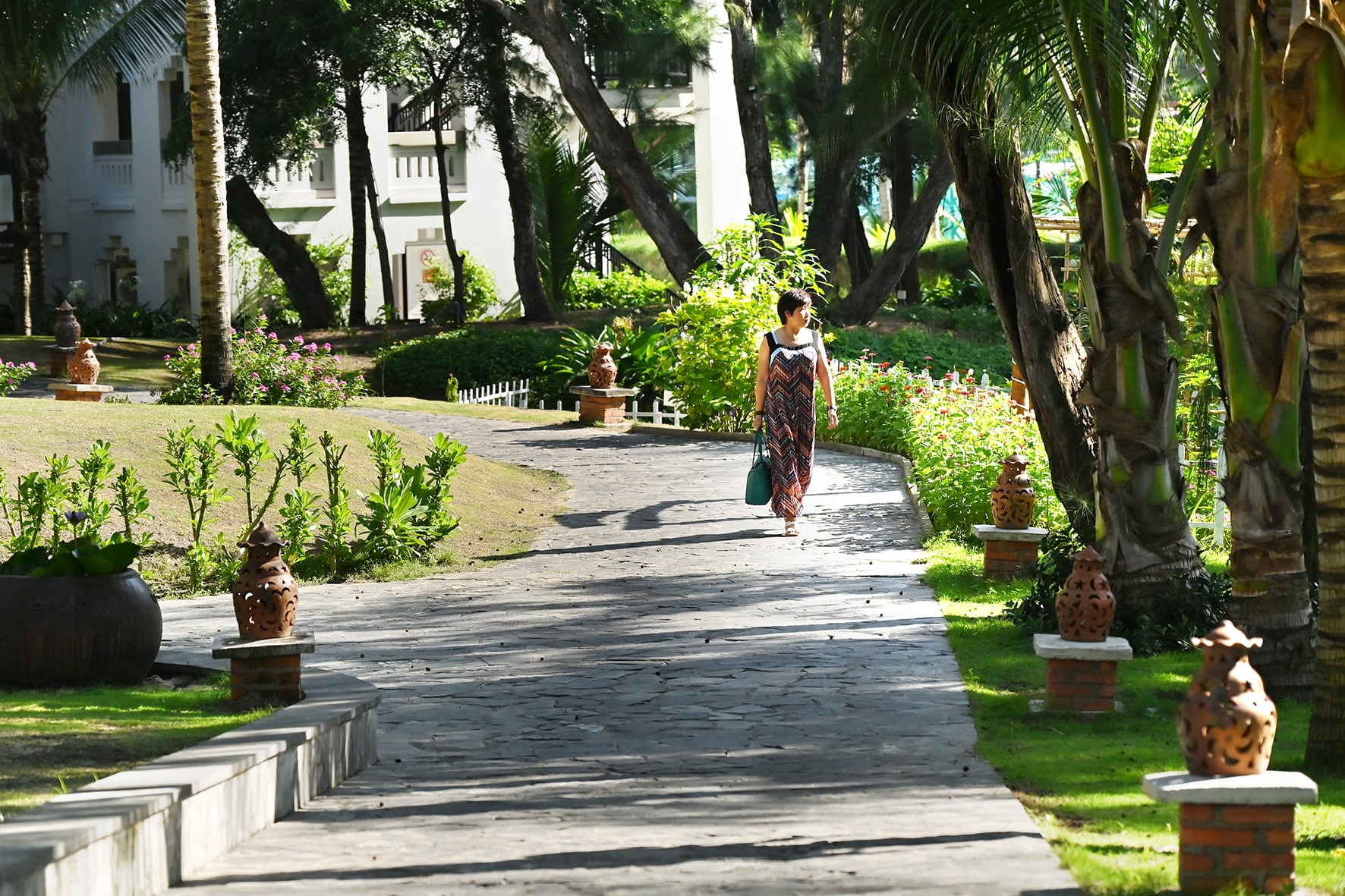
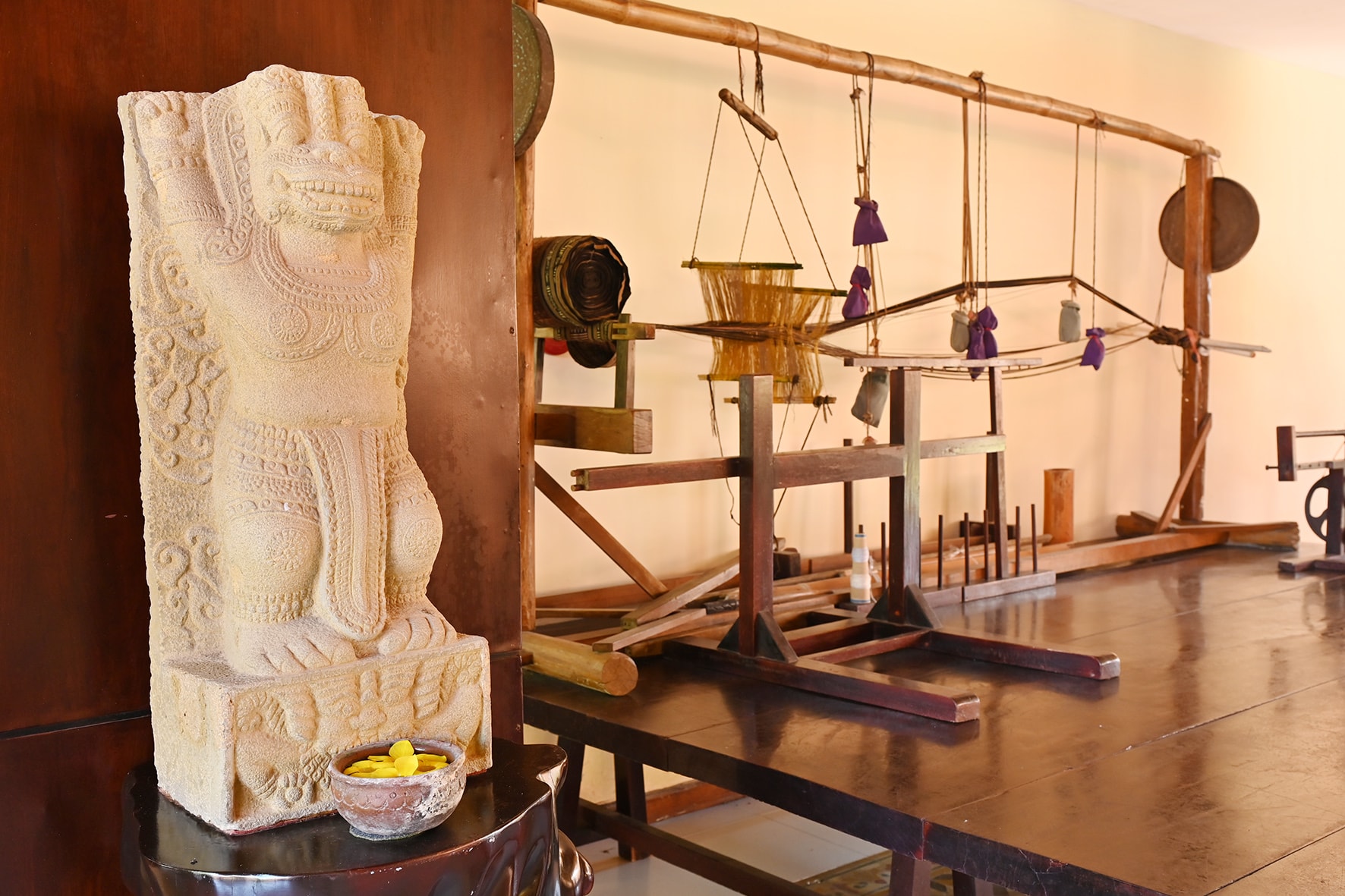
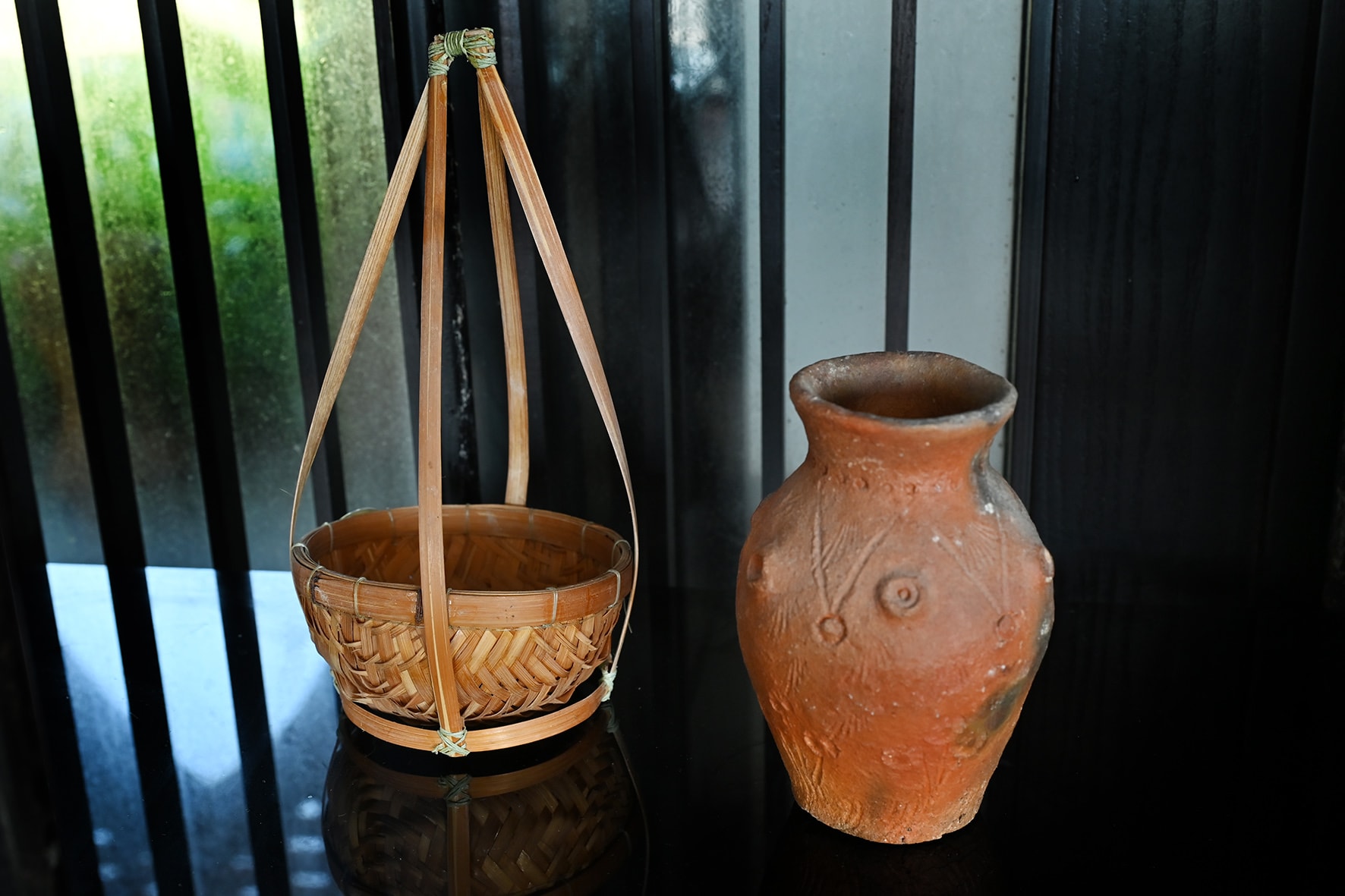
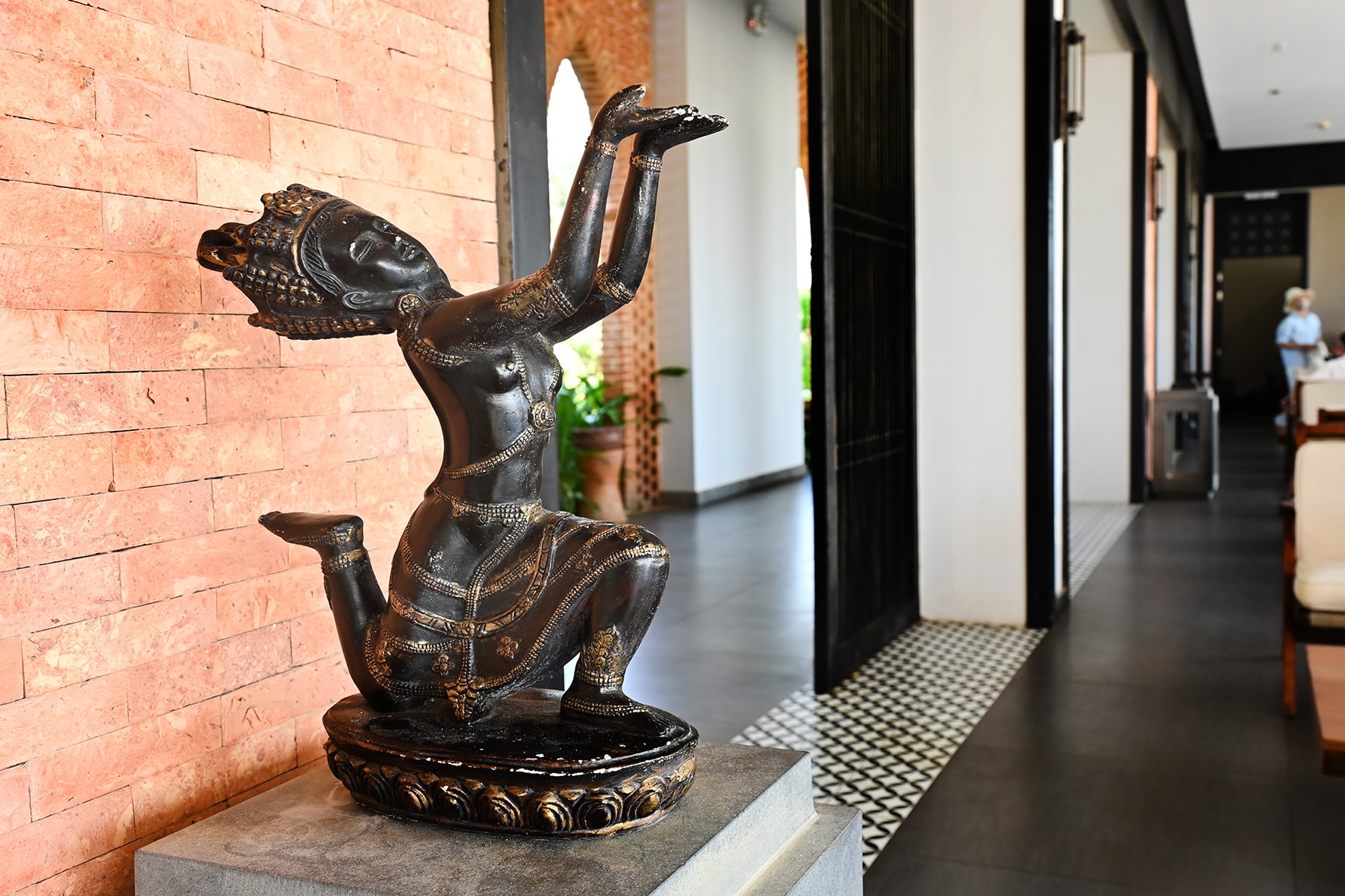
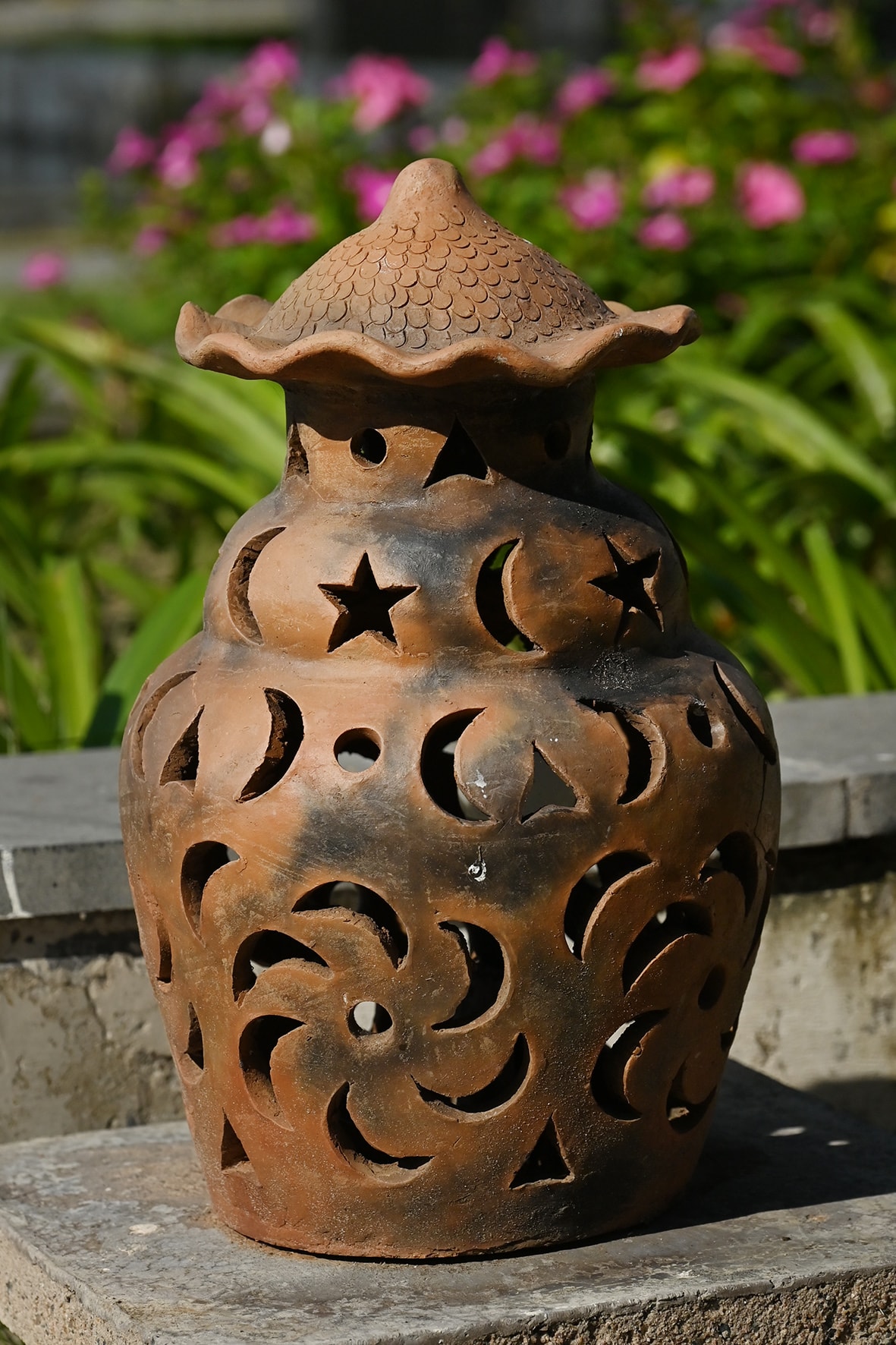
Ngoài ra, các bức phù điêu, các hiện vật, bộ sưu tập tranh liên quan đến văn hóa Chăm cũng được trưng bày tại các lối đi, trong nhà hàng hay trong khuôn viên xanh, tạo ra một không gian văn hóa Chăm thu nhỏ ngay trong cơ sở lưu trú.
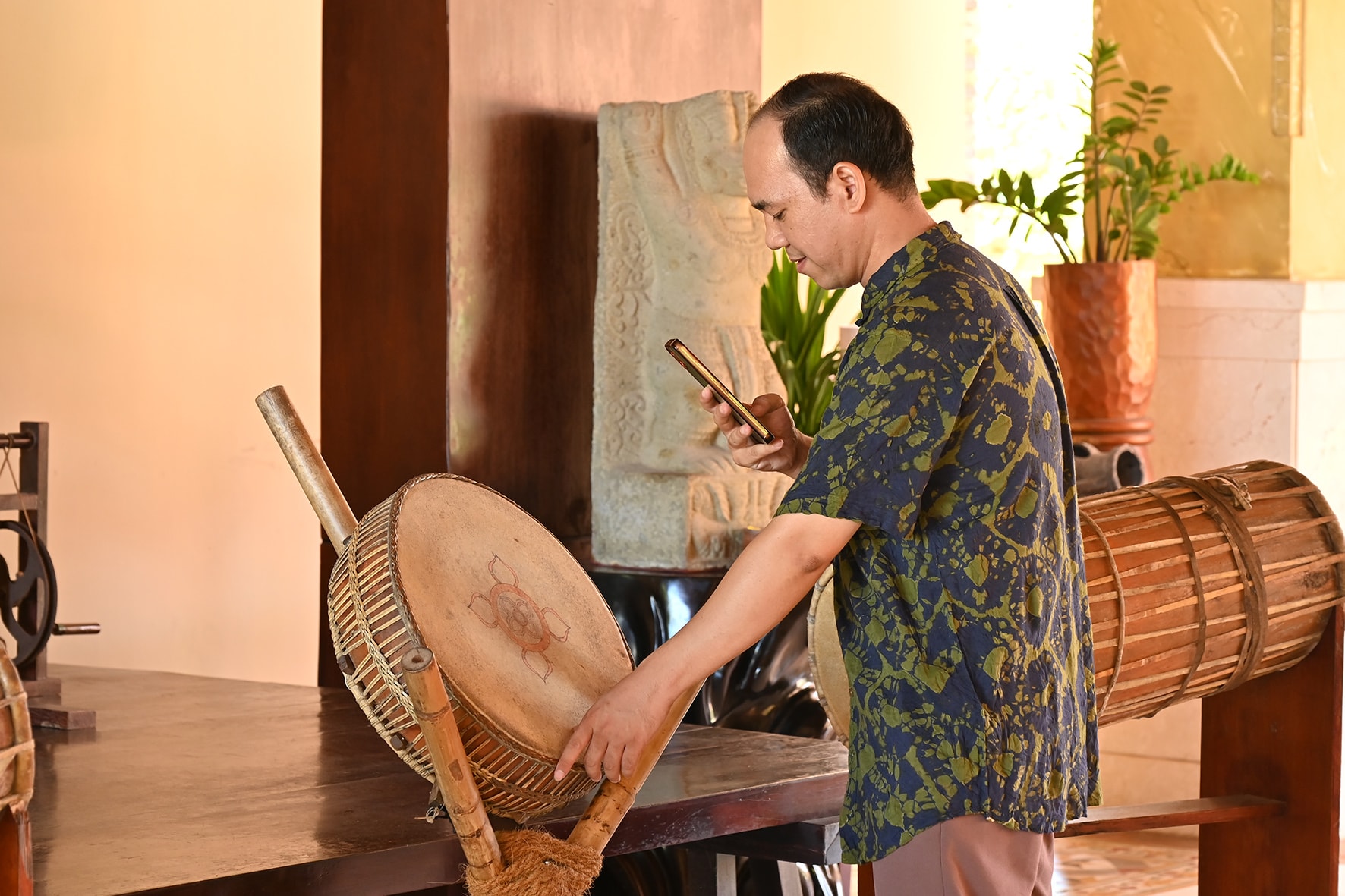
Đến đây, tôi mới biết thêm một chút về người Chăm tại Lâm Đồng. Lối kiến trúc sử dụng tông màu vàng khiến tôi liên tưởng đến cát và cảm nhận rõ hơn về văn hóa địa phương và biển Mũi Né.
Anh Trần Hồng Phúc – Du khách TP. Hồ Chí Minh
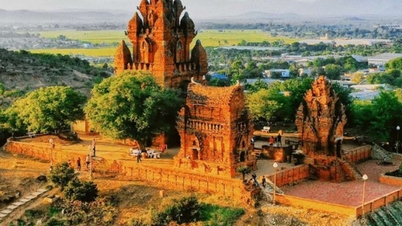
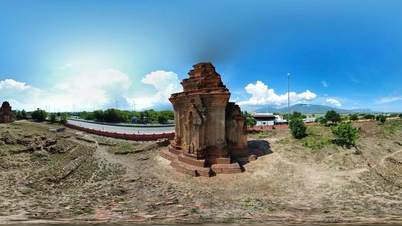
Các resort sử dụng thiết kế các mái vòm cao mang lại sự thoáng đãng và tận dụng gió biển để du khách thoải mái. Ngoài ra màu sắc chủ đạo như vàng nâu, đỏ để gợi ý về tháp Chăm mang lại cảm giác ấm cúng và phong cách hiện đại.
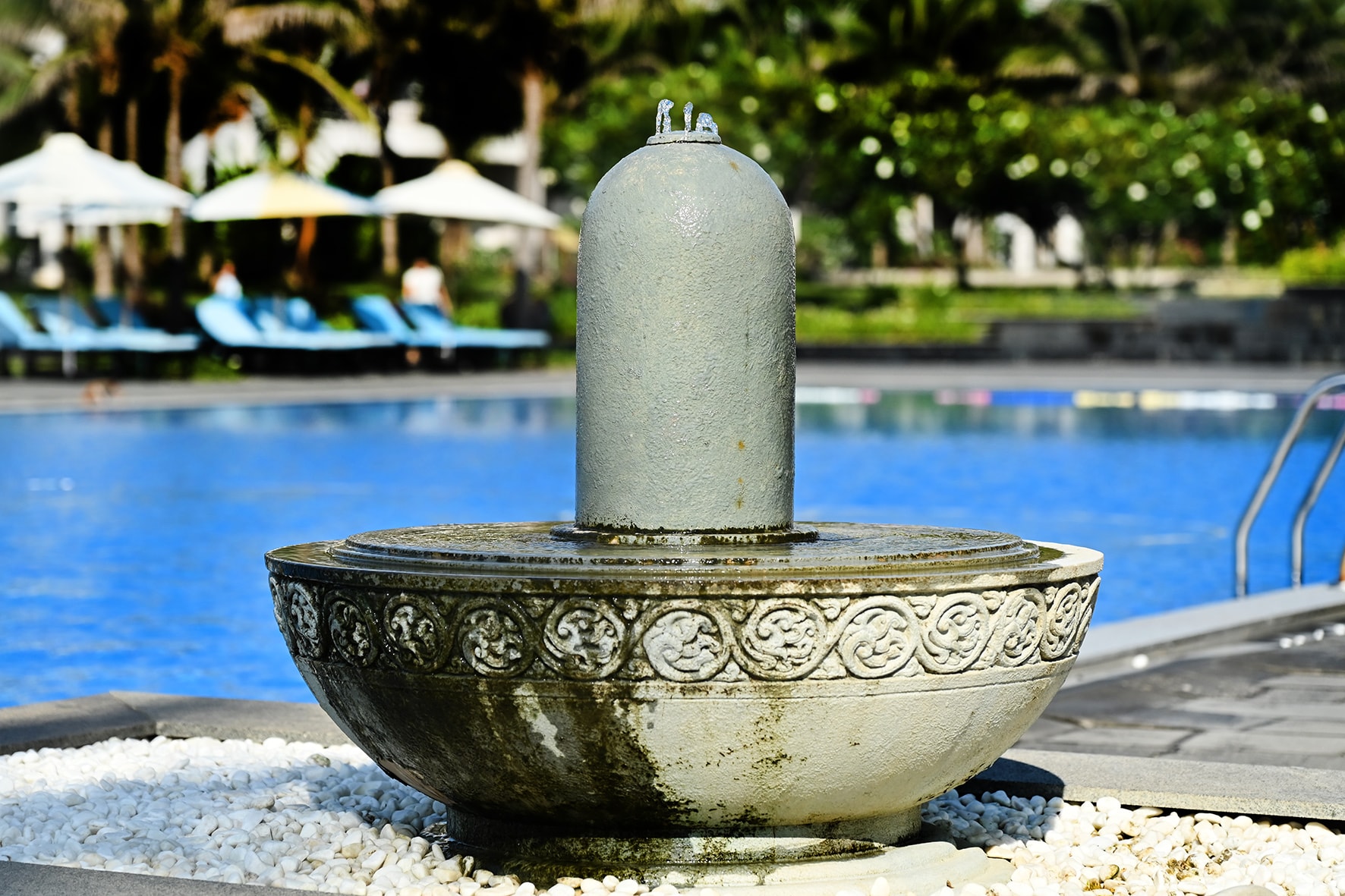
Nói chung mỗi resort đều có 1 phong cách riêng, tạo điểm nhấn để du khách check-in, chụp hình và lưu lại những khoảnh khắc khi nghỉ dưỡng tại resort.
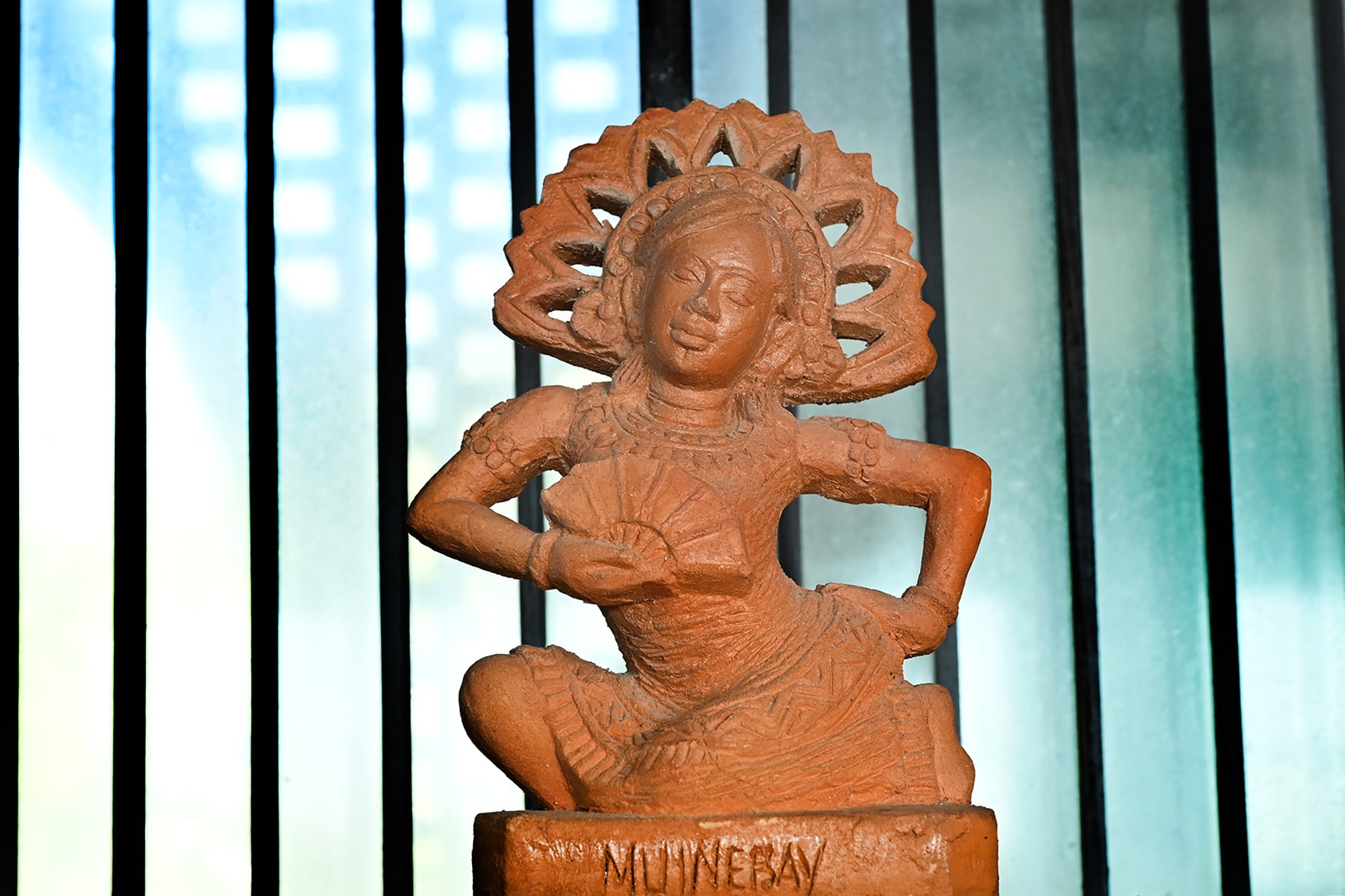
Việc sắp đặt không gian một cách tinh tế giữa nét truyền thống và hiện đại, kết hợp hài hòa giữa văn hóa và kiến trúc sẽ tạo nên một nét hấp dẫn thu hút du khách trong và ngoài nước. Văn hóa Chăm, với bề dày lịch sử và những nét đặc trưng độc đáo, có thể trở thành nguồn cảm hứng quý báu cho kiến trúc du lịch tại Việt Nam.
Việc đưa văn hóa Chăm vào kiến trúc du lịch không chỉ giúp bảo tồn và phát huy di sản văn hóa mà còn tạo ra những trải nghiệm độc đáo và hấp dẫn cho du khách. Đây là một hướng đi sáng tạo và đầy tiềm năng cho ngành du lịch Lâm Đồng.
Nguồn: https://baolamdong.vn/van-hoa-cham-voi-kien-truc-du-lich-391668.html

![[Photo] The heat at the fireworks display site on the opening night of the Da Nang International Fireworks Festival 2026](https://vphoto.vietnam.vn/thumb/1200x675/vietnam/resource/IMAGE/2026/05/27/1779889741485_ndo_br_z7872039145157-fecaba5112f39e8352544099d7ef4738-5140-jpg.webp)
![[Photo] The courage of new recruits of Brigade 144 on the training ground.](https://vphoto.vietnam.vn/thumb/1200x675/vietnam/resource/IMAGE/2026/05/27/1779881651341_anh-man-hinh-2026-05-27-luc-18-32-52.png)






































![[Photo] The courage of new recruits of Brigade 144 on the training ground.](https://vphoto.vietnam.vn/thumb/402x226/vietnam/resource/IMAGE/2026/05/27/1779881651341_anh-man-hinh-2026-05-27-luc-18-32-52.png)

















Comment (0)