

Gia Mien is one of the most disadvantaged communes in Van Lang district. In recent years, this area has become known as the "capital" of red mushrooms. These mushrooms grow naturally only under the roots of old Chẹo trees, and only those with a curved shape and reddish-brown color. The Tay-Nung people call this tree "co bjóc piào." Even stranger, not every Chẹo tree produces mushrooms; only old trees, growing in damp, dense areas, with sufficient age, decay, and shade, have a chance of bearing fruit.
According to locals, in the past, mushrooms grew abundantly. People returning from the forest would carry back baskets of mushrooms, too many to eat and unable to preserve, so they had to use them as animal feed. However, due to their nutritional value and traditional medicinal uses, in the last decade or so, these mushrooms have been likened to "red gold" because they bring high economic value.
Harvesting red mushrooms is not easy, as you can't just pick any mushroom you see. Harvesters have to get up early in the morning and go into the forest while the dew still covers the base of the trees. If you pick them before the caps open, they will be bitter; if you leave them too long, they will rot like sponges.
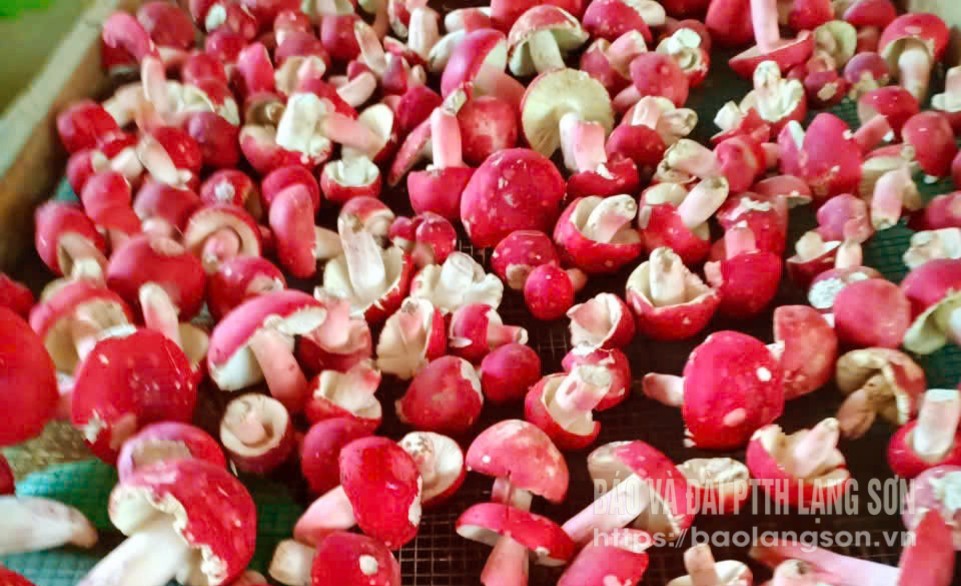
“Farming all year round is not as profitable as a single season of red mushrooms. This type of mushroom is very precious and hard to find because it appears some years and not others. The mushrooms usually grow from around March to October in the lunar calendar, but sometimes later, and only once every one or two months; usually, they grow from two to four or five times a year. A characteristic of the mushrooms is that they grow very quickly but also wither quickly; sometimes they grow tonight and are already spoiled by noon the next day,” shared Mr. Linh Van Toan from Coc Nhang village as he led us into the forest, where his family has a few chẹo trees that have been producing mushrooms for about ten years .
Each mushroom only lives for 1-2 days. If you're slow, the mushrooms will spoil and become unharvestable. That's why people often say, "Seeing mushrooms is like seeing gold," because each mushroom bloom only lasts for about 5-15 days. When they bloom profusely, the entire forest glows red under the old chẹo trees. But only those whose forest and chẹo trees are allowed to harvest them.
According to the leaders of Gia Mien commune, nearly 150 out of 557 households in the commune currently have forests of Chẹo trees that yield mushrooms. Over the years, members of Linh Van Toan's family, along with many other households, have memorized every bush and every patch of damp soil where mushrooms can grow, and they regularly observe them, timing their harvesting when they detect signs of mushroom growth.
According to local residents, this year's low rainfall has caused the mushrooms to grow later than usual. The first mushroom harvest this year started at the end of May, lasting five days until the beginning of June. During this period, many households with large mushroom-growing areas harvested about 50 kg of fresh mushrooms in a single day. One kilogram of fresh mushrooms sells for approximately 200,000 to 300,000 VND.
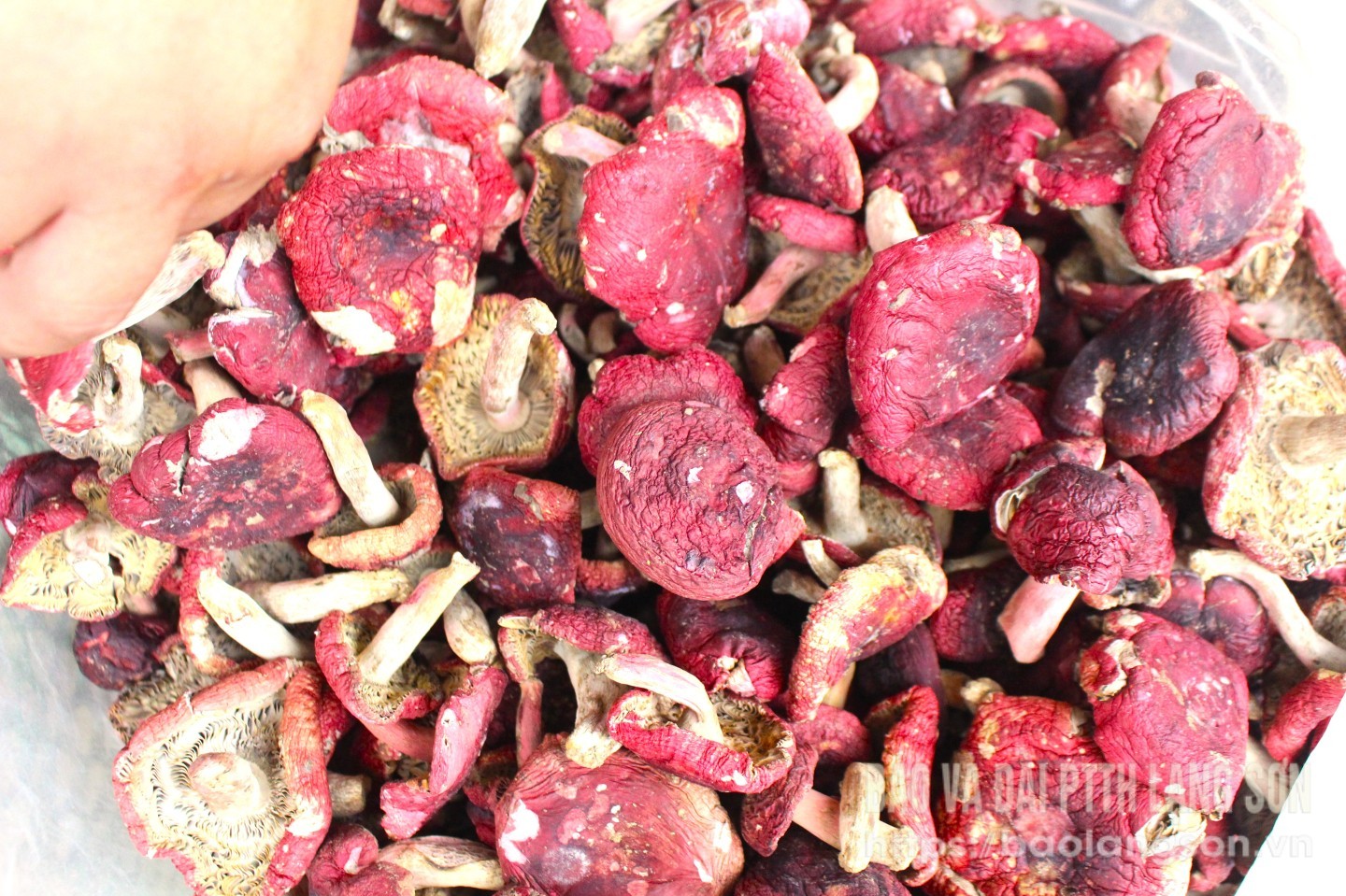
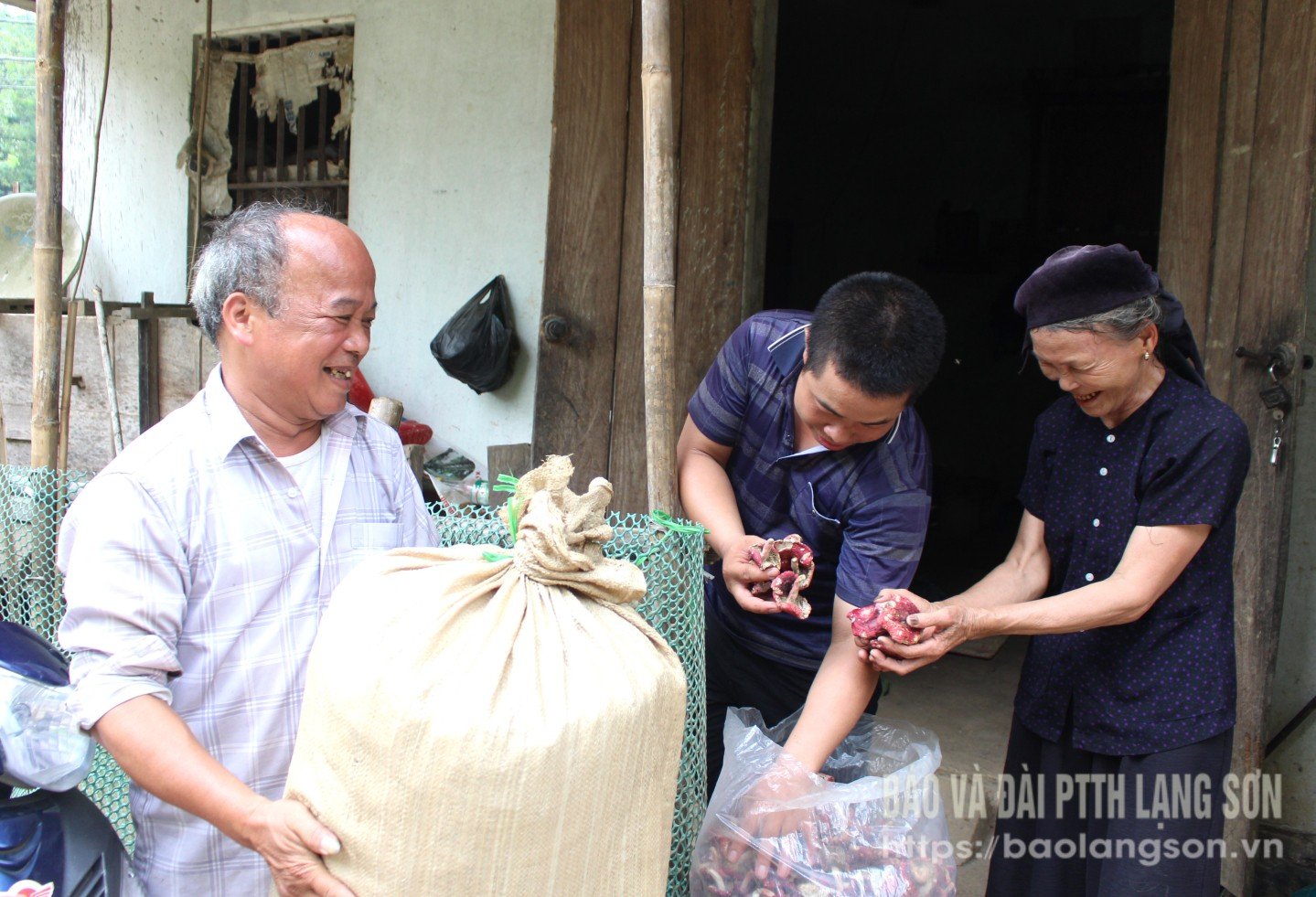
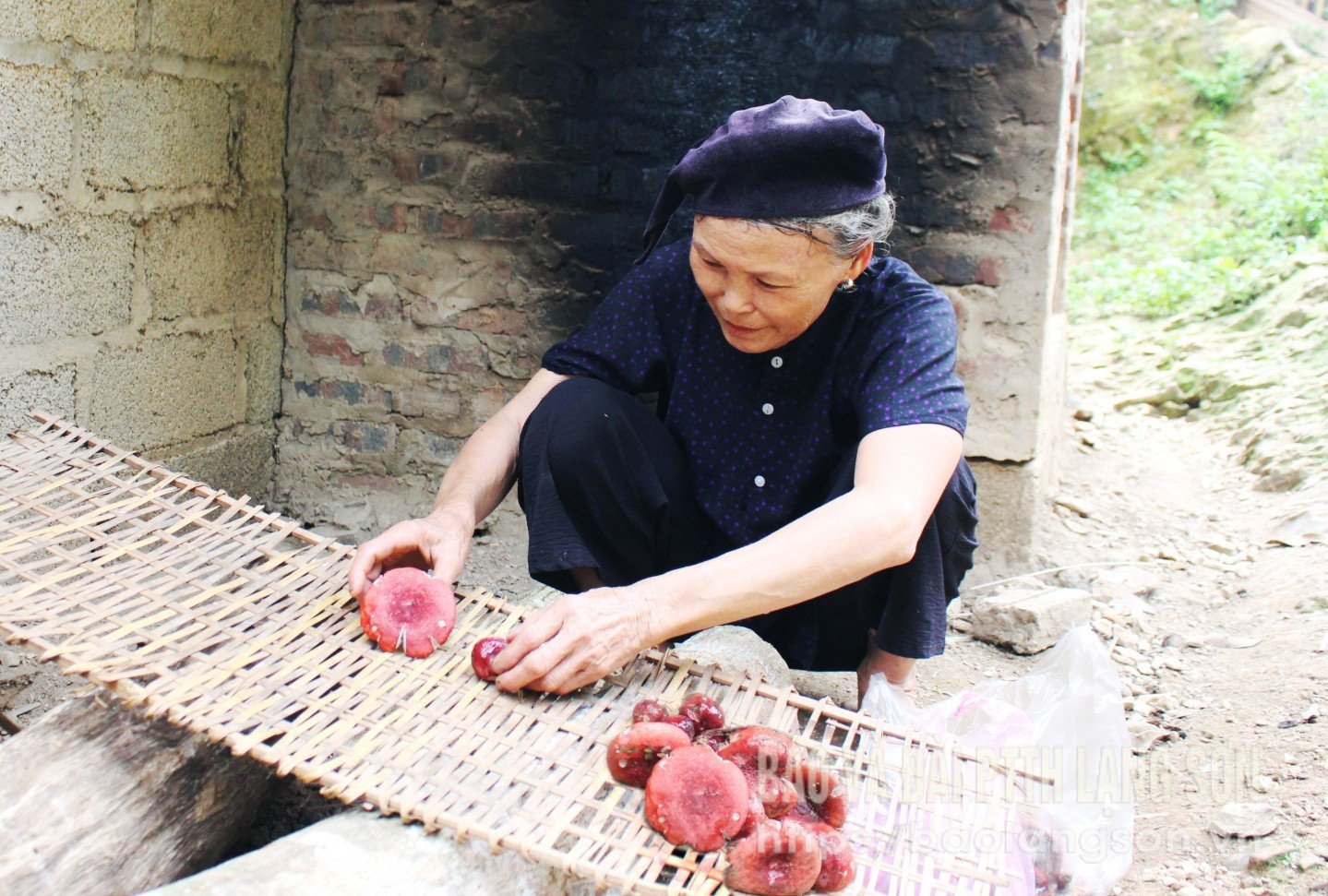
Due to the perishable nature of mushrooms, many households have invested in home mushroom drying ovens to extend their shelf life and increase their value. Accordingly, after harvesting, the mushrooms are immediately washed, dried for 6-7 hours, and then packaged for sale to buyers who come directly to the farm. Approximately 5 or 6 kg of fresh mushrooms yield 1 kg of dried mushrooms. In some years (like this year), the price of dried mushrooms has reached over 2 million VND/kg.
Because of this value, the villagers have incorporated the harvesting of red mushrooms into their village regulations and customs. "Each person enjoys their own forest," meaning no one is allowed to enter another's forest to steal; if caught, they will be punished according to village rules. Protecting natural resources like red mushrooms is not only about preserving a product, but also about maintaining order and upholding the community's cultural values.
Despite its high economic value, red mushrooms are becoming increasingly rare. Part of the reason for this scarcity is outdated farming practices; slash-and-burn agriculture inadvertently destroys the mushroom roots. Additionally, many harvesters pull the mushrooms up by the roots to get them quickly, or unintentionally damage their natural growing areas.
Mr. Hoang Van Hung, Chairman of the Gia Mien Commune People's Committee, said: "To preserve and conserve this valuable resource, we regularly educate and encourage people to protect the forest and not burn fields to preserve the Chẹo trees. At the same time, we guide people on how to properly harvest red mushrooms so that they can both earn income and preserve this valuable resource for future generations."
Mushroom harvesting isn't a year-round "profession," but it offers hope and opens a path for people towards an ecological development model. Ms. Lo Thi Kim Oanh, Deputy Head of the Agriculture and Environment Department of Van Lang District, shared: "Red mushrooms are a rare natural product, widely distributed in several communes such as Gia Mien, Thanh Hoa, and Bac La... For many years, we have researched and experimented with cultivating red mushrooms, but without success because this species is highly dependent on the natural ecosystem, terrain, soil, and especially the Chẹo tree, a species that only grows sporadically in nature and cannot be cultivated industrially. Therefore, we are currently still monitoring the situation and researching sustainable mushroom harvesting methods to guide and avoid overexploitation that could harm the forest environment."
Undeniably, over the years, red mushrooms have been contributing to helping the people of Gia Mien overcome difficulties. The economic value derived from this "red gold" in the deep forest is gradually changing the lives of the local people. While the average per capita income in the commune was 17 million VND/person/year in 2020, it has now increased to 28 million VND/person/year; and during the period 2020-2025, the poverty rate in the commune is expected to decrease by an average of 7% annually.
Amidst the worries of making a living, red mushrooms quietly sprout, a testament that, with proper care, even barren land can yield miraculous things. For many locals, red mushrooms are not just a product, a food item, or a precious medicine – they represent hope and motivation, driving them to stay connected to the forest and preserve the valuable resources that nature has bestowed upon Gia Mien.
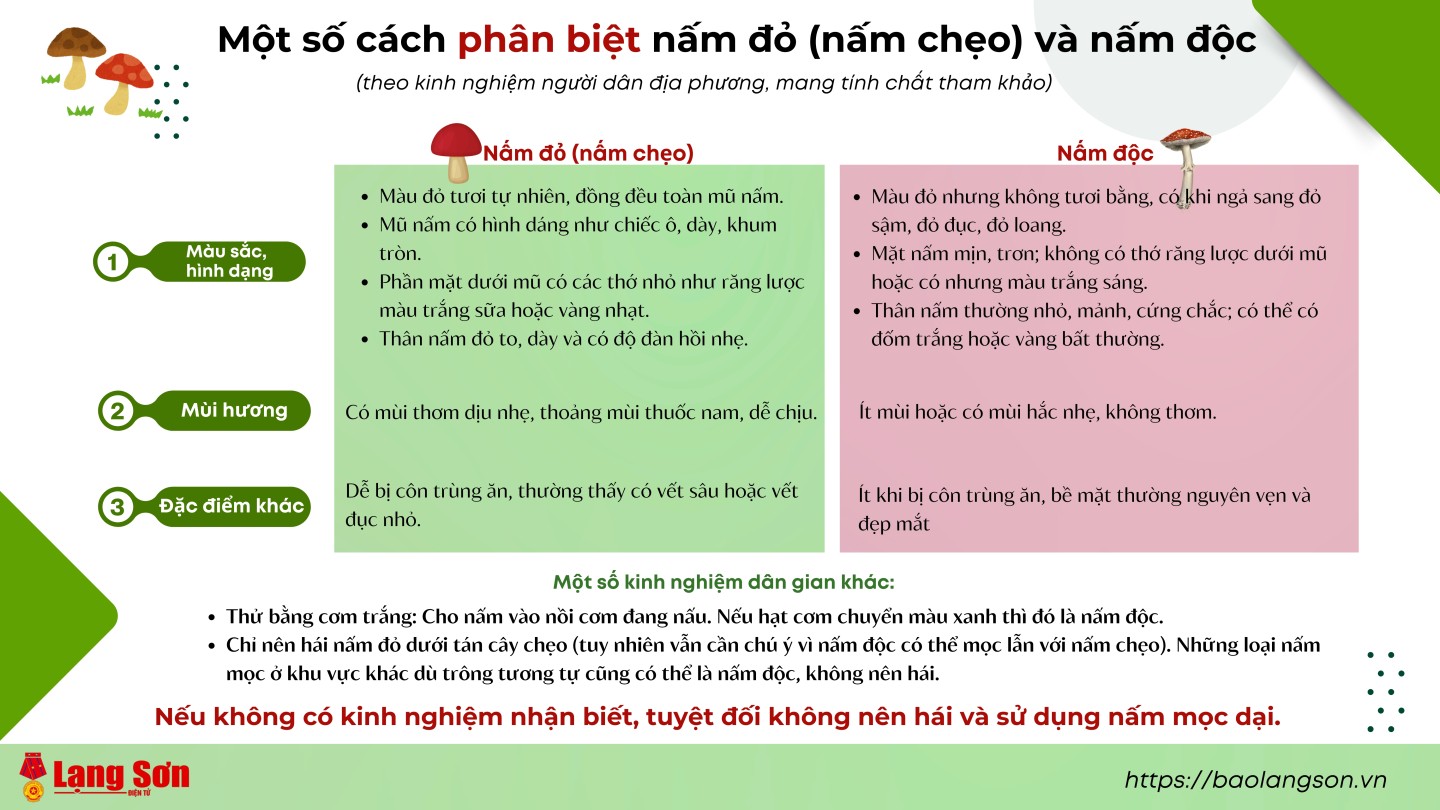
Source: https://baolangson.vn/vang-do-giua-dai-ngan-5049676.html

![[Photo] General Secretary To Lam receives President of the European Council Antonio Costa](/_next/image?url=https%3A%2F%2Fvphoto.vietnam.vn%2Fthumb%2F1200x675%2Fvietnam%2Fresource%2FIMAGE%2F2026%2F01%2F29%2F1769697816651_a1-bnd-5216-9741-jpg.webp&w=3840&q=75)


![OCOP during Tet season: [Part 3] Ultra-thin rice paper takes off.](/_next/image?url=https%3A%2F%2Fvphoto.vietnam.vn%2Fthumb%2F402x226%2Fvietnam%2Fresource%2FIMAGE%2F2026%2F01%2F28%2F1769562783429_004-194121_651-081010.jpeg&w=3840&q=75)


![OCOP during Tet season: [Part 2] Hoa Thanh incense village glows red.](/_next/image?url=https%3A%2F%2Fvphoto.vietnam.vn%2Fthumb%2F402x226%2Fvietnam%2Fresource%2FIMAGE%2F2026%2F01%2F27%2F1769480573807_505139049_683408031333867_2820052735775418136_n-180643_808-092229.jpeg&w=3840&q=75)
![OCOP during Tet season: [Part 1] Ba Den custard apples in their 'golden season'](/_next/image?url=https%3A%2F%2Fvphoto.vietnam.vn%2Fthumb%2F402x226%2Fvietnam%2Fresource%2FIMAGE%2F2026%2F01%2F26%2F1769417540049_03-174213_554-154843.jpeg&w=3840&q=75)



Comment (0)