

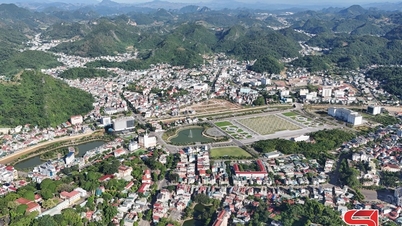
After several missed opportunities, we finally had the chance to visit Van Ho. This season, along National Highway 6, the scenery is breathtakingly beautiful. Wild peach blossoms and bauhinia flowers bloom on the mountain slopes, adding a gentle touch of spring amidst the clouds, and in the distance, villages peek through the mist.
After crossing the 64-meter slope, the village of Chiềng Đi appears peaceful and picturesque. In the spacious courtyard in the middle of the village, Hmong boys innocently play, engrossed in the traditional tu lu game, the crisp sounds of their games awakening the entire village atmosphere on a spring day.

At the Chiềng Đi 2 village cultural center, Giàng A Lử and the members of the performing arts group are enthusiastically practicing special performances for the weekend market. Lử shared: "Previously, young people in the village used to celebrate the Hmong New Year until the end of the twelfth lunar month, but now they only celebrate for about 5 days before returning to work and production. This year, community tourism has developed, bringing more visitors to the village, generating income from selling agricultural products, brocade, and performing arts for tourists... Thanks to this, the lives of the villagers are becoming more prosperous, and the New Year is more fulfilling."
As if to prove the story, A Lử invited us to stay and experience the "Chiềng Đi market" on the weekend. As the sun gradually set behind the peak of Hua Tạt mountain, the Mong ethnic people busily set up their stalls. Some stalls were brightly colored with scarves, bags, and brocade skirts; others displayed mustard greens, chayote, pumpkins, and woven handicrafts… all simple and rustic, yet possessing a unique charm. At the far end of the market, the rising smoke from steaming pots of horse meat stew, carrying a distinctive aroma that permeated the cool highland air, enticed visitors to stop and sample the unique flavors of mountain cuisine .

Stopping at Chieng Di village after a journey of over 1,000 km, Mr. Cao Tuan Kiet and a group of 15 tourists from Ho Chi Minh City excitedly shared: "As soon as we got off the bus, we forgot all our fatigue because of the fresh, pleasant air of the highland village. The small market was very warm and simple, the people were hospitable; especially the dishes of the Mong ethnic people here were very delicious and attractive. For me, this is a beautiful experience on my trip to Northwest Vietnam."
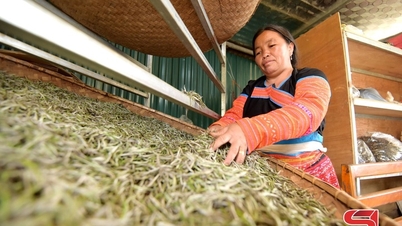
From Chieng Di, we continued along National Highway 6 to Hua Tat village, one of the highlights of community tourism in Van Ho commune. On the clean, paved road leading into the village, Mr. Hang A To was guiding groups of Western tourists on a sightseeing tour and experiencing the traditional crafts of making Do paper and beeswax painting. As we walked, he fluently introduced in English the daily life of the Mong people here, from the craft of making Do paper to the technique of beeswax painting on fabric – cultural values preserved and passed down through generations.

Mr. Hang A To said: "About 50% of the visitors to Hua Tat are international tourists. They love the tranquility, the fresh natural environment, and authentic local cultural experiences. Therefore, we always focus on improving our foreign language communication skills, and at the same time, find ways to turn traditional cultural values into unique tourism products. This helps us meet the experiential needs of tourists while contributing to preserving and promoting our cultural identity."
Visiting Van Ho in the spring, besides the vibrant pink of peach blossoms and the pristine white of plum blossoms, tourists can hardly miss the gentle beauty of the vast fields of mustard flowers stretching as far as the eye can see. White and yellow mustard flowers bloom interspersed, creating a pure and poetic natural landscape amidst the mountains and forests of Northwest Vietnam.

In Long Luong village, Van Ho commune, the mustard flower "check-in" spot of Mr. Giang A Sanh's family is always bustling with tourists these days. Mr. Sanh said: "Since the beginning of December, my family has dedicated more than 1 hectare of land to planting mustard flowers, opening to welcome visitors from the end of January to the beginning of March. On average, the garden welcomes about 300-400 visitors each day. Besides sightseeing and taking photos, my family also rents out traditional ethnic costumes and sells local agricultural products such as mustard greens and taro, contributing to increased income."
Discussing the local tourism development orientation, Ms. Le Thi Minh Hue, Head of the Culture and Social Affairs Department of Van Ho Commune, said: In 2025, Van Ho Commune aims to welcome 180,000 tourists, generating 54 billion VND in tourism revenue. In the future, the commune will continue to focus on developing sustainable community tourism; encourage villages to create unique tourism products linked to cultural experiences; and prioritize improving tourism skills for local people, gradually building an image of Van Ho as a safe, friendly, and culturally rich destination.

The beauty of nature, blended with the vibrant culture and the diligence and creativity of the highland people, has adorned the spring landscape of Van Ho, leaving in the hearts of every visitor beautiful memories of a peaceful and hospitable land.
Source: https://baosonla.vn/van-hoa-xa-hoi/ve-van-ho-du-xuan-dWgaQRDDg.html































































Comment (0)