

Minister Nguyen Manh Hung urged Viettel 's leaders and key officials to change their mindset and approach. This means identifying challenging and large-scale problems and solving them using global strength, through cooperation with developed countries.
A great opportunity for Viettel to reach a new level of development.
On the afternoon of October 18th, Minister Nguyen Manh Hung chaired a working session of the Ministry of Information and Communications with leaders and key officials of the Viettel Military Telecommunications and Industry Group. Also present were Deputy Ministers Phan Tam, Pham Duc Long, Bui Hoang Phuong, and leaders of several units under the Ministry of Information and Communications.
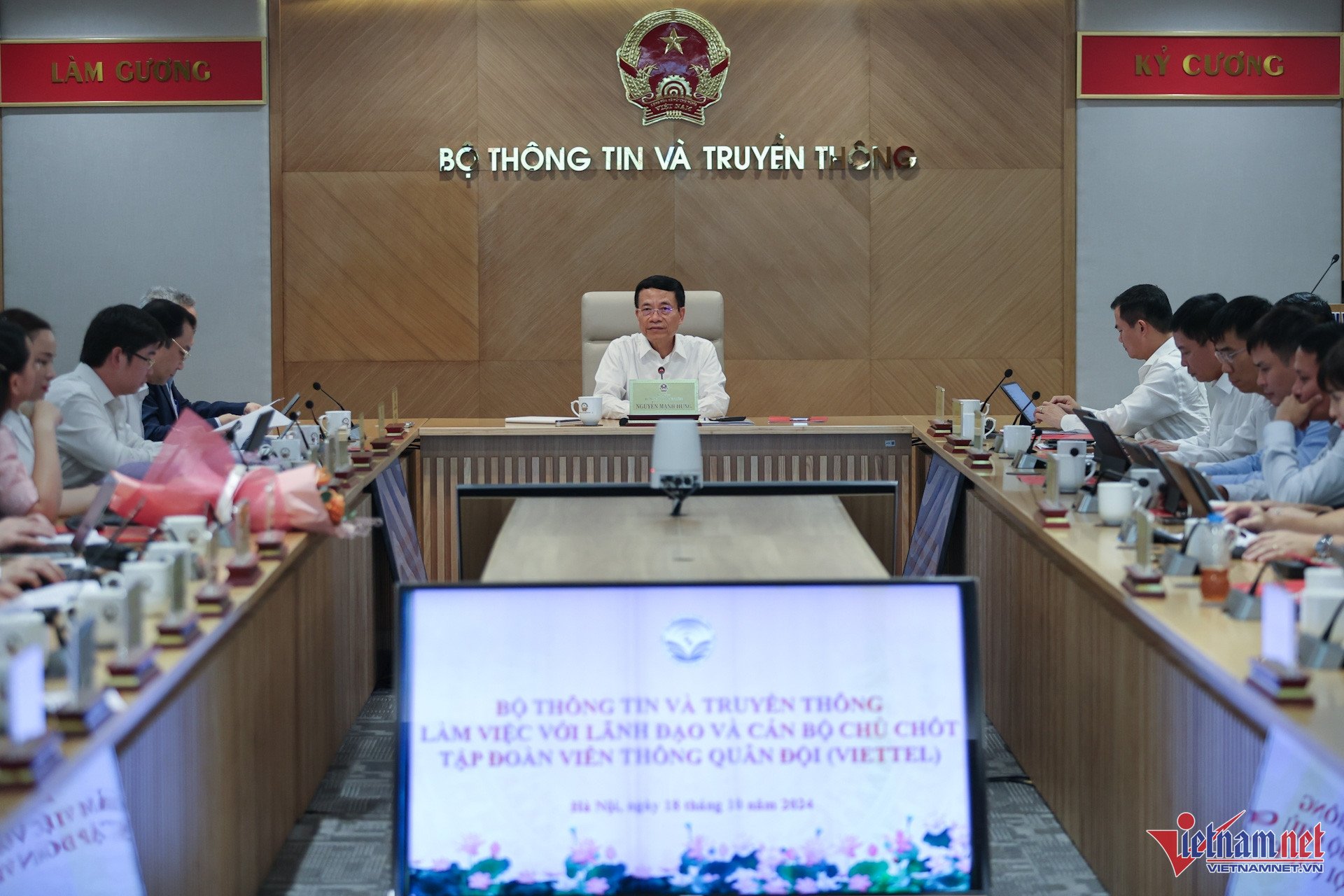
Emphasizing the significant mission of the country's three main telecommunications enterprises, the head of the Ministry of Information and Communications stated: Digital transformation is the main path for Vietnam's development. The Party has identified digital transformation as the main driving force for national development, and digital infrastructure is a strategic infrastructure, on par with transportation and electricity infrastructure.
If the three major telecommunications companies do not develop, the information and communication technology (ICT) sector will not develop, and if that happens, the country will find it difficult to achieve its two centenary goals. With this understanding, from mid-September until now, the Ministry of Information and Communications has successively worked with the leaders and key officials of VNPT, MobiFone , and Viettel to suggest directions, approaches, and to support and resolve obstacles for these businesses.
According to Minister Nguyen Manh Hung, after three 10-year cycles of consistently leading in the fields of construction, telecommunications, and industry, the current generation of leaders shouldering the responsibility in the fourth 10-year period of technology need to focus on fulfilling their leadership and national mission to contribute to the development of the industry and the country. This is a great opportunity for Viettel to reach a new level of development. "The goal of the current generation of leaders is to surpass the previous generation," the Minister stated.
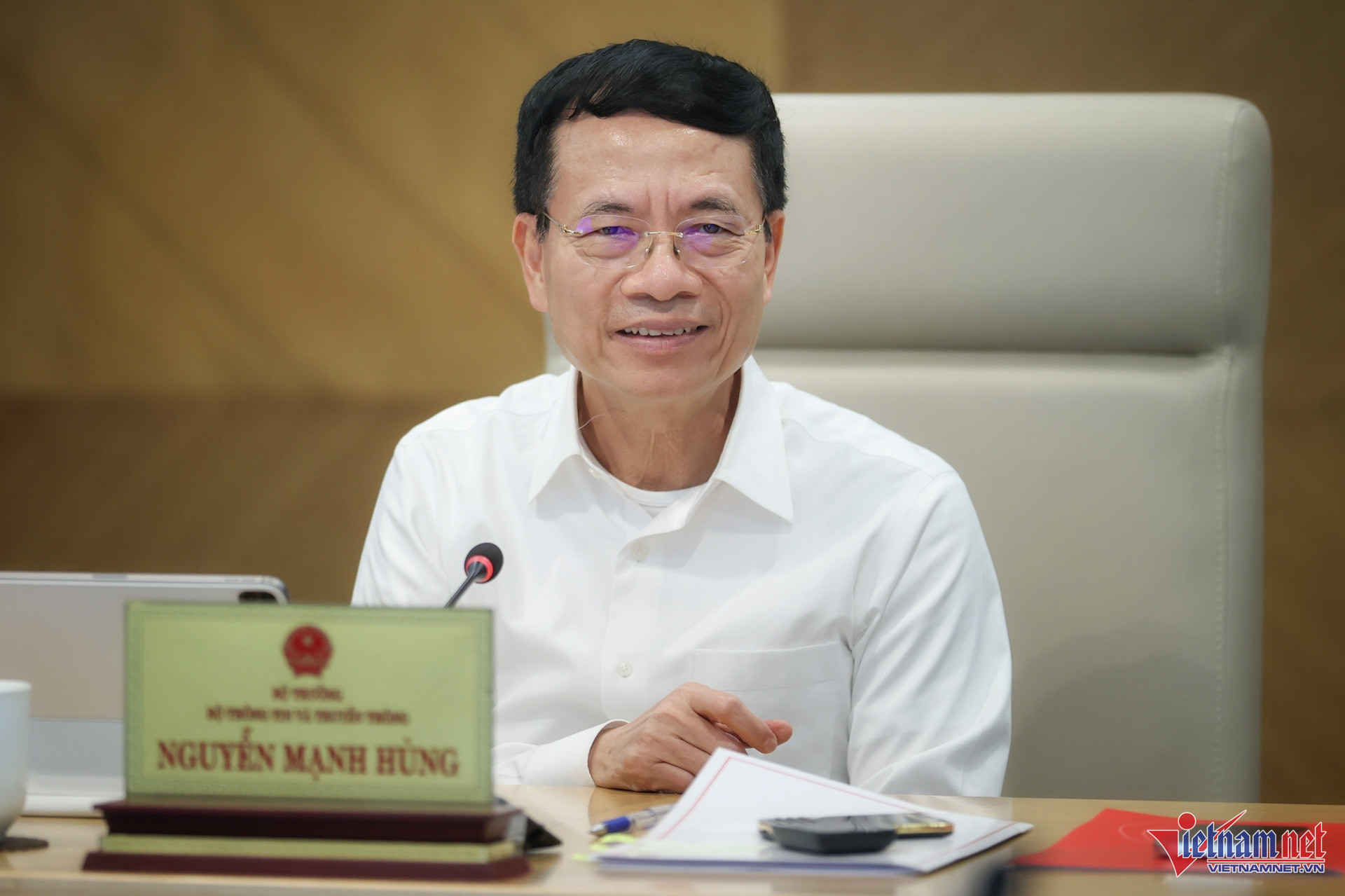
Sharing new insights from his trip to Finland, the head of the Ministry of Information and Communications suggested that Viettel's leaders and key personnel should change their mindset and approach. This means identifying challenging and large-scale problems and solving them with global strength, through cooperation with developed countries.
Based on an analysis of the key viewpoints in the article by General Secretary and President To Lam on the occasion of the 79th anniversary of National Day on September 2nd, and the Resolution on digital transformation soon to be considered and issued by the Politburo, Minister Nguyen Manh Hung has applied this to Viettel's work to guide and outline a series of requirements for the group's operations in the coming period.
That is, Viettel's goals must at least be in sync with the country's goals; specifically, the corporation should aim to be among the top 30 or 40 global digital technology companies; Viettel needs to double the proportion of spending on investment in digital infrastructure development and digital technology research; the proportion of personnel involved in digital transformation, science and technology, and innovation should account for 50% in technology units and 30% in non-technology units.

Besides noting that Viettel's leadership should consider evaluating, promoting, and rewarding the heads of the group's leading units in digital transformation, Minister Nguyen Manh Hung also suggested that the group's leaders and the departments and divisions of the Ministry should all learn from the example of General Secretary and President To Lam, who directly led the implementation of a digital transformation project - Project 06 - when he was the head of the Public Security sector.
Simultaneously, Viettel was also required to prioritize its internal digital transformation, using digital technology in all of the group's operations, leading the way in AI application; and changing internal operating mechanisms such as salaries, delegation of authority, employee evaluation, and supervision... to free up resources and thereby create significant growth.
To restructure revenue and profits, reduce the proportion of revenue from telecommunications to below 30% to ensure sustainable development; and master core technologies such as 5G, semiconductor chips, AI, and Cloud. "To be a leader, Viettel must aim to master these technologies. If we don't set high goals, the system will become sluggish," Minister Nguyen Manh Hung reminded.
Shift strongly towards new development areas.
At the meeting, Viettel's Chairman and CEO, Tao Duc Thang, reported on the group's business results for the first nine months of the year and its plans for the fourth quarter of 2024. He also presented recommendations to the Ministry of Information and Communications, such as: promptly organizing an auction for the right to use radio frequencies in the 700MHz band to enable the company to continue expanding coverage to remote areas; advising the Government on a strategy for deploying low-altitude satellite internet services in Vietnam; resolving difficulties in installing new BTS stations near residential areas due to public complaints; and providing advice on resolving obstacles in investing in Vietnamese-owned submarine fiber optic cables.
The above recommendations, along with the concerns of Viettel's leaders and key officials, were addressed by Minister Nguyen Manh Hung, who assigned relevant departments and divisions to support the enterprise in resolving these issues. For example, the Telecommunications and Radio Frequency departments were instructed to closely monitor and expedite the process so that the 700MHz low-frequency auction could be held by early January 2025.
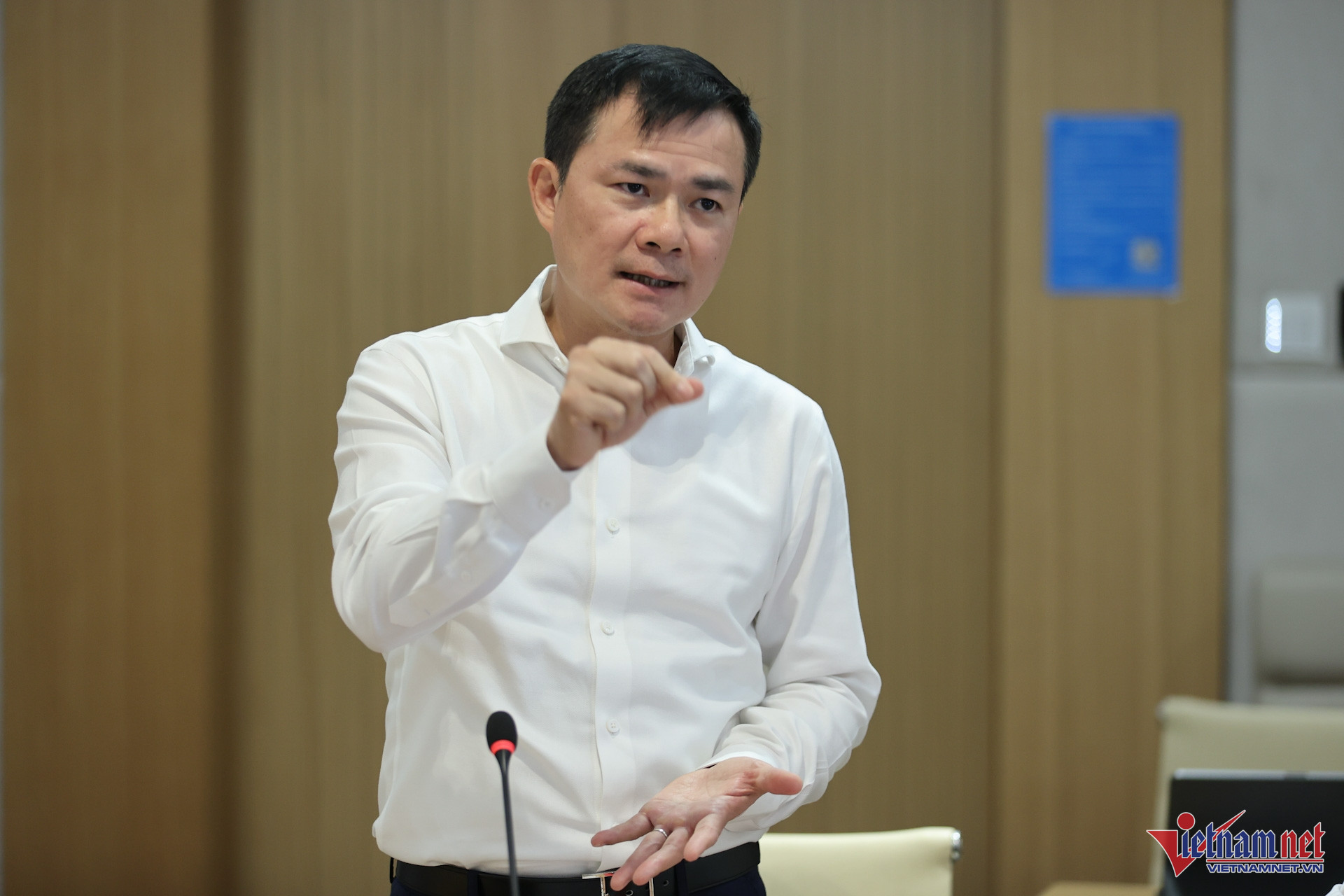
Regarding the difficulties in installing BTS stations, the Ministry of Information and Communications will request the police force to assist in infrastructure development; initially, the Ministry will work with Hanoi to discuss ways to resolve the issue at 200 locations in the city that have faced serious complaints and are unsuitable for station installation.
Regarding the question of whether a common mission for the entire Viettel group is necessary since each unit already has its own mission, Minister Nguyen Manh Hung explained: A large corporation must have both common and specific missions. Viettel is now multi-industry and multi-business, so its mission must be more general, for example, technology for people. Then, down to each field, each unit has its own mission; however, whatever we do, we must rely on technology, technology must be excellent, advanced, and technology must serve people and create development.
While acknowledging and appreciating Viettel's achievements and contributions to the industry, the leaders of the Ministry of Information and Communications and the heads of its departments and divisions all expect the group to clearly understand its role as a leading enterprise, thereby setting higher goals and volunteering to take on major national challenges.
Emphasizing that Viettel needs to look further ahead as a leading enterprise, Minister Nguyen Manh Hung hoped that the group would boldly invest in 5G coverage, as it had done strongly with 4G networks in the past, thereby encouraging other network operators to develop this important infrastructure to serve the country's digital transformation.
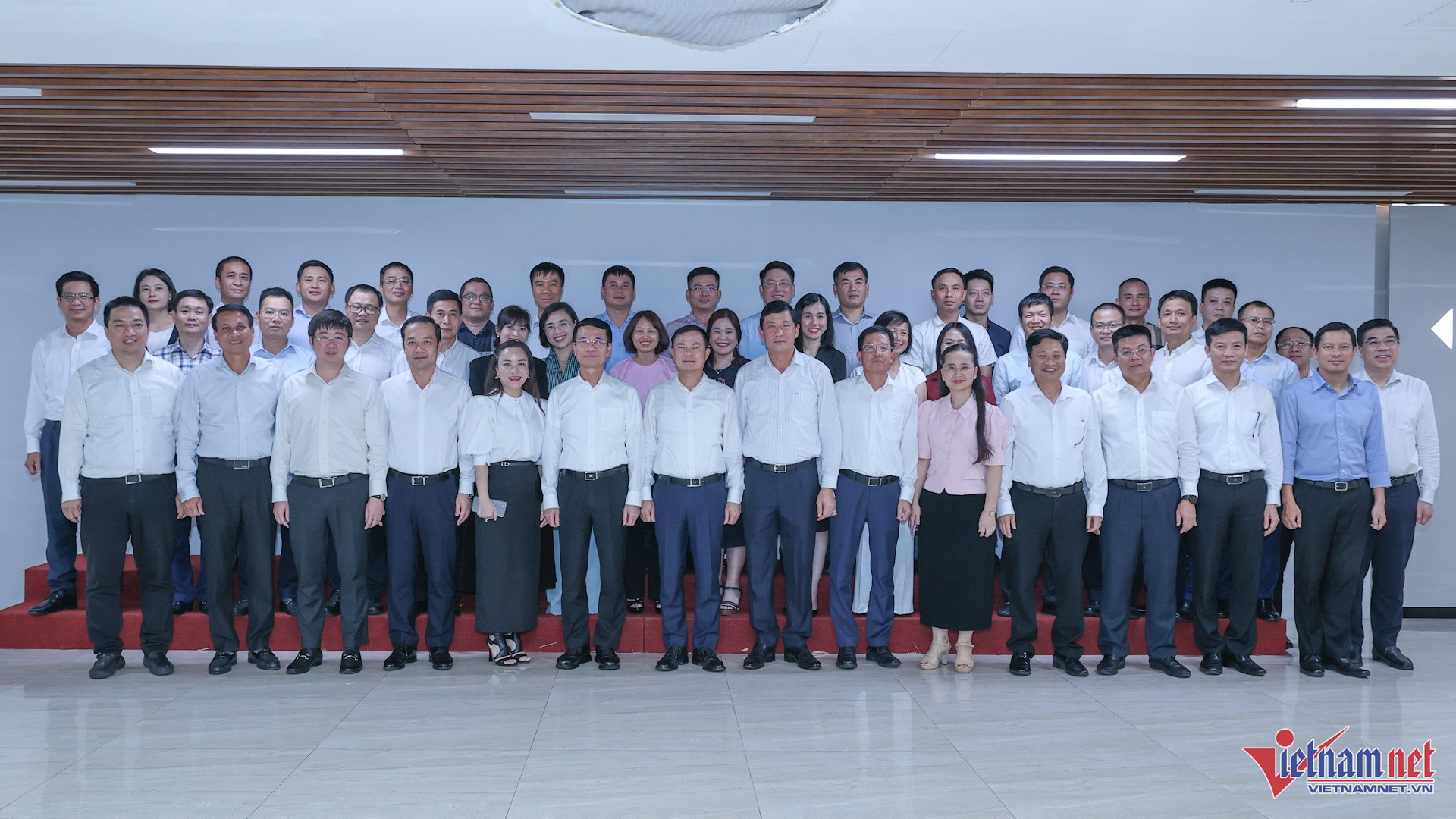
The three Deputy Ministers Phan Tam, Pham Duc Long, and Bui Hoang Phuong, along with leaders of various units of the Ministry of Information and Communications, all hope that Viettel will focus on strategic, large-scale, national-level projects in the coming period, such as: concentrating intensely, setting high goals, and developing more outstanding solutions to strongly shift to a new development space, the digital space, and digital transformation;
Focus on developing an investment plan for a small-scale, high-tech semiconductor chip manufacturing plant to serve the research and production needs of semiconductor chips; participate in popularizing personal digital signatures by providing digital signatures to all its subscribers; invest in developing a smart industrial manufacturing platform; and undertake solutions to major national problems such as the AI doctor project...
Believing it's time for Viettel to reach a new level, the head of the Ministry of Information and Communications analyzed: Instead of competing with other businesses, the corporation needs to develop platforms that allow other entities to "stand on its back," doing things that both lead the country and generate significant revenue, while ensuring sustainable development.
“The Ministry of Information and Communications always considers businesses in the industry as family, part of the same IT and telecommunications sector, and always wishes for their development. Businesses are the target of the Ministry's services, so the busier the Ministry is, the more the Ministry will develop,” Minister Nguyen Manh Hung affirmed.
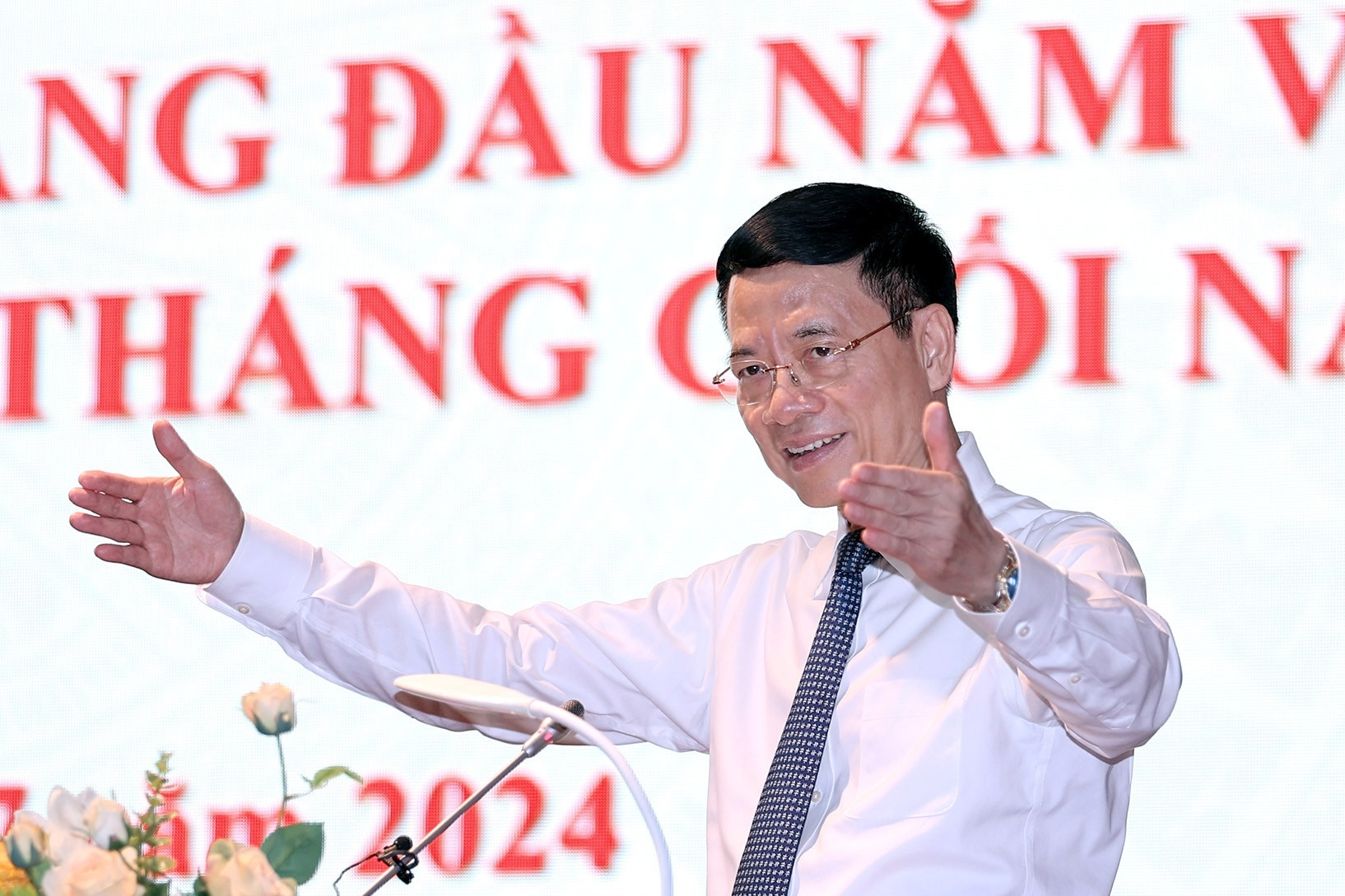
Source: https://vietnamnet.vn/viettel-hay-thay-doi-suy-nghi-va-lam-tot-su-menh-dan-dat-2333411.html
![[Live] 2025 Community Action Awards Gala](/_next/image?url=https%3A%2F%2Fvphoto.vietnam.vn%2Fthumb%2F1200x675%2Fvietnam%2Fresource%2FIMAGE%2F2025%2F12%2F16%2F1765899631650_ndo_tr_z7334013144784-9f9fe10a6d63584c85aff40f2957c250-jpg.webp&w=3840&q=75)
![[Image] Leaked images ahead of the 2025 Community Action Awards gala.](/_next/image?url=https%3A%2F%2Fvphoto.vietnam.vn%2Fthumb%2F1200x675%2Fvietnam%2Fresource%2FIMAGE%2F2025%2F12%2F16%2F1765882828720_ndo_br_thiet-ke-chua-co-ten-45-png.webp&w=3840&q=75)
![[Photo] Prime Minister Pham Minh Chinh receives Lao Minister of Education and Sports Thongsalith Mangnormek](/_next/image?url=https%3A%2F%2Fvphoto.vietnam.vn%2Fthumb%2F1200x675%2Fvietnam%2Fresource%2FIMAGE%2F2025%2F12%2F16%2F1765876834721_dsc-7519-jpg.webp&w=3840&q=75)


![[Photo] Prime Minister Pham Minh Chinh receives the Governor of Tochigi Province (Japan)](/_next/image?url=https%3A%2F%2Fvphoto.vietnam.vn%2Fthumb%2F1200x675%2Fvietnam%2Fresource%2FIMAGE%2F2025%2F12%2F16%2F1765892133176_dsc-8082-6425-jpg.webp&w=3840&q=75)






















































![[Video] Independence and self-reliance linked with international integration through 40 years of reform](https://vphoto.vietnam.vn/thumb/402x226/vietnam/resource/IMAGE/2025/12/16/1765899635777_1-1-8054-png.webp)























Comment (0)