

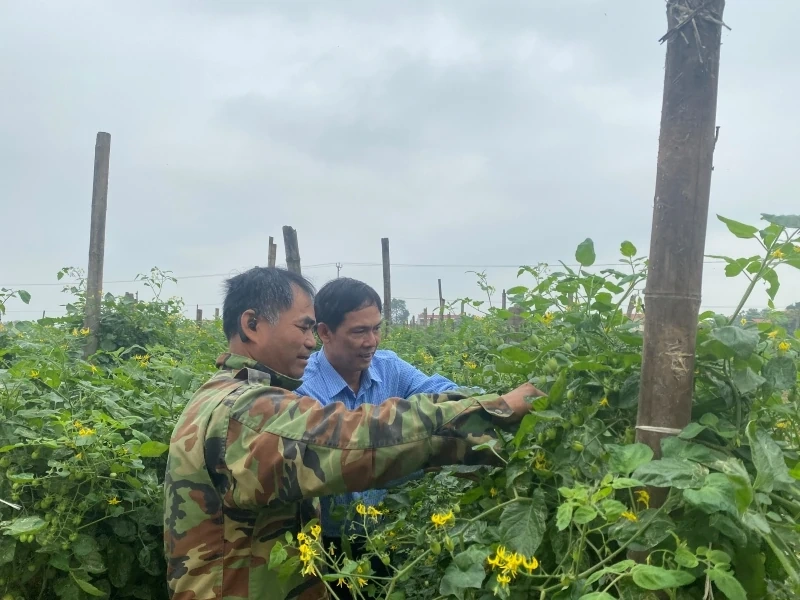
Farmers in Dinh Hoa commune are tending to their tomato plants.
Expecting a "sweet" chili pepper season.
Last winter, many chili farmers were anxious because the price hovered around 20,000 VND/kg, not enough to cover costs. This year, however, right from the start of the season, chili prices have surprised growers. Traders are buying ripe chili peppers directly from the fields at 105,000 - 110,000 VND/kg, five times higher than the same period last year.
Notably, not only ripe chilies but also green chilies are being bought at high prices, from 50,000 to 60,000 VND/kg. Traders are willing to go directly to the fields to buy them without being too strict about appearance or size. Locals in chilies-growing regions jokingly say, "This chilies are already being bought even before they're harvested."
In the chili fields of Duyen Hy village, Dinh Tan commune, Mrs. Trinh Thi Thuy, with nimble hands, excitedly shared: “This winter season, my family planted 4 sao (approximately 0.4 hectares) of chili. Before the floods, we were very worried, fearing we would lose everything. Luckily, after the floods, the plants recovered quickly, and we also encountered such high prices. If we can maintain these prices until the end of the season, we will make hundreds of millions of dong in profit.”
According to Ms. Thuy, on days with normal weather, chili peppers can be harvested almost daily. Only on days with severe cold weather does the chili ripen more slowly, requiring harvesting every other day. On average, her family harvests about 60kg of chili peppers per day, earning over 6 million VND. "Compared to the previous season, when chili prices were low, harvesting all day wouldn't even earn as much as harvesting in a single morning," Ms. Thuy added.
The joy of Mrs. Thuy's family is also the shared sentiment of many chili farmers in various localities throughout the province. According to the agricultural sector, the high price of chili is mainly due to the impact of early-season storms and floods. Many chili growing areas in the province and central provinces suffered heavy damage and had to be replanted, leading to a sharp decrease in supply. Meanwhile, the demand for chili as a raw material for processing and export remains high, even increasing compared to the same period last year, causing the market to be constantly in high demand.
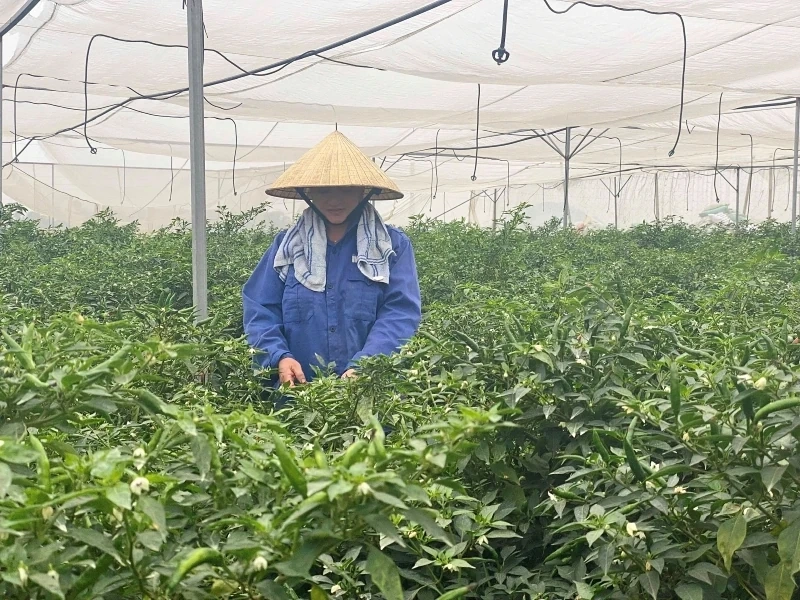
Chili peppers are becoming a high-value crop in the winter season of 2025-2026.
As of December 13th, the entire province had planted 980 hectares of chili peppers. Localities with large planted areas include: Vinh Loc (160 ha); Bien Thuong (40 ha); Tay Do (40 ha); Xuan Lap (60 ha); Yen Truong (55 ha); Quy Loc (70 ha); Dinh Hoa (62.2 ha); Dinh Tan (85 ha); Yen Ninh (35 ha); Hoa Loc (100 ha); Dong Thanh (30.5 ha)... Most of the area is planted with the hybrid chili pepper variety Demon, which begins to be harvested after about 2.5 months and lasts from November of the previous year to April of the following year.
With good cultivation techniques, each plot of chili peppers can yield more than 1 ton. In the current high price climate, many households estimate that if prices remain stable, profits per hectare could reach billions of dong. Farmers are excitedly calling this a rare "sweet" chili harvest, a stark contrast to the "bumper harvest, low prices" of previous years.
Aiming for a profitable winter crop and stable output.
Not only chili peppers, but this year's winter tomato crop has also brought great joy to growers. In Xuan Lap commune, many tomato fields that "survived" the floods are now in full harvest season. The ripe, evenly sized tomatoes are being bought by traders right in the fields.
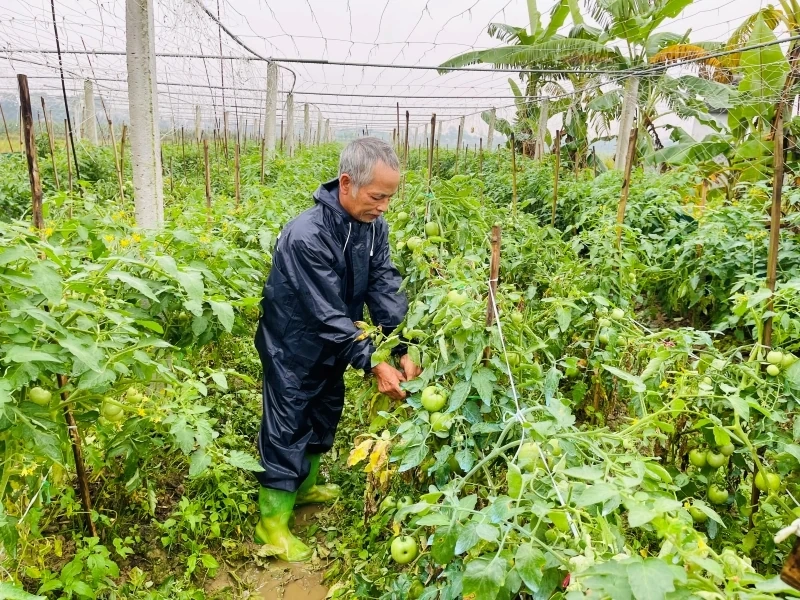
Along with chili peppers, tomato prices have also risen, bringing higher income to farmers.
Mr. Nguyen Quang Thuyet, from Thanh Vinh village, Xuan Lap commune, said: “This season, my family planted 2 sao (approximately 2,000 square meters) of tomatoes. Fortunately, during the floods in late September and early October 2025, this area was not submerged, so the plants developed well and yielded an early harvest. Meanwhile, many other fields in the village were flooded and had to be replanted; they are only now flowering and will only have fruit to harvest at the end of December.”
According to Mr. Thuyet, what makes the farmers most excited is the sharp increase in tomato prices this year. Traders are buying tomatoes directly from the fields at around 45,000 VND/kg, dozens of times higher than last winter, when at one point the price dropped to only 3,000 VND/kg and nobody wanted to buy them. "Last year, tomato prices plummeted, and we didn't even cover our labor costs. This year is completely different; we have both a good harvest and good prices," Mr. Thuyet shared.
Ms. Nguyen Thi Tinh, Director of Tinh Cam Trading and Service Co., Ltd., said: "For many years, the company has collaborated with people in Yen Truong, Dinh Tan, Yen Dinh communes... to produce over 100 hectares of chili peppers for export. Well-cared-for chili pepper plots yield up to 100 kg per harvest. The chili peppers are purchased directly from the fields at a stable price, providing an income 4-5 times higher than many other crops," Ms. Tinh said.
According to Ms. Tinh, the production-consumption linkage helps businesses proactively secure raw materials, while also giving farmers peace of mind in production and reducing market risks. Purchase prices are adjusted flexibly according to market developments but still ensure benefits for growers.
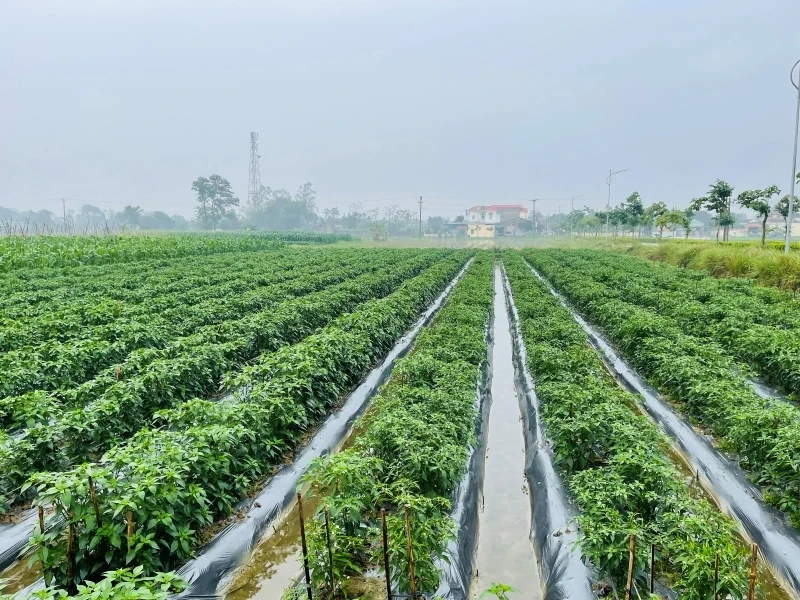
For the 2025-2026 winter crop season, the entire province aims to plant over 46,000 hectares of various crops, with a total production value exceeding 3,580 billion VND, averaging 77.8 million VND per hectare. However, the agricultural sector also warns of a familiar situation from previous years: when seeing that some agricultural products fetch high prices, people tend to expand their planting area in the following season without carefully considering market demand, leading to "bumper harvest, plummeting prices".
Currently, several short-term vegetable crops have been harvested in abundance, increasing supply and causing prices to cool down compared to the beginning of the season. Forecasts indicate that winter crop prices will gradually stabilize from now until the end of the year, but risks remain if production increases rapidly. Therefore, the agricultural sector advises farmers to adhere to production guidelines, strengthen linkages with businesses and cooperatives to stabilize output, and aim for a winter crop that not only offers good prices in the short term but also ensures sustainable development.
Le Hoi
Lesson 2: Soaring agricultural prices and the pressure to manage supply chains.
Source: https://baothanhhoa.vn/vu-dong-nam-2025-2026-nhieu-khoi-sac-va-thu-thach-bai-1-cay-trong-vu-dong-ngan-ngay-cho-gia-tri-cao-271737.htm

![[Live] 2025 Community Action Awards Gala](/_next/image?url=https%3A%2F%2Fvphoto.vietnam.vn%2Fthumb%2F1200x675%2Fvietnam%2Fresource%2FIMAGE%2F2025%2F12%2F16%2F1765899631650_ndo_tr_z7334013144784-9f9fe10a6d63584c85aff40f2957c250-jpg.webp&w=3840&q=75)
![[Photo] Prime Minister Pham Minh Chinh receives the Governor of Tochigi Province (Japan)](/_next/image?url=https%3A%2F%2Fvphoto.vietnam.vn%2Fthumb%2F1200x675%2Fvietnam%2Fresource%2FIMAGE%2F2025%2F12%2F16%2F1765892133176_dsc-8082-6425-jpg.webp&w=3840&q=75)
![[Photo] Prime Minister Pham Minh Chinh receives Lao Minister of Education and Sports Thongsalith Mangnormek](/_next/image?url=https%3A%2F%2Fvphoto.vietnam.vn%2Fthumb%2F1200x675%2Fvietnam%2Fresource%2FIMAGE%2F2025%2F12%2F16%2F1765876834721_dsc-7519-jpg.webp&w=3840&q=75)

![[Image] Leaked images ahead of the 2025 Community Action Awards gala.](/_next/image?url=https%3A%2F%2Fvphoto.vietnam.vn%2Fthumb%2F1200x675%2Fvietnam%2Fresource%2FIMAGE%2F2025%2F12%2F16%2F1765882828720_ndo_br_thiet-ke-chua-co-ten-45-png.webp&w=3840&q=75)












































![[Photo] Prime Minister Pham Minh Chinh attends the Vietnam Economic Forum 2025](https://vphoto.vietnam.vn/thumb/402x226/vietnam/resource/IMAGE/2025/12/16/1765893035503_ndo_br_dsc-8043-jpg.webp)






























Comment (0)