

Originating from love
Mr. Le Quoc Trung began his volunteer work nearly 20 years ago. It stemmed from his high school days, when he learned about leprosy. He saw how leprosy sufferers endure immense pain, their limbs gradually falling apart and becoming amputated, their eyesight failing, their bodies covered in sores… and how they are also feared, scorned, and avoided by others. He felt incredibly fortunate compared to these patients and developed a special compassion for them, leading him to seek them out. Initially, they were shy and hesitant, but eventually, convinced by Mr. Trung's genuine affection, they accepted his care. He helped them trim, clean, and bandage their wounds, cut their hair, and bathe them; he also gave them medicine and instructed them on maintaining good hygiene.
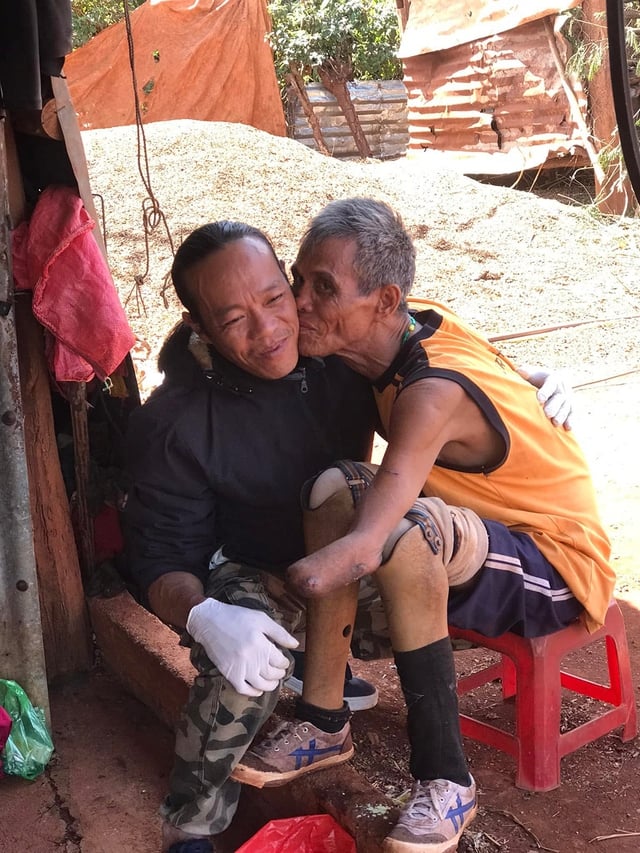
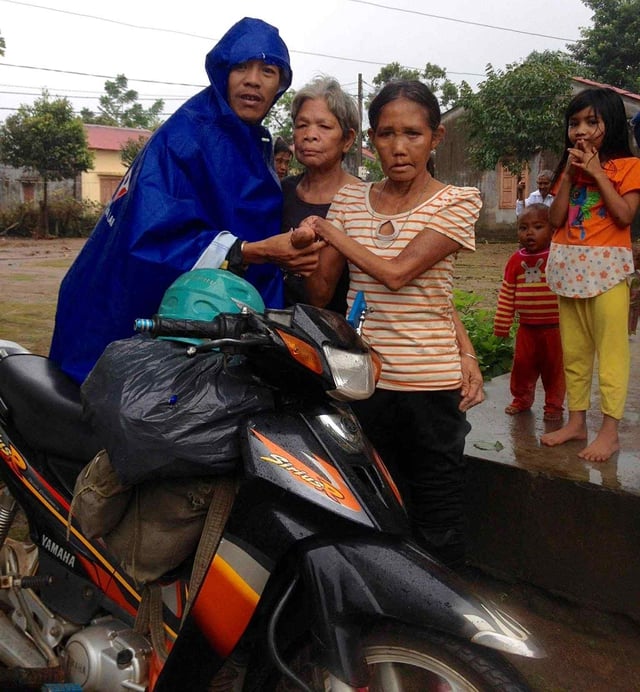
The joy of patients when they meet Mr. Le Quoc Trung.
Photo: Dao An Duyen
Trung is a freelance musician with an unstable job and income. However, whenever he has free time, he rides his motorbike alone to ethnic minority villages to help them with many things. The villages he visits are scattered throughout the province, some dozens of kilometers from his home, others hundreds of kilometers away, with very difficult roads, especially during the rainy season. He often goes to remote villages with low levels of education, particularly those affected by leprosy, as few people dare to go there. Sometimes you see him cutting hair for the elderly and children, other times you see him distributing medicine and food.
In particular, the most common image I saw was him disinfecting, washing wounds, and changing bandages for patients like a real doctor. When I first met him, I thought he was a doctor because of his professional and skillful movements. But later I learned that he had never received any formal medical training. He learned his medical knowledge through books and from doctors and nurses while transporting seriously ill patients from the village to the hospital. Over time, he accumulated experience, that's all. He casually said, "That's all," reflecting his thoughts about what he was doing.
Previously, Mr. Nguyen Quoc Trung used to help about twenty villages, but now, due to health and financial constraints, he can only help about ten villages. His work is unstable, but whatever money he saves, he buys medicine, medical equipment, and food to help the sick and the poor. Only when he runs out of money does he ask his family, relatives, and friends for help, but even then, it's very rare. He intends to reduce his work in the future to dedicate more time to visiting leprosy villages and helping children in poor families with leprosy. Now, he only wishes to have enough health to continue helping the people. He hopes that people will view leprosy sufferers with open hearts, without fear, so that they suffer less hardship.
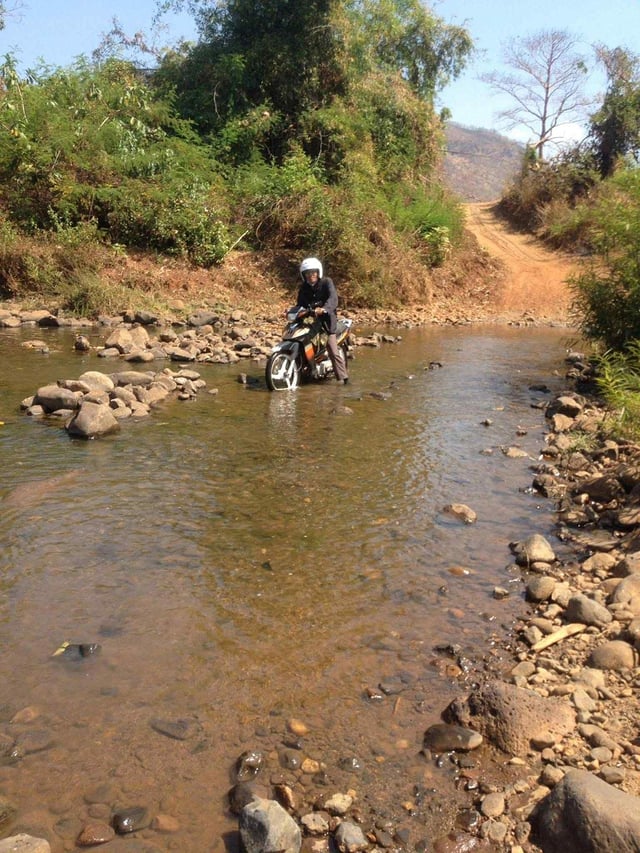
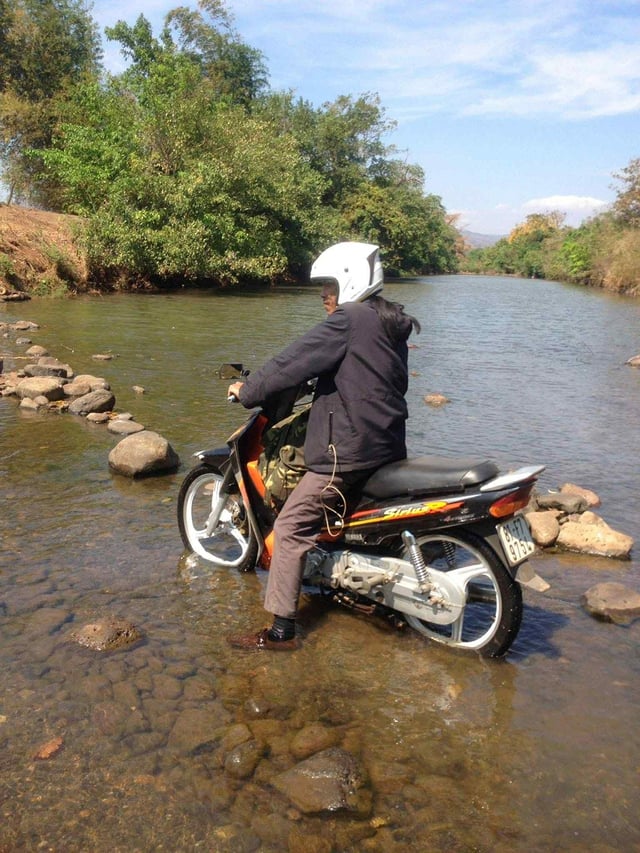
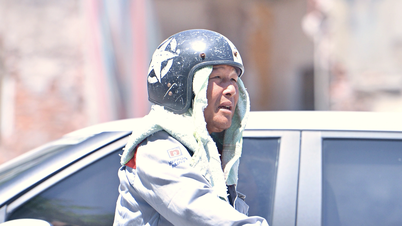
Trung on his way to the leprosy villages.
Photo: Dao An Duyen
The journey continues.
Trung's travels and help to the sick were so numerous that he no longer remembered their names, even in some very special cases. Once, he visited a very remote leprosy village, isolated on the other side of the Ayun River (leprosy sufferers often built houses in secluded places, and other patients, hearing about it, came to live with them, gradually forming a village, isolated from other residential areas).
The road to the village was very difficult. Trung had to leave his motorbike behind, hiding it in a clump of trees at the edge of the forest, then walk, climb over mountains, and wade through rivers to reach the village. The people here were still backward in every respect. When he entered the village, he encountered a young boy with a very high fever and convulsions. The villagers, when someone was seriously ill, only called a shaman instead of taking the child to the hospital. They said that Giàng (the sky god) wanted to take the child. They sat around the child, waiting for him to die. Trung quickly took out some fever-reducing medicine to give the child, but the adults stopped him. After much persuasion, he finally managed to give the medicine to the child.
That night, he stayed in the village to care for and guard the child, giving her rice porridge and medicine. By the next morning, the child's fever had subsided and she was alert. When Trung was leaving, the villagers told him that the child should have been taken away by the spirits, but since he had kept her, he now had to be her father. He agreed and left. After that, he continued to visit other villages and never returned. Several years later, Trung accidentally met the child again in a village on the other side of the Ayun River. The child ran to him, hugged him, and called him Ama (father). Tears welled up in Trung's eyes from happiness.
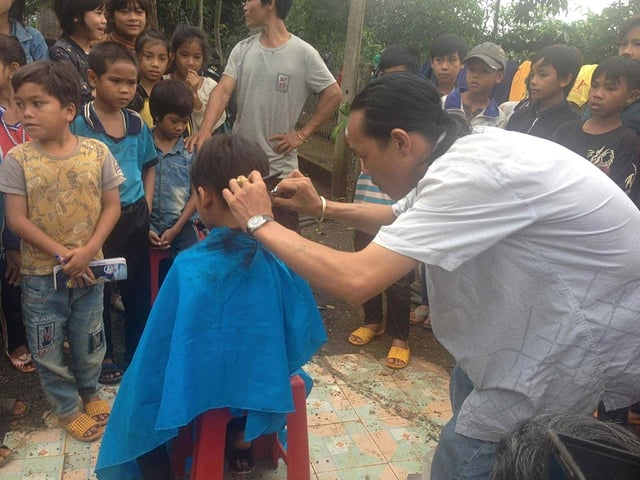
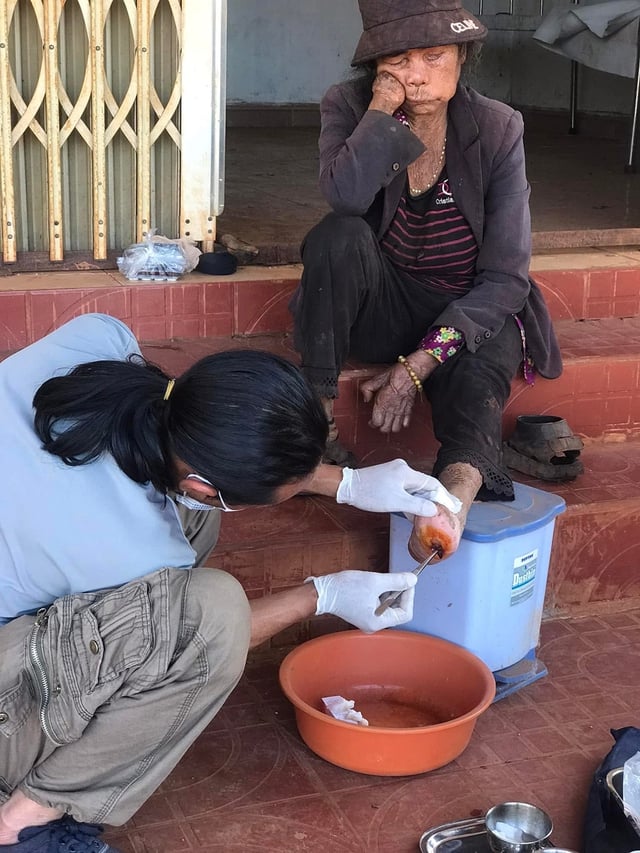
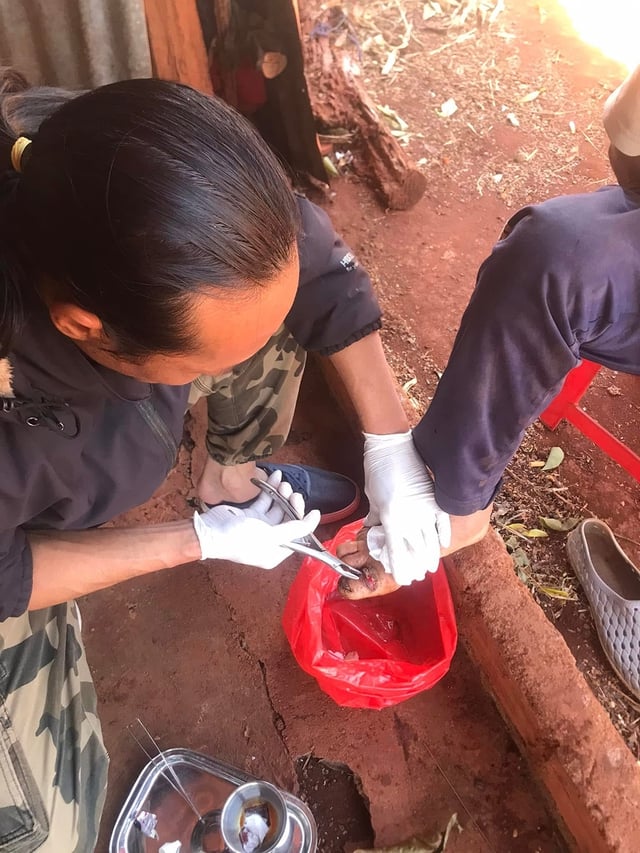
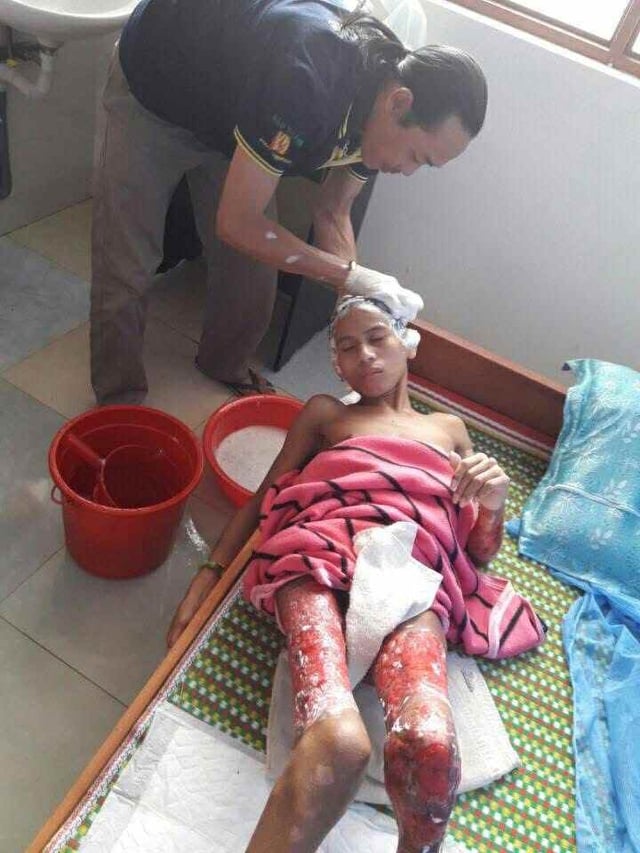
Mr. Trung helps leprosy patients clean their wounds, bathe, cut their hair, etc.
Photo: Dao An Duyen
In another village, a child was injured in an accident. Due to extreme poverty, the family couldn't afford proper treatment, and both of the child's legs became almost completely gangrenous. When the hospital sent him home, the nuns in the nearby village, feeling sorry for him, took him in to care for him, but his condition worsened. His legs became increasingly ulcerated and painful. The nuns heard about Mr. Trung's expertise in treating such wounds, so they sought him out, asking him to clean the wounds and care for the child. Unexpectedly, after some time, the child showed significant improvement. Seven years later, Mr. Trung unexpectedly met the child again, now a healthy young man, not in the village, but at Mr. Trung's house. Seeing him, the young man ran to him, hugged him tightly, and cried. For seven years, the child wanted to find Mr. Trung to thank him but didn't know where he was. He went to churches asking for information, and after much searching, a priest who knew Mr. Trung led him to his home. Now the child has a wife, children, and a family like everyone else. Mr. Trung feels happy, like a father rejoicing for his son.
Every trip with Mr. Trung is a memorable experience. When he arrives, the villagers smile; when he leaves, they cry. Some say they dreamt of Mr. Trung visiting last night, and he actually came the next day. Others miss him so much they look at his picture to ease their longing. How could they not miss him? Only by witnessing firsthand what Mr. Trung did for the villagers can one truly appreciate the actions of a compassionate heart; especially towards leprosy patients whose skin is constantly ulcerated, oozing pus, and whose joints are eroded and gradually fall off… Not everyone is brave enough to clean their wounds and change their bandages.
It wasn't just that; during the rainy season and storms, some villages were isolated, inaccessible to volunteer groups. At those times, Trung, familiar with the terrain and the way around, would wade through the mud to care for the villagers. There were times when each household would cut down a banana tree and keep it inside, then chew on pieces of the trunk to stave off hunger. Trung brought them food, and they couldn't help but miss him dearly.
Mr. Trung never considered his actions as charity. He always thought of them as small acts. Yet, he felt he received so much joy and happiness in return. He was happy to return to a village and see that the villagers lived more hygienically, understood more about their illness, and felt less ashamed. Those who were healthier participated in labor and farming to earn a living. For him, that was a wonderful source of happiness. The villagers called Mr. Le Quoc Trung "the leper's doctor." He told them not to call him that because he wasn't a doctor, but they said they liked it, because to them, he was the real doctor.

Source: https://thanhnien.vn/bac-si-trong-long-dan-185251017154517204.htm
























































































Comment (0)