

 |
1. Subjects covered by mandatory motorcycle insurance
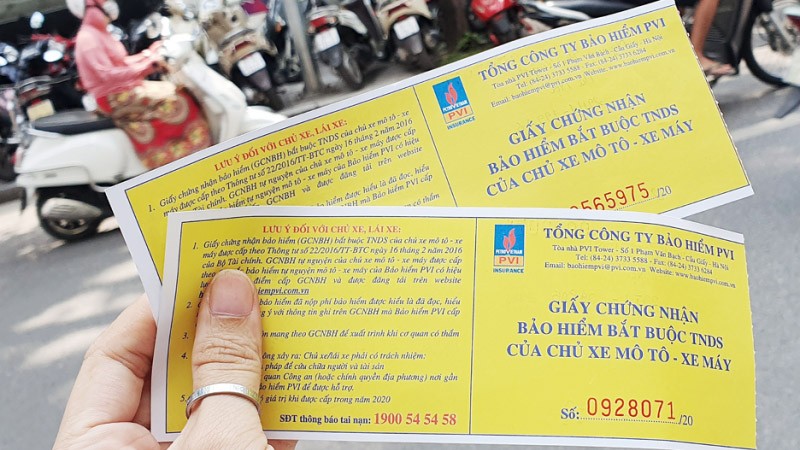
The subject of mandatory motor vehicle liability insurance (mandatory motorcycle insurance) is the civil liability of motor vehicle owners towards third parties and passengers as stipulated by law.
(Article 5 of Decree 67/2023/ND-CP)
2. Limits of liability for mandatory motorcycle insurance
The liability limits for mandatory motorcycle insurance are stipulated in Article 5 of Decree 67/2023/ND-CP as follows:
- The insurance liability limit for injuries and fatalities caused by motor vehicles is VND 150 million per person in a single accident.
- Limitations of insurance liability for property damage:
+ The penalty for accidents caused by two-wheeled motorcycles; three-wheeled motorcycles; motorbikes (including electric motorbikes) and similar vehicles as defined by the Road Traffic Law is 50 million VND per accident.
+ The penalty for accidents caused by automobiles; tractors; trailers or semi-trailers towed by automobiles or tractors, as defined by the Road Traffic Law, is 100 million VND per accident.
3. Mandatory motorcycle insurance premium rates in 2023
The mandatory motorcycle insurance premium rates for 2023 are stipulated in Appendix I issued with Decree 67/2023/ND-CP as follows:
TT | Vehicle type | Insurance premium (VND) (VAT not included) |
I | Two-wheeled motorcycle | |
1 | Under 50 cc | 55,000 |
2 | From 50 cc and above | 60,000 |
II | Three-wheeled motorcycle | 290,000 |
III | Motorcycles (including electric motorcycles) and similar motor vehicles | |
1 | Electric motorbike | 55,000 |
2 | The remaining types of vehicles | 290,000 |
Based on the insurance claims history of each motor vehicle or the accident history of the motor vehicle owner, insurance companies will proactively review and adjust insurance premiums upwards or downwards. The maximum increase or decrease in insurance premiums is 15% of the current premium.
4. Cases where mandatory motorcycle insurance does not provide compensation.
Insurance companies are not liable for insurance claims in the following cases:
- Intentional acts of causing damage by the owner of a motor vehicle, the driver, or the person who suffered the damage.
- The driver who caused the accident intentionally fled the scene and did not fulfill their civil liability as the owner of the motor vehicle. However, if the driver who caused the accident intentionally fled but had already fulfilled their civil liability as the owner of the motor vehicle, this does not fall under the circumstances excluded from insurance liability.
- Drivers who do not meet the age requirements stipulated by the Road Traffic Law; drivers who do not possess a driver's license or who use an invalid driver's license as prescribed by law on training, testing, and issuing driver's licenses for motor vehicles; drivers whose driver's licenses have been altered or expired at the time of the accident; or drivers whose driver's licenses are unsuitable for motor vehicles that require a driver's license. In cases where a driver's license has been temporarily suspended or revoked, they are considered to be driving without a license.
- Indirect damages include: reduced commercial value, and damages associated with the use and exploitation of the damaged property.
- Damage to property caused by drivers operating motor vehicles with blood or breath alcohol concentrations exceeding the normal levels as guided by the Ministry of Health ; or using drugs and stimulants prohibited by law.
- Damage to property that was stolen or robbed during the accident.
- Damage to special property includes: gold, silver, precious stones, valuable documents such as money, antiques, rare paintings and photographs, corpses, and remains.
- Damage caused by war, terrorism, earthquakes.
(Clause 2, Article 7 of Decree 67/2023/ND-CP)
5. Electronic versions of mandatory motorcycle insurance are available.
Article 10 of Decree 67/2023/ND-CP stipulates that when purchasing mandatory civil liability insurance for motor vehicle owners, the motor vehicle owner will be issued an insurance certificate by the insurance company. One insurance certificate is issued for each motor vehicle.
In the case of issuing electronic insurance certificates, insurance companies must comply with the regulations of the Law on Electronic Transactions and its implementing guidelines; the electronic insurance certificate must fully comply with current regulations and fully reflect the contents as prescribed in Clause 3, Article 10 of Decree 67/2023/ND-CP.
Therefore, people can use the electronic version of mandatory motorcycle insurance.
6. Documents required for mandatory motorcycle insurance claims.
The claim file for mandatory motor vehicle liability insurance includes the following documents:
(1) Claim for compensation document.
(2) Documents relating to motor vehicles and drivers (Certified copies from the original or copies certified by the insurance company after comparison with the original or photocopies):
- Vehicle registration certificate (or a certified copy of the original vehicle registration certificate along with the original receipt from the credit institution that is still valid, in place of the original vehicle registration certificate during the period the credit institution holds the original vehicle registration certificate) or vehicle ownership transfer documents and vehicle origin documents (in case there is no vehicle registration certificate).
- Driver's license.
- The driver's identity card, citizen identification card, passport, or other personal identification documents.
- Insurance certificate.
(3) Documents proving health and life damage (Copies from medical facilities or certified copies from insurance companies after comparison with the original or photocopies). Depending on the extent of personal injury, one or more of the following documents may be included:
- Certificate of injury.
- Medical records.
- A copy of the death certificate or death notice or confirmation document from the police or the results of a forensic examination by a forensic examination agency in cases where the victim died on a vehicle or died as a result of an accident.
(4) Documents proving damage to property:
- Valid invoices, receipts, or evidence proving the repair or replacement of property damaged in the accident (in cases where the insurance company carries out the repair or remediation of the damage, the insurance company is responsible for collecting this documentation).
- Documents, invoices, and receipts related to expenses incurred by the motor vehicle owner to mitigate losses or to comply with the instructions of the insurance company.
(5) Copies of relevant documents from the Police agency in cases of fatal accidents involving third parties and passengers or cases requiring verification of accidents caused entirely by the fault of a third party, including: Notification of investigation results, verification and resolution of the accident or Notification of conclusion of investigation and resolution of the accident.
(6) Assessment report of the insurance company or a person authorized by the insurance company.
(7) Court decision (if any).
The policyholder, or insured, is responsible for collecting and submitting documents 1, 2, 3, 4, and 7 to the insurance company. The insurance company is responsible for collecting documents 5 and 6.
(Article 13 of Decree 67/2023/ND-CP)
Source




































































































Comment (0)