The fish is small but swims fast.
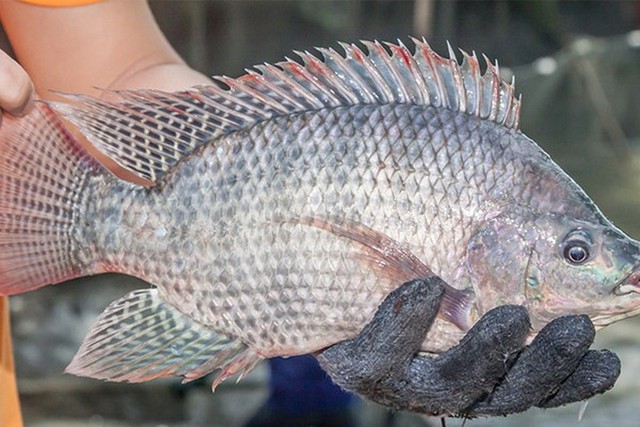
Tilapia has export potential that could generate significant revenue in the future.
PHOTO: VASEP
According to the Vietnam Association of Seafood Processing and Export (VASEP), while tilapia exports only reached US$13.26 million in 2024, by the end of the third quarter of 2025, this small fish with its distinctive countryside flavor had brought in US$57.3 million in export revenue, a 332% increase compared to the same period in 2024. Particularly in August and September, when global supply fluctuated significantly, Vietnamese businesses took advantage of the opportunity to boost exports, earning nearly US$10 million per month on average. Vietnamese tilapia products are now present in many markets, with the US being a key market, accounting for a large proportion of total export revenue.
Analysts say the tilapia market is experiencing significant volatility due to China, the world's largest tilapia producer (1.6 million tons/year), facing a 55% tariff on exports to the US. This has led to reduced orders and the postponement or cancellation of many contracts. While prices have risen slightly, farming costs have increased sharply, resulting in losses for businesses and record-high inventory levels. Furthermore, Brazil, another major tilapia supplier expected to replace China , has also been subject to a 50% tariff imposed by the US since August, causing export stagnation and forcing many businesses to raise prices, thus losing their competitive edge.
After facing excessively high export tariffs to the US, both countries turned to the domestic market for consumption, but this proved ineffective due to high production costs. Small and medium-sized enterprises (SMEs) that primarily served the domestic market faced intense price competition. Overall, the tilapia industries in China and Brazil are facing a double challenge: slowing exports, falling prices, and weakening market sentiment. According to some forecasts, global tilapia supply will remain stable at 7 million tons by 2025, thanks to a strong recovery in major producing countries such as China, Indonesia, Egypt, and Bangladesh, with Vietnam emerging as a promising tilapia supplier due to its rapid production expansion capacity.
What do Vietnamese businesses need to prepare for?

Vietnamese tilapia exporting businesses have agreed to establish a club under VASEP.
PHOTO: VASEP
Entering the fourth quarter of 2025, Vietnam's tilapia export growth slowed down due to a temporary increase in inventory in the US following a period of strong imports in the preceding months. This indicates that Vietnam needs to shift from capitalizing on short-term opportunities to developing a long-term strategy, focusing on improving product quality, diversifying markets, and building a sustainable Vietnamese tilapia brand.
According to Rabobank, experiences from China and Brazil show that dependence on a single market or product makes the seafood industry vulnerable to policy changes. When the US increased tariffs, both countries struggled to shift orders and maintain exports, leading to market share losses. For Vietnam, this is the time to turn short-term opportunities into long-term strategies. The tilapia industry should proactively diversify its markets, expanding into Europe, the Middle East, and South America, and developing value-added products such as breaded tilapia, pre-processed or conveniently packaged tilapia. Simultaneously, investing in improved breeding, farming technology, and advanced processing will help increase productivity, reduce costs, and meet sustainability standards.
On November 14th, VASEP (Vietnam Association of Seafood Exporters and Processors) held a conference for tilapia producers and exporters to finalize the establishment of the "VASEP Tilapia Producers and Exporters Club". According to the participating businesses, the current context of Vietnam's fisheries industry , which is actively pursuing a strategy of diversifying farmed species and export products, shows that tilapia is emerging as a promising sector, aligning with international consumer trends and domestic production conditions. Tilapia exports are projected to reach over $41 million in 2024 and increase to $83 million in 2025, more than double the target. Many member businesses have invested in farming areas, applied advanced processing technologies, developed value-added products, and are gradually forming a stable, high-quality, and competitive tilapia export supply chain.
With global tilapia production projected to continue increasing and consumer trends favoring environmentally friendly products, Vietnam has the opportunity to build its own tilapia brand, strengthen its position in the global supply chain, not just fill a temporary gap, but aim for the role of a strategic, sustainable, and high-value supplier.
Source: https://thanhnien.vn/xuat-khau-ca-ro-phi-viet-vut-sang-185251117153727225.htm








































































































Comment (0)