

Not only stopping at the group of manufacturing and exporting enterprises to meet the strict criteria of demanding international customers, the real estate group is also actively applying digitalization to improve management efficiency in the context of the industry gradually recovering after a series of fluctuations.
In the export production group, facing a series of tariff and non-tariff barriers, focusing on improving quality in a sustainable direction is an inevitable step for businesses.
Digitalization and sustainable development are inevitable steps to maintain export market share.
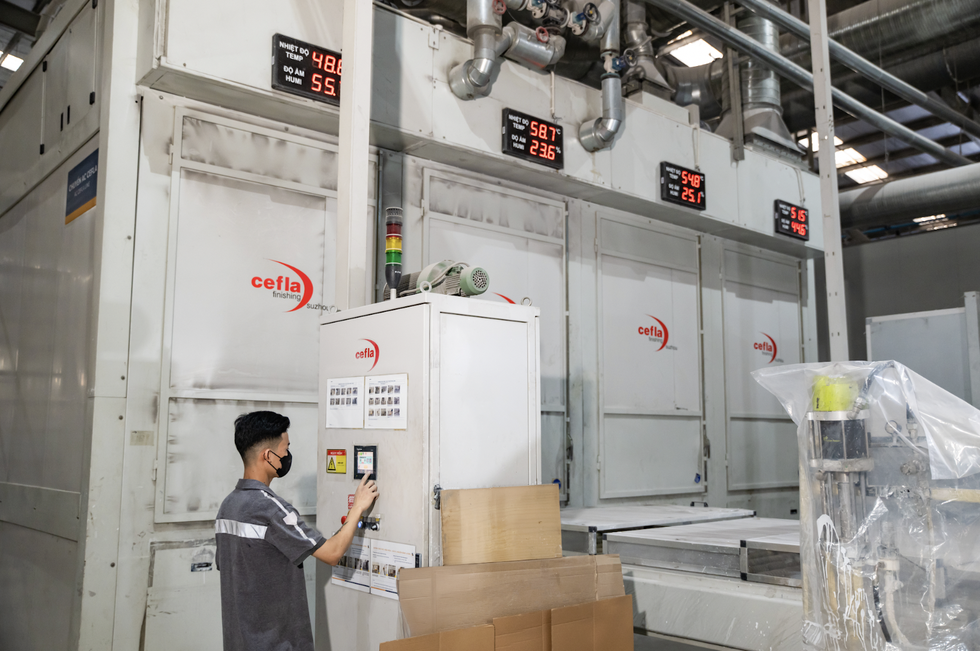
Sharing with Dan Tri newspaper reporter, Mr. Nguyen Huu Linh - Factory Director, Technical Department of TEKOM board, a company specializing in manufacturing and exporting industrial wood boards in Vietnam - said that the enterprise is applying technology and innovation at both factories, to automate steps that previously required a lot of manual labor as well as control the quality of the products.
How to apply science and technology to implement ESG for different types of businesses, including small and medium enterprises (SMEs), is also part of the content shared at the workshop "Implementing ESG with science and technology - From data to action" organized by Dan Tri newspaper at 1:30 p.m. on November 26, in Hanoi .
This workshop is a satellite activity within the framework of the Vietnam ESG Forum 2025 with the theme "Science and technology and driving force for sustainable development".
Interested readers can register to attend the conference here.
This unit currently operates 2 factories, one with a total area of 55,000m2 with a capacity of 120,000 m3/year, the second factory is 60,000m2 wide with a glue workshop that has been automated with a 100% automatic glue mixer for high productivity.
Applying science and technology helps businesses reduce costs. For example, the UV painting process using modern technology according to TEKOM has helped the painting process optimize costs by 25-30% compared to manual painting. Many other technological applications are also implemented by this company in the production and business management process... This helps reduce the effort of workers while increasing production efficiency; especially the products meet all the most stringent standards in all export markets.
Plywood factory applies technology and machinery to automate many stages (Photo: NVCC).
Or in the 2024 Sustainability Report, Vinamilk said it is also applying many technological elements in ESG implementation.
For example, this dairy company established an ESG data system by collecting multiple data sources, then managing them in real time and building a roadmap for emissions reduction. Technology also supports the company in product traceability, ensuring transparency about product quality, safety and origin for consumers.
Applying technology, businesses reduce 30% of fuel consumption
Also applying technology to meet export criteria, Rang Dong Light Source and Vacuum Flask Joint Stock Company is promoting the application of science and technology to effectively implement the ESG strategy in the digital transformation and dual transformation roadmap (Digital and Green) in the period 2025-2030.
Based on the comprehensive digitalization platform in the period of 2020-2024, this company has formed a Big Data and Artificial Intelligence (AI) ecosystem to serve production management, operations and smart business. Technologies such as IoT, AI, cloud computing, and automated robots are applied in the production line to reduce energy consumption, optimize resources, control emissions and manage product lifecycles towards a circular economy.
In addition, the ESG data management system helps the company monitor, evaluate and transparently disclose environmental, social and governance indicators, ensuring compliance with international sustainable development standards.
Sharing at a recent workshop, Mr. Nguyen Doan Ket - Vice Chairman of Rang Dong Board of Directors - said that after 5 years of digital transformation (2020-2024), the company's energy efficiency has improved significantly. Specifically, before 2020, to generate 1 billion VND in revenue, it required 1,497 TOE (tons of oil equivalent), but now it only takes 1,104 TOE - reducing nearly 30% of fuel consumption for the same production value.
Rang Dong emphasized that it is necessary for businesses to apply technology and develop sustainably in order to access green capital sources as well as meet the standards of major markets such as the US, EU, etc.
At Coca-Cola, the use of a 10-ton biomass boiler to replace a traditional diesel system not only saves costs but also contributes to the group's goal of achieving net zero emissions globally.
The company is also known for its annual plastic bottle recycling program. Ms. Bui Dang Duyen Mai, representative of Coca-Cola Vietnam, added that in the production area, the company has invested in 5 modern bottling lines at the factory that operate continuously with a capacity of up to 1 billion liters of beverages per year.
The factory integrates smart technologies including warehouse simulation (digital twin), real-time manufacturing information system (MIS) and AI safety monitoring (Intenseye) to optimize productivity and strictly control quality, ensuring consistency for each product reaching consumers.

Applying technology, businesses reduce fuel consumption by 30% (Photo: DT).
Real estate giants join in promoting digital transformation
In the real estate group, 2025 marks the acceleration phase in the digital transformation journey of many "big guys".
Novaland Group (stock code: NVL) promotes the application of technology and artificial intelligence (AI) in business operations and management such as BI Dashboard, upgrading the E-Office system and applications for finance, sales, customer care and human resource management. The Group aims to complete the digital transformation process next year, thereby improving operational capacity, optimizing resources and increasing business value.
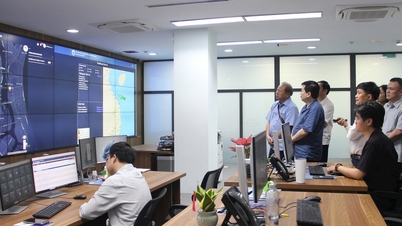
At the Aqua City project, the AI security center - Aqua Security Center - has been put into operation with a multi-layered security system, nearly 2,000 surveillance cameras operating 24/7, helping to identify risks early and optimize operations, ensuring a safe living environment for residents.
Nam Long (stock code: NLG) is also promoting technological innovation and green planning, towards smart cities. The company aims to build sustainable urban areas, applying Internet of Things (IoT) technology in management, operation and control of public activities. IoT technology is deployed in many areas such as environment, community, energy, safety and health.
In the energy sector, the company applies smart energy management solutions and automatic public lighting systems to help save electricity and reduce emissions. In addition, the security, emergency and CCTV systems are integrated with AI, helping to quickly identify and handle emergency situations...
Source: https://dantri.com.vn/kinh-doanh/doanh-nghiep-san-xuat-bat-dong-san-day-manh-cuoc-dua-so-hoa-20251110112832385.htm





























































































Comment (0)