

According to the roadmap proposed by the Ministry of Agriculture and Environment , the application of emission standards for automobiles will be divided by year of manufacture and region.
Specifically, vehicles manufactured before 1999 will apply level 1 (equivalent to Euro 1 standards) as soon as the decision takes effect. Vehicles manufactured between 1999 and 2016 will apply level 2 (Euro 2) from the time the regulation is issued.
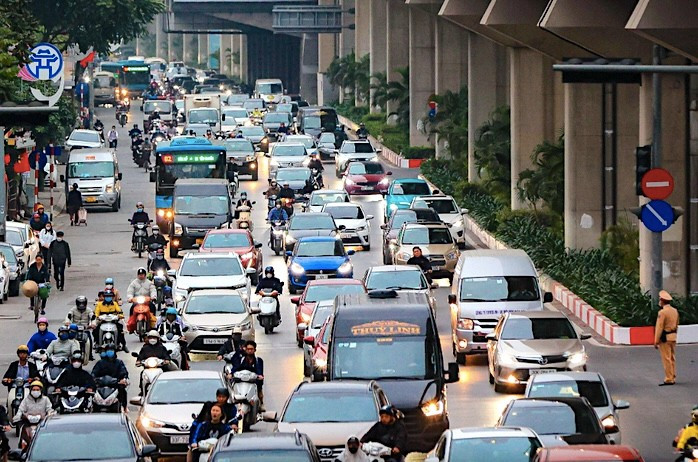
For vehicles manufactured from 2017 to 2021, level 3 (Euro 3) will be applied nationwide from January 1, 2026, while Hanoi and Ho Chi Minh City will apply level 4 (Euro 4) from January 1, 2027.
Vehicles manufactured from 2022 onwards will apply level 4 nationwide from January 1, 2026; however, the two major cities will advance to level 5 (Euro 5) earlier, from January 1, 2028. From 2029, in Hanoi and Ho Chi Minh City, all vehicles in circulation must meet at least level 2 or higher.
Vehicle models manufactured and assembled under technical safety and environmental protection certificates issued before January 1, 2022, until their expiration date, will have the same emission levels as cars manufactured in the 2017-2021 period (level 3).
The Ministry of Agriculture and Environment also proposed many support solutions such as: encouraging the exchange of old vehicles for new ones, providing technical support to upgrade exhaust treatment equipment, ensuring the supply of fuel meeting Euro 5 standards; and at the same time strongly developing green public transport systems such as electric buses, hybrid vehicles and inner-city metro lines.
However, raising emission standards poses many challenges for the current inspection system as it requires investment and upgrading of measuring equipment to meet international standards. In addition, fuel suppliers must also ensure compatibility with engines to meet high emission standards (levels 4 and 5).
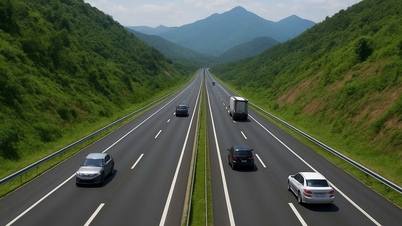
Vietnam currently has more than 5 million cars in circulation, with most of them concentrated in the two major cities of Hanoi and Ho Chi Minh City. The proportion of old, high-emission vehicles is still quite high, especially trucks, passenger cars, tractors and old cars. According to statistics from the Ministry of Construction, about 16% of vehicles produced in the period 2017-2021 in Hanoi and Ho Chi Minh City do not meet Euro 4 standards, mainly trucks and tractors.
Raising automobile emission standards is considered by experts to be an inevitable step, in line with the Vietnamese Government's green growth strategy and commitment to reduce net emissions to zero by 2050.
Source: https://baogialai.com.vn/de-xuat-lo-trinh-tieu-chuan-khi-thai-moi-cho-o-to-post572435.html




![[Photo] General Secretary To Lam receives Vice President of Luxshare-ICT Group (China)](https://vphoto.vietnam.vn/thumb/1200x675/vietnam/resource/IMAGE/2025/11/15/1763211137119_a1-bnd-7809-8939-jpg.webp)
![[Photo] Prime Minister Pham Minh Chinh meets with representatives of outstanding teachers](https://vphoto.vietnam.vn/thumb/1200x675/vietnam/resource/IMAGE/2025/11/15/1763215934276_dsc-0578-jpg.webp)








































































Comment (0)