

This is a continuation and development from the 12th and 13th National Congresses of the Party, but has gone further in theoretical awareness, in line with international trends on the role of private enterprises in sustainable development, technological innovation and improving national competitiveness, opening up a new step of development in the Party's thinking on the economic growth model.
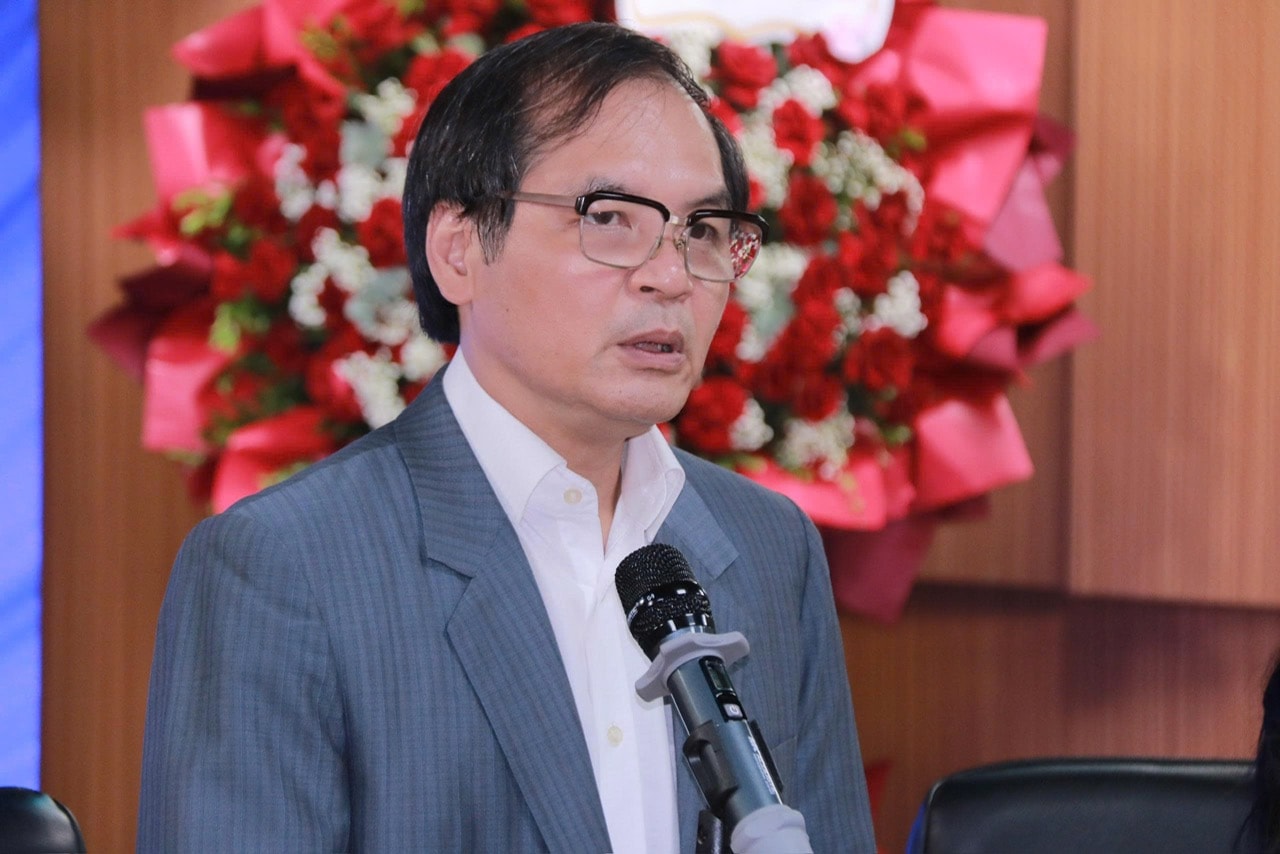
In Vietnam, the private economic sector, especially small and medium enterprises, accounts for more than 98% of the total number of enterprises, contributes about 50% of GDP, creates over 60% of new jobs, and is the most dynamic force in the process of economic model transformation. However, this sector still faces many institutional barriers, resource limitations, and difficulties in innovation, digital transformation, and access to green finance.
This is also the reason why it is necessary to continue improving institutions - finance - human resources - infrastructure so that the private sector can promote its role as the leading driving force of the economy in the new period.
In the context of the world entering a period of profound transformation, the trend of comprehensive digital transformation, green transformation and low-carbon economy, innovation based on science and technology , especially artificial intelligence, biotechnology, new materials... is reshaping the global value chain, reallocating capital, labor and markets. Competition between countries is no longer based solely on market size or labor costs but on technological capacity, digital resources, management quality and business innovation capacity.
For Vietnam, if institutional conditions are not created for the private sector to be proactive and pioneer in new fields, the economy will find it difficult to achieve the goal of independence - autonomy - sustainability. Recognizing the importance of the decisive moment, the draft document has put forward many new and progressive points, affirming that the private sector is the most important driving force (a breakthrough in perception); Connecting the private sector with three strategic pillars: Innovation, digital transformation, green growth.
Promoting modern market institutions: Protecting property rights, fair competition. Strengthening inter-sectoral policy linkages: Finance - Science and Technology - Environment - Education . All these orientations will lay the basic foundation for the development of private enterprises in future economic sectors.
However, small and medium-sized private enterprises still want the draft document to clarify and provide more specific principles on:
(i) Perfecting institutions and protecting property rights : Protecting legitimate ownership rights; quick and transparent dispute resolution mechanism; economic laws are institutionalized in the direction of restructuring, supporting failed startups to return to the market.
(ii) Strongly reform tax policies to promote innovation for small and medium-sized enterprises: Deduct all research and development costs; tax incentives for green projects, clean energy, AI, digital transformation; corporate income tax exemption and reduction for innovative enterprises.
(iii) Perfecting the mechanism for mobilizing private capital and green finance : Strongly encourage the development of private capital markets and venture capital funds; build a carbon market; establish a State Credit Guarantee Fund according to the principle of the State guaranteeing risks with conditions and the market pricing risks; develop green bonds according to international standards.
(iv) Forming a national innovation ecosystem : Linking the State - enterprises - institutes and schools; training centers for digital skills - green energy - automation; supporting enterprises to participate in international research networks.
(v) The role of the State in policy implementation : The State not only "creates" but also needs to "accompany - promote - supervise fairness"; perfect the legal framework for PPP in innovation; sandbox mechanism for new business models (AI, fintech, circular economy).
(vi) Regional linkage and innovation cluster development : Each economic region must have a private innovation center, linking businesses with digital infrastructure, green finance and human resource training.
(vii) Promote the role of business associations through mechanisms to be included in the national policy-making process : Mechanism for ordering policy feedback; participate in developing independent reports on the business environment; improve data capacity, forecasting, and impact analysis.
In that general picture, the capital Hanoi and Ho Chi Minh City, as the two largest economic - political - cultural - social centers of the country, have a particularly important meaning. This is also the place where businesses, high-quality human resources, innovation ecosystems and the strongest technology absorption capacity in the country converge.
Policy movements in these two special cities always have a fast and wide spread, strongly impacting the entire private business sector in the country. From that perspective, it is necessary to emphasize that private economic development is a national orientation, applied equally to all localities and all business sectors. The capital Hanoi and Ho Chi Minh City need to emphasize and clarify their leading role, without reducing the overall and universal nature of the policy.
Also from the perspective of the small and medium-sized enterprise community nationwide, we fully believe that the documents submitted to the 14th National Party Congress, after collecting opinions, will be absorbed, refined and supplemented so that political awareness can be transformed into transparent institutions - modern financial mechanisms - equal competitive environment, which is an important basic foundation for the private sector to truly become the most important driving force of national growth, contributing to making Vietnam a developed, high-income country by 2045.
Dr. To Hoai Nam
Permanent Vice President and General Secretary of the Vietnam Association of Small and Medium Enterprises (VINASME)
Source: https://hanoimoi.vn/buoc-phat-trien-moi-trong-tu-duy-cua-dang-ve-mo-hinh-tang-truong-kinh-te-723563.html


![[Photo] General Secretary To Lam and National Assembly Chairman Tran Thanh Man attend the 80th Anniversary of the Traditional Day of the Vietnamese Inspection Sector](https://vphoto.vietnam.vn/thumb/1200x675/vietnam/resource/IMAGE/2025/11/17/1763356362984_a2-bnd-7940-3561-jpg.webp)


















































































Comment (0)