

 |
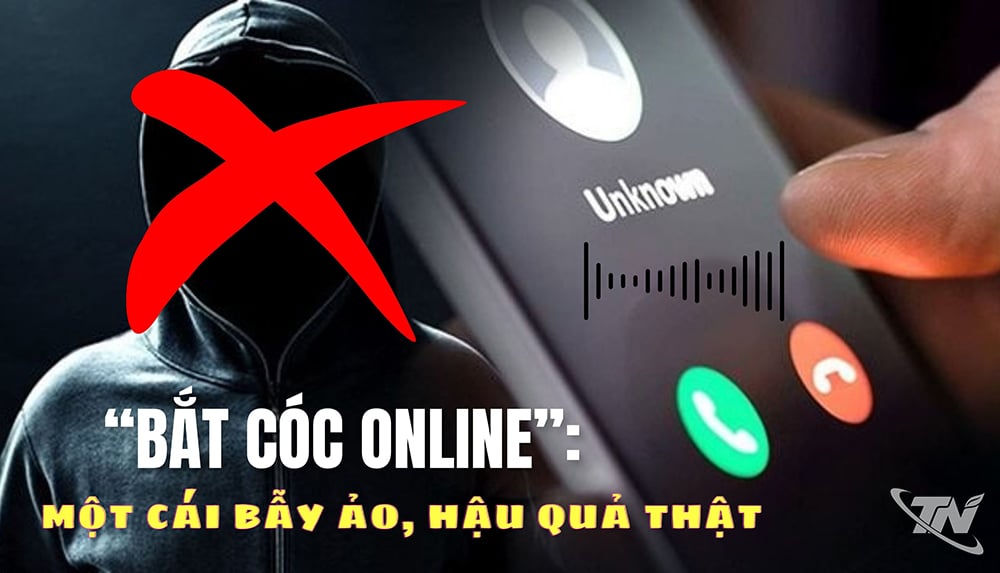
| People need to limit sharing personal information on social media and be wary of extremely sophisticated and dangerous scams to avoid serious consequences. (Image: Illustration) |
"Online kidnapping" is a form of psychological manipulation of victims via telephone, using tactics such as impersonating police, prosecutors, or judges through social media platforms to threaten and trick victims into isolating themselves from their families. Afterward, the perpetrators call the victim's relatives, fabricating a "kidnapping and ransom" scenario.
A typical example is the incident in Ho Chi Minh City last July, where a female student from Khanh Hoa was accused by individuals posing as police officers of involvement in a money laundering ring, demanding 150 million VND to "prove her innocence." The perpetrators lured the victim to a hotel in Hoa Hung ward, Ho Chi Minh City , and "locked herself" in a room.
According to the girl's account: "I participated in a video call, those men said they needed to check my body, told me to take off all my clothes, record a video, and then they used that video to threaten me and force my mother to send more money."
Similarly, Mr. D. (46 years old), residing in Viet Hung ward, unexpectedly received a Zalo message from his daughter X.'s account (born in 2007) demanding an immediate transfer of 300 million VND, accompanied by a video of his daughter completely naked.
The head of the Cyber Security and High-Tech Crime Prevention Department (Thai Nguyen Provincial Police) stated that no cases of this type of scam have been recorded in Thai Nguyen province. However, many localities nationwide have detected and handled similar cases. The perpetrators often use AI technology to mimic voices, create deepfake images, and even fake video calls. In some cases, parents have seen videos of their children tied up and crying, but these were actually images created using this technology.
Some common tactics include: Impersonating police officers to call students, informing them they are involved in a criminal ring and demanding that the victims go to a hotel or guesthouse for questioning. They also instruct the victims not to answer any other calls besides the one they received for "investigation." Afterward, the perpetrators force the victims to call their families and demand money for their "ransom."
Nowadays, some parents often share information about their children on social media (showing off their economic status, academic achievements, etc.). However, in reality, this poses a potential risk for criminals to exploit for malicious purposes, especially "online kidnapping".
From a professional perspective, Dr. Le Thi Phuong Hoa, Head of the Psychology Department at the University of Education (Thai Nguyen University), stated: Children are easily swayed by coaxing and easily panicked when threatened or intimidated. Therefore, with skillful "role-playing," scammers can completely gain the trust of children, making them listen and follow instructions. Children lack the ability to verify information and are easily fooled by images of people in police uniforms and serious-sounding voices. In addition, university students are also targeted because they study far from home, are completely independent in their online activities, and lack supervision, making them easily susceptible to manipulation and deception.
In particular, it stems from love and Overly worried about their children, parents are easily swayed by emotions rather than reason; simply hearing that their child's life is in danger will trigger a common reaction in most people: anxiety, followed by panic and confusion, reducing their ability to analyze the situation.
To prevent the negative consequences of abusing the sharing of family and child photos on social media, people need to proactively take measures to protect their personal information. Specifically: Limit posting photos of children publicly on social media; set privacy settings for posts and do not allow strangers to follow your account; and instruct children not to share personal information with strangers on social media.
The leakage of personal information online poses many risks, including sophisticated forms of fraud such as: impersonating police officers, bank employees, or relatives to trick people into transferring money; making fake phone calls or sending fake videos (like "a child being kidnapped") to extort money; using information to open bank accounts, apply for unsecured loans, or make installment purchases; impersonating others on social media to deceive relatives and friends, etc.
In reality, there are thousands of reasons and situations that can happen at any time, to anyone. When faced with threatening phone calls, people should report it to the nearest police station for assistance.
Furthermore, citizens should immediately warn their relatives and friends to avoid becoming the next victims. It's important to note that the police do not conduct investigations via phone or OTP applications (Zalo, Messenger, Telegram, etc.). In cases where it is necessary to work with citizens, the police will issue an invitation or summons in accordance with the law.
Source: https://baothainguyen.vn/phap-luat/202508/bat-coc-online-bay-ao-hau-qua-that-4287d9e/








































































































Comment (0)