

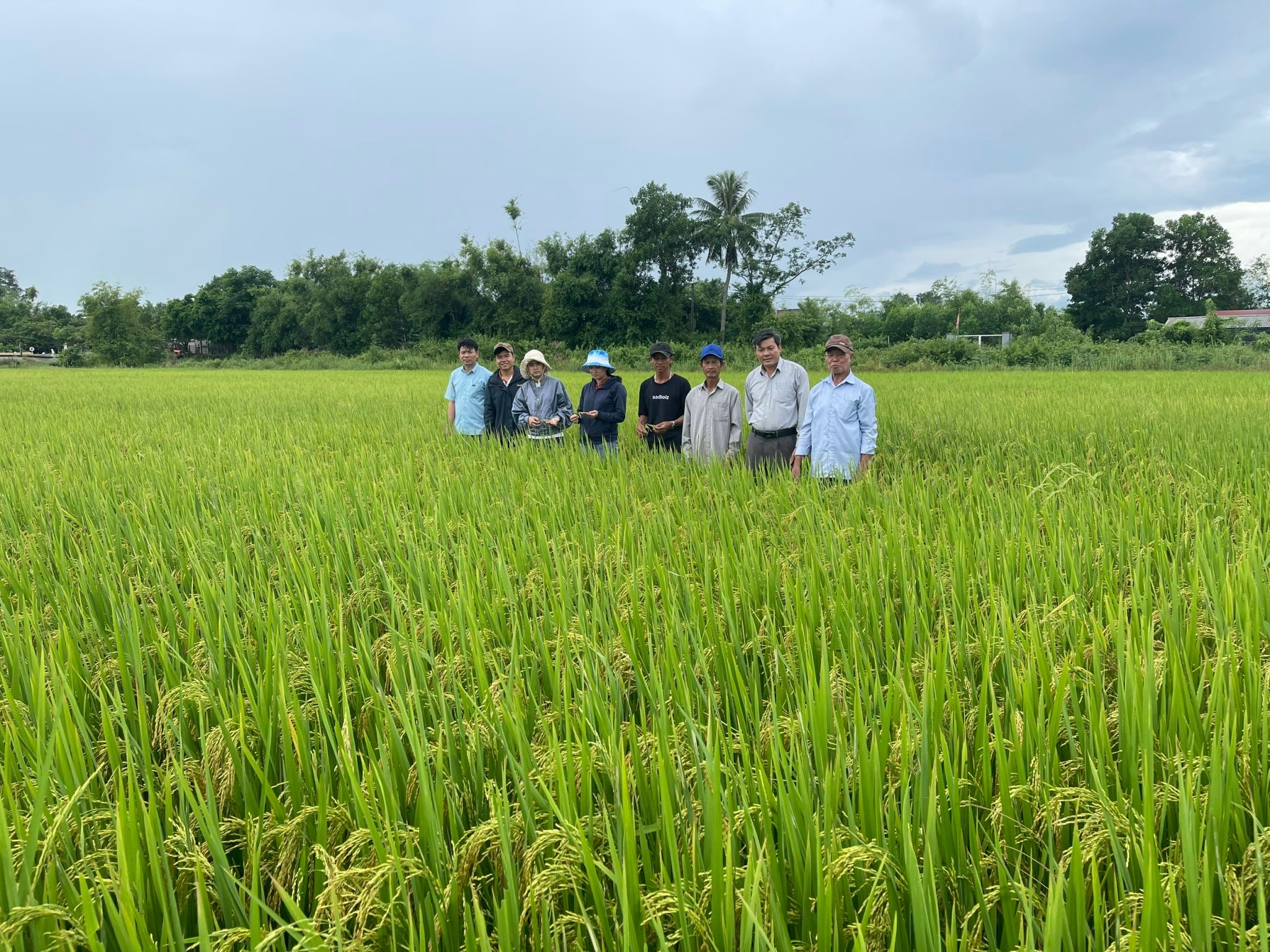
Organic rice farming in Trieu Phong - Photo: TCL
One of the factors contributing to the resurgence of organic farming among farmers is agricultural extension activities. Over the years, the Quang Tri Agricultural Extension Center has implemented activities to advise, guide, and support farmers in applying organic farming methods such as: not using synthetic chemicals, pesticides, chemical fertilizers, or animal feed containing growth hormones, but instead using organic fertilizers, practicing crop rotation, intercropping, and using natural pest control methods such as: using natural enemies, and making homemade insecticides from ginger, chili, and garlic.
The biggest harm of using chemical fertilizers and pesticides in agriculture is the pollution of soil, water sources, and air. Chemicals from fertilizers and pesticides seep into the soil, causing it to become compacted, depleted of nutrients, and leading to slow plant growth.
Over time, toxic chemicals from inorganic fertilizers and pesticides seep into water sources, polluting rivers and lakes and affecting aquatic ecosystems. Chemical pesticides kill pests but also eliminate beneficial organisms such as beneficial insects, birds, and other animals. The use of chemical fertilizers and pesticides in agriculture can lead to greenhouse gas emissions...
Organic farming methods apply practices such as: using organic fertilizers, crop rotation and intercropping, deep plowing, and using biological control methods... This method is applied to both crop farming and livestock raising.
In agriculture, organic farming methods, instead of using chemical fertilizers, utilize manure and plant-based fertilizers to provide nutrients to plants and improve soil fertility. Combined with deep plowing, this improves soil structure, making the soil loose, nutrient-rich, and better able to retain water and organic matter, thus preserving its fertility in the long term.
Implementing crop rotation and intercropping helps prevent soil depletion, minimizes pest and disease outbreaks, and increases biodiversity.
Use natural pest control methods such as employing natural enemies, biological preparations, or herbal pesticides, and avoid using chemical pesticides. Organic fertilizers and biological control methods do not harm the soil and water sources. In livestock farming, organic farming methods do not use feed containing growth stimulants or lean meat enhancers.
Implementing organic farming methods effectively protects the production environment and ecological environment by: increasing soil porosity and humus content, reducing soil and water pollution, protecting biodiversity, reducing greenhouse gas emissions, protecting soil, and preventing erosion...
Organic farming helps maintain and enhance biodiversity by minimizing the use of chemical pesticides. The use of biological control methods, such as natural enemies or natural insecticides, not only protects the environment but also maintains ecological balance in agriculture.
Simultaneously, crop rotation and intercropping create a more diverse environment for beneficial animals and insects, thereby building natural resistance in crops and minimizing pests and diseases. Mulching, the use of organic fertilizers, and sustainable farming practices help maintain soil aeration and limit erosion, especially in hilly areas, protecting the soil for long-term cultivation.
According to Tran Can, Director of the Quang Tri Agricultural Extension Center: Organic agricultural extension activities focus on guiding and encouraging farmers to switch from farming using chemical fertilizers and pesticides to organic farming with safe and sustainable methods.
Over the years, the center has developed many demonstration models on the application of organic farming methods. In particular, in collaboration with Quang Tri Trading Corporation, it has implemented organic rice farming models that bring many benefits such as: reducing pests and diseases, producing clean products, and achieving higher selling prices, leading to significantly higher economic efficiency compared to inorganic farming. Only by adopting organic farming methods can we enhance product value, protect public health, and improve environmental quality, thus ensuring sustainable farming.
Propagating and encouraging farmers to change their farming methods through agricultural extension channels and mass media has a wide reach, thereby accelerating the process of farmers changing their farming practices.
When farmers widely adopt organic farming methods, it creates safety in production, protects land and water resources, and fosters a cleaner and more sustainable agricultural system.
Switching to organic farming methods that apply scientific and technical measures in agricultural production is a farming solution that brings multiple benefits in terms of economics, environmental friendliness, and protection of human health.
Tran Cat Linh
Source: https://baoquangtri.vn/canh-tac-huu-co-giai-phap-phat-trien-nong-nghiep-ben-vung-192510.htm


![[Image] Vietnam's colorful journey of innovation](/_next/image?url=https%3A%2F%2Fvphoto.vietnam.vn%2Fthumb%2F1200x675%2Fvietnam%2Fresource%2FIMAGE%2F2025%2F12%2F14%2F1765703036409_image-1.jpeg&w=3840&q=75)


























































![[Image] Vietnam's colorful journey of innovation](https://vphoto.vietnam.vn/thumb/402x226/vietnam/resource/IMAGE/2025/12/14/1765703036409_image-1.jpeg)























Comment (0)