

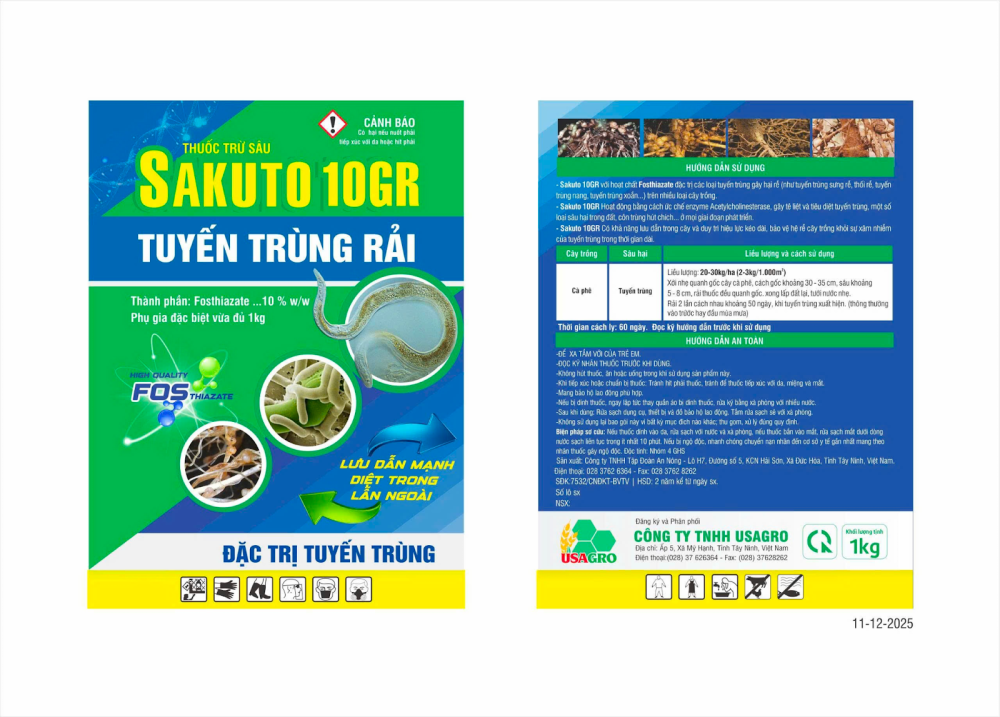
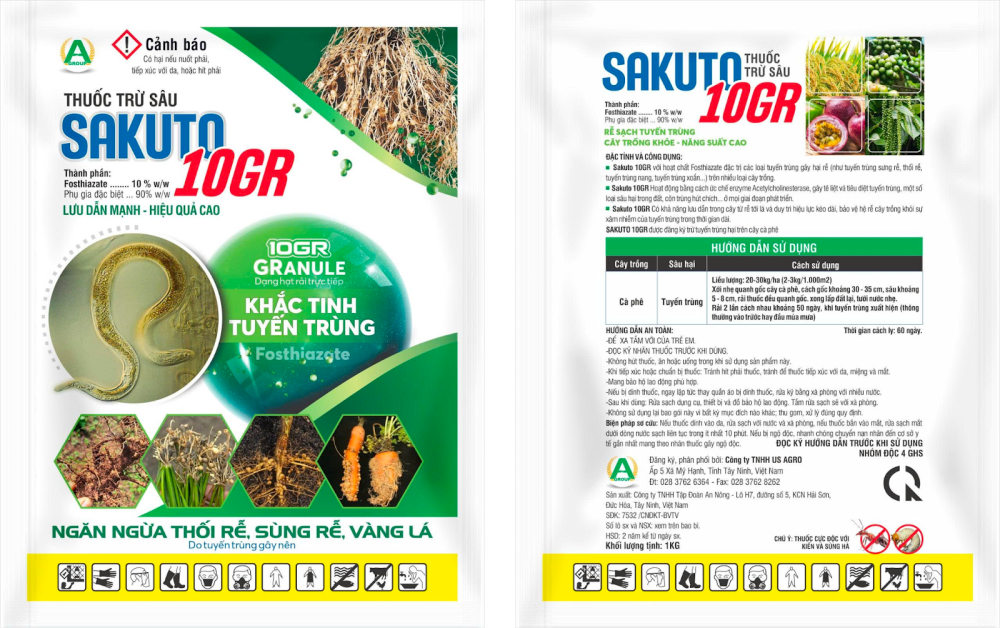
Based on farming practices in many growing regions across the country, An Nong has recently tested and added SAKUTO 10GR, a pesticide specifically designed to control soil nematodes and protect healthy root systems from the beginning of the growing season, to its list of approved pesticides in Vietnam.
The addition of SAKUTO 10GR to An Nong's product ecosystem is considered a timely step in the context of nematode disease becoming an increasingly common pest affecting many crops.
Nematodes are the silent enemy underground.
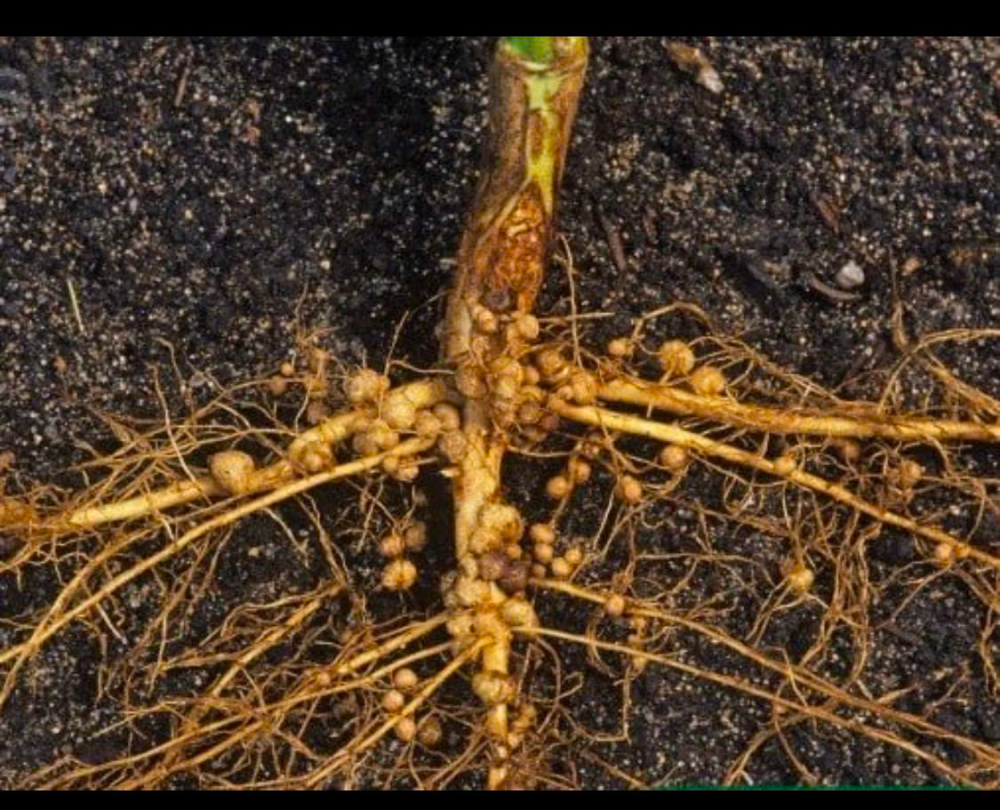
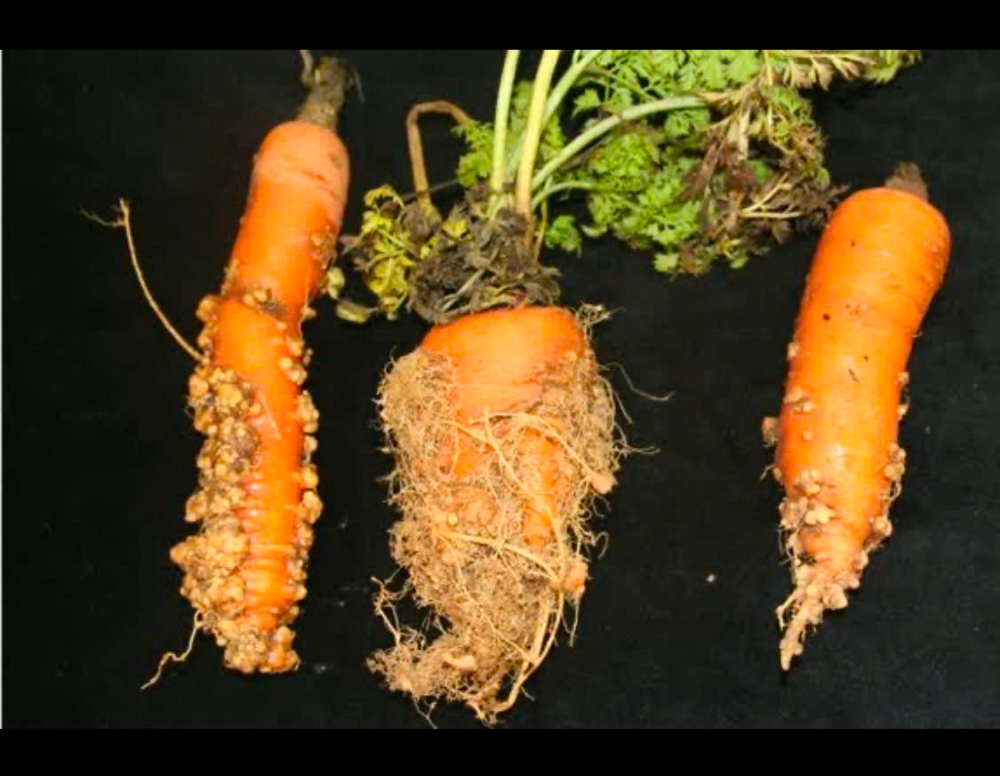
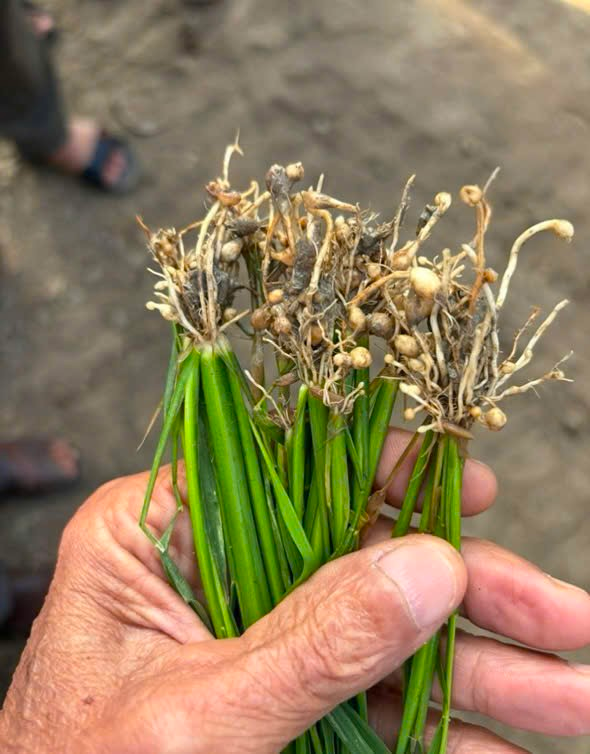
In practice, many farmers encounter problems such as slow plant growth, yellowing leaves, and failure to recover even after fertilization. Upon digging up the roots for inspection, many cases reveal swollen, rotten, or broken roots. These are typical signs of nematode infestation.
Nematodes live primarily in the soil and directly attack the root system. Three common groups are root gall nematodes, cyst nematodes, and root damage nematodes. When infected, plant roots have a reduced ability to absorb water and nutrients, leading to poor growth, prolonged yellowing of leaves, and easy weakening of the plant.
Because nematodes cannot be observed with the naked eye, they are often only detected when the plants already show clear symptoms. At this point, treatment is both costly and difficult to achieve high effectiveness. Therefore, agricultural engineers recommend that farmers control nematodes early, right from the soil preparation and planting stages.
Solutions for controlling nematodes from the root zone.
In current pest control measures, proper soil treatment remains crucial. One of the commonly used active ingredients for controlling root-damaging nematodes is Fosthiazate, which An Nong currently applies in its SAKUTO 10GR product.
Fosthiazate is effective on many crops such as tomatoes, peppers, melons, potatoes, and bananas. This active ingredient inhibits nematode movement and damage, thereby limiting their invasion of plant roots. When used at the correct dosage and with proper technique, the nematode population in the soil is significantly reduced, creating favorable conditions for root recovery and healthy development.
Timely action determines effectiveness.
According to technical experts, the timing of pesticide application is crucial in nematode control. Nematodes cause significant damage when they are still moving freely in the soil, before they invade the roots.
Therefore, farmers should apply pesticides before or immediately after planting, focusing on the soil around the base of the plants. This method helps prevent nematodes from the beginning of the season, limiting damage and reducing the need for additional treatment later.
Protect both old and new roots simultaneously.
After being introduced into the soil, the pesticide not only acts locally but is also partially absorbed by the plant roots. As a result, both the existing root system and the new roots that develop after treatment are protected for a certain period of time.
Practical experience shows that fields treated with proper techniques usually have a uniformly developed root system with fewer swellings. When the roots are healthy, the plants absorb fertilizers better, grow steadily, and physiological yellowing of leaves is reduced.

Note when using on different soil types
Fosthiazate can be used on many soil types; however, farmers need to pay attention to specific farming conditions. On acidic, sandy, and low-organic-content soils, the pesticide may move more quickly through the soil, so treatment near ponds, ditches, and canals should be avoided.
For soils rich in organic matter, pesticides are usually most effective in the early stages of the growing season. Understanding the characteristics of the soil will help farmers use pesticides more effectively and safely.
Helps reduce some soil-borne insect pests.
In addition to its primary effect on nematodes, Fosthiazate also helps reduce damage from some soil-dwelling insects such as root-damaging caterpillars and aphids. This allows growers to reduce pest pressure in the early stages of the growing season and save on treatment costs.
Use medication correctly to ensure safety.
Agricultural engineers advise that when using nematode control chemicals, farmers must strictly adhere to occupational safety regulations. They should wear gloves, masks, and protective clothing when mixing and applying the chemicals. They should not use bare hands and should keep children and pets away from the treated area.
In addition, strict adherence to the prescribed dosage and quarantine period is mandatory to ensure the safety of both producers and consumers.
Combine multiple measures for sustainable control.
For effective long-term nematode management, experts suggest that one should not rely on a single method. Combining the judicious use of pesticides with agricultural practices such as crop rotation, field sanitation, and post-harvest residue management will help reduce nematode populations in the soil and improve production efficiency.
Conclude
Nematodes are dangerous pests, but they are completely controllable if detected early and treated properly. Treating the soil at the right time and with the right dosage, combined with appropriate farming practices, will help protect the root system, create a foundation for stable plant growth, and improve agricultural productivity and quality.
Recently, with the introduction of SAKUTO 10GR into production, An Nong Group continues to affirm its role in accompanying farmers in applying science and technology, protecting plant roots, and moving towards efficient, safe, and sustainable agriculture. This is also a necessary direction to help improve agricultural production efficiency in localities.
AT
Source: https://baolongan.vn/an-nong-dua-giai-phap-phong-tru-tuyen-trung-tu-som-giu-re-khoe-giup-cay-trong-phat-trien-on-dinh-a208356.html

































































































Comment (0)