

On January 6th, Indonesia officially became a member of BRICS – an international forum led by Russia and China, emerging as a new trend in integration among developing countries globally. With a new, closer level of cooperation with its Southern Hemisphere partners, can Jakarta maintain its friendship with the West?
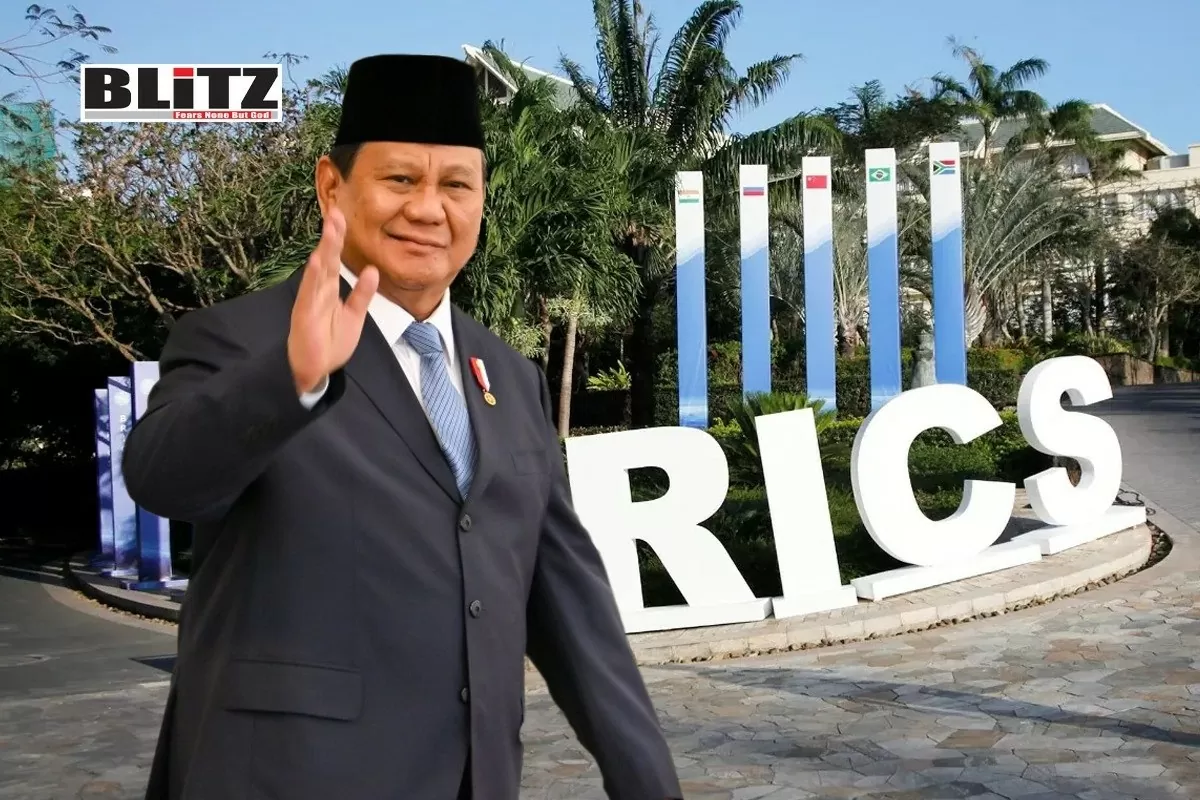 |
| Officially part of BRICS, how should this Southeast Asian nation 'calculate' its relationship with the West? (Source: weeklyblitz.net) |
Thus, with the inclusion of Southeast Asia's largest economy and also the region's most populous country, the BRICS group of leading developing economies officially has 10 members (Brazil, Russia, India, China, South Africa, Iran, UAE, Egypt, Ethiopia, Indonesia) and 8 partner countries, accounting for approximately half of the global population and over 41% of the world's GDP, based on purchasing power parity (PPP).
The new factor in BRICS
German news outlet DW commented that, by continuously adding new members and partners, BRICS is seeking to strengthen its reputation as a counterweight to the G7 group of developed economies led by the United States.
"We have repeatedly affirmed that BRICS is an important platform for Indonesia to strengthen South-South cooperation and ensure that the voices and aspirations of Southern Hemisphere nations are better represented in global decision-making processes," said Indonesian Foreign Ministry spokesperson Rolliansyah Soemirat.
As the spokesperson shared, Jakarta "is committed to contributing to the BRICS agendas, including efforts to promote economic resilience, technological cooperation, and public health."
In 2023, former Indonesian President Joko Widodo declined to join BRICS, citing Jakarta's continued consideration of the pros and cons and its reluctance to "rush into participation." Current President Prabowo Subianto, who won the 2024 general election, appears to have resolved all his concerns and is determined to take a decisive step within BRICS.
DW suggests that the change in Jakarta signals more than just a simple change of government. With the Western-led global order seen as politically fractured, weakened by economic instability and military conflicts in Ukraine and the Middle East, Southern Hemisphere nations are increasingly inclined to align themselves with Beijing and Moscow. This risks enraging Washington.
More than 30 other countries, including Southeast Asian nations such as Thailand and Malaysia, have now expressed interest or formally submitted applications to join BRICS.
The development of BRICS into a larger geopolitical bloc is also driven by the rise of China as a global economic and political power. With its strong potential and increasing foothold in emerging economic trends, Beijing frequently calls for a "multipolar" world order, a security and financial infrastructure not dominated solely by the United States.
BRICS members also frequently discuss the global dominance of the US dollar and the need for alternative financial frameworks among countries.
Diplomatically, BRICS has become very important to both China and Russia, as a symbol in this emerging multipolar landscape. This was affirmed at the 2024 BRICS summit hosted by the presiding country, Russia. Moscow demonstrated that it still has many friends around the world, despite Western sanctions.
Commenting on Indonesia's decision to join BRICS, Chinese Foreign Ministry spokesperson Guo Jiakun praised the South Asian nation as "a major developing country and an important power in the Southern Hemisphere."
However, according to international analysts, it is important to note that BRICS is not an openly anti-Western "club." Indonesia, like India, a founding member of BRICS, has good relations with Western countries and is unlikely to take sides in the geopolitical confrontation between the US and its rivals.
"Indonesia has no intention of separating from the West, whether slowly or immediately," asserted M. Habib Abiyan Dzakwan, a researcher at the Department of International Relations of the Center for Strategic and International Studies (CSIS) in Indonesia.
The CSIS researcher noted that, "in Indonesia's foreign policy, it's all friends, as President Subianto Prabowo has stated," and Jakarta "simply wants to expand its playing field."
"If Indonesia can maintain its non-aligned stance and influence the BRICS agenda with its inclusive perspective – neither excluding nor rejecting the West – I think membership might not have much impact on Jakarta's relationship with the West," the expert commented.
Meanwhile, Associate Professor Teuku Rezasyah, an expert on international relations from Padjadjaran University in West Java, argues that Indonesia could play the role of a "balancer" within BRICS, while still maintaining relations with the US and the EU. He is quite confident that, "as a middle power, membership in BRICS would give Indonesia leverage in the global order."
Strengthening Indonesia's position
Following expansions, BRICS now includes several major energy producers with some of the leading energy consumers among developing countries.
Bloomberg Economics analysts suggest that the increasing expansion of BRICS could make the alliance a stronger counterweight to the G7 group – the United States, Canada, France, Germany, Italy, Japan, and the United Kingdom.
Meanwhile, US President-elect Donald Trump will officially return to the White House later this month with many views that are causing concern among many partners. Washington is predicted to quickly decide to withdraw from multilateral commitments. Meanwhile, targeting BRICS, Trump threatened members of the bloc in November 2024 that they would be cut off from the US economy if a "BRICS currency" were created.
However, in this context, Dr. Alexander Raymond Arifianto, a senior fellow at the S. Rajaratnam School of International Studies (RSIS), believes that the more diplomatic approach of the Trump administration could offer Indonesia an opportunity to build stronger partnerships within regional organizations.
According to this international researcher, "building mutually beneficial partnerships with other Southeast Asian nations will not only strengthen the region's non-aligned position in an increasingly unstable geopolitical order but also bolster Indonesia's position as an ASEAN leader, as well as its multilateral prestige at a time when the US is moving toward unilateralism."
Source: https://baoquocte.vn/chinh-thuc-la-nhan-to-moi-cua-brics-quoc-gia-dong-nam-a-nay-da-tinh-toan-the-nao-trong-quan-he-voi-phuong-tay-300205.html

![[Photo] Two flights successfully landed and took off at Long Thanh Airport.](/_next/image?url=https%3A%2F%2Fvphoto.vietnam.vn%2Fthumb%2F1200x675%2Fvietnam%2Fresource%2FIMAGE%2F2025%2F12%2F15%2F1765808718882_ndo_br_img-8897-resize-5807-jpg.webp&w=3840&q=75)
















































































Comment (0)