


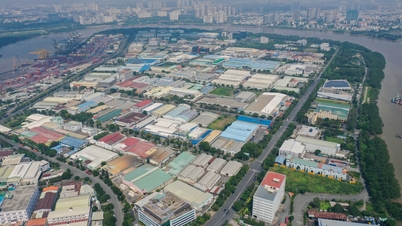
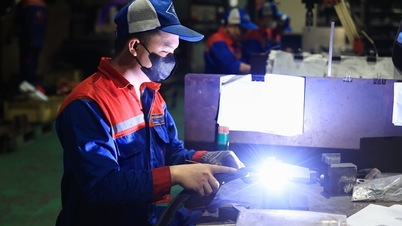
An electronics manufacturing company inside Tan Thuan Export Processing Zone, Ho Chi Minh City - Photo: QUANG DINH
According to experts, the transformation is not just about renewing land leases, but should be viewed as a strategic decision to enhance land value and competitiveness in Ho Chi Minh City, while boldly relocating industrial zones that have lost their development momentum.
Assoc. Prof. Dr. Tran Dinh Thien (former Director of the Vietnam Institute of Economics ):
Industrial zones that have run out of momentum for development need to be relocated.

The transformation of old industrial parks in Ho Chi Minh City is an urgent requirement that needs to be implemented decisively. Many industrial parks have lost their role as drivers of development, and some have even become obstacles to progress by causing traffic congestion, pollution, using outdated technology, and occupying prime land.
Therefore, even with 20-25 years remaining on their leases, these areas must still be addressed to align with the city's new development scale.
Ho Chi Minh City needs to allocate these land funds for modern projects, while also implementing strong policies to encourage businesses to relocate, such as incentives and extensions of operating rights in the new area.
When relocating, businesses must meet higher technological and environmental standards and are not allowed to bring their old business model to the new location.
More importantly, Ho Chi Minh City must clearly define the "future profile" of each land plot after conversion. The superior potential value of these land plots will be the leverage for the city in negotiations. Locating the new areas in advantageous positions, such as near ports, will help businesses operate efficiently, while also creating a ripple effect, freeing up development space for both the former Binh Duong and Ba Ria-Vung Tau provinces.
In summary, transforming old industrial parks is a strategic move that requires bold thinking, flexible negotiation mechanisms, and higher standards in technology and environment to create new development space for the entire region.
Mr. Phan Huu Thang (former Director of the Foreign Investment Department):
Retain high-performing employees.
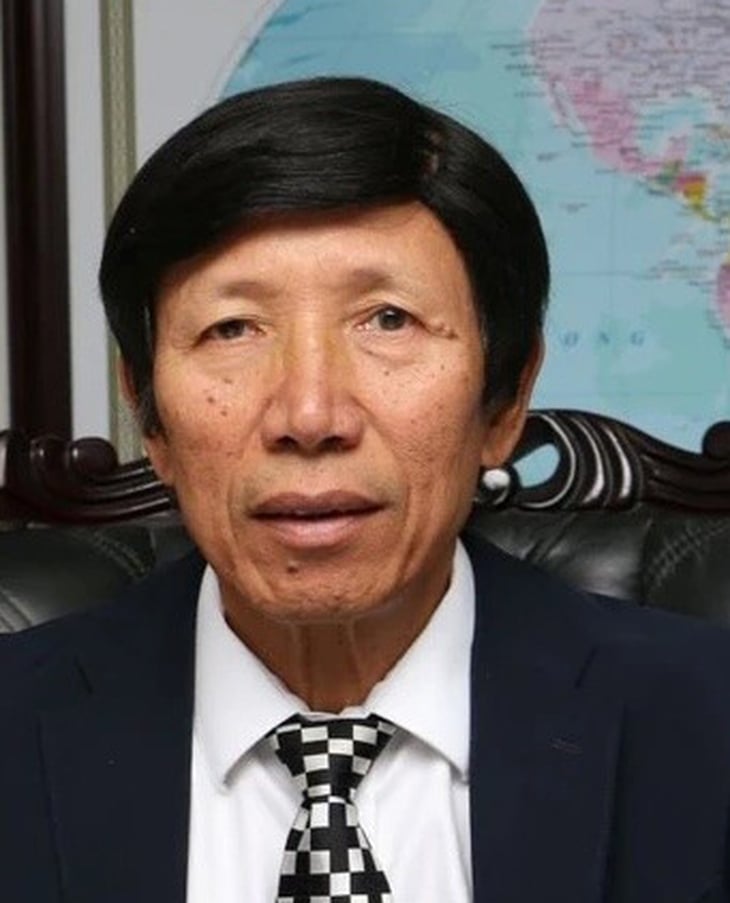
The extension of land leases for Tan Thuan Export Processing Zone (EPZ), as well as other EPZs and industrial parks nationwide, should be based on the practical experience and performance of these EPZs and industrial parks since their inception.
First, the city needs to review whether the investor of Tan Thuan Export Processing Zone has fulfilled its commitments in the past, assessing whether the investor has kept its promises and whether the results have been effective.
At the same time, it is necessary to assess what contributions Tan Thuan Export Processing Zone has made to the industrial development of Ho Chi Minh City and the whole country, and based on that, to find appropriate solutions.
In accordance with global demands, all existing investors in Vietnam's export processing zones and industrial parks must also adapt to the new transformation direction, meeting market needs.
If FDI investors in existing export processing zones and industrial parks want to transform in a new direction, we should support them in doing so.
Mr. Tran Dac Khoa (General Director of Renesas Vietnam Design Co., Ltd.):
Retaining high-level talent

The biggest advantage of Tan Thuan Export Processing Zone is its central location and convenient connectivity, strongly supporting the attraction of high-quality human resources and trade.
When the export processing zone's operating license expires, having to leave the specially built facilities with modern infrastructure will create a major challenge for many technology companies located there.
This could impact long-term investment plans, disrupt operations tied to the Tan Thuan ecosystem, and pose a risk to employee retention if the new location does not meet their living needs. The relocation process also requires significant time and resources.
Renesas Vietnam believes that transforming Tan Thuan Export Processing Zone into a high-tech industrial park and extending its operating period will help businesses feel secure in making long-term investments, while also stabilizing housing and working environments for their workforce.
This model can also form a green ecosystem comprising businesses, schools, and residential areas dedicated to the high-tech sector.
Mr. Le Trong Hieu (Senior Director of CBRE Vietnam):
This creates more room for new industries.

The transformation and extension of Tan Thuan Export Processing Zone's operation under the high-tech zone model will enhance the value of the area, attracting significant investments in technology, research, and innovation.
This helps to create new industries such as software development and integrated circuit design, and attracts a highly skilled workforce.
Tan Thuan Export Processing Zone could prioritize attracting businesses in the fields of software, chip design, high-tech pharmaceuticals, data centers, customer support centers, and zero-emission assembly.
International trends show that many inner-city industrial parks are being transformed into high-tech complexes combining commercial and residential areas. Vietnam can learn from this model, while adapting it to local conditions, especially regarding smart infrastructure, sustainable development, traffic congestion reduction, and integration with surrounding urban and economic planning.
Some successful models to consider include: Taiwan's Kaohsiung Cianjhen Technology Industrial Park, once a polluting industrial park with unskilled labor, has now become an R&D center for corporations such as Intel, Microsoft, and Radiant; or Singapore Science Park, which has gradually transformed from traditional manufacturing to high-tech and office spaces. These examples demonstrate the great potential when Tan Thuan Export Processing Zone is properly oriented and upgraded to new standards.
Mr. Phan Dang Tuat (Chairman of the Vietnam Supporting Industries Association):
We must commit to attracting high-tech investment.
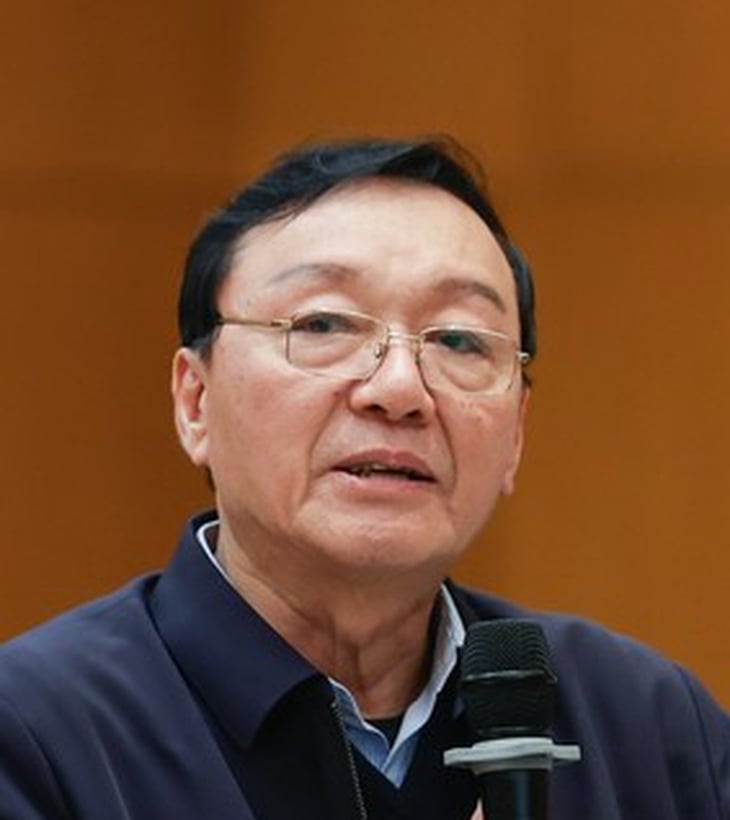
With industrial parks and export processing zones operating efficiently and contributing to the economy, there is no reason not to extend the land lease and operating periods of these projects.
The land lease extension period must also be long enough to allow industrial park and export processing zone investors to transition to higher technologies, use land more efficiently, increase economic efficiency, and reduce environmental pollution.
Extending land leases for industrial parks and export processing zones should be accompanied by commitments to attract high-tech investors and reduce environmental pollution.
In reality, finding new investors for industrial parks and export processing zones after the initial investment period expires is not easy; therefore, the best solution is to extend the land lease period for them.
Mr. Tran Viet Anh (Vice President of the Ho Chi Minh City Business Association):
Many industrial parks have fulfilled their historical role.
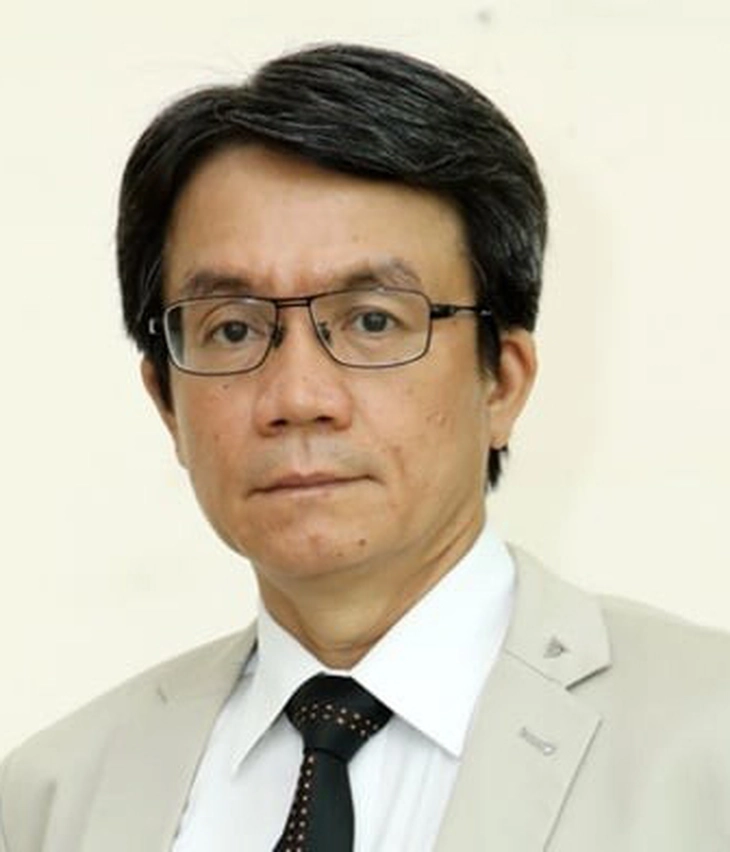
Many long-established industrial parks and export processing zones, such as Tan Binh, Cat Lai, and Tan Thuan, have existed for over 30 years and are entering the final stages of their operation.
Deteriorating infrastructure and outdated industrial models are no longer suitable, even creating an unsightly image for the city. Tan Binh Industrial Park is interspersed with residential areas and wholesale activities; Cat Lai Industrial Park is located next to high-end apartment complexes and frequently causes congestion in the port area.
In this context, the business community urgently needs a clear announcement or plan to guide its development.
Transparent planning will help businesses in industrial parks break free from their "historical role," proactively choose new directions, transform technology, participate in logistics or other suitable models, and avoid having to relocate their operations to overly distant locations.
Source: https://tuoitre.vn/chuyen-doi-khu-cong-nghiep-phai-co-tam-nhin-xa-20251213081353409.htm
![[Photo] Prime Minister Pham Minh Chinh attends the Conference summarizing and implementing tasks of the judicial sector.](/_next/image?url=https%3A%2F%2Fvphoto.vietnam.vn%2Fthumb%2F1200x675%2Fvietnam%2Fresource%2FIMAGE%2F2025%2F12%2F13%2F1765616082148_dsc-5565-jpg.webp&w=3840&q=75)









































































Comment (0)