

 |
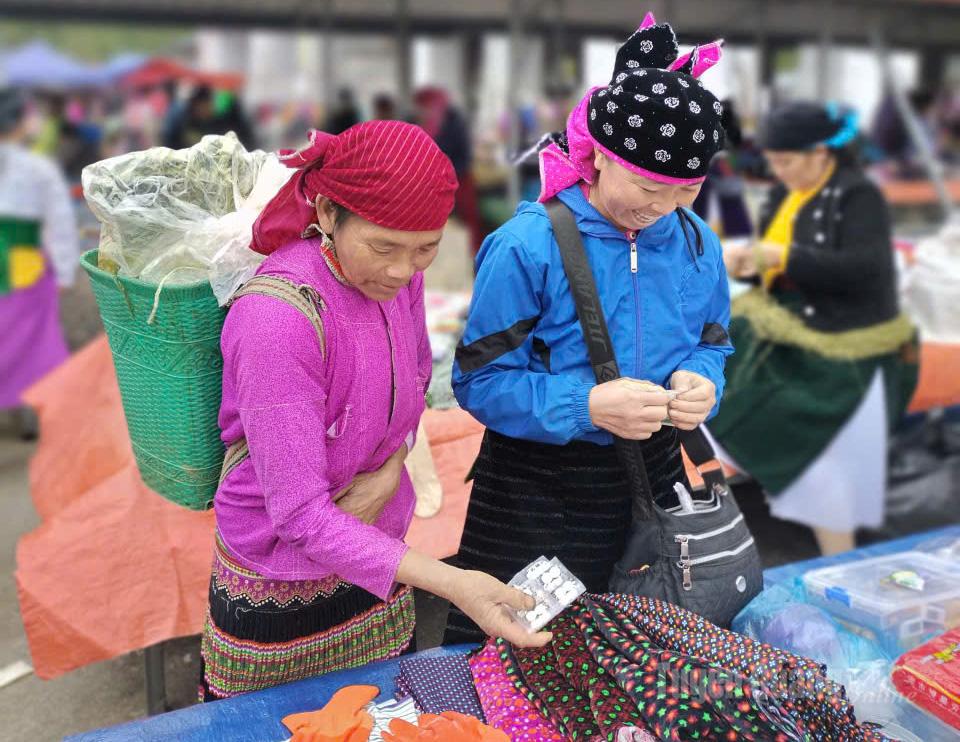
| The basket accompanies Hmong women to every market day. |
The color of linen, the soul of the basket.
Sa Phin Market is located along National Highway 4C, next to the winding Happiness Road - the legendary route of the Dong Van Stone Plateau. This is one of the most unique and distinctive markets in this region.
The market is held every six days, and each session is "shifted" back by one day compared to the previous one. If it's on Sunday this week, it will be on Saturday next week, then Friday, Thursday... This unique rhythm seems to defy modern timekeeping, following the cycles of farming, of the corn and rice seasons. As scheduled, when the mist still blankets the mountainside, the villagers carry their goods down to the market.
From dawn until dusk, the market bustles with the sounds of people, bargaining, and laughter, all mingled with the smoke from cooking fires. Here, people go to the market not only to buy and sell, but also to meet, to share – to see each other amidst the hardships of life in the highlands.
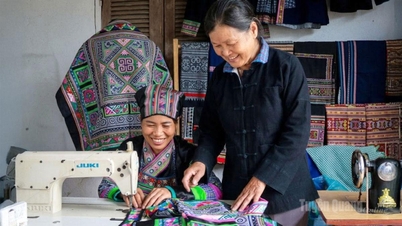
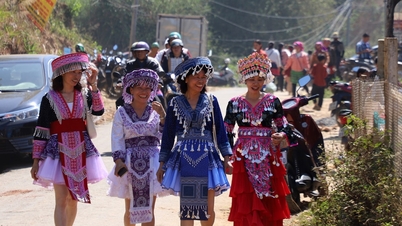
Amidst the bustling market, the image of a Hmong woman stands out in her vibrant attire – a color that seems to draw sunlight from the mist. They are the keepers of the flax spinning and weaving craft – a profession that has nurtured and shaped the Hmong identity for generations. In their hands, Hmong women always carry a flax thread in the process of spinning – they stroll through the market, chat, and spin flax at the same time. Each delicate flax thread is spun, woven, dyed with indigo, and hand-embroidered into dresses, blouses, and scarves – not just for wearing, but also a way for the women to express their souls.
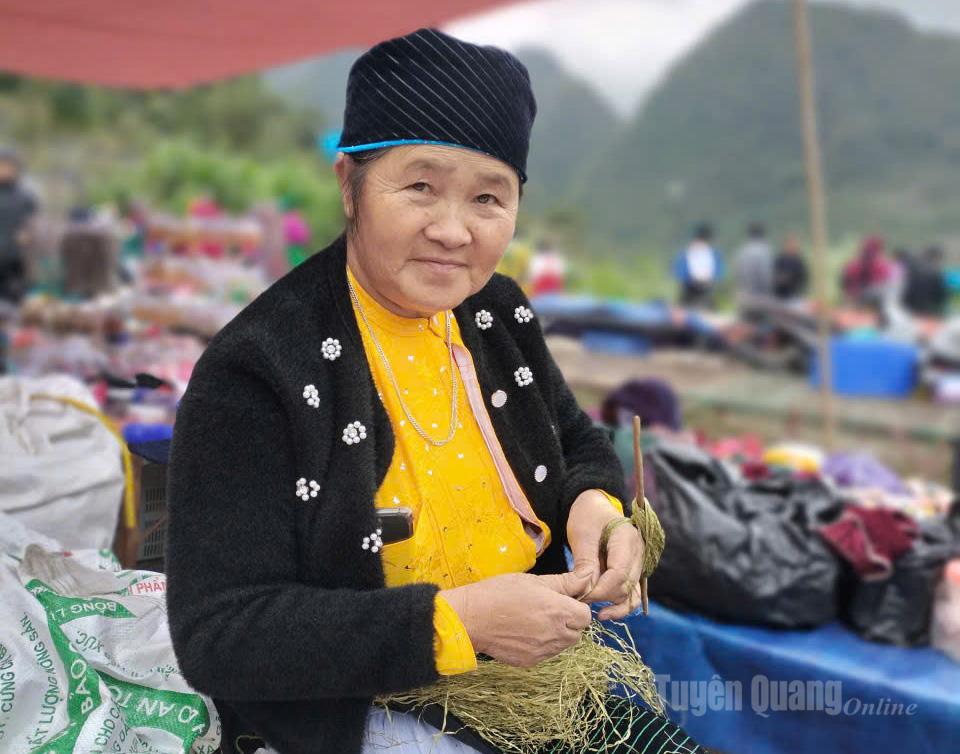 |
| In the hands of the Hmong woman, there is always a flax thread that is in the process of being spun. |
If linen thread is something they never part with, then the wicker basket on their backs is an inseparable part of the Hmong people's lives. At the market, basket after basket, creating a simple flow of labor. Inside the baskets might be yellow corn, wild beans, honey, or a few new skirts to exchange for herbs. These simple exchanges take place in the warm, chirpy Hmong language, without much bargaining.
That simple basket has become an integral part of the people's lives and culture. People may forget the names and ages, but seeing the Hmong woman carrying the basket, everyone knows – it's an image of the mountains and forests of Tuyen Quang .
The market is also a place rich in the colors of highland cuisine . A steaming pot of horse meat stew – a signature dish of the Hmong people, made from horse meat and bones along with mountain spices – rises from the pot. Beside it are baskets of golden-yellow steamed cornmeal and fragrant buckwheat cakes made from the purple flowers that bloom on the mountain slopes every autumn. All of this blends with the pungent aroma of fermented corn wine – a drink that makes people laugh more easily, talk more, and forget the chill of the gray rocky region.
People go to the market not only to sell goods, but also to find friends, meet acquaintances, and even go on dates. There are young Hmong couples who go to the market together, their clothes still smelling of new linen, their eyes shy yet bright. For them, the market day is a festival, an opportunity to express their feelings, to begin long stories.
The lingering echoes of the backward market and the journey through the rocky region.
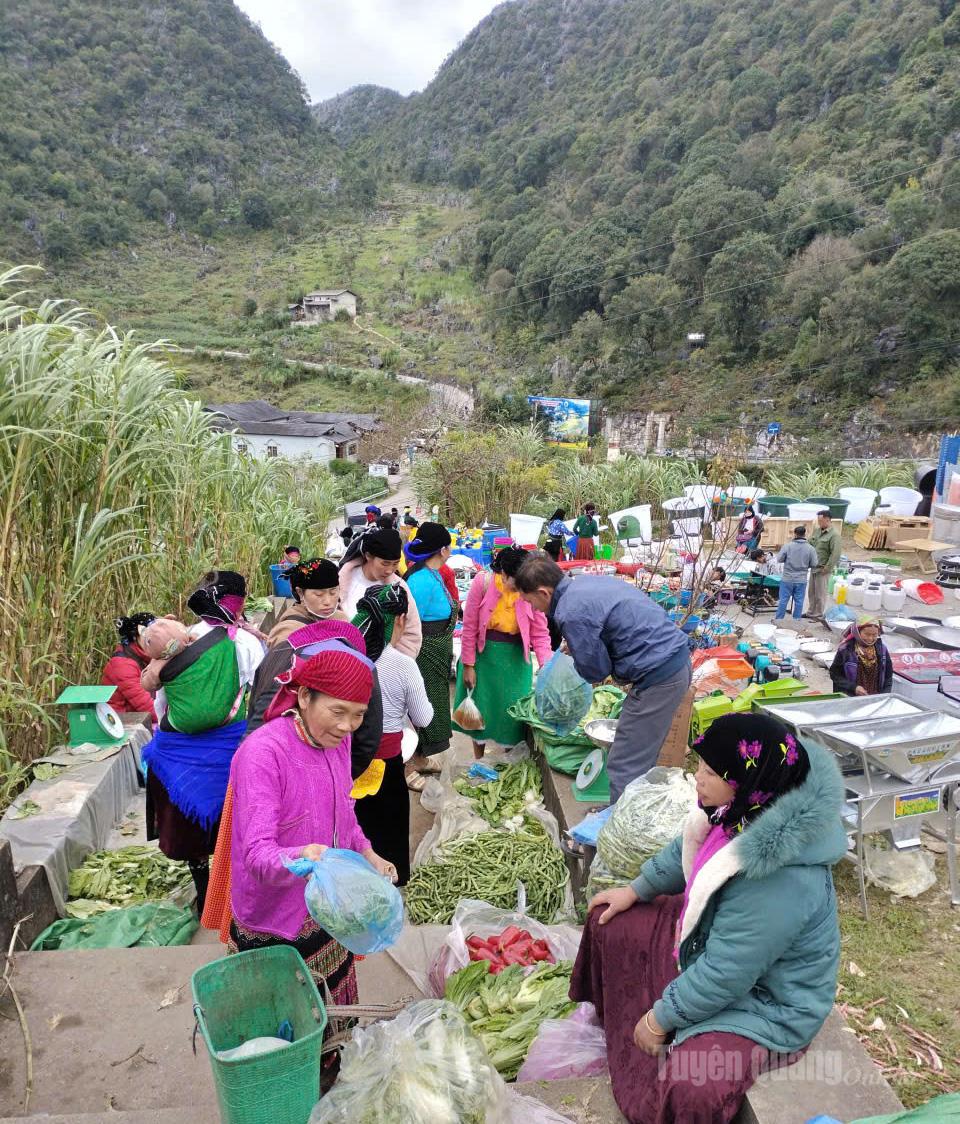 |
| Sa Phin market offers a wide variety of local agricultural products. |
Now, the Sa Phin backward market is not only a meeting place for the highland people, but also a favorite stop for domestic and international tourists. Amidst the vibrant colors of brocade fabrics, the sight of Western tourists with cameras in hand has become familiar. The locals here are accustomed to cameras – they smile gently and naturally, just like the land itself.
From Sa Phin market, visitors can continue their journey to visit the Vuong Family Mansion – an architectural masterpiece made of blue stone and precious wood, once the "Miao King's palace"; or visit Lao Xa village, where traditional rammed-earth houses nestle against the mountainside, and the ancient silver-carving craft still burns brightly every afternoon. Further on is Dong Van Old Town – a place that preserves weathered yellow rammed-earth houses, cafes nestled in the rocks, where time seems to stand still amidst the haunting sound of the Hmong flute.
At noon, when the sun had dried the morning dew, the market gradually emptied. Baskets of goods were depleted, pots of thang co (a traditional stew) were empty, leaving only the sound of footsteps carried on the wind. In six days, the market will reopen – once again “postponed” by a day – but the human warmth, the vibrant colors, and the cultural soul of the rocky plateau remain intact. Because in Sa Phin, the market is not just a place of trade, but also a repository of memories, culture, and the very breath of life of the highlanders.
Notes by: Hoang Anh
Source: https://baotuyenquang.com.vn/van-hoa/du-lich/202511/co-mot-cho-lui-o-sa-phin-01c2c4b/
![[Photo] The General Secretary, President and his wife meet with Vietnamese-Chinese friendship leaders.](https://vphoto.vietnam.vn/thumb/1200x675/vietnam/resource/IMAGE/2026/04/15/1776264829725_vna-potal-tong-bi-thu-chu-tich-nuoc-to-lam-gap-mat-nhan-sy-huu-nghi-viet-nam-trung-quoc-8703641-3130-jpg.webp)
![[Photo] My Son at night: A thousand-year-old heritage site amidst the Milky Way](https://vphoto.vietnam.vn/thumb/1200x675/vietnam/resource/IMAGE/2026/04/15/1776261039184_ndo_br_chon6-jpg.webp)
![[Photo] National Assembly Chairman Tran Thanh Man attends the opening session of IPU-152](https://vphoto.vietnam.vn/thumb/1200x675/vietnam/resource/IMAGE/2026/04/16/1776277863731_ctqh5-jpg.webp)
![[Photo] Mrs. Ngo Phuong Ly meets and exchanges views with Mrs. Peng Li Yuan](https://vphoto.vietnam.vn/thumb/1200x675/vietnam/resource/IMAGE/2026/04/16/1776277858080_phu-nhan-1-jpg.webp)




















































Comment (0)